



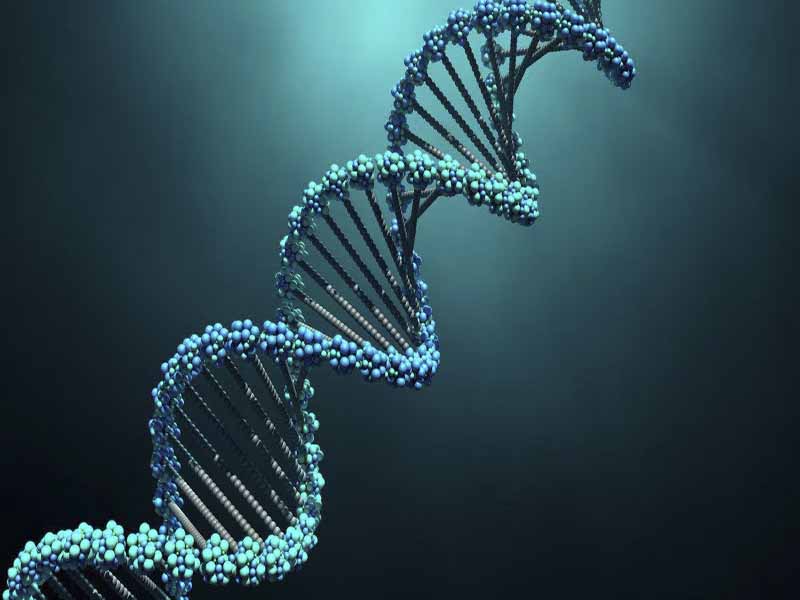
I’d like to turn now to the object which is the main point of this talk: the helix. This is a fascinating mathematical object which touches many parts of our lives. Movement, the natural world, the manufactured world and our genetic make-up are all connected to the shape of the helix.
A helix is a type of three-dimensional curve that goes around a central cylindrical shape in the form of a spiral, like a corkscrew or a spiral staircase. The helix is a very popular shape in nature because it is very compact. In fact, helices are sometimes referred to as ‘nature’s space saver’. In architecture too, the helix shape of a spiral staircase is an attractive option in buildings where space is very restricted.
The most renowned type of helix is probably the double helix of DNA, or deoxyribonucleic acid. DNA is made of two helices that curve around each other, a bit like a twisted ladder. DNA contains the genetic information or ‘code’ that determines the development and functioning of all known living things. The helix shape is a very efficient way to store a long molecule like DNA in the limited space of a cell.
There are different types of helices. Helices can twist clockwise, right-handed, or anti-clockwise, left-handed. An interesting experiment is to hold a clockwise helix, such as a corkscrew, up to a mirror. The clockwise helix appears to become counterclockwise.
We can perceive examples of helices in many areas of our world. Spiral staircases, cables, screws and ropes can be right-handed or left-handed helices. A helix that goes around a cone is called a conical helix. Examples of conical helices are screws or the famous spiral ramp designed by the architect Frank Lloyd Wright in the Guggenheim Museum in New York.
Helices are also prevalent in the natural world. The horns of certain animals, viruses, seashells and the structure of plants, flowers and leaves can all contain helices. The human umbilical cord is in fact a triple helix.
With the discovery that the helix is the shape of the DNA molecule, it is not surprising that the helix is found in so many areas. It’s one of the most natural shapes in nature.
Let’s turn our attention now to the mathematical description of the helix. You’ll need a pen and paper for the next part of the talk as I am going to give you some variables to write down. Take your time to notice the different …
حالا میخواهم به سراغ موضوعی بروم که نکته اصلی این صحبت است: مارپیچ. این یک موضوع ریاضی جذاب است که بخشهای زیادی از زندگی ما را تحت تأثیر قرار میدهد. حرکت، دنیای طبیعی، دنیای ساخته شده و ساختار ژنتیکی ما، همگی به شکل مارپیچ مرتبط هستند.
مارپیچ نوعی منحنی سهبعدی است که به شکل مارپیچ، مانند یک دربازکن یا یک راه پله مارپیچ، به دور یک شکل استوانهای مرکزی میچرخد. مارپیچ در طبیعت به دلیل فشرده بودن، شکلی بسیار محبوب است. در واقع، گاهی اوقات از مارپیچها به عنوان «صرفهجوینده فضای طبیعت» یاد میشود. در معماری نیز، شکل مارپیچ یک راه پله مارپیچ، گزینهای جذاب در ساختمانهایی است که فضا بسیار محدود است.
مشهورترین نوع مارپیچ، احتمالاً مارپیچ دوگانه DNA یا دئوکسی ریبونوکلئیک اسید است. DNA از دو مارپیچ ساخته شده است که به دور یکدیگر خم میشوند، کمی شبیه یک نردبان پیچ خورده. DNA حاوی اطلاعات ژنتیکی یا «کد» است که توسعه و عملکرد همه موجودات زنده شناخته شده را تعیین میکند. شکل مارپیچ روشی بسیار کارآمد برای ذخیره یک مولکول طویل مانند DNA در فضای محدود سلول است.
انواع مختلفی از مارپیچها وجود دارد. مارپیچها میتوانند در جهت عقربههای ساعت، راستگرد یا خلاف جهت عقربههای ساعت، چپگرد بچرخند. یک آزمایش جالب این است که یک مارپیچ در جهت عقربههای ساعت، مانند یک دربازکن، را جلوی یک آینه نگه دارید. مارپیچ در جهت عقربههای ساعت به نظر میرسد که خلاف جهت عقربههای ساعت میشود.
ما میتوانیم نمونههایی از مارپیچها را در بسیاری از مناطق جهان خود مشاهده کنیم. راهپلههای مارپیچی، کابلها، پیچها و طنابها میتوانند مارپیچهای راستگرد یا چپگرد باشند. مارپیچی که به دور یک مخروط میچرخد، مارپیچ مخروطی نامیده میشود. نمونههایی از مارپیچهای مخروطی، پیچها یا رمپ مارپیچی معروفی هستند که توسط معمار فرانک لوید رایت در موزه گوگنهایم در نیویورک طراحی شده است.
مارپیچها همچنین در دنیای طبیعی رایج هستند. شاخ برخی از حیوانات، ویروسها، صدفها و ساختار گیاهان، گلها و برگها همگی میتوانند حاوی مارپیچ باشند. بند ناف انسان در واقع یک مارپیچ سهگانه است.
با کشف اینکه مارپیچ، شکل مولکول DNA است، جای تعجب نیست که این مارپیچ در بسیاری از مناطق یافت میشود. این یکی از طبیعیترین شکلهای طبیعت است.
حالا بیایید توجه خود را به توصیف ریاضی مارپیچ معطوف کنیم. برای بخش بعدی صحبت به یک قلم و کاغذ نیاز دارید زیرا قرار است چند متغیر برای نوشتن به شما بدهم. وقت بگذارید و به تفاوتها توجه کنید…
















نظرات کاربران