



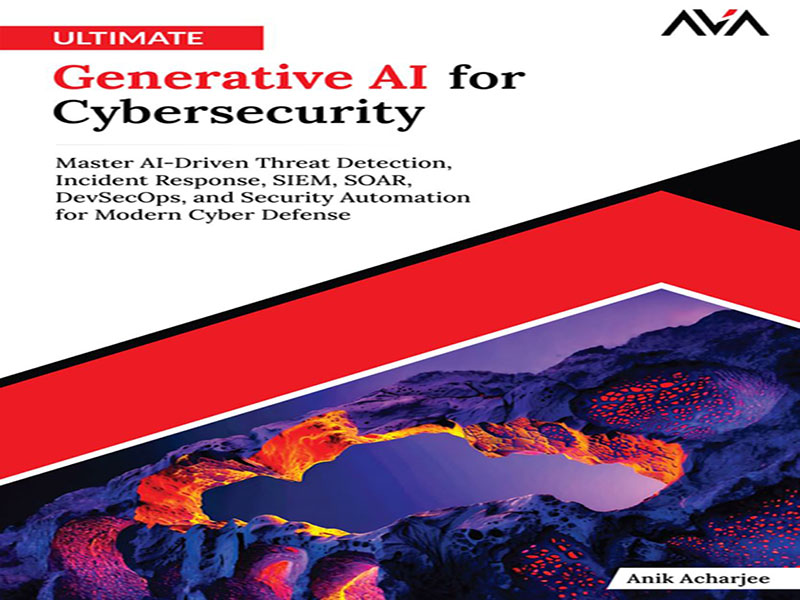
- عنوان کتاب: Ultimate Generative AI for Cybersecurity -Master AI-Driven Threat Detection, Incident Response, SIEM, SOAR, DevSecOps
- نویسنده: Anik Acharjee
- حوزه: امنیت سایبری
- سال انتشار: 2026
- تعداد صفحه: 418
- زبان اصلی: انگلیسی
- نوع فایل: pdf
- حجم فایل: 10.4 مگابایت
کتاب «هوش مصنوعی مولد نهایی برای امنیت سایبری» یک راهنمای کاربردی و آیندهنگر برای یکی از مهمترین تحولات در امنیت مدرن است. هوش مصنوعی مولد (GenAI) به سرعت در حال تغییر نحوه شناسایی تهدیدات، بررسی ناهنجاریها، پاسخ به حوادث و تقویت دفاع سازمانها در محیطهای دیجیتال پیچیده است. این کتاب به گونهای طراحی شده است که به خوانندگان کمک کند تا درک کنند چگونه میتوان هوش مصنوعی مولد را به طور مسئولانه و مؤثر در عملیات امنیت سایبری به کار برد. از مدلهای زبان بزرگ (LLM) و شبکههای مولد تخاصمی گرفته تا اتوماسیون با کمک هوش مصنوعی و هوش تهدید، فصلهای این کتاب هم فرصتها و هم خطرات ناشی از این فناوریها را بررسی میکنند. تیمهای امنیت سایبری امروزه تحت فشار مداوم برای انجام کارهای بیشتر با منابع کمتر هستند، در حالی که مهاجمان همچنان تاکتیکهای خود را تکامل میدهند. عملیات امنیتی مبتنی بر هوش مصنوعی برای مقیاسبندی تشخیص، کاهش خستگی ناشی از هشدار، بهبود اولویتبندی و تسریع گردشهای کاری پاسخ در محیطهای SOC ضروری میشوند. این کتاب رویکردی ساختارمند به موضوع دارد و با مبانی GenAI و معماریهای اصلی آن شروع میکند و سپس به مفاهیم یادگیری ماشینی (ML) که از موارد استفاده امنیتی پشتیبانی میکنند، میپردازد. سپس، قبل از پرداختن به دفاعهای عملی، ملاحظات حریم خصوصی، امنیت ابری و استراتژیهای استقرار عملیاتی، چشمانداز تهدیدهای شکل گرفته توسط حملات مبتنی بر هوش مصنوعی را بررسی میکند. خوانندگان همچنین بررسی خواهند کرد که چگونه GenAI میتواند از طریق پلتفرمهای SIEM، SOAR و DevSecOps از اتوماسیون امنیتی پشتیبانی کند؛ چگونه ابزارهای هوش مصنوعی میتوانند مدیریت آسیبپذیری را بهبود بخشند و چگونه میتوان از طریق اولویتبندی، مهار و بررسی هوشمند، واکنش به حوادث را بهبود بخشید.
Ultimate Generative AI for Cybersecurity is a practical and forward-looking guide to one of the most important transformations in modern security. Generative Artificial Intelligence (GenAI) is rapidly changing how organizations detect threats, investigate anomalies, respond to incidents, and strengthen their defenses across increasingly complex digital environments. This book is designed to help readers understand how generative AI can be applied responsibly and effectively in cybersecurity operations. From Large Language Models (LLMs) and generative adversarial networks to AIassisted automation and threat intelligence, the chapters in this book explore both the opportunities and the risks introduced by these technologies. Cybersecurity teams today are under constant pressure to do more with less, while attackers continue to evolve their tactics. AI-driven security operations are becoming essential for scaling detection, reducing alert fatigue, improving triage, and accelerating response workflows in SOC environments. This book takes a structured approach to the subject, beginning with the foundations of GenAI and its core architectures, then moving into Machine Learning (ML) concepts that support security use cases. It then examines the threat landscape shaped by AI-powered attacks, before transitioning into practical defenses, privacy considerations, cloud security, and operational deployment strategies. Readers will also explore how GenAI can support security automation through SIEM, SOAR, and DevSecOps platforms; how AI tools can improve vulnerability management, and how incident response can be enhanced through intelligent prioritization, containment, and investigation. The later chapters cover prompt engineering for security, real-world case studies, and future career and market trends in this fast-growing field. Each chapter in this book is intended to combine conceptual clarity with actionable insight. Hence, whether you are a cybersecurity professional, a security architect, an AI practitioner, or a technology leader, this book aims to help you build a practical understanding of how GenAI can be integrated into defensive security strategies without losing sight of ethics, governance, and privacy. Thus, by the end of this book, readers should be able to think critically about where GenAI adds value, where it introduces risk, and how it can be deployed to improve security outcomes in a measured and responsible way. Therefore, the goal is not only to explain the technology, but to show how it can be used to create more adaptive, resilient, and intelligence-driven cybersecurity operations. Chapter 1: Introduction to Generative AI and Cybersecurity This chapter introduces GenAI fundamentals like LLMs (for example, GPT models) and GANs, alongside cybersecurity basics such as threat vectors, CIA triad, and attack surfaces. It explores how GenAI predicts threats via pattern synthesis and anomaly detection. It also includes historical evolution, real-world breach examples (such as, AI-amplified phishing), and setup for a simple GenAI threat simulator project. Chapter 2: Core Architectures of Generative AI This chapter details architectures including transformers, diffusion models, and VAEs used in security contexts. It covers training pipelines, fine-tuning for threat data, and integration with security stacks. It also gives guidelines to build a basic GAN for generating synthetic malware samples; discusses scalability and compute requirements. Chapter 3: Machine Learning Fundamentals for Security The chapter reviews supervised/unsupervised/reinforcement learning tailored to security datasets (for instance, logs, network flows, and so on). The chapter focuses on feature engineering for behavioral analysis and metrics like F1-score for imbalanced threat data. It also covers a Project: Implement a Python-based ML classifier for intrusion detection using public datasets like NSL-KDD. Chapter 4: Threat Landscape Using AI-driven Attacks and Defensive Strategies This chapter examines AI-powered attacks (for example, deepfakes, adversarial examples, prompt injection). Defensive strategies include robust training, red-teaming, and monitoring. The chapter also includes a Case Study: Mitigating LLM jailbreaks; framework for AI threat modeling. Chapter 5: Data Privacy and Ethical Considerations with GenAI This chapter covers GDPR/CCPA compliance, differential privacy in GenAI models, and bias mitigation in threat detection. It also includes ethical dilemmas like dual-use AI (offense vs. defense). The book also contains exercises such as Audit, a GenAI model for fairness, and design privacy-preserving federated learning for SOC data. Chapter 6: Securing GenAI Deployments in the Cloud Addresses cloud-specific risks (for example, model poisoning in AWS SageMaker and Azure ML). Best practices for encryption, access controls (IAM), and monitoring tools like Guardrails, along with a hands-on exercise to deploy a secure GenAI endpoint on GCP Vertex AI with audit logging, are the highlights of this chapter. Chapter 7: Security Automation Using SIEM, SOAR, and DevSecOps Platforms Integrates GenAI with SIEM (for instance, Splunk, ELK, and so on) for alert triage, SOAR (for example, Phantom) for playbook automation, and DevSecOps pipelines (for example, GitHub Actions with Snyk). Framework: AI-orchestrated incident workflows, and Project: Automate a phishing response playbook are the highlights of this chapter. Chapter 8: Vulnerability Management with AI Tools Uses GenAI for vulnerability prioritization (for example, via LLMs analyzing CVEs), fuzzing, and patch simulation. Tools like Nuclei with AI enhancements, and a Quick Exercise: Build an AI scanner for zero-days in open-source repos are the salient features of this chapter. Chapter 9: AI-Powered Incident Response and Digital Forensics GenAI for timeline reconstruction, memory forensics, and automated containment. The chapter also integrates with EDR (for example, CrowdStrike) and tools like Volatility. It also includes a Case Study: Forensically analyzing an AI-generated ransomware attack; IR playbook template. Chapter 10: Prompt Engineering for AI Security Techniques for secure prompting (for example, chain-of-thought, role-based prompts) in threat hunting and configuration generation. The chapter also includes mitigating risks like data leakage, and a Project: Engineer prompts for a GenAI SOC analyst bot. Chapter 11: Real-World Case Studies and Security Playbooks This chapter analyzes breaches like Solar Winds (with AI hindsight) and defenses at firms like Palo Alto. It also Includes customizable playbooks for DDoS mitigation and supply chain attacks using GenAI. Chapter 12: Future Trends in Evolving Careers and Market Demand Predicts quantum-resistant GenAI, AI vs. AI arms race, and roles like “AI SecOps Engineer.” The chapter also includes market data on demand (for example, 30% growth); career roadmap with certifications (such as, CCSP with AI focus). It also includes a final project such as: Design your GenAI security portfolio.
این کتاب را میتوانید از لینک زیر بصورت رایگان دانلود کنید:
Download: Ultimate Generative AI for Cybersecurity
















نظرات کاربران