



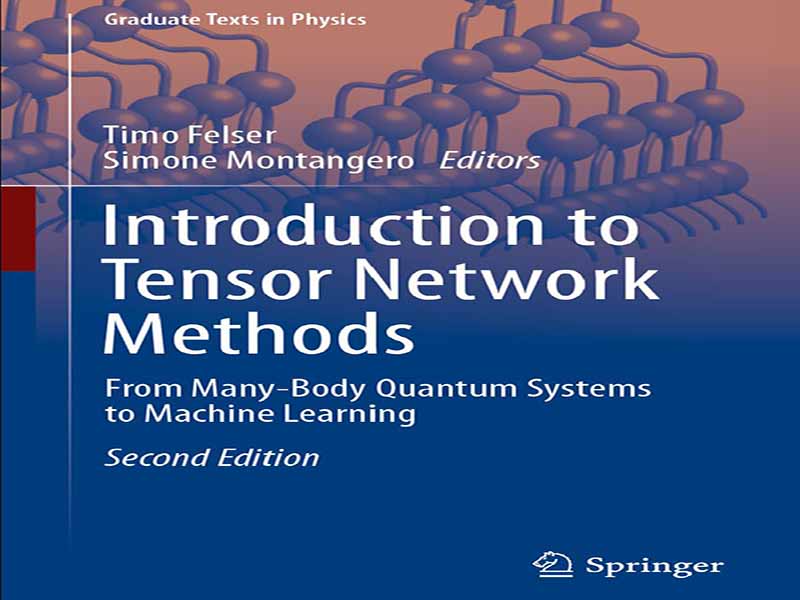
- عنوان کتاب: Introduction to Tensor Network Methods From Many-Body Quantum Systems to Machine Learning
- نویسنده: Timo Felser, Simone Montangero
- حوزه: سیستمهای کوانتومی
- سال انتشار: 2026
- تعداد صفحه: 407
- زبان اصلی: انگلیسی
- نوع فایل: pdf
- حجم فایل: 11.0 مگابایت
در چند سال گذشته، حوزه روش شبکه تانسوری پیشرفت بسیار سریعی داشته است. از زمان انتشار اولین ویرایش این کتاب، پیشرفتهای هیجانانگیز متعددی در جهات مختلف رخ داده است. همزمان، من از دانشگاه اولم به ایتالیا بازگشتم، جایی که اکنون ریاست گروه اطلاعات و ماده کوانتومی را در دانشکده فیزیک و نجوم دانشگاه پادووا بر عهده دارم. این گروه تحقیقاتی به طور قابل توجهی رشد کرده است که به من اجازه میدهد جهات تحقیقاتی مختلفی را بررسی کنم، که بیشتر آنها به توسعه و بهرهبرداری از ویژگیهای جدید روشهای شبکه تانسوری اختصاص یافته است. در همین حال، بخش ایتالیایی طرح بازیابی اتحادیه اروپا – نسل بعدی اتحادیه اروپا نیز بر تحقیقات من تأثیر گذاشته است، زیرا مرکز ملی محاسبات با کارایی بالا، کلان داده و محاسبات کوانتومی ایتالیا (بنیاد ICSC) را تأمین مالی کرده است، که فعالیتهای ایتالیا در زمینه محاسبات کوانتومی را تقویت کرده، تعامل و انسجام بین دانشگاهها، مراکز تحقیقاتی ملی و صنایع را در زمینه محاسبات کوانتومی افزایش داده و تا آنجا که به ما مربوط میشود، تعاملات ما را با CINECA، مرکز HPC ایتالیا، بسیار نزدیکتر کرده است. همزمان، در سال ۲۰۲۲، دانشگاه پادووا از طریق یک فراخوان عمومی، مرکز محاسبات و شبیهسازی کوانتومی (QCSC) را تأمین مالی کرد که من افتخار مدیریت آن را دارم. QCSC توسط چندین مرکز کوانتومی و دانشگاه در ایتالیا، به همراه مؤسسه ملی فیزیک هستهای ایتالیا (INFN) تأمین مالی شده است و فعالیتهای هماهنگ در زمینه اطلاعات کوانتومی را بین این مؤسسات توسعه میدهد. این محیط پررونق، ما را در شرایطی قرار داد تا برخی از پیشرفتهای هیجانانگیز روشهای شبکه تانسوری، به ویژه در مورد محاسبات و شبیهسازیهای کوانتومی آینده را بررسی کنیم. در واقع، روشهای شبکه تانسوری به عنوان ابزارهایی برای محک زدن، تأیید و هدایت توسعه رایانهها و شبیهسازهای کوانتومی آینده، بیش از پیش اهمیت پیدا میکنند. از یک سو، شبیهسازیهای محاسبات کوانتومی شبکه تانسوری در حال تبدیل شدن به ابزارهای نهایی صدور گواهینامه مزیت کوانتومی هستند. توانایی شبیهسازهای شبکه تانسوری در شبیهسازی محاسبات کوانتومی با صدها کیوبیت با درهمتنیدگی متوسط، آنها را به ابزاری ایدهآل برای تشخیص آستانه مزیت محاسبات کوانتومی تبدیل میکند. در سالهای گذشته، با شروع ادعای _اولین آزمایش برتری کوانتومی گوگل در سال ۲۰۱۸ – درست پس از انتشار اولین ویرایش این کتاب – شاهد افزایش تعداد آزمایشهایی بودهایم که ادعا میکنند به مزیت کوانتومی رسیدهاند، اما شبیهسازیهای شبکه تانسوری به طور جدی آنها را به چالش کشیدهاند. این رقابت دوستانه در حال حاضر ادامه دارد و مطمئناً به بهبود درک عمیق ما از محدودیتها و پتانسیل تراشههای کوانتومی فعلی و محاسبات کوانتومی کمک کرده است. در کنار آن، روشهای شبکه تانسوری به مقابله با جدیترین چالشی که برای چند دهه با آن روبرو بودهاند، یعنی اثربخشی آنها در توصیف سیستمهای کوانتومی چندجسمی با ابعاد بالاتر از یک، ادامه دادهاند. در واقع، از زمان معرفی گروه بازبهنجارش ماتریس چگالی، روشهای شبکه تانسوری به عنوان روش انتخابی برای توصیف سیستمهای یک بعدی در رژیمهایی شناخته شدهاند که در آنها روشهای مونت کارلو با مشکل علامت، یعنی توصیف توسط یک عمل منفی یا موهومی، مواجه هستند. با این حال، برای سیستمهای با ابعاد بالاتر، وضعیت متفاوت است. از یک طرف، نتایج نظری دقیق و مهمی در رابطه با شبیهسازیهای شبکه تانسوری برای سیستمهای با ابعاد بالا، مانند PEPS و MERA، وجود دارد. از طرف دیگر، پیچیدگی الگوریتمی بالای آنها مانع از کاربرد آنها در بسیاری از کاربردهای عملی شده است و پذیرش آنها هنوز به اندازه روشهای سیستمهای یک بعدی، یعنی مبتنی بر حالتهای حاصلضرب ماتریس، فراگیر نشده است. سالهاست که دشواریهای روشهای شبکه تانسوری در مطالعه سیستمهای با ابعاد بالا، مانع از کاربرد آنها در تعداد زیادی از مسائل اساسی، مانند مطالعه نظریههای پیمانهای شبکهای در پتانسیل شیمیایی محدود یا خارج از تعادل، شده است. یکی از پیشرفتهای هیجانانگیز سالهای اخیر، ترکیبی از پیشرفتهای جدید بوده است که امکان مطالعه آنها را فراهم میکند. در واقع، ترکیبی از پیشرفتهای الگوریتمی، شبیهسازیهای جدید شبکههای تانسوری (مثلاً شبکههای تانسوری درختی تقویتشده) و پیشرفتهای محاسباتی (استفاده از زبانهای برنامهنویسی مدرن، پردازندههای گرافیکی (GPU) و محیطهای HPC و غیره) به گونهای است که شبیهسازی سیستمهای دوبعدی و حتی سهبعدی در حال دسترسی هستند و شروع به تولید نتایج جالبی در زمینههای مختلف، از نظریه ماده چگال گرفته تا فیزیک انرژی بالا، میکنند. بار دیگر، نتایجی که در سالهای آینده به دست خواهند آمد، تحقیقات آینده را در زمینههای مختلف هدایت میکنند و به عنوان معیارهای بسیار مهم برای رایانههای کوانتومی آینده و شبیهسازهایی که در نهایت دیدگاه فاینمن را تحقق میبخشند، عمل خواهند کرد. در جهتی موازی، روشهای شبکههای تانسوری کاربردهای مستقیم فزایندهای در مسائل علوم کامپیوتر پیدا میکنند.
In the last few years, the field of tensor network method has undergone a very fast development. Since the publication of the first edition of this book, there have been several exciting developments in different directions. At the same time, I moved from Ulm University back to Italy, where I am now heading the Quantum Information and Matter group at the Department of Physics and Astronomy of Padova University. The research group has grown substantially which allowed me to explore different research directions, most of them devoted to the development and exploitation of new features of tensor network methods. Meanwhile, the Italian part of the EU Recovery Plan— Next Generation EU has impacted my research as well, as it funded the Italian National Center for High-Performance Computing, Big Data, and Quantum Computing (Foundation ICSC), which has boosted the Italian activities on quantum computation, has increased the interaction and cohesion between universities, national research centers and industries in the field of quantum computing, and, as far as concern us, has greatly tightened our interactions with the CINECA, the Italian HPC center. At the same time, in 2022, Padova University funded via an open call a Quantum Computing and Simulation Center (QCSC) which I have the honor to direct. The QCSC was co-funded by several Quantum Centers and universities in Italy, together with the Italian National Institute for Nuclear Physics (INFN), and develops coordinated activities on quantum information among those institutions. This thriving environment put us in the conditions to explore some of the exciting developments of tensor network methods, especially concerning future quantum computations and simulations. Indeed, tensor network methods are becoming more and more relevant as tools to benchmark, verify, and guide the development of future quantum computers and simulators. On the one hand, tensor network quantum computing emulations are becoming the ultimate quantum advantage certification tools. The ability of tensor network emulators to simulate quantum computations with hundreds of moderately entangled qubits makes them the perfect tool to discern where the quantum computing advantage threshold lays. In the last years, starting from the _irst claim of Google’s quantum supremacy experiment in 2018—right after the publication of the first edition of this book—we have seen an increasing number of experiments claiming to have reached quantum advantage that have been seriously challenged by tensor network emulations. This friendly competition is currently ongoing and has surely contributed to improving our profound understanding of the limitations and the potential of current quantum chips and quantum computations. Alongside, tensor network methods have kept attacking the most serious challenge they have been facing for a couple of decades, that is, their effectiveness in describing many-body quantum systems with dimensions higher than one. Indeed, since the introduction of the Density Matrix Renormalization Group, tensor network methods have been recognized as the method of choice for describing one dimensional systems in regimes where Monte Carlo methods are hindered by the sign problem, i.e., described by a negative or imaginary action. However, for higher dimensional systems, the situation is different. On the one side, there are many rigorous and important theoretical results related to tensor network ansatzes for high dimensional systems, like as PEPS and MERA. On the other side, their high algorithmic complexity prevented their application in many practical uses, and their adoption is not yet as ubiquitous as methods for one-dimensional systems, i.e., based on Matrix Product States. For many years, the difficulties of tensor network methods in studying high-dimensional systems have prevented their application in a large number of fundamental problems, such as the study of lattice gauge theories at finite chemical potential or out of equilibrium. One of the exciting developments of the last years has been a combination of new developments that are starting to unlock the possibility of studying them. Indeed, a combination of algorithmic developments, new tensor network ansatzes (e.g., the augmented Tree Tensor Networks), and computational improvements (the use of modern programming languages, of GPUs, and HPC environments, etc.) are such that simulations of 2D and even 3D dimensional systems are becoming available and start to produce interesting results in different fields, from condensed matter theory to high-energy physics. Once again, the results that will be obtained in the years to come will guide future research in different fields and will serve as future highly nontrivial benchmarks for future quantum computers and simulators that will eventually realize Feynman’s vision. On a parallel direction, tensor network methods are finding increasing direct applications in computer science problems. Indeed, since the seminal work of Stoudenmire and Schwab in 2016, it is becoming increasingly evident that the interplay of tensor network methods and machine learning can lead to very interesting developments, possibly opening up new routes toward the solution of some long-standing limitations of neural networks, from their explainability to their energy and computational extreme needs. Moreover, tensor network machine learning is a sub-class of quantum machine learning, that is, it is a perfect bridge between quantum and classical machine learning, and as such, it is the perfect playground to study their interplay and properties such as scalability, resilience to errors, dependence on the entanglement of the trial function, different architectures, and so on. Similarly, thanks to the new developments and the new ability to efficiently simulate high-dimensional systems, tensor network methods can be used to attack hard combinatorial classical optimizations, one of the main attractive real-world applications of quantum computers for industries. Once again, they can be used to develop new classical optimizers that might become competitive and relevant for industrial applications, and naturally bridge the quantum and classical optimizers, providing a perfect playground to study hard instances, their scalability to thousands of variables, the role of entanglement, and various strategies and architectures.
این کتاب را میتوانید از لینک زیر بصورت رایگان دانلود کنید:
Download: Introduction to Tensor Network Methods From Many-Body Quantum Systems to Machine Learning
















نظرات کاربران