



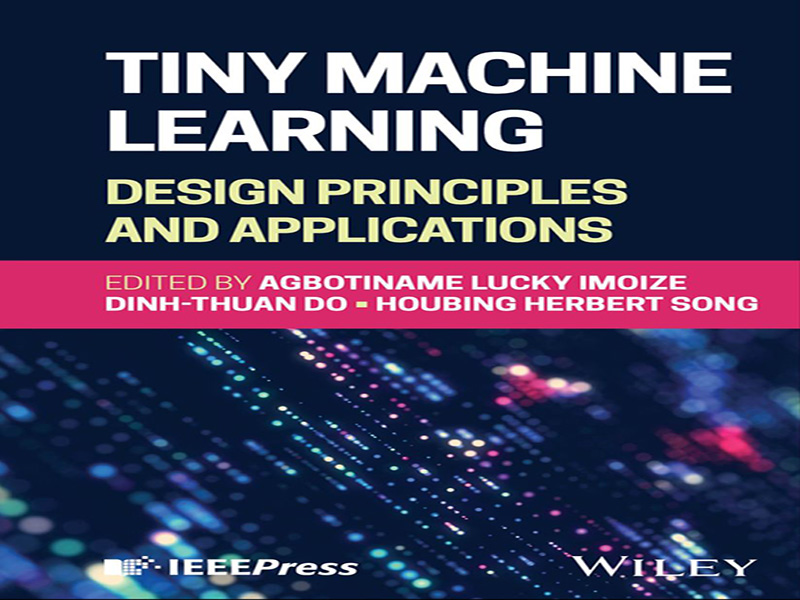
- عنوان کتاب: Tiny Machine Learning Design Principles and Applications Design Principles and Applications
- نویسنده: Agbotiname Lucky Imoize
- حوزه: یادگیری ماشین
- سال انتشار: 2026
- تعداد صفحه: 906
- زبان اصلی: انگلیسی
- نوع فایل: pdf
- حجم فایل: 17.8 مگابایت
یادگیری ماشینی کوچک (TinyML) امکان اجرای مدلهای یادگیری ماشینی (ML) را در دستگاههای تعبیهشده کممصرف فراهم میکند. با کمک این دستگاههای TinyML، مدلهای یادگیری عمیق میتوانند در میلیاردها دستگاه اینترنت اشیا و واحدهای میکروکنترلر (MCU) گنجانده شوند و دامنه کاربردها را گسترش دهند و هوش فراگیر را برای جامعهای بهتر امکانپذیر سازند. در مقیاس جهانی، انتظار میرود محمولههای دستگاههای TinyML تا سال 2030 به 2.5 میلیارد دستگاه با ارزش اقتصادی بیش از 70 میلیارد دلار آمریکا برسد. با این حال، منابع حافظه محدود TinyML نمیتواند به طور مؤثر از مدلهای یادگیری عمیق طراحیشده برای پلتفرمهای ابری و موبایل، که برای برنامههای کاربردی لبه حیاتی هستند، پشتیبانی کند. دستگاههای لبه باید دادهها را با استفاده از حسگرهای خارجی با منابع انرژی و توان محدود جمعآوری کنند. علاوه بر این، TinyML پشتیبانی محدودی از کامپایلر و موتور استنتاج برای دستگاههای فلزی ساده دارد که کاربردهای آنها را در سیستمهای حیاتی که نیاز به محاسبات گسترده دارند، محدود میکند. برای پرداختن به این مسائل، طراحی الگوریتم و پشته سیستم برای افزایش قابلیتهای مدلهای TinyML ضروری است. این کتاب مفاهیم حیاتی، اصول طراحی، کاربردها و مسائل کلیدی مربوط به TinyML را بررسی میکند. این کتاب پیشرفتهای اخیر در TinyML و یادگیری عمیق در MCUها را روشن میکند. علاوه بر این، کتاب مفاهیم جدید TinyML، از جمله TinyML در دستگاههای اینترنت اشیا با طراحی کد الگوریتم سیستم، را معرفی میکند و بر کاربردهای آنها در حوزههای مختلف تأکید دارد. به طور خاص، این کتاب به بررسی الگوهای TinyML، توانمندسازهای TinyML، TinyML برای تشخیص ناهنجاری، چشمانداز یادگیری تحت TinyML، دستگاهها و ابزارهای TinyML، طراحی کد برای TinyML، مصرف برق و حافظه در MCUهای اینترنت اشیا، چارچوبهای سبک برای TinyML، TinyML برای کاربردهای بلادرنگ و محیطی، استنتاج، آموزش و اعتبارسنجی TinyML، امنیت و حریم خصوصی دستگاههای TinyML، ارتباط متقابل بین مدلهای TinyML و LargeML، مصرف برق و حافظه در MCUهای اینترنت اشیا، امنیت و حریم خصوصی مدلهای TinyML، TinyML برای یادگیری فدرال و انتقالی، تحقیقات TinyML با هدف قرار دادن میکروکنترلرهای آینده و موارد دیگر میپردازد. علاوه بر این، این کتاب تکنیکهای آموزش کوچک روی دستگاه، چارچوبهای نظارتی و ملاحظات اجتماعی و اخلاقی را مورد بحث قرار میدهد و مسیرهای آینده را در حوزه جالب TinyML ارائه میدهد. این کتاب به پرسنل صنعت، محققان و دانشگاهیان بینشهای جدیدی در مورد سناریوهای دنیای واقعی روند فناوری، استقرار، کاربرد و مزایای مرتبط با TinyML ارائه میدهد. همچنین، کتاب مسائل مهم امنیتی و حریم خصوصی را در طرحها و برنامههای کاربردی مبتنی بر TinyML مورد بحث قرار میدهد. در نهایت، این کتاب برای متخصصان صنعت، دانشگاهیان، محققان، دانشمندان، مهندسان، مدرسان و دانشجویان پیشرفته در حوزه فناوری اطلاعات و ارتباطات (از جمله شبکه، محاسبات، علوم داده، هوش مصنوعی (AI)، یادگیری ماشینی، ارتباطات)، TinyML، یادگیری فدرال، مدلسازی و فناوریهای نوظهور مفید خواهد بود. این کتاب در نوزده فصل ساختار یافته است که به شرح زیر است: فصل 1 TinyML را معرفی میکند و با یک مرور کلی حاشیهنویسی شده از فناوری و فلسفه اصلی آن شروع میشود. سپس به بحث مفصلی در مورد تکامل آن میپردازد و بر جدول زمانی و نقاط عطف کلیدی، روندهای فعلی و پیشرفتهای TinyML تمرکز میکند. در ادامه، فصل ۲ به بررسی چشمانداز یادگیری تحت TinyML میپردازد. این فصل به درک مسائل اصلی مربوط به طراحی و بهینهسازی مدلهای TinyML کمک میکند و الگوریتمهای یادگیری گسترده را بررسی میکند. فصل ۳ بر TinyML برای تشخیص ناهنجاری، به ویژه در دادههای سری زمانی، تمرکز دارد و پتانسیل آن را در نظارت بلادرنگ بر ماشینآلات صنعتی، سیستمهای زیرساختی و شبکههای IoT بررسی میکند. فصل ۴ مصرف برق TinyML و استفاده از حافظه در MCUهای IoT را بررسی میکند. این فصل به مقیاسپذیری TinyML برای استقرار هوش مصنوعی با مصرف بسیار کم در شبکههای IoT در مقیاس بزرگ میپردازد و بر پتانسیل آن برای پشتیبانی از میلیاردها دستگاه متصل در عین حفظ تأخیر کم و بهرهوری انرژی تأکید میکند. فصل ۵ به بررسی پاکسازی کارآمد دادهها و تشخیص ناهنجاری در دستگاههای IoT با استفاده از TinyCleanEDF میپردازد. این مطالعه یک راهحل سازگار و مقیاسپذیر برای کاربردهای مختلف IoT از سیستمهای خانه هوشمند گرفته تا اتوماسیون صنعتی، از جمله نظارت بر محیط زیست، ارائه میدهد. فصل ۶ دستگاهها و ابزارهای TinyML را ارائه میدهد. این فصل تکنیکهای پیشرفته در کوانتیزاسیون مدل، هرس کردن و جستجوی معماری عصبی را معرفی میکند. این فصل اثربخشی آنها را در به دست آوردن اندازههای مدل بسیار بهینه با بهرهوری انرژی، بدون از دست دادن دقت به اندازه سایر مدلهای سبک، نشان میدهد. فصل 7 تکنیکهای حفظ حریم خصوصی در TinyML برای اینترنت اشیا را بررسی میکند. این فصل تجزیه و تحلیل جامعی از چارچوبهایی مانند یادگیری ماشین امن (SecureML)، شبکه عصبی امن (SecureNN) و Falcon ارائه میدهد و سهم آنها را در محاسبات کارآمد و ایمن در محیطهای با منابع محدود برجسته میکند و به بررسی بده بستانهای بین تضمینهای امنیتی، بهرهوری محاسباتی و سربار ارتباطی میپردازد که برای TinyML بسیار مهم هستند.
Tiny Machine Learning (TinyML) enables the execution of machine learning (ML) models on low‐power embedded devices. With the aid of these TinyML devices, deep learning models could be squeezed into billions of IoT devices and microcontrollers units (MCUs), expanding the scope of applications and enabling ubiquitous intelligence for a better society. On a global scale, shipments of TinyML devices are expected to reach 2.5 billion by 2030, with an economic value of over US$70 billion. However, the limited memory resources of TinyML cannot efficiently support deep learning models designed for cloud and mobile platforms, which are critical for edge applications. Edge devices must collect data using external sensors with limited power and energy resources. Additionally, TinyML has limited compiler and inference engine support for bare‐metal devices, which limits their applications in critical systems that require extensive computations. To address these issues, it is imperative to codesign the algorithm and system stack to enhance the capabilities of TinyML models. This book explores critical concepts, design principles, applications, and key issues related to TinyML. The book sheds light on the recent progress in TinyML and deep learning on MCUs. Additionally, the book introduces new TinyML concepts, including TinyML on IoT devices with system‐algorithm codesign, emphasizing their applications in various domains. Specifically, the book explores TinyML paradigms, TinyML enablers, TinyML for anomaly detection, learning panorama under TinyML, TinyML devices and tools, codesign for TinyML, power consumption and memory in IoT MCUs, lightweight frameworks for TinyML, TinyML for real‐time and environmental applications, TinyML inference, training, and validation, security and privacy of TinyML devices, interrelationship between TinyML and LargeML models, power consumption and memory in IoT MCUs, security and privacy of TinyML models, TinyML for federated and transfer learning, TinyML research targeting microcontrollers of the future, and more. Additionally, the book discusses tiny on‐device training techniques, regulatory frameworks, and social and ethical considerations, and presents future directions in the interesting domain of TinyML. The book offers industry personnel, researchers, and academics new insights into the real‐world scenarios of the technological trend, deployment, application, and associated benefits of TinyML. Also, the book discusses critical security and privacy issues in practical TinyML‐based designs and applications. Lastly, the book would be helpful to industry professionals, academics, researchers, scientists, engineers, lecturers, and advanced students in ICTs (including networking, computing, data science, Artificial Intelligence (AI), ML, communication), TinyML, federated learning, modeling, and emerging technologies. The book is structured into nineteen chapters, outlined as follows: Chapter 1 introduces TinyML, starting with an annotated overview of the technology and its central philosophy. It then delves into a detailed discussion of its evolution, focusing on key timelines and milestones, current trends, and state‐of‐the‐art in TinyML. Next, Chapter 2 dwells on learning panorama under TinyML. The chapter contributes to understanding the main issues relating to the design and optimization of TinyML models, and explores wide‐ranging learning algorithms. Chapter 3 focuses on TinyML for anomaly detection, particularly within time‐series data, and explores its potential in real‐time monitoring of industrial machinery, infrastructure systems, and IoT networks. Chapter 4 examines TinyML power consumption and memory usage in IoT MCUs. The chapter discusses the scalability of TinyML for ultralow‐power AI deployments in large‐scale IoT networks, emphasizing its potential to support billions of connected devices while maintaining low latency and energy efficiency. Chapter 5 investigates efficient data cleaning and anomaly detection in IoT devices using TinyCleanEDF. The study proposes a compatible and scalable solution for various IoT applications ranging from smart home systems to industrial automation, including environmental monitoring. Chapter 6 presents TinyML devices and tools. The chapter introduces advanced techniques in model quantization, pruning, and neural architecture search. It shows their effectiveness in obtaining highly optimized model sizes with energy efficiency, without losing as much accuracy as other lightweight models. Chapter 7 investigates privacy‐preserving techniques in TinyML for IoT. The chapter provides a comprehensive analysis of frameworks such as secure machine learning (SecureML), secure neural network (SecureNN), and Falcon, highlighting their contributions to efficient and secure computation in limited‐resource settings, and discusses the tradeoffs between security guarantees, computational efficiency, and communication overhead, which are crucial for TinyML applications. Chapter 8 focuses on enhancing cybersecurity in TinyML with lightweight cryptographic algorithms. The chapter further addresses the integration of these cryptographic tools into existing TinyML frameworks, exemplifying their real‐world applicability and effectiveness in securing TinyML applications against increasingly sophisticated cyber threats. Chapter 9 explores TinyML for enhanced edge intelligence. It introduces TinyML‐as‐a‐Service (TMLaaS), a hybrid architecture that extends the traditional TinyML paradigm by distributing ML workloads across edge devices and gateway systems. The chapter focuses on design trade‐offs, integration with ML operations (MLOps), and validation through a case study involving datasets obtained under different scenarios. Chapter 10 sheds light on advanced security schemes for TinyML devices, emphasizing the need for chip‐level or language‐level privacy. The study dramatically expands the accepted attack landscape on TinyML devices and discusses extant work related to the threat model and system under discussion. Chapter 11 critically examines robust ground truth data mining for enhanced privacy and accuracy in noisy TinyML environments. The proposed model applies traditional differential privacy (DP) principles to the “ground truth,” which is unknown to the data owner or anonymizer, rather than the erroneous “sensor data.” The method is beneficial for TinyML, where optimizing data accuracy and privacy while minimizing resource usage is critical. Chapter 12 presents the security and privacy of TinyML devices, addressing the unique challenges of securing TinyML models on microcontrollers and other low‐power devices vulnerable to cyberphysical threats. Chapter 13 elaborates on the semantic management of TinyML for industrial applications. The study provides a framework that leverages semantic web technologies to enable largescale collaborative management of TinyML models and IoT devices. Chapter 14 demonstrates fighting poison with poison, exploiting the resilience of TinyML against poisoning attacks. The study proposes a defense method to mitigate any degradation to the accuracy of a ML model caused by poisoning attacks. Chapter 15 delves into TinyML for real‐time medical image classification and diagnosis. The study showed that TinyML models, such as MobileNet, ShuffleNet, and SqueezeNet, achieve high accuracy and efficiency on resourceconstrained devices. This indicates that TinyML can significantly reduce healthcare costs and improve patient outcomes. Chapter 16 thoroughly examines biometric authentication in TinyML, exploring its vast opportunities and challenges. The chapter discusses the potential of multimodal biometric authentication and the integration of biometric techniques with other security mechanisms to enhance the overall robustness and reliability of TinyML systems. Chapter 17 examines the secure deployment of TinyML applications, exploring new strategies and best practices. The chapter comprehensively analyzes current methodologies for secure bootstrapping, secure key storage, and firmware updates, illustrating their significance in maintaining the integrity and confidentiality of TinyML applications. Chapter 18 highlights recent advances in TinyML for environmental applications. The chapter examines TinyML’s potential as a contributor to various environmental applications and represents as a technological advancement in the widely recognized field of ML. Finally, Chapter 19 concludes the book, benchmarking TinyML encrypted federated learning with secret sharing in medical computer vision. Specifically, the chapter benchmarks the performance impact of gradient encryption and secret sharing in federated learning through ablation studies. The results highlight an explicit trade‐off between security guarantees and computational efficiency, guiding practical optimizations for deploying secure federated learning in privacysensitive settings. The book serves as an ideal reference for practitioners and researchers in the design, inference, training, testing, validation, implementation, and applications of TinyML models, including deep reinforcement learning, deep transfer learning, federated learning, and transfer learning. It is also a suitable textbook for graduate and senior undergraduate courses in these subjects.
این کتاب را میتوانید از لینک زیر بصورت رایگان دانلود کنید:
Download: Tiny Machine Learning
















نظرات کاربران