



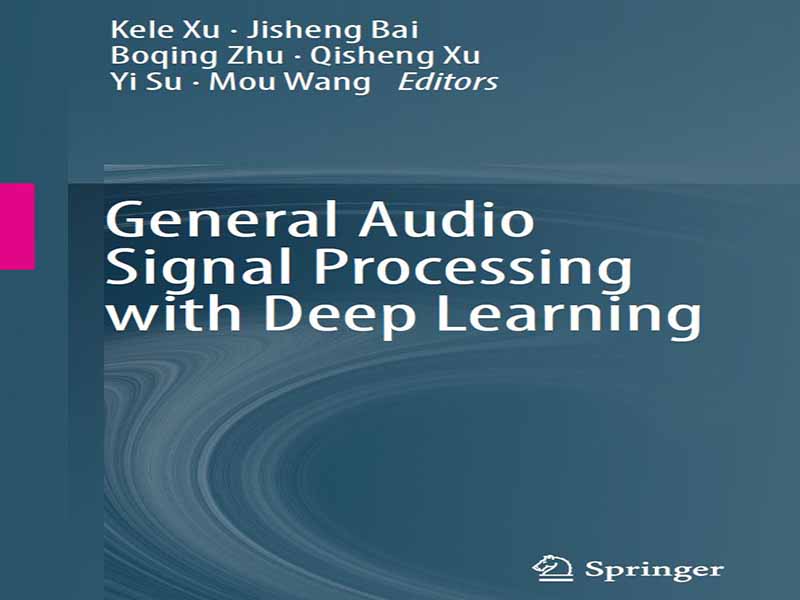
- عنوان کتاب: General Audio Signal Processing with Deep Learning
- نویسنده: Kele Xu, Jisheng Bai, Boqing Zhu
- حوزه: پردازش سیگنال
- سال انتشار: 2026
- تعداد صفحه: 896
- زبان اصلی: انگلیسی
- نوع فایل: pdf
- حجم فایل: 11.1 مگابایت
تلاقی یادگیری عمیق و پردازش سیگنال صوتی به عنوان یک حوزه تحقیقاتی پویا و تأثیرگذار، با پیامدهای قابل توجه برای پیشرفت نظری و کاربرد عملی، ظهور کرده است. این کتاب مروری بهموقع و جامع بر این حوزه پویا ارائه میدهد و مقدمهای قابل فهم و در عین حال عمیق از روششناسیهای کلیدی، چالشهای فعلی و روندهای نوظهور را در اختیار خوانندگان قرار میدهد. سیگنالهای صوتی نقش محوری در طیف وسیعی از حوزهها، از جمله تحلیل موسیقی، طبقهبندی صداهای محیطی، زیستصوتی، آکوستیک مراقبتهای بهداشتی و نظارت صنعتی ایفا میکنند. در حالی که تشخیص گفتار از نظر تاریخی یک حوزه کاربردی غالب بوده است، این کتاب عمداً تمرکز را از وظایف گفتارمحور دور میکند تا چشمانداز غنی پردازش سیگنال صوتی عمومی را برجسته کند. هدف ما بررسی چگونگی اعمال تکنیکهای یادگیری عمیق در حوزههای صوتی متنوع و اغلب کمتر نمایانده شده فراتر از زبان گفتاری است. روشهای سنتی پردازش سیگنال سهم قابل توجهی در تحلیل صدا داشتهاند، اما اغلب به ویژگیهای دستساز و اکتشافات خاص حوزه وابسته هستند. ظهور یادگیری عمیق اساساً این چشمانداز را متحول کرده و مدلها را قادر میسازد تا نمایشهای سلسله مراتبی و تطبیقی با وظیفه را مستقیماً از ورودیهای خام یا با حداقل پردازش یاد بگیرند. این رویکردها مزایای قانعکنندهای از نظر مقاومت در برابر نویز، مدلسازی دینامیک زمانی، مقیاسپذیری و سازگاری با وظایف و دامنههای جدید ارائه میدهند. این کتاب به گونهای ساختار یافته است که هم دانش بنیادی و هم بینشهای عملی را ارائه دهد. ما طیف وسیعی از معماریهای یادگیری عمیق – از جمله شبکههای عصبی کانولوشن (CNN)، شبکههای عصبی بازگشتی (RNN) و مدلهای مبتنی بر ترانسفورماتور – را بررسی میکنیم و کاربردهای آنها را در وظایف صوتی عمومی بررسی میکنیم. توجه ویژهای به پیشرفتهای اخیر در یادگیری بدون نظارت و خودنظارتی، به ویژه در محیطهایی که دادههای برچسبگذاری شده محدود یا گران هستند، معطوف شده است. در صورت لزوم، مثالها و مطالعات موردی مبتنی بر کاربرد برای پیوند نظریه و عمل ارائه شده است. هدف اصلی این کتاب ارائه دیدگاهی متعادل و واقعبینانه از این حوزه است: ما نه تنها قابلیتها و دستاوردهای یادگیری عمیق در صدا، بلکه محدودیتها، سوالات باز و زمینههای مناسب برای تحقیقات آینده را نیز پوشش میدهیم. ملاحظات عملی مانند پیشپردازش دادهها، پروتکلهای ارزیابی و استقرار مدل نیز مورد بحث قرار گرفته است که این کتاب را برای مطالعه دانشگاهی و توسعه کاربردی مناسب میسازد. با ادامهی تکامل این حوزه، امیدواریم این کتاب به عنوان منبعی ارزشمند برای محققان، دانشجویان و متخصصانی که مشتاق کاوش و مشارکت در یادگیری عمیق برای صوت عمومی هستند، مفید واقع شود. اگرچه هیچ کتاب واحدی نمیتواند وسعت کامل چنین حوزهی بهسرعت در حال پیشرفتی را در بر بگیرد، هدف ما ارائهی پایهای محکم و جهتگیریای روشن برای کاوشهای بیشتر است.
The intersection of deep learning and audio signal processing has emerged as a vibrant and impactful area of research, with significant implications for both theoretical advancement and practical application. This book provides a timely and comprehensive overview of this dynamic field, offering readers an accessible yet in-depth introduction to key methodologies, current challenges, and emerging trends. Audio signals play a central role in a wide range of domains, including music analysis, environmental sound classification, bioacoustics, healthcare acoustics, and industrial monitoring. While speech recognition has historically been a dominant application area, this book intentionally shifts the focus away from speech-centric tasks to highlight the rich landscape of general audio signal processing. Our aim is to explore how deep learning techniques can be applied to diverse and often underrepresented audio domains beyond spoken language. Traditional signal processing methods have made substantial contributions to audio analysis but often depend on handcrafted features and domain-specific heuristics. The rise of deep learning has fundamentally transformed this landscape, enabling models to learn hierarchical and task-adaptive representations directly from raw or minimally processed inputs. These approaches offer compelling advantages in terms of noise robustness, modeling temporal dynamics, scalability, and adaptability to new tasks and domains. This book is structured to provide both foundational knowledge and practical insights. We survey a range of deep learning architectures—including convolutional neural networks (CNNs), recurrent neural networks (RNNs), and transformer-based models—and examine their applications in general audio tasks. Special attention is given to recent advances in unsupervised and self-supervised learning, particularly relevant in settings where labeled data is limited or expensive to obtain. Where applicable, application-driven examples and case studies are presented to bridge theory and practice. A central goal of this book is to offer a balanced and realistic view of the field: we not only cover the capabilities and achievements of deep learning in audio, but also its limitations, open questions, and areas ripe for future research. Practical considerations such as data preprocessing, evaluation protocols, and model deployment are also discussed, making the book suitable for both academic study and applied development. As the field continues to evolve, we hope this book will serve as a valuable resource for researchers, students, and practitioners who are eager to explore and contribute to deep learning for general audio. While no single volume can encompass the full breadth of such a fast-moving domain, we aim to provide a solid foundation and a clear orientation for further exploration.
این کتاب را میتوانید از لینک زیر بصورت رایگان دانلود کنید:
Download: General Audio Signal Processing with Deep Learning
















نظرات کاربران