



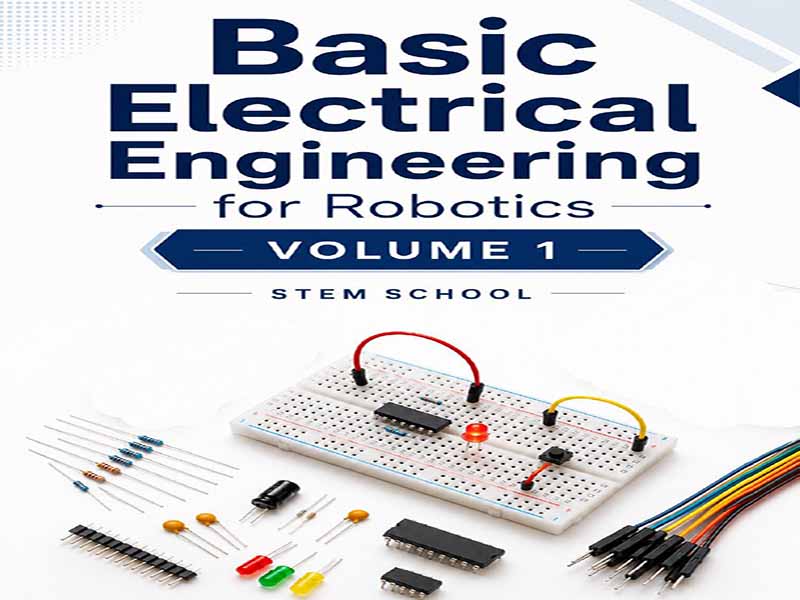
- عنوان کتاب: Basic Electrical Engineering for Robotics Volume 1
- نویسنده: SCHOOL, STEM
- حوزه: مهندسی الکترونیک
- سال انتشار: 2026
- تعداد صفحه: 236
- زبان اصلی: انگلیسی
- نوع فایل: pdf
- حجم فایل: 11.50 مگابایت
یک ربات اغلب با قطعات قابل مشاهدهاش مانند چرخها، بازوها، گیرهها، شاسی، حسگرها، دوربینها و مفاصل متحرک توصیف میشود. با این حال، در کار مهندسی واقعی، این قطعات قابل مشاهده تنها زمانی مفید میشوند که انرژی الکتریکی تحویل داده، کنترل، اندازهگیری، محافظت و به عمل مفید تبدیل شود. یک چرخ رباتیک به این دلیل نمیچرخد که چرخ از نظر مکانیکی گرد است؛ بلکه به این دلیل میچرخد که انرژی الکتریکی به یک موتور میرسد، سوئیچینگ الکترونیکی جریان را از طریق آن موتور کنترل میکند، دستورات نرمافزاری جهت و سرعت را تعریف میکنند و سیگنالهای بازخورد به کنترلکننده کمک میکنند تا تصمیم بگیرد که آیا حرکت صحیح است یا خیر. بنابراین، مهندسی برق یک موضوع جداگانه در کنار رباتیک نیست. این یکی از زبانهای اصلی است که از طریق آن یک ربات به عنوان یک ماشین فعال زنده میشود. در رباتیک، مهندسی برق پایه تقریباً در هر تصمیم عملی ظاهر میشود. وقتی دانشجویی یک LED را به یک میکروکنترلر وصل میکند، مهندسی برق تصمیم میگیرد که آیا LED به طور ایمن روشن میشود یا میسوزد. وقتی یک ربات متحرک هر بار که موتورهایش روشن میشوند، دوباره تنظیم میشود، مهندسی برق افت ولتاژ، افزایش جریان، اختلال زمین و جداسازی توان را توضیح میدهد. وقتی یک حسگر خوانشهای ناپایداری میدهد، مهندسی برق به تشخیص نویز، پینهای ورودی شناور، اتصال زمین ضعیف، فیلتر ناکافی یا مرجع ولتاژ اشتباه کمک میکند. وقتی یک ربات باید در یک کارگاه، کارخانه، آزمایشگاه مدرسه، انبار، مزرعه کشاورزی یا محیط خانه کار کند، مهندسی برق تعیین میکند که آیا سیستم ایمن، قابل اعتماد، قابل استفاده و کارآمد است یا خیر. این فصل آغازین، دیدگاه سطح سیستم مورد نیاز قبل از مطالعه مدارهای دقیق را ایجاد میکند. هدف این نیست که فرمولهای زیادی را به طور همزمان حفظ کنید. هدف این است که بفهمید کمیتهای الکتریکی در سیستمهای رباتیک واقعی چگونه رفتار میکنند و چرا مهندسان ولتاژ، جریان، مقاومت، توان، اتصال به زمین، سوئیچینگ، جریان سیگنال و حفاظت را به عنوان ابزارهای طراحی عملی در نظر میگیرند. یک یادگیرنده رباتیک که این ایدهها را درک میکند، میتواند نمودارهای مدار را هوشمندانهتر بخواند، اجزا را با مسئولیتپذیری بیشتری انتخاب کند، نمونههای اولیه را با خیال راحتتر آزمایش کند، سریعتر خطاها را اشکالزدایی کند و نظریه الکتریکی را با مکانیک، برنامهنویسی، کنترل، حسگرها، محرکها و گردش کار صنعتی مرتبط کند. در پایان این فصل، دانشآموزان باید بتوانند معماری الکتریکی یک ربات ساده را توصیف کنند، مدارهای قدرت را از مدارهای سیگنال تشخیص دهند، الزامات جریان و توان را تخمین بزنند، بفهمند که چرا اتصال به زمین بر اندازهگیری و کنترل تأثیر میگذارد، توضیح دهند که چگونه انرژی الکتریکی از باتری به زیرسیستمهای ربات منتقل میشود و یک گردش کار مهندسی عملی را از مفهوم تا نمونه اولیه آزمایش شده دنبال کنند. این فصل همچنین خواننده را برای مباحث بعدی مانند قوانین مدار، اجزا، طراحی توان، رابط حسگر، کنترل موتور، رابطهای تعبیهشده، شبیهسازی، ایمنی و یکپارچهسازی کامل سیستم ربات آماده میکند.
A robot is often described by its visible parts like wheels, arms, grippers, chassis, sensors, cameras and moving joints. In real engineering work, however, those visible parts only become useful when electrical energy is delivered, controlled, measured, protected and converted into useful action. A robotic wheel does not rotate because the wheel is mechanically round; it rotates because electrical power reaches a motor, switching electronics control current through that motor, software commands define direction and speed and feedback signals help the controller decide whether the motion is correct. Electrical engineering is therefore not a separate subject placed beside robotics. It is one of the central languages through which a robot becomes alive as a functioning machine. In robotics, basic electrical engineering appears in almost every practical decision. When a student connects an LED to a microcontroller, electrical engineering decides whether the LED glows safely or burns out. When a mobile robot resets every time its motors start, electrical engineering explains voltage drop, current surge, ground disturbance and power separation. When a sensor gives unstable readings, electrical engineering helps diagnose noise, floating input pins, poor grounding, insufficient filtering or wrong voltage reference. When a robot must operate in a workshop, factory, school laboratory, warehouse, agricultural field or home environment, electrical engineering determines whether the system is safe, reliable, serviceable and efficient. This opening chapter builds the system-level view needed before studying detailed circuits. The goal is not to memorize many formulas at once. The goal is to understand how electrical quantities behave inside real robotic systems and why engineers treat voltage, current, resistance, power, grounding, switching, signal flow and protection as practical design tools. A robotics learner who understands these ideas can read circuit diagrams more intelligently, choose components more responsibly, test prototypes more safely, debug failures faster and connect electrical theory with mechanics, programming, control, sensors, actuators and industrial workflow. By the end of this chapter, students should be able to describe the electrical architecture of a simple robot, distinguish power circuits from signal circuits, estimate current and power requirements, understand why grounding affects both measurement and control, explain how electrical energy moves from a battery to the robot’s subsystems and follow a practical engineering workflow from concept to tested prototype. The chapter also prepares the reader for later topics such as circuit laws, components, power design, sensor interfacing, motor control, embedded interfaces, simulation, safety and complete robot system integration.
این کتاب را میتوانید از لینک زیر بصورت رایگان دانلود کنید:
Download: Basic Electrical Engineering for Robotics Volume 1
















نظرات کاربران