



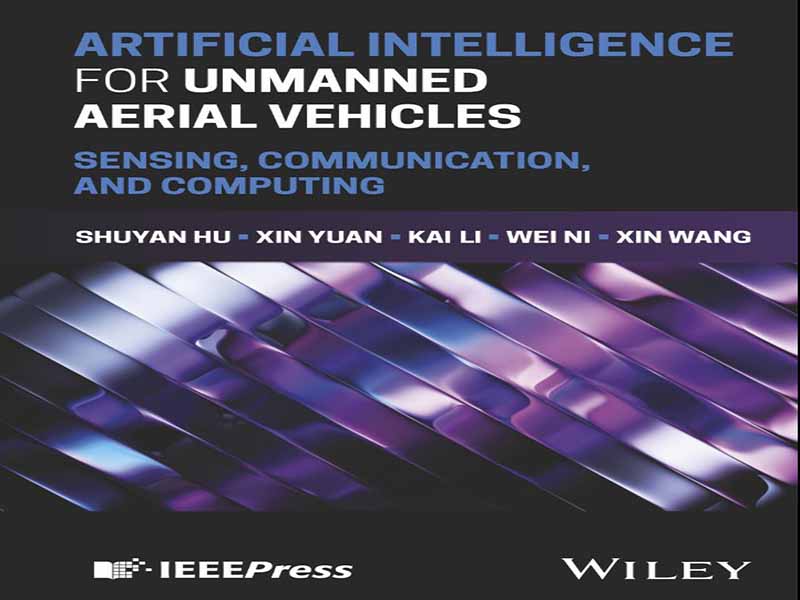
- عنوان کتاب: Artificial Intelligence for Unmanned Aerial Vehicles
- نویسنده: Shuyan Hu, Kai Li, Xin Yuan, Wei Ni
- حوزه: هواپیمای بدون سرنشین
- سال انتشار: 2026
- تعداد صفحه: 415
- زبان اصلی: انگلیسی
- نوع فایل: pdf
- حجم فایل: 8.82 مگابایت
وسایل نقلیه هوایی بدون سرنشین (UAV) به سرعت در حال تبدیل شدن به عوامل هوشمند و خودمختار هستند که کاربردهای نظارتی، نظارت بر محیط زیست، واکنش به بلایا و ارتباطات بیسیم را متحول میکنند. این کتاب، با تمرکز بر قابلیتهای حسگری، ارتباطی، محاسباتی و هوش مصنوعی (AI)، به بررسی جامع و سیستماتیک فناوریهای بنیادی و نوظهوری میپردازد که پهپادها را توانمند میسازند. این کتاب، کاوشی عمیق در شبکههای پهپاد در محیطهای سهبعدی، از جمله طراحی مسیر، کاهش تداخل، بهرهوری انرژی و ارتباطات ایمن، ارائه میدهد. این کتاب به طور منحصر به فردی به رفتار پهپادهای متخاصم میپردازد و تهدیدات استراق سمع و حملات گروهی مشارکتی را از دیدگاه نظریه اطلاعات و پردازش سیگنال تجزیه و تحلیل میکند. تأکید اصلی بر نقش متحولکننده هوش مصنوعی – از جمله یادگیری عمیق، یادگیری تقویتی و مدلهای عصبی گراف – در امکانپذیر کردن برنامهریزی مسیر تطبیقی، تصمیمگیری در زمان واقعی، محاسبات لبهای و نظارت خودمختار است. مباحث پیشرفتهای مانند سطوح هوشمند قابل پیکربندی مجدد، حسگری و ارتباط مشترک و نظارت پنهان با پهپاد، با استفاده از چارچوبهای پیشرفته بهینهسازی و یادگیری، مانند گرادیانهای سیاست قطعی عمیق (DDPG) و DDPG با تأخیر دوقلو (TD3)، به دقت مورد تجزیه و تحلیل قرار گرفتهاند. نتایج شبیهسازی گسترده و معیارهای عملکرد برای اعتبارسنجی مفاهیم کلیدی و ارزیابی عملی بودن آنها در استقرارهای دنیای واقعی ارائه شده است. این کتاب با پیوند دادن مبانی نظری با تحقیقات کاربردی، نه تنها پیشرفتهای فعلی را تثبیت میکند، بلکه نقشه راهی برای نوآوریهای آینده در سیستمهای پهپاد انعطافپذیر، هوشمند و مشارکتی ارائه میدهد. این کتاب عصر جدیدی را تصور میکند که در آن پهپادها به طور یکپارچه هوش مصنوعی، محاسبات لبهای و شبکههای بیسیم نسل بعدی را برای عملکرد مستقل در محیطهای پیچیده و پویا ادغام میکنند. از آنجایی که پلتفرمهای هوایی به طور فزایندهای در شهرهای هوشمند، واکنش اضطراری، پایداری محیطی و ارتباطات نسل ششم (6G) نقش محوری پیدا میکنند، این اثر محققان، مهندسان و متخصصان را به دانش لازم برای پیشگامی در موج بعدی پیشرفتها در خودمختاری هوایی و زیرساختهای هوشمند هوایی مجهز میکند.
Unmanned aerial vehicles (UAVs) are rapidly evolving into intelligent, autonomous agents revolutionizing applications in surveillance, environmental monitoring, disaster response, and wireless communications. This book provides a comprehensive and systematic treatment of the foundational and emerging technologies that empower UAVs—focusing on their sensing, communication, computing, and artificial intelligence (AI) capabilities. It offers an in-depth exploration of UAV networks in three-dimensional environments, including trajectory design, interference mitigation, energy efficiency, and secure communication. The book uniquely addresses adversarial UAV behavior, analyzing eavesdropping threats and cooperative swarm attacks from an information-theoretic and signal-processing perspective. A core emphasis is placed on the transformative role of AI—including deep learning, reinforcement learning, and graph neural models—in enabling adaptive path planning, real-time decision-making, edge computing, and autonomous surveillance. Cutting-edge topics such as reconfigurable intelligent surfaces, joint sensing and communication, and UAV-enabled covert monitoring are rigorously analyzed using advanced optimization and learning frameworks, such as deep deterministic policy gradients (DDPG) and twin-delayed DDPG (TD3). Extensive simulation results and performance benchmarks are presented to validate key concepts and assess their practicality in real-world deployments. By bridging theoretical foundations with applied research, this book not only consolidates current advancements but also lays a roadmap for future innovations in resilient, intelligent, and collaborative UAV systems. It envisions a new era where UAVs seamlessly integrate AI, edge computing, and next-generation wireless networks to operate autonomously in complex and dynamic environments. As aerial platforms become increasingly central to smart cities, emergency response, environmental sustainability, and sixth-generation (6G) communications, this work equips researchers, engineers, and practitioners with the knowledge to pioneer the next wave of breakthroughs in aerial autonomy and intelligent skyborne infrastructure.
این کتاب را میتوانید از لینک زیر بصورت رایگان دانلود کنید:
Download: Artificial Intelligence for Unmanned Aerial Vehicles
















نظرات کاربران