



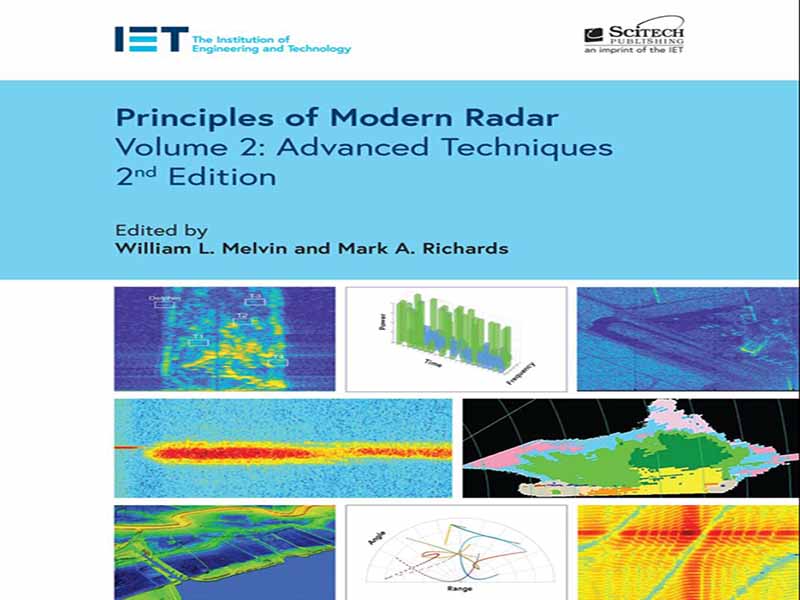
- عنوان کتاب: Principles of Modern Radar, Volume 2
- نویسنده: William L. Melvin, Mark A. Richards
- حوزه: رادار
- سال انتشار: 2026
- تعداد صفحه: 1225
- زبان اصلی: انگلیسی
- نوع فایل: pdf
- حجم فایل: 76.1 مگابایت
فناوری رادار به سرعت در حال تکامل است و این امر تحت تأثیر چندین روند مهم قرار دارد. روند اصلی، پیشرفت سریع و مداوم فرکانس رادیویی (RF) و فناوری دیجیتال است. این امر به نوبه خود، مهاجرت مداوم نقطه دیجیتالی شدن به سمت آنتن رادار را ممکن ساخته و به نوبه خود امکان انجام هرچه بیشتر عملکردهای رادار را به صورت دیجیتالی به جای استفاده از تکنیکهای آنالوگ فراهم میکند. چنین سیستمهای «رادار محاسباتی» میتوانند از تکنیکها و الگوریتمهای جدیدتر و پیشرفتهتری برای ایجاد سیستمهایی با الگوریتمهای پردازش سیگنال پیشرفتهتر و مهمتر، فرآیندهای پیکربندی و کنترل پیچیدهتر و تطبیقیتر استفاده کنند. ده سال پس از انتشار نسخه اول، برای ناشر، IET، و ویراستاران آشکار شد که برای همگام شدن با توسعه رادار و حفظ ادعای نمایندگی رادار مدرن، به نسخه جدیدی از هر سه جلد نیاز است. برنامهریزی برای نسخه دوم در اوایل سال 2020 آغاز شد و کار بر روی جلد اول، POMR: اصول اساسی، در همان سال آغاز شد. نسخه دوم اصول اساسی در سال 2022 تکمیل و منتشر شد و موفقیت نسخه اول را ادامه میدهد. این ویرایش دوم از جلد دوم، اصول رادار مدرن: تکنیکهای پیشرفته (POMR:AT)، دوازده سال پس از نسخه اصلی سال ۲۰۱۳ منتشر شده است. از بین این سه جلد، این جلد، همانطور که از عنوانش پیداست، بیشترین تمرکز را بر الگوریتمهای پیشرفته و تکنیکهای پردازش دارد. به همین دلیل، شاید بیشترین تأثیر را از تکامل سریع دیجیتال رادار که در بالا توضیح داده شد، پذیرفته و از ویرایش اول تا ویرایش دوم بیشترین تغییر را داشته است. بارزترین تأثیر افزایش قابلیت پردازش بر POMR:AT، اضافه شدن فصلهای کاملاً جدید در مورد اشتراکگذاری طیف، یادگیری ماشین در رادار و رادار شناختی است. تعداد سرویسهای ارتباطی بیسیم و سیستمهای راداری که برای تخصیص طیف رقابت میکنند، در طول دهه گذشته به سرعت افزایش یافته است و پایانی برای آن متصور نیست. نیاز به همزیستی آنها، الزامات و تکنیکهای مورد بررسی در فصل ۵ در مورد اشتراکگذاری طیف را به یک ملاحظه اساسی در طراحی رادار مدرن تبدیل کرده است. همانند بسیاری از حوزههای فناوری دیگر، ظهور اخیر و جهش سریع هوش مصنوعی (AI) و یادگیری ماشین (ML) به عنوان یک الگوی جدید برای استخراج اطلاعات از دادهها در سناریوهای پیچیده حسگری و پردازش، روشهای جدیدی را برای پرداختن به مشکلات دیرینه به جامعه رادار ارائه میدهد. این ویرایش فصلهایی را اضافه میکند که به کاربرد هوش مصنوعی و یادگیری ماشین در رادار در دو سطح مختلف میپردازند. فصل ۱۷ یک آموزش پایه در مورد تکنیکهای یادگیری ماشین ارائه میدهد و مثالهای کاربردی مانند تشخیص پیشرفته در تداخل فرکانس رادیویی (RFI) و محیطهای درهمریخته، بهبود تشخیص هدف و بهبود تصویر رادار و موارد دیگر را مورد بحث قرار میدهد. فصل ۱۸ در مورد رادار شناختی به پیکربندی و کنترل سیستم در سطح بالاتر برای بهبود تصمیمگیری استراتژیک سیستم میپردازد. رادارهای پیشرفته سیستمهای بسیار پویایی هستند که قادر به کاوش محیط خود و تنظیم فرکانسها، شکل موجها، الگوهای آنتن و موارد دیگر برای بهینهسازی دادههای جمعآوریشده و به حداکثر رساندن عملکرد هستند. این فصل توضیح میدهد که چگونه تکنیکهای رباتیک و یادگیری ماشین برای تحقق پتانسیل این سیستمها به کار گرفته میشوند.
Radar technology has continued to evolve rapidly, driven by several important trends. The root trend is the continued rapid advance of radio frequency (RF) and digital technology. This in turn has enabled the continued migration of the point of digitization toward the radar antenna, in turn allowing ever more of the radar functionality to be performed digitally rather than using analog techniques. Such “computed radar” systems can employ newer, more advanced techniques and algorithms to create systems with more advanced signal processing algorithms and, importantly, more complex and adaptive configuration and control processes. Ten years after publication of the first edition, it became evident to the publisher, IET, and the editors that a new edition of all three volumes was needed to keep pace with radar development and maintain the claim of representing modern radar. Planning for the second edition began in early 2020, and work commenced on the first volume, POMR: Basic Principles, that same year. The second edition of Basic Principles was completed and published in 2022 and is continuing the success of the first edition. This second edition of the second volume, Principles of Modern Radar: Advanced Techniques (POMR:AT), follows the 2013 original by twelve years. Of the three volumes, this one, as emphasized by its title, has the sharpest focus on advanced algorithms and processing techniques. As such, it is perhaps most affected by the rapid digital evolution of radar described above, and so has changed the most from the first to the second edition. The most obvious impact of increasing processing capability on POMR:AT is the addition of entire new chapters on spectrum sharing, machine learning in radar, and cognitive radar. The number of wireless communication services and radar systems competing for spectrum allocations has grown rapidly over the last decade, with no end in sight. The need for their coexistence has made requirements and techniques considered in Chapter 5 on spectrum sharing an essential design consideration in modern radar. As with many other technology areas, the recent emergence and meteoric rise of artificial intelligence (AI) and machine learning (ML) as a new paradigm for extracting information from data in complex sensing and processing scenarios offers the radar community new ways of addressing long-standing problems. This edition adds chapters addressing the application of AI and ML to radar at two different levels. Chapter 17 provides a basic tutorial on ML techniques and discusses usage examples such as enhanced detection in radio frequency interference (RFI) and clutter environments, improved target recognition and radar image enhancement, and others. Chapter 18 on cognitive radar addresses higher-level system configuration and control to improve system strategic decision-making. Advanced radars are highly dynamic systems able to probe their environment and adjust their frequencies, waveforms, antenna patterns, and more to optimize the collected data and maximize performance. This chapter describes how techniques from robotics and machine learning are being adopted to realize the potential of these systems.
این کتاب را میتوانید از لینک زیر بصورت رایگان دانلود کنید:
Download: Principles of Modern Radar, Volume 2















نظرات کاربران