



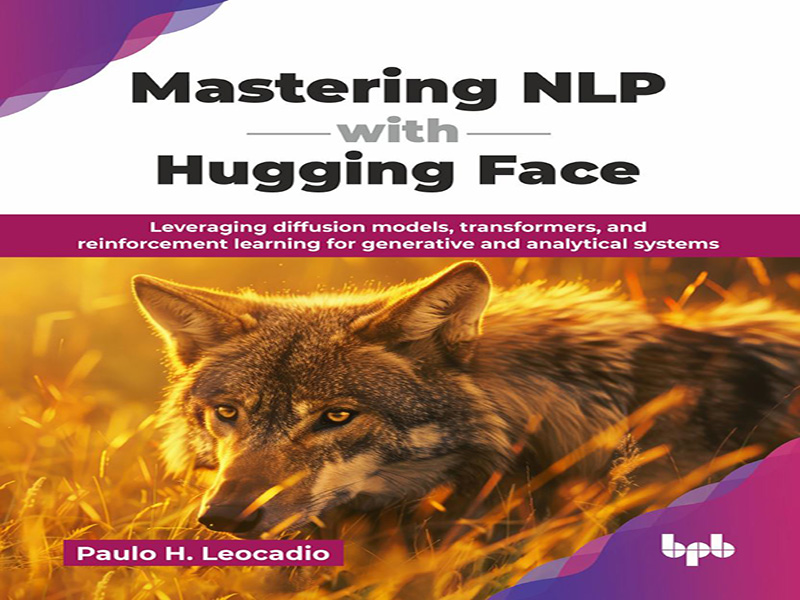
- عنوان کتاب: Mastering NLP with Hugging Face
- نویسنده: Paulo H. Leocadio
- حوزه: پردازش زبان طبیعی
- سال انتشار: 2026
- تعداد صفحه: 371
- زبان اصلی: انگلیسی
- نوع فایل: pdf
- حجم فایل: 9.98 مگابایت
در میان دولتها، صنایع و خانوارها، ایده هوش مصنوعی به دو قطب مخالف کشیده شده است؛ از پیشبینیهای بزرگ مبنی بر اینکه میلیونها شغل از بین خواهند رفت، تا هشدارهای آخرالزمانی مبنی بر اینکه ماشینها بشریت را به بردگی خواهند گرفت، و تا این فرض ساده که هوش مصنوعی چیزی بیش از یک چتبات آموزشدیده برای پاسخ به شکایات نیست. جایی در میان این تحریفات، رشته واقعی، مجموعهای دقیق از مهندسی، ریاضیات، معماری شناختی و طراحی سیستمها، نهفته است. سفر من به این حوزه با خود یادگیری ماشین آغاز نشد، بلکه با پایههایی که آن را ساختند، همراه بود. در طول دههها، من به عنوان یک مهندس الکترونیک و علوم کامپیوتر کار کردم و اجزای سطح پایینی مانند ماژولهای CPU، آداپتورهای ویدیویی، روالهای اولیه سیستم عامل و درایورهای دستگاه را طراحی کردم که زمانی به سادگی به عنوان هندلر شناخته میشدند. بعداً طیف گستردهای از نقشها، از جمله مهندسی سیستمها، مشاوره سازمانی، رهبری پشتیبانی جهانی، معماری ابری و تحول دولت دیجیتال را در قارههای مختلف تجربه کردم. هیچ یک از این تجربیات با هدف آماده شدن برای هوش مصنوعی انتخاب نشده بودند، اما در مجموع، قوسی ناگسستنی از درک را در مورد چگونگی رفتار سیستمها، چگونگی انتشار خطاها، چگونگی تصمیمگیری تحت محدودیتها و چگونگی ظهور هوش از ساختار و بازخورد تشکیل دادند. همین کنجکاوی در نهایت منجر به علاقه به مهندسی زیستپزشکی شد. با علاقه دیرینه به دستگاههای قابل کاشت برای درمان آریتمی قلبی، آزمایشگاه تحقیقاتی خودم را تأسیس کردم تا بررسی کنم که چگونه یادگیری ماشین میتواند ضربانسازها و اکوسیستمهای قلبی مرتبط را تقویت کند. این کار به طور طبیعی به سمت استقلال، ایمنی و هوش انسانمحور، حوزههایی که عمیقاً با مدلهای انتشار، ترانسفورماتورها و یادگیری تقویتی مرتبط هستند، تغییر جهت داد. با بالغ شدن این تحقیق، من شروع به دریافت دعوتنامههایی برای انتشار مقالات، ارائه فصلها و نوشتن کتابهایی کردم که مهندسی دقیق را با سیستمهای هوش مصنوعی مدرن پیوند میداد. این کتاب با این روحیه نوشته شده است. این کتاب با هوش مصنوعی به عنوان جادو، حدس و گمان یا سرگرمی رفتار نمیکند. این کتاب با هوش مصنوعی به عنوان یک رشته مهندسی رفتار میکند، رشتهای که نیاز به ساختار، روش علمی، مرزهای اخلاقی و احترام عمیق به سیستمهایی که در حال شکل دادن به آنها هستیم، دارد. پخشکنندههای چهره در آغوش گیرنده به عنوان پایه ایدهآل برای این کاوش پدیدار شدند. آنچه که به عنوان یک کتابخانه برای تصویربرداری مولد آغاز شد، به یک چارچوب جامع برای خطوط لوله، زمانبندیها، استدلال چندوجهی و ادغامهای یادگیری تقویتی تبدیل شد. پخشکنندهها در تقاطع معماری مدل، مهندسی در مقیاس ابری و هوش کاربردی قرار دارند، دقیقاً همان جایی که تحقیقات مدرن هوش مصنوعی به سمت آن میرود. این کتاب با هدف ارائه شفافیت در مورد نحوه کار مدلهای انتشار، نحوه ادغام ترانسفورماتورها با آنها، نحوه تکمیل یادگیری تقویتی هر دو و نحوه گسترش این ایدهها فراتر از متن و تصاویر به تصمیمگیری، شبیهسازی و سیستمهای خودمختار، برای خوانندگان نوشته شده است. این کتاب مسیری ساختاریافته از مفاهیم بنیادی تا پیادهسازیهای پیشرفته را با نمایشهای عملی و توضیحات دقیق در هر مرحله ارائه میدهد. فصل 1: مقدمهای بر کتابخانه پخشکنندههای چهره در آغوش – این فصل مفاهیم اصلی پشت مدلهای انتشار و کتابخانه پخشکنندههای چهره در آغوش را معرفی میکند. همچنین اصطلاحات بنیادی، اجزای معماری و مدلهای ذهنی مورد استفاده در سراسر کتاب را مشخص میکند. فصل 2: استفاده از پخشکنندههای چهره در آغوش برای طبقهبندی متن – این فصل نشان میدهد که چگونه میتوان مدلهای مبتنی بر انتشار و مبتنی بر ترانسفورماتور را در وظایف طبقهبندی متن به کار برد. همچنین بر گردشهای کاری عملی، الگوهای استفاده از مدل و آزمایشهای تکرارپذیر تمرکز دارد. فصل 3: وظایف مولد پیشرفته با پخشکنندههای چهره در آغوش – این فصل به بررسی برنامههای مولد پیشرفته پشتیبانی شده توسط پخشکنندهها، از جمله تولید متن به تصویر و چندوجهی، میپردازد. این فصل بیشتر بر طراحی وظیفه، محدودیتها و گردشهای کاری مولد کاربردی تأکید دارد. فصل 4: برچسبگذاری توالی با پخشکنندههای چهره در آغوش – این فصل وظایف برچسبگذاری توالی مانند تشخیص موجودیت نامدار (NER) و برچسبگذاری اجزای کلام (PoS) را پوشش میدهد. این فصل همچنین رویکردهای کلاسیک و مبتنی بر مبدل، روشهای ارزیابی و مثالهای پیادهسازی عملی را ارائه میدهد. فصل 5: یادگیری انتقالی برای وظایف NLP – این فصل به بررسی چگونگی تطبیق مدلهای از پیش آموزشدیده با وظایف NLP پاییندست با استفاده از یادگیری انتقالی میپردازد. این فصل همچنین دارای مباحثی است که شامل استخراج ویژگی، استراتژیهای تنظیم دقیق، انجماد لایه و مطالعات موردی کاربردی میشود. فصل 6: خطوط لوله در پخشکنندههای چهره در آغوش – این فصل خطوط لوله پخشکنندهها را به عنوان انتزاعهای ساختاریافته برای آموزش و استنتاج معرفی میکند. در ادامه به ترکیب خط لوله، استفاده مجدد و ادغام در گردشهای کاری بزرگتر هوش مصنوعی پرداخته میشود. فصل 7: زمانبندها در پخشکنندههای چهره در آغوش – این فصل بر مکانیسمهای زمانبند که فرآیند حذف نویز و بهینهسازی را کنترل میکنند، تمرکز دارد. این فصل همچنین توضیح میدهد که چگونه انتخاب زمانبند بر پایداری آموزش، همگرایی و استنتاج تأثیر میگذارد.
Across governments, industries, and households, the idea of AI has been stretched between extremes; from grand predictions that millions of jobs will vanish, to apocalyptic warnings that machines will enslave humanity, to the casual assumption that AI is nothing more than a chatbot trained to answer complaints. Somewhere between these distortions lies the actual discipline, a rigorous body of engineering, mathematics, cognitive architecture, and systems design. My journey into this field did not begin with machine learning itself, but with the foundations that built it. Over the decades, I worked as an electronic and computer sciences engineer, designing low-level components such as CPU modules, video adapters, early operating-system routines, and device drivers, which were once known simply as handlers. I later moved through a wide spectrum of roles, including systems engineering, enterprise consulting, global support leadership, cloud architecture, and digital government transformation across multiple continents. None of these experiences was chosen with the intention of preparing for AI, yet collectively they formed an unbroken arc of understanding, regarding how systems behave, how failures propagate, how decisions are made under constraint, and how intelligence emerges from structure and feedback. That same curiosity eventually led to an interest in biomedical engineering. With a longstanding interest in implantable devices for cardiac arrhythmia treatment, I established my own research laboratory to explore how machine learning can augment pacemakers and related cardiac ecosystems. This work shifted naturally toward autonomy, safety, and human-centered intelligence, areas deeply connected to diffusion models, transformers, and reinforcement learning. As this research matured, I began receiving invitations to publish articles, contribute chapters, and write books that bridged rigorous engineering with modern AI systems. This book was written in that spirit. It does not treat AI as magic, speculation, or entertainment. It treats AI as an engineering discipline, one that requires structure, scientific method, ethical boundaries, and a deep respect for the systems we are shaping. Hugging Face Diffusers emerged as the ideal foundation for this exploration. What began as a library for generative imaging evolved into a comprehensive framework for pipelines, schedulers, multimodal reasoning, and reinforcement learning integrations. Diffusers sit at the intersection of model architecture, cloud-scale engineering, and applied intelligence, exactly where modern AI research is heading. For readers, this book aims to provide clarity, regarding how diffusion models work, how transformers integrate with them, how reinforcement learning complements both, and how these ideas extend beyond text and images into decision-making, simulation, and autonomous systems. It offers a structured path from foundational concepts to advanced implementations, with practical demonstrations and rigorous explanations at every stage. Chapter 1: Introduction to Hugging Face Diffusers Library- This chapter introduces the core concepts behind diffusion models and the Hugging Face Diffusers library. It also establishes the foundational terminology, architectural components, and mental models used throughout the book. Chapter 2: Utilizing Hugging Face Diffusers for Text Classification- This chapter demonstrates how diffusion-based and transformer-based models can be applied to text classification tasks. It also focuses on the practical workflows, model usage patterns, and reproducible experimentation. Chapter 3: Advanced Generative Tasks with Hugging Face Diffusers- This chapter explores advanced generative applications supported by Diffusers, including text-to-image and multimodal generation. The chapter further emphasizes on task design, constraints, and applied generative workflows. Chapter 4: Sequence Labeling with Hugging Face Diffusers- This chapter covers sequence labeling tasks such as named entity recognition (NER) and part-of-speech (PoS) tagging. The chapter also presents classical and transformer-based approaches, evaluation methods, and practical implementation examples. Chapter 5: Transfer Learning for NLP Tasks- This chapter examines how pre-trained models are adapted to downstream NLP tasks using transfer learning. The chapter also has topics that include feature extraction, fine-tuning strategies, layer freezing, and applied case studies. Chapter 6: Pipelines in Hugging Face Diffusers- This chapter introduces Diffusers pipelines as structured abstractions for training and inference. It further discusses pipeline composition, reuse, and integration within larger AI workflows. Chapter 7: Schedulers in Hugging Face Diffusers- This chapter focuses on scheduler mechanisms that control the denoising and optimization process. The chapter further explains how scheduler choice impacts training stability, convergence, and inference behavior. Chapter 8: Advanced Inference Techniques- This chapter presents advanced inference strategies and real-world deployment considerations. It also includes applied scenarios across domains such as cybersecurity, generative systems, and autonomous workflows. Chapter 9: Build Your Own AlphaZero AI- This chapter introduces the AlphaZero framework and its core principles. The chapter further covers self-play, Monte Carlo Tree Search, and policy/value learning through practical examples. Chapter 10: Deep Q-Network and Atari Games- This chapter explains Deep Q-Networks and their application to game environments. The chapter also covers replay buffers, target networks, exploration strategies, and performance considerations. Chapter 11: Asynchronous Actor-Critic with Gym-Retro- This chapter examines asynchronous reinforcement learning using the A3C algorithm. It focuses on parallel training, environment scaling, and stabilization techniques. Chapter 12: Road Ahead- This chapter concludes the book with a forward-looking discussion on ethics, safety, governance, and future directions for AI systems, framing AI as a disciplined and responsible engineering field.
این کتاب را میتوانید از لینک زیر بصورت رایگان دانلود کنید:
Download: Mastering NLP with Hugging Face
















نظرات کاربران