



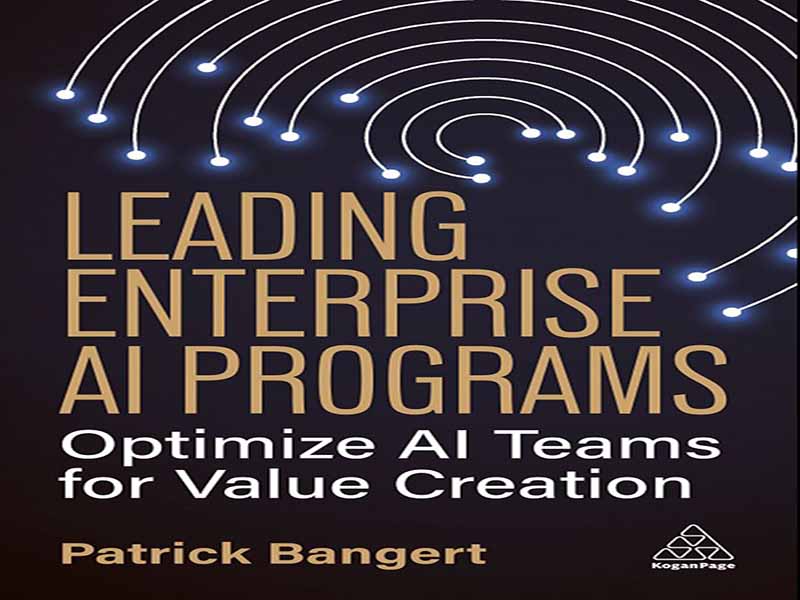
- عنوان کتاب: Leading Enterprise AI Programs -Optimize AI Teams for Value Creation
- نویسنده: Patrick Bangert
- حوزه: مدیریت تیم
- سال انتشار: 2026
- تعداد صفحه: 391
- زبان اصلی: انگلیسی
- نوع فایل: pdf
- حجم فایل: 4.65 مگابایت
این کتاب راهنما برای همه کسانی است که مایل به رهبری تیمی از متخصصان با استفاده از هوش مصنوعی (AI) برای ایجاد ارزش تجاری واقعی و پایدار در یک شرکت هستند. این کتاب، نه به عنوان یک شاخه علمی ریاضیات و نه به عنوان یک موضوع فناوری در قالب نرمافزار، در مورد هوش مصنوعی نیست. بلکه بیشتر کتابی در مورد رهبری در زمینه ملموس هوش مصنوعی است. پروژههای هوش مصنوعی عمدتاً به سه دلیل در ارائه ارزش تجاری شکست میخورند: ۱. کاربران به دلایل مختلف نمیخواهند از نرمافزاری که مدل هوش مصنوعی را برای آنها به ارمغان میآورد استفاده کنند. ۲. کاربران میخواهند از آن استفاده کنند اما نمیتوانند به طور کارآمد یا مؤثر این کار را انجام دهند زیرا رابط کاربری، چه برای کاربر و چه برای فرآیند کسبوکار، به نوعی دست و پا گیر است. ۳. برنامه هوش مصنوعی مشکلی را حل میکند که هیچ کس ندارد یا بهتر است بگوییم فقط بخشی از مشکل واقعی یا نسخه متفاوتی از آن را حل میکند. در اصل، این کتاب راهنمایی در مورد چگونگی اجتناب از این سه علت اصلی مرگ پروژههای هوش مصنوعی است. در حالی که اجتناب از آنها موفقیت را تضمین نمیکند، اما شانس شما را در پروژههای فردی تا ده برابر افزایش میدهد. این کتاب علاوه بر بررسی پروژههای منفرد، واقعیت یک برنامه و تیم هوش مصنوعی سازمانی را که دارای مجموعهای از پروژهها با الزامات تکنولوژیکی همپوشانی و اولویتهای متناقض است، مورد بحث قرار میدهد. از آنجایی که هدف کلی سازمانی شما لزوماً موفقیت در هر پروژه نیست، بلکه موفقیت کلی برنامه هوش مصنوعی متشکل از پروژههای متعدد است، اکنون موفقیت عملاً تضمین شده است. اصل اساسی، تمرکز بیوقفه بر ارزش تجاری است. هوش مصنوعی نباید به دلیل زرق و برق، مدرن بودن یا جدیدترین تبلیغات دنبال شود، بلکه باید به صورت جراحی در جایی که به عنوان ابزاری برای حل یک مشکل واقعی منطقی است، مورد استفاده قرار گیرد. ارزش تنها در صورتی حاصل میشود که کاربران از محصولی که شما میسازید استفاده کنند. برای اینکه این امر مؤثر باشد، محصول باید به طور کامل در فرآیند گستردهتر ادغام شود و شما باید در بین گروه کاربران اعتماد ایجاد کنید. اعتماد از یک سو، اعتماد کاربر به خروجی برنامه هوش مصنوعی است و از سوی دیگر، اعتماد به این است که هدف برنامه هوش مصنوعی، اخراج همان کاربرانی نیست که با آنها سر و کار دارید. برای این منظور، تیم هوش مصنوعی باید مهارتهای قوی در مدیریت تغییر، همدلی و آموزش ایجاد کند. دانشمندان هوش مصنوعی میخواهند مدلهای خود را بهبود بخشند و به رکوردهای دقت برسند. اگرچه این خوب است، اما انجام کار بهتر از بینقص بودن است. تیم هوش مصنوعی باید استانداردهایی را برای زمانی که یک نتیجه به اندازه کافی خوب است، در نظر بگیرد و سپس به کار خود ادامه دهد، زیرا هدف، تعالی علمی نیست، بلکه ارزش تجاری است. بینشهای کلیدی کتاب عبارتند از: ۱. با یک چشمانداز روشن، شفاف و ملموس از آنچه برنامه هوش مصنوعی برای کل شرکت ارائه خواهد داد – یک استراتژی هوش مصنوعی سازمانی – شروع کنید. ۲. یک تیم و یک مدل عملیاتی ایجاد کنید که بتواند آن استراتژی را ارائه دهد. ۳. با جستجوی چالشهایی که در حال حاضر کسب و کار با آنها مواجه است و میتوانند به طور معناداری توسط هوش مصنوعی حل شوند، موارد استفاده را شناسایی کنید و آنها را در یک سبد اولویتبندی شده گردآوری کنید. ۴. یک زیرساخت جامع برای استقرار مدلهای هوش مصنوعی مورد نیاز برای سبد پروژه با استفاده از حداکثر همافزایی ممکن و در نظر گرفتن تمام وابستگیها مانند دسترسی به دادهها و کیفیت و همچنین امنیت سایبری ایجاد کنید. هدف استقرار یک مورد استفاده پس از دیگری نیست، بلکه استقرار کل سبد است! ۵. برای هر پروژه، نیازهای تجاری را با دقت تجزیه و تحلیل کنید، آنها را بنویسید و از ذینفعان تجاری بخواهید که رسماً آنها را تأیید کنند. از مدیریت پروژه چابک برای انجام پروژهها با مشارکت مکرر ذینفعان استفاده کنید. ۶. بیوقفه بر تجربه کاربری و مدیریت تغییر تمرکز کنید، زیرا این دو عنصر در کنار هم، شرایط لازم و کافی برای پذیرش موفقیتآمیز و در نتیجه تولید ارزش هستند. ۷. با اندازهگیری دقیق هزینه و سود در طول پروژه و نظارت بر ریسکهای پروژه مانند کیفیت دادهها، به طور مداوم بر هدف تولید ارزش تأکید کنید. ۸. فرآیندهای مرکزی مدیریت هوش مصنوعی را نهادینه کنید تا استفاده اخلاقی و مسئولانه از هوش مصنوعی را در کل پروژه با مدیریت ریسک و موانع مناسب تضمین کنید. ۹. مدیریت فروشندگان هوش مصنوعی مانند مؤسسات تحقیقاتی، فروشندگان محصول و شرکتهای خدماتی را متمرکز کنید تا از تکرار تلاشها جلوگیری کرده و استانداردهای با کیفیت بالا را تضمین کنید. ۱۰. در نهایت، از طریق رویدادها و آموزشهایی که یادگیری متقابل و نوآوری را تقویت میکنند، یک جامعه هوش مصنوعی در سطح سازمان ایجاد کنید.
This is a handbook for all those who wish to lead a team of specialists using artificial intelligence (AI) to create real and lasting business value in an enterprise. It is not a book on AI neither as a scientific branch of mathematics nor as a technology topic in software form. It is more a book on leadership in the concrete context of AI. AI projects fail to deliver business value mainly for three reasons: 1. Users do not want to use the software application that brings the AI model to them for a variety of reasons. 2. Users want to use it but cannot efficiently or effectively do so because the interface, either to the user or to the business process, is clunky in some way. 3. The AI application solves a problem no one has or rather solves only part of the real problem or a different version of it. In essence, this book is a manual on how to avoid these three leading causes of death of AI projects. While avoiding them will not guarantee success, it will improve your odds by a factor of ten in individual projects. In addition to the view on individual projects, this book discusses the reality of an enterprise AI program and team having a portfolio of projects with overlapping technological requirements and conflicting priorities. As your overall enterprise goal is not necessarily success in every project but rather the overall success of the AI program consisting of many projects, success is now virtually assured. The root principle is a relentless focus on business value. AI should not be pursued because it is flashy, modern, or the latest hype but used surgically where it makes sense as a tool to solve a real problem. Value can be achieved only if users use the product you build. The product needs to be fully integrated into the wider process for this to work and you need to build trust among the user group. Trust on the one hand is user confidence in the output of the AI application and on the other hand it is trust that the goal of the AI program is not laying off the very users you are dealing with. For this, the AI team must develop strong change management, empathy, and training skills. AI scientists want to improve their models and hit accuracy records. While that is good, done is better than perfect. The AI team must embody standards for when an outcome is good enough and then move on because the goal is not scientific excellence but business value. The key insights of the book are these: 1. Start with a clear, transparent, and concrete vision of what the AI program will deliver for the whole company— an enterprise AI strategy. 2. Structure a team and an operating model that can deliver on that strategy. 3. Identify use cases by looking for challenges currently faced by the business that can be solved meaningfully by AI and assemble these into a prioritized portfolio. 4. Create a comprehensive infrastructure for the deployment of the required AI models for the project portfolio using as many synergies as possible and taking into account all dependencies such as data access and quality as well as cybersecurity. The goal is not to deploy one use case after another but to deploy the entire portfolio! 5. For each project, carefully analyze business needs, write them down, and get business stakeholders to formally sign off on them. Use agile project management to conduct the projects with frequent stakeholder involvement. 6. Focus relentlessly on user experience and change management as these two elements together are necessary and sufficient conditions for successful adoption and therefore value generation. 7. Consistently emphasize the goal of value generation by carefully measuring cost and benefit throughout the project and watching project risks such as data quality. 8. Institutionalize central AI governance processes to ensure ethical and responsible use of AI throughout with appropriate risk management and guardrails. 9. Centralize the management of AI vendors such as research institutions, product vendors, and services companies to limit duplication of efforts and ensure high-quality standards. 10. Finally, create an enterprise-wide AI community through events and education fostering mutual learning and innovation.
این کتاب را میتوانید از لینک زیر بصورت رایگان دانلود کنید:
Download: Leading Enterprise AI Programs















نظرات کاربران