



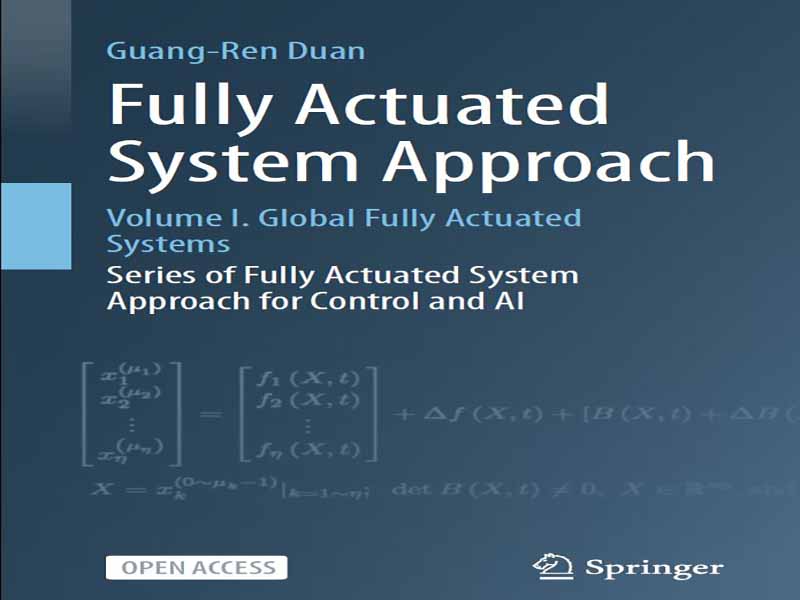
- عنوان کتاب: Fully Actuated System Approach Volume I. Global Fully Actuated Systems
- نویسنده: Guang-Ren Duan
- حوزه: سیستمهای کنترل
- سال انتشار: 2026
- تعداد صفحه: 513
- زبان اصلی: انگلیسی
- نوع فایل: pdf
- حجم فایل: 8.14 مگابایت
در جامعه کنترل، این موضوع به خوبی پذیرفته شده است که سیستمهای کاملاً فعال فیزیکی (FAS) نوع کاملی از سیستمها هستند، به این معنا که کنترلکنندههای آنها را میتوان به راحتی طراحی کرد و سیستمهای حلقه بسته حاصل را اغلب میتوان به صورت خطی ثابت سراسری درآورد. یک سیستم غیر FAS، سیستمی است که یا یک سیستم فیزیکی کمفعال (UAS) است یا سیستمی است که نمیتوان آن را در یک FAS یا UAS طبقهبندی کرد. اگر به هر دلیلی، یک غیر FAS بتواند به یک FAS تبدیل شود، آنگاه طراحی کنترل همه غیر FASها را میتوان به طور سیستماتیک حل کرد. با این حال، تحت محدودیتهای فیزیکی، این هدف عملی نیست و به طور کلی قابل دستیابی نیست. با این حال، یک دستاورد مهم اخیر در کشف مدل FAS ریاضی تعمیمیافته از سیستمهای دینامیکی، نقطه عطف مهمی در جهت این هدف ایجاد کرد. یعنی، اگرچه یک غیر FAS را نمیتوان به یک FAS فیزیکی تبدیل کرد، اما میتوان آن را به یک FAS ریاضی تعمیمیافته تبدیل کرد. علاوه بر این، مانند یک FAS فیزیکی، کنترل یک FAS ریاضی تعمیمیافته نیز میتواند به راحتی محقق شود. چنین حقایق و منطقی طبیعتاً نویسنده را بر آن میدارد تا رویکردی موسوم به FAS را پیشنهاد دهد که مسائل طراحی سیستمهای کنترل را بر اساس مدلهای تعمیمیافته FAS حل میکند. به طور خاص، نویسنده رویکرد FAS را در سالهای 2020-2021 از طریق انتشار دو سری مقاله پیشنهاد کرد، سری اول شامل 3 مقاله در ACTA Automatica Sinica در سال 2020 منتشر شد و سری دوم شامل 10 مقاله در International Journal of Systems Science منتشر شد. تاکنون، بسیاری از محققان به تحقیق در مورد رویکرد FAS پیوستهاند و در نتیجه صدها مقاله در این زمینه وجود داشته است. جالب است که میبینیم – کنفرانس بینالمللی نظریه و کاربردهای سیستم کاملاً فعال (FASTA) چهار بار برگزار شده است که آخرین آن، FASTA 2025، بیش از 1000 شرکتکننده داشته است؛ – کمیتههای فنی نظریه و کاربردهای سیستم کاملاً فعال با انجمن اتوماسیون چین (CAA) و انجمن کنترل آسیا (ACA) تأسیس شدهاند؛
It is well-accepted in the control community that physical fully actuated systems (FASs) are a perfect type of systems in the sense that their controllers can be easily designed and the resulted closed-loop systems can often be made globally constant linear. A non-FAS is a system that is either a physical underactuated system (UAS) or a system that cannot be classified into a FAS or UAS. If, by any chance, a non-FAS can be converted into a FAS, then the control design of all non-FASs can be systematically solved. However, under physical restrictions, this goal is not practical and in general not achievable. However, a recent significant achievement on the discovery of the mathematically generalized FAS model of dynamical systems made an important milestone toward this goal. Namely, although a non-FAS cannot be converted into a physical FAS, it can be converted into a mathematically generalized FAS. Moreover, like a physical FAS, the control of a mathematically generalized FAS can also be easily realized. Such facts and logic naturally motivate the author to propose the so-called FAS approach that solves control systems design problems based on generalized FAS models. Specifically, the author proposed the FAS approach in 2020-2021 through publishing two series of papers, the first series of 3 papers was published in ACTA Automatica Sinica in 2020, and the second series of 10 papers was published in International Journal of Systems Science. By now, many researchers have joined the research on the FAS approach, and consequently there have been hundreds of papers already on this topic. It is nice to see that – the International Conference on Fully Actuated System Theory and Applications (FASTA) has been held four times, with the most recent one, FASTA 2025, receiving over 1000 participants; – the technical committees on Fully Actuated System Theory and Applications have been established with the Chinese Association of Automation (CAA) and the Asian Control Association (ACA);
این کتاب را میتوانید از لینک زیر بصورت رایگان دانلود کنید:
Download: Fully Actuated System Approach Volume I
















نظرات کاربران