



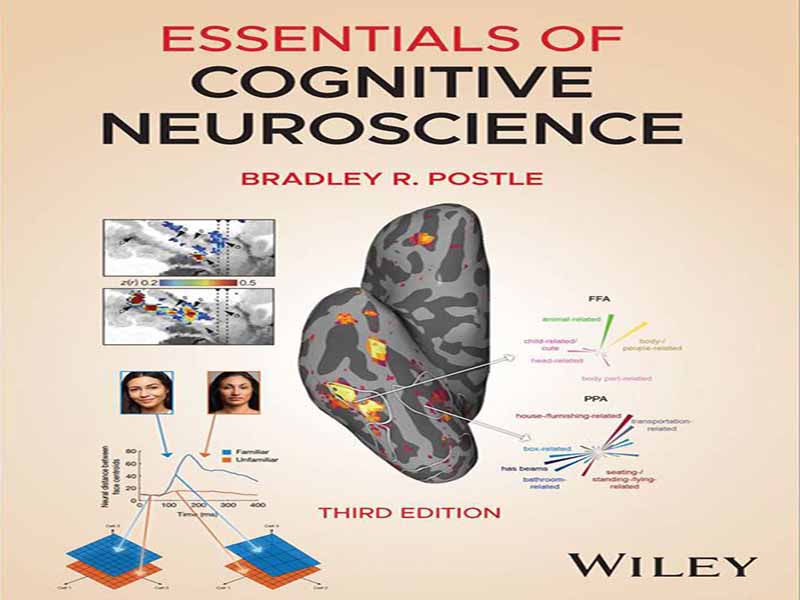
- عنوان کتاب: Essentials of Cognitive Neuroscience
- نویسنده: Bradley R. Postle
- حوزه: اعصاب شناختی
- سال انتشار: 2026
- تعداد صفحه: 651
- زبان اصلی: انگلیسی
- نوع فایل: pdf
- حجم فایل: 34.2 مگابایت
آیا دنیا به یک کتاب درسی علوم اعصاب شناختی دیگر نیاز دارد؟ خب، «نیاز» کلمهی بسیار سنگینی است. کاری که من سعی میکنم در اینجا انجام دهم، خلاصه کردن انگیزهام برای نوشتن اولیهی این کتاب و متعاقباً، دو بار ویرایش آن است. در این فرآیند، همچنین سعی خواهم کرد دیدگاه آموزشی پشت انتخاب سبک، محتوا و سازماندهی را منتقل کنم. در 25 سال گذشته، روانشناسی شناختی و علوم اعصاب شناختی را به دانشجویان کارشناسی و کارشناسی ارشد در دانشگاه ویسکانسین-مدیسون تدریس کردهام. برای دانشجویان کارشناسی در برنامهی افتخاری، سمیناری ارائه میدهم که به یک دوره سخنرانی با ثبتنام گسترده در مورد روانشناسی شناختی مرتبط است. دوره سخنرانی، بررسی روانشناسی شناختی، از احساس و ادراک گرفته تا تصمیمگیری، زبان و آگاهی است. سمینار افتخاری، انگیزهی اصلی این کتاب، توسط حدود 15 دانشجو که همزمان در دوره سخنرانی ثبتنام کردهاند، برگزار میشود. در این سمینار که فقط یک بار در هفته و فقط به مدت 50 دقیقه (به همین شکل) برگزار میشود، ما در مورد علوم اعصاب شناختیِ آنچه در سخنرانیهای روانشناسی شناختی آن هفته پوشش داده شده است، بحث میکنیم. دانشجوی نمونه در این سمینار، پیشینهای در طراحی آزمایش و احتمال و آمار برای روانشناسی تجربی دارد؛ تنها برخی از آنها آموزش رسمی در زیستشناسی دارند و تعداد کمتری در علوم اعصاب. در این زمینه، دریافتهام که کتاب درسی که سعی در پوشش «هر آنچه که ما میدانیم» در این زمینه دارد، مؤثر نیست – یا پوشش آن بسیار سطحی خواهد بود که از بحثهای اساسی در کلاس پشتیبانی نمیکند، یا به طور نامناسبی طولانی و متراکم خواهد بود، یک کتاب درسی علوم اعصاب شناختی با بیش از ۱۰۰۰ صفحه کتاب درسی علوم اعصاب دانشکده پزشکی که من به عنوان دانشجوی کارشناسی ارشد علوم اعصاب سیستمها به سختی آن را حمل میکردم. رویکرد دیگر، که اختصاص مقالات از منابع اولیه است، جایگزین رضایتبخشی نبوده است، زیرا منجر به صرف مقدار زیادی از وقت کلاس با کارهای جبرانی برای پر کردن پیشزمینهای میشود که مقالات اختصاص داده شده پوشش نمیدهند و توضیح روشها به طوری که دانشجویان بتوانند به طور کامل نحوه انجام آزمایشها و نحوه تفسیر نتایج آنها را درک کنند. کتاب «مبانی علوم اعصاب شناختی» قصد دارد به کتابی درسی تبدیل شود که از تعامل سطح بالا و اساسی با مطالب در محیطهایی که ساعات تماس و/یا انتظارات برای زمان آمادهسازی خارج از کلاس درس ممکن است محدود باشد، پشتیبانی کند. این کتاب اصول و مفاهیم کلیدی علوم اعصاب شناختی را به گونهای معرفی و توضیح میدهد که خواننده بتواند به طور انتقادی یافتههای رو به رشد این حوزه را ارزیابی کند. برای برخی از دانشجویان، این دانش برای مطالعه رسمی بعدی مورد نیاز خواهد بود و برای همه خوانندگان، برای ارزیابی و تفسیر گزارشهای مربوط به تحقیقات علوم اعصاب شناختی که روزانه به رسانههای خبری و فرهنگ عامه راه پیدا میکنند، مورد نیاز خواهد بود. این کتاب در پی انجام این کار به شیوهای است که به دانشجو درکی از ماهیت یک دانشمند علوم اعصاب شناختی بدهد: وقتی با مشکلی روبرو میشوید، چگونه پیش میروید؟ چگونه تحقیقاتی را که خارج از حوزه تخصصی شماست، میخوانید و تفسیر میکنید؟ چگونه دو دانشمند که مدلهای ناسازگار متقابل را پیش میبرند، با هم ارتباط برقرار میکنند؟ از همه مهمتر، چه احساسی دارد که در شگفتی و هیجان این پویاترین و بنیادیترین علوم سهیم شوید؟ برای تبدیل این آرزوها به یک کتاب، انتخابهای آموزشی و سازمانی زیر را انجام دادهام: • بخش مقدماتی در سه فصل مقدماتی سازماندهی شده است، یکی در مورد تاریخچه و مفاهیم کلیدی، یکی مقدماتی در مورد نوروبیولوژی سلولی و سطح مدار، و دیگری مقدمهای بر رویکردهای کلاسیک به مطالعه علوم اعصاب شناختی ضمن معرفی اصول احساس و ادراک. پس از این فصلها، فصلی در مورد روشها و فصلی در مورد چارچوبهای نظری برجسته معاصر و رویکردهای محاسباتی آمده است. این دو مورد آخر، که به ترتیب برای ویرایش دوم و اکنون برای ویرایش سوم معرفی شدهاند، شایسته توضیحات بیشتری هستند. • ترجیح شخصی من هنگام تدریس، معرفی روشها در طول ترم، در نقطهای است که برای سوال تحقیقاتی که شرح داده میشود، مرتبط باشند. بنابراین، ویرایش اول این کتاب شامل فصلی مختص به روشهای علوم اعصاب شناختی نبود. با این حال، وقتی از مدرسانی که از ویرایش اول استفاده کرده بودند، بازخورد گرفتیم، متوجه شدیم که همه این ترجیح را ندارند. بنابراین، ویرایشهای بعدی شامل یک فصل مستقل در مورد روشها (فصل ۴) بودهاند، و هر مدرسی که از «ترجیح پستل» پیروی میکند، میتواند مانند من عمل کند: این فصل را به عنوان یک تکلیف مستقل در طول هفته اول دوره حذف کند، و در عوض، یک یا چند بخش مرتبط را برای تکمیل مطالب خواندنی با موضوع حوزه شناخت، در اولین باری که یک روش معرفی میشود، اختصاص دهد. (توصیههایی برای نحوه انجام این کار در راهنمای مدرس ارائه شده است.) • فصل جدیدی که برای ویرایش سوم اضافه شده است، فصل
Does the world need another cognitive neuroscience textbook? Well, “need” is such a loaded word. What I’ll try to do here is summarize my motivation for initially writing this book and, subsequently, revising it twice. In the process, I’ll also try to convey the pedagogical vision behind choices about style, content, and organization. For the past 25 years, I have taught cognitive psychology and cognitive neuroscience to undergraduate and graduate students at the University of Wisconsin–Madison. For undergraduates in the honors program, I offer a seminar that is linked to a large- enrollment lecture course on cognitive psychology. The lecture course is a survey of cognitive psychology, spanning sensation, and perception to decision- making, language, and consciousness. The honors seminar, the original impetus for this book, is populated by 15 or so students who are concurrently enrolled in the lecture course. In the seminar, which meets only once per week, for only 50 minutes (sic), we discuss the cognitive neuroscience of what’s been covered in that week’s cognitive psychology lectures. The modal student in this seminar has a background in experimental design and in probability and statistics for experimental psychology; only some have any formal training in biology, and fewer still in neuroscience. In this context, I have found that a textbook that attempts to cover “everything that we know” in the field is not effective – either it will be too superficial in its coverage to support substantive discussions in class or it will be inappropriately lengthy and dense, a cognitive neuroscience analogue of the >1000- page medical- school neuroscience textbook that I lugged around as a graduate student in systems neuroscience. Another approach, which is to assign papers from the primary literature, has proven to be an unsatisfactory alternative, because it results in an inordinate amount of class time being taken up with the remedial work of filling in background that the assigned papers don’t cover, and explaining methods so that students can fully understand how the experiments were performed and how their results can be interpreted. Essentials of Cognitive Neuroscience aspires to be a textbook that will support high- level, substantive engagement with the material in settings where contact hours and/or expectations for outside- of- the- classroom preparation time may be constrained. It introduces and explicates key principles and concepts in cognitive neuroscience in such a way that the reader will be equipped to critically evaluate the ever- growing body of findings that the field is generating. For some students, this knowledge will be needed for subsequent formal study, and for all readers, it will be needed to evaluate and interpret reports about cognitive neuroscience research that make their way daily into the news media and popular culture. The book seeks to do so in a style that will give the student a sense of what it’s like to be a cognitive neuroscientist: when confronted with a problem, how does one proceed? How does one read and interpret research that’s outside of one’s subarea of specialization? How do two scientists advancing mutually incompatible models interrelate? Most importantly, what does it feel like to partake in the wonder and excitement of this most dynamic and fundamental of sciences? To translate these aspirations into a book, I have made the following pedagogical and organizational choices: • The introductory section is organized into three preliminary chapters, one on history and key concepts, one a primer on cellular and circuit- level neurobiology, and one an introduction to classical approaches to the study of cognitive neuroscience while introducing principles of sensation and perception. These are followed by a chapter on methods and one on prominent contemporary theoretical frameworks and computational approaches. These latter two, newly introduced for the second edition and now for the third edition, respectively, merit some additional explication. • My own preference when teaching is to introduce methods throughout the course of the semester, at the point at which they are relevant for the research question that is being described. Thus, the first edition of this book did not include a chapter dedicated to Methods of Cognitive Neuroscience. When we solicited feedback from instructors who had used the first edition, however, we learned not all share this preference. Thus, subsequent editions have included a stand- alone chapter on methods (Chapter 4), and any instructor following the “Postle preference” can do as I will do: omit this chapter as a stand- alone assignment during the first week of the course, and, instead, assign one or more relevant sections to supplement domain- of- cognition- themed readings the first time that a method is introduced. (Recommendations for how to do this are provided with the instructor guide.) • Newly added for this third edition is Chapter 5: Theoretical Frameworks and Computational Approaches, which was necessitated to accommodate the ongoing explosion of new developments at the levels of theory and analysis, particularly in the realm of computational approaches. More specifically, if the early chapter on The Visual System was to be reasonably coherent (i.e., not interrupted on each page by lengthy theoretical or methodological digression), the reader would already need to be conversant with such topics as predictive coding, machine learning- derived analysis techniques, and representational similarity analysis. (And the same would be true for the early chapter on skeletomotor control for Hebbian plasticity, dynamical systems theory, reinforcement learning, recurrent neural networks, and representational geometry analysis.) Therefore, new to this third edition is a reworked Chapter 3 that introduces “classical” concepts of sensory systems (e.g., the transduction of energy into a neural code, the receptive field, feedforward/“bottom- up” versus feedback/“top- down” signaling) so as to provide context and motivation for content from Chapter 5, such as why an idea like predictive coding, or a method like multivariate pattern analysis, might be valuable for supplementing (or, in some cases, supplanting) the principles adopted or developed during the first quarter century of cognitive neuroscience as a formal discipline. • Important concepts are introduced and explained via experiments that illustrate them. These won’t always be the first experiment that is credited with introducing an idea, nor even an experiment performed by the investigator or group that is credited with innovating the idea. Rather, they will be ones that I feel are particularly effective for explicating the concept in question. Further, most of the experiments that make it into this book are considered in a fair amount of depth. In doing so, I seek to model a “best practice” of the cognitive neuroscientist, one that is captured by a quote from the nineteenth- century neuroscientist David Ferrier, “In investigating reports on diseases and injuries of the brain . . . I feel obliged always to go to the fountainhead – dirty and muddy though this frequently turns out.” A corollary to this point is that because cognitive neuroscientists learn about and work with key concepts via empirical findings, almost all of the figures in this book are taken directly from the primary scientific literature, just as they appear in the empirical reports or review papers in which they were published. This is also how I teach and reflects my conviction that an important skill for students to develop is how to interpret figures as they appear in scientific publications. Thus, the book contains only a minimum of figures/diagrams/cartoons that were developed expressly for pedagogical purposes. • Because a book targeting “essentials” can’t cover all of the areas of research that fall under the rubric of cognitive neuroscience, each chapter concludes with an annotated list of suggested Further Reading. Many of the listed works will provide effective entrées into an area that the book doesn’t cover. • The first edition of this book was accompanied by a companion website that included 6–12 (or so)- minute bespoke narrated audiovisual presentations contributed by over 40 experts in different areas of cognitive neuroscience. These have now been spun off from the book and are made publicly available at https://postlab.psych.wisc.edu/cognitive-neurosciencecompendium/. Through these presentations, students will hear directly from the experts themselves about either (1) an important experiment that is described in the book and that I think merits a telling from the perspective of the investigator who actually performed the study, or (2) an important area of cognitive neuroscience that can’t be covered in the book but that the reader really should know about. These narrated videos generate a frisson of “what it’s like” to work in this field. I am greatly indebted to my colleagues who contributed their time and expertise to this remarkable collection. (Poignantly, those from Corkin, Eichenbaum, and Lisman capture the wisdom and energy of colleagues from whom we can no longer learn through direct interaction.) Although conceived and written for an upper- level undergraduate readership, Essentials of Cognitive Neuroscience can also be used for graduate teaching. For example, one associate of mine has used it as the primary text in a general “Introduction to Cognitive Neuroscience” course in which each week a student presented a chapter to the class and led the ensuing discussion. In my graduate seminar, assigned readings from this book cover the background that every student needs to know before coming to the class, and in class we focus on more recent developments. Those of us who are lucky enough to make a living grappling with some facet of the mind–brain problem have a responsibility to impart to our students a sense of the wonder, awe, and excitement that permeate our professional lives. I hope this book can help some of us meet this responsibility.
این کتاب را میتوانید از لینک زیر بصورت رایگان دانلود کنید:
Download: Essentials of Cognitive Neuroscience















نظرات کاربران