



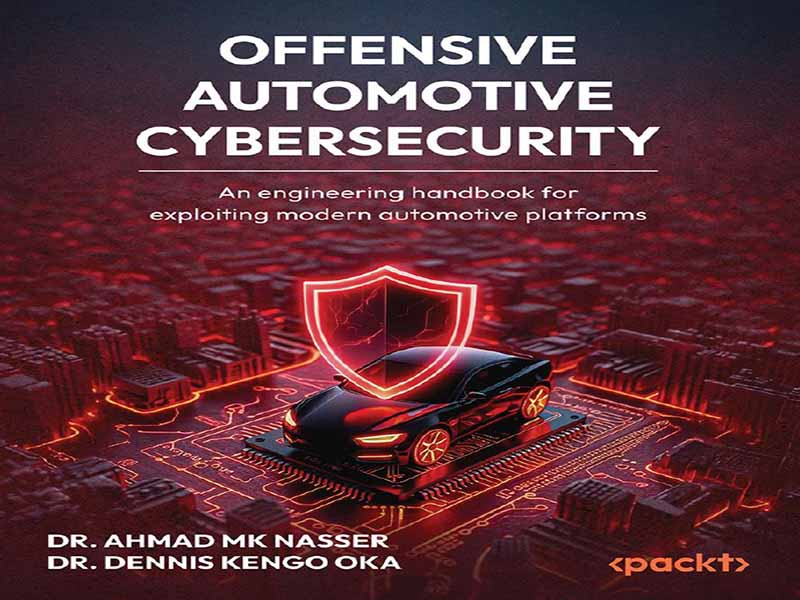
- عنوان کتاب: Offensive Automotive Cybersecurity – An engineering handbook for exploiting modern automotive platforms
- نویسنده: Dr. Ahmad MK Nasser, Dr. Dennis Kengo Oka
- حوزه: حمله سایبری
- سال انتشار: 2026
- تعداد صفحه: 694
- زبان اصلی: انگلیسی
- نوع فایل: pdf
- حجم فایل: 54.8 مگابایت
ایده این کتاب از گفتگویی که با یکی از همکاران باهوشم داشتم، جرقه خورد. او در مورد احتمال وقوع یک زنجیره حمله خاص علیه ECU خودرو، من را به چالش کشید. هنگام بحث در مورد خطرات امنیت سایبری، مواجهه با ذهنهای شکاک منحصر به صنعت خودرو نیست. از دوستان زیادی که در حوزههای ابری و امنیت سازمانی کار میکنند، شنیدهام که اغلب هنگام مطرح کردن نگرانیهای امنیتی، به ویژه هنگامی که راهحل پرهزینه است یا بر عملکرد یا برنامه پروژه تأثیر میگذارد، با شک و تردید مواجه میشوند. اما وقتی آن همکار نگرانی خود را به اشتراک گذاشت، برای من واضح بود که این یک مورد ساده اختلاف نظر در مورد امکان حمله نیست، بلکه قطع ارتباط با واقعیت حملات سایبری مدرن است. قبل از آن روز، من گفتگوهای زیادی با مهندسان در مورد تهدیدات علیه انواع قطعات خودرو داشتم و یک موضوع قابل توجه همیشه عدم تخیل آنها در مورد آنچه ممکن است بود. این مهندسان، در حالی که در حوزههای مربوطه خود کاملاً شایسته بودند، اغلب نمیتوانستند تصور کنند که چگونه یک ضعف امنیتی در قطعه آنها میتواند به یک سوءاستفاده تمام عیار تبدیل شود. به اعتبار آنها، من هم اگر صدها خبر و مقاله که نشان میدهند چگونه مهاجمان از آسیبپذیریهای به ظاهر بیضرر برای انجام اهداف حمله خود سوءاستفاده کردهاند، وجود نداشت، بسیار شکاک میشدم. مهندسانی که بر طراحی تراشه، نوشتن نرمافزارهای تعبیهشده یا توسعه سیستمهای پشتیبانی خودرو تمرکز کردهاند، ممکن است خودرو را به عنوان یک قلعه چندلایه از پیچیدگی الکترونیکی درک کنند که هیچکس نمیتواند به آن نفوذ کند. مهندسان به سختی میتوانند طرحهای خود را به کار بیندازند، بنابراین برای دشمنان بسیار دشوارتر است که از میان آن پیچیدگی عبور کنند و خودرو را هک کنند. از آنجایی که رد این استدلال به سادگی ذکر چند حادثه که در آنها چنین نبوده است، نیست، ما برای اثبات ادعای خود به رشته امنیت سایبری تهاجمی روی میآوریم. ما نمیتوانیم کسی را که قبلاً تصمیم گرفته است که حمله به خودروها یک کار نظری از قلمرو علمی تخیلی است نه واقعیت، متقاعد کنیم، اما کاری که ما قصد انجام آن را داریم، نشان دادن شواهد آنچه ممکن است و آنچه قبلاً اتفاق افتاده است و اجازه دادن به شما برای تصمیمگیری است. اگرچه این کتاب بر سیستمهای خودرو متمرکز است، اما بیشتر مفاهیم و حملات مورد بحث را میتوان به راحتی در سیستمهای اینترنت اشیا اعمال کرد، زیرا معماری زیربنایی محاسبات لبه و ابری به تدریج بین این دو حوزه همگرا میشود. در طول این کتاب، شما هکهای واقعی را که هر لایه از معماری خودرو را هدف قرار میدهند، خواهید آموخت تا نشان دهید که چگونه مهاجمان با موفقیت به اهداف خود دست یافتهاند. در این راستا، امیدواریم شما را متقاعد کنیم که وسایل نقلیه مدرن بیشتر شبیه غشاهای متخلخل هستند و اطلاعات تقریباً در هر جهتی جریان دارد، برخلاف جزایر جدا شدهای که نفوذ به آنها دشوار است. پس از معرفی مفاهیم اساسی امنیت سایبری تهاجمی و آزمایش نفوذ، هر لایه از معماری وسیله نقلیه متصل را از طریق مطالعات موردی بررسی خواهیم کرد که نشان میدهد چگونه مهاجمان موفق به دور زدن لایههای امنیتی متعدد برای دستیابی به اهداف خود شدهاند، از قسمت پشتی خودرو شروع میشود و به واحدهای کنترل الکترونیکی و حسگرهای تعبیه شده در اعماق خودرو ختم میشود. برای آن دسته از مهندسانی که استدلال میکردند سیستمهای آنها به دلیل داشتن اقدامات امنیتی درجه یک داخلی به اندازه کافی ایمن هستند، خواهیم دید که نتایج آنها اغلب بهتر از کسانی نیست که امنیت را به طور کلی نادیده گرفتهاند. در پایان این کتاب، امیدواریم شما را متقاعد کنیم که امنیت باید به طور سیستماتیک در تمام لایههای معماری خودرو، تمام فرآیندهای توسعه و تمام چرخههای عمر خودرو ادغام شود. به جای اینکه شما را با توضیحات فنی در مورد آسیبپذیریهای کدنویسی و پروتکلهای ناامن غرق کنیم، این مفاهیم را در فصلهای مربوطه که در حملات واقعی مورد سوءاستفاده قرار گرفتهاند، معرفی خواهیم کرد. قبل از ارائه مطالعات موردی، مروری بر نقاط ضعف امنیتی که بر هر لایه معماری تأثیر میگذارند، ارائه میدهیم تا مفاهیم و جنبههای فناوری را که باید برای درک کامل چگونگی امکان حملات درک شوند، برجسته کنیم. همچنین، از آنجایی که ابزارهای امنیتی تهاجمی بخش بزرگی از این حوزه هستند، یک فصل کامل را به این موضوع اختصاص دادهایم. این باید به عنوان یک مرجع مفید باشد که میتوانید هنگام خواندن مطالعات موردی یا انتخاب راهاندازی محیط تست نفوذ خود به آن مراجعه کنید. در فصل آخر، چشمانداز خود را برای آینده امنیت سایبری دفاعی خودرو بیان میکنیم که باید از هوش مصنوعی به عنوان یک فناوری توانمندساز نه تنها برای همگام شدن با قابلیتهای هوش مصنوعی تهاجمی، بلکه برای از بین بردن نهایی تمام طبقات ضعف امنیتی نیز استفاده کند.
The idea for this book was sparked by a conversation I had with a bright colleague who challenged me on the likelihood of a specific attack chain against an automotive ECU. When discussing cybersecurity risks, encountering doubtful minds is not exclusive to the automotive industry. I have heard from numerous friends who work in cloud and enterprise security that they often face skepticism when raising security concerns, especially when the remedy is costly or has an impact on performance or project schedule. But when that colleague shared his concern, it was obvious to me that this was not a simple case of disagreement over attack feasibility, but rather a disconnect with the reality of modern-day cyberattacks. Prior to that day, I had many conversations with engineers about threats against all sorts of vehicle components, and the one striking theme was always their lack of imagination about what is possible. These engineers, while quite competent in their respective domains, often failed to imagine how a security weakness in their component could ever materialize into a fullblown exploit. To their credit, I too would be highly skeptical if it were not for the hundreds of news stories and papers illustrating how attackers took advantage of seemingly innocuous vulnerabilities to carry out their attack objectives. Engineers focused on chip design, writing embedded software, or developing vehicle supporting systems may perceive the vehicle as a multi-layered fortress of electronic complexity that no one can penetrate. Heck, engineers can barely get their designs working, so it must be magnitudes more difficult for adversaries to work through that complexity and hack into the vehicle. Since rebutting this argument is not as straightforward as citing a few incidents in which that was not the case, we turn to the discipline of offensive cybersecurity to build our case. We cannot convince someone who has already made up their mind that attacking vehicles is theoretical work from the realm of science fiction rather than reality, but what we intend to do is show the evidence of what is possible and what has already happened and let you decide. While this book is focused on automotive systems, most of the concepts and attacks discussed can easily be applied to IoT systems, as the underlying architecture of edge and cloud computing is gradually converging between the two domains. Throughout this book, you will learn real-life hacks targeting each layer of vehicle architecture to show how attackers successfully achieved their objectives. As we do so, we hope to convince you that modern vehicles are more like porous membranes, with information àowing in almost every direction, as opposed to isolated islands that are hard to breach. After introducing the basic concepts of offensive cybersecurity and penetration testing, we will explore each layer of the connected vehicle architecture through case studies that show how attackers managed to bypass multiple layers of security to achieve their objectives, starting with the vehicle backend and ending with deeply embedded electronic control units and sensors. For those engineers who argued that their systems were sufficiently secure because they had built-in first-order security measures, we will see that their results were often no better than those who ignored security altogether. By the end of this book, we hope to convince you that security must be systematically integrated across all vehicle architecture layers, all development processes, and all vehicle lifecycles. Rather than overwhelming you with technical explanations about coding vulnerabilities and insecure protocols, we will introduce these concepts in the respective chapters where they were exploited in real-life attacks. Before presenting the case studies, we offer a survey of security weaknesses that impact each architecture layer to highlight the concepts and technology aspects that must be understood to fully internalize how the attacks were possible. Also, since offensive security tools are a big part of the domain, we dedicated a full chapter to the topic. This should serve as a useful reference that you can return to when reading case studies or choosing to set up your own penetration testing environment. In the final chapter, we lay out our vision for the future of defensive automotive cybersecurity, which must leverage artificial intelligence as an enabling technology not only to keep up with offensive AI capabilities, but also to finally eliminate entire classes of security weaknesses.
این کتاب را میتوانید از لینک زیر بصورت رایگان دانلود کنید:
Download: Offensive Automotive Cybersecurity
















نظرات کاربران