













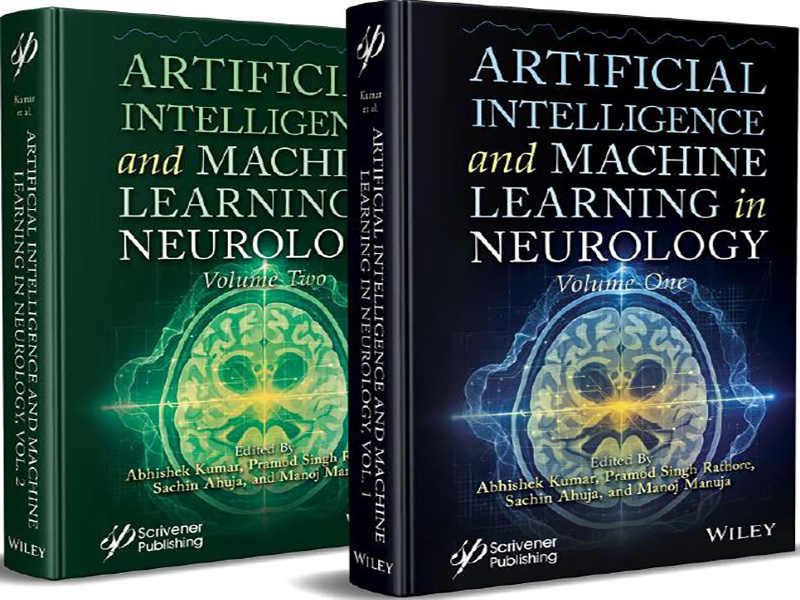
- عنوان کتاب: Artificial Intelligence and Machine Learning in Neurology 2 Volume Set
- نویسنده: Pandey
- حوزه: کاربرد هوش مصنوعی در پزشکی
- سال انتشار: 2026
- تعداد صفحه: 1069
- زبان اصلی: انگلیسی
- نوع فایل: pdf
- حجم فایل: 11.4 مگابایت
پیشرفت سریع هوش مصنوعی (AI) در مراقبتهای بهداشتی، چشمانداز اقدامات پزشکی، تحقیقات و تشخیصها را متحول کرده است. همزمان با تلاش سیستمهای مراقبتهای بهداشتی در سراسر جهان برای افزایش دقت، دسترسی و کارایی، ادغام هوش مصنوعی و فناوریهای یادگیری ماشینی به سنگ بنای نوآوری پزشکی مدرن تبدیل شده است. از استراتژیهای درمانی شخصیسازیشده گرفته تا تجزیه و تحلیل پیشبینیکننده و مدیریت ایمن دادهها، پتانسیل راهحلهای مراقبتهای بهداشتی مبتنی بر هوش مصنوعی بیسابقه است. این کتاب، کاوشی جامع از کاربردهای پیشرفته هوش مصنوعی در مراقبتهای بهداشتی ارائه میدهد و به چارچوبهای اخلاقی، تبادل ایمن دادهها، تجزیه و تحلیل پیشبینیکننده و مدیریت بیماریهای مزمن میپردازد. این کتاب با بررسی ملاحظات اخلاقی و قانونی مهم در استقرار هوش مصنوعی در محیطهای مراقبتهای بهداشتی آغاز میشود و بر اهمیت استفاده مسئولانه از دادهها و حفظ حریم خصوصی بیمار تأکید دارد. با افزایش اتکا به هوش مصنوعی برای تصمیمگیریهای حیاتی پزشکی، پرداختن به کاهش سوگیری، انصاف و مدیریت دادهها، ضمن اطمینان از رعایت استانداردهای نظارتی، ضروری است. این کتاب با بررسی دیدگاههای متنوع از دیدگاههای ژنتیکی، اپیدمیولوژیک و بالینی، پایه و اساس درک پیچیدگیهای استقرار اخلاقی هوش مصنوعی را بنا مینهد. تمرکز قابل توجه کتاب، پیادهسازی سیستمهای داده مراقبتهای بهداشتی امن و سازگار است. در عصری که امنیت دادههای بیمار از اهمیت بالایی برخوردار است، اکوسیستمهای مبتنی بر بلاکچین و چارچوبهای امنیت سایبری برای حفاظت از اطلاعات پزشکی بسیار مهم هستند. چندین فصل به نقش فناوری بلاکچین در حفظ یکپارچگی دادهها و فراهم کردن امکان تبادل ایمن دادههای سلامت میپردازند. این مباحث نشان میدهد که چگونه فناوریهای غیرمتمرکز، آینده مدیریت ایمن مراقبتهای بهداشتی را شکل میدهند. قدرت دگرگونکننده هوش مصنوعی در مدیریت بیماریهای مزمن نیز موضوع اصلی است. فصلهای اختصاص داده شده به مدیریت دیابت، نظارت بر بیماریهای قلبی و مراقبتهای شخصی، نشان میدهند که چگونه مدلهای پیشبینی مبتنی بر هوش مصنوعی میتوانند نتایج بیمار را بهبود بخشند. این کتاب همچنین به بررسی فناوریهای مراقبتهای بهداشتی پوشیدنی و راهحلهای سلامت از راه دور میپردازد که اهمیت زیادی در نظارت از راه دور بیمار و مداخله در بیماریهای مزمن پیدا کردهاند. علاوه بر این، کتاب به نقش رو به رشد الگوریتمهای یادگیری ماشین و پردازش زبان طبیعی (NLP) در تشخیص زودهنگام و مدیریت بیماریهای مزمن میپردازد. با ادغام تکنیکهای محاسباتی نوآورانه با برنامههای کاربردی مراقبتهای بهداشتی، فصلها بینشهای ارزشمندی در مورد تجزیه و تحلیل پیشبینیکننده و تصمیمگیری مبتنی بر داده ارائه میدهند. این کتاب با فصلهای آیندهنگر در مورد آینده هوش مصنوعی در مراقبتهای بهداشتی به پایان میرسد و پتانسیل واقعیت افزوده در پزشکی از راه دور و توسعه سیستمهای هوشمند سلامت عصبی را برجسته میکند. گنجاندن محاسبات شناختی و نوروبیولوژی، تأثیر عمیق هوش مصنوعی بر سلامت مغز و توانبخشی را برجسته میکند. ما از مشارکتکنندگانی که تخصص و فداکاری آنها این جلد را شکل داده است، قدردانی میکنیم. تعهد آنها به پیشبرد راهحلهای مراقبتهای بهداشتی مبتنی بر هوش مصنوعی، نشان دهنده تلاش جمعی برای پر کردن شکاف بین فناوری پیشرفته و عمل پزشکی است. ما همچنین از تلاشهای مداوم محققان و متخصصان در سراسر جهان که در حال گسترش مرزهای نوآوری در این زمینه پویا هستند، قدردانی میکنیم. این کتاب در ۳۶ فصل سازماندهی شده است. فصل ۱ به بحث اپیدمیولوژی میپردازد. هوش مصنوعی (AI) میتواند نحوه ردیابی بیماریها، یافتن شیوع بیماریها و انجام اقدامات بهداشت عمومی را تغییر دهد. مدلهای مبتنی بر هوش مصنوعی میتوانند به مجموعه دادههای بزرگ نگاه کنند تا الگوها و روندهایی را در نحوه شیوع بیماریها پیدا کنند. این امر به شکلگیری سیاستها و برنامههای بهداشت عمومی کمک میکند. از سوی دیگر، استفاده از هوش مصنوعی در اپیدمیولوژی، مسائل اخلاقی در مورد حفاظت از دادهها، توافق آگاهانه و احتمال تصمیمگیریهای جانبدارانه الگوریتمها را مطرح میکند. شفافیت، مسئولیتپذیری و انصاف باید در صدر دستورالعملهای اخلاقی برای هوش مصنوعی در اپیدمیولوژی باشد. در فصل ۲، بخش اول این فصل در مورد مفاهیم اخلاقی اساسی که باید منجر به ایجاد و استفاده از فناوریهای هوش مصنوعی در مراقبتهای بهداشتی شوند، صحبت میکند. این مفاهیم شامل نیکوکاری، عدم زیانرسانی، آزادی و عدالت است. سپس مقاله در مورد مشکلات خاصی که هنگام استفاده از هوش مصنوعی در اورولوژی و گوارش ایجاد میشوند، صحبت میکند. این مشکلات شامل نگرانیهایی در مورد حریم خصوصی و امنیت دادهها، انصاف و سوگیری الگوریتمهای هوش مصنوعی و نحوه استفاده از هوش مصنوعی در عمل بالینی است. در فصل ۳، هوش مصنوعی پتانسیل بهبود نتایج بیمار، افزایش تشخیصها و سادهسازی مراقبتهای بهداشتی را دارد، اما سیستمهای جانبدارانه میتوانند منجر به رفتار ناعادلانه با گروههای خاص شوند. سوگیری میتواند ناشی از دادههای آموزشی منحرف، طراحی الگوریتم ناقص و نابرابریهای سیستمی در مراقبتهای بهداشتی باشد. برای پرداختن به این مسائل، یک رویکرد چندوجهی مورد نیاز است. این شامل استفاده از دادههای آموزشی متنوع و نماینده، طراحی الگوریتم شفاف و ممیزیهای منظم برای تشخیص و اصلاح سوگیریها است. گنجاندن بررسیهای انصاف در طول توسعه میتواند به شناسایی زودهنگام نقصها کمک کند…
The rapid advancement of artificial intelligence (AI) in healthcare has transformed the landscape of medical practice, research, and diagnostics. As healthcare systems worldwide strive to enhance precision, accessibility, and efficiency, the integration of AI and machine learning technologies has become a cornerstone of modern medical innovation. From personalized treatment strategies to predictive analytics and secure data management, the potential of AI-driven healthcare solutions is unprecedented. This book presents a comprehensive exploration of cutting-edge AI applications in healthcare, addressing ethical frameworks, secure data exchange, predictive analytics, and chronic disease management. The book begins by examining the critical ethical and legal considerations in deploying AI within healthcare environments, emphasizing the importance of responsible data usage and patient privacy. With increasing reliance on AI to make critical medical decisions, it is essential to address bias mitigation, fairness, and data governance, while ensuring compliance with regulatory standards. By exploring diverse perspectives from genetic, epidemiological, and clinical viewpoints, this book lays the foundation for understanding the complexities of ethical AI deployment. A significant focus of the book is the implementation of secure and interoperable healthcare data systems. In an era where patient data security is paramount, blockchain-enabled ecosystems and cybersecurity frameworks are crucial to safeguarding medical information. Several chapters delve into the role of blockchain technology in maintaining data integrity and enabling secure health data exchange. These discussions highlight how decentralized technologies are shaping the future of secure healthcare management. The transformative power of AI in chronic disease management is also a central theme. Chapters dedicated to diabetes management, heart disease monitoring, and personalized care showcase how AI-driven predictive models can improve patient outcomes. The book also explores wearable healthcare technologies and telehealth solutions, which have gained immense relevance in remote patient monitoring and chronic disease intervention. Moreover, the book addresses the growing role of machine learning algorithms and natural language processing (NLP) in early diagnosis and chronic disease management. By integrating innovative computational techniques with healthcare applications, the chapters provide valuable insights into predictive analytics and data-driven decision-making. The book concludes with forward-looking chapters on the future of AI in healthcare, highlighting the potential for augmented reality in telemedicine and the development of intelligent neuro health systems. The inclusion of cognitive computing and neurobiology underscores the profound impact of AI on brain health and rehabilitation. We extend our gratitude to the contributors whose expertise and dedication have shaped this volume. Their commitment to advancing AI-driven healthcare solutions reflects a collective effort to bridge the gap between cutting-edge technology and medical practice. We also acknowledge the continued efforts of researchers and practitioners worldwide who are pushing the boundaries of innovation in this dynamic field. This book is organized into 36 chapters. Chapter 1 discusses the epidemiology. Artificial intelligence (AI) could change how diseases are tracked, outbreaks are found, and public health measures are taken. AI-powered models can look at large datasets to find patterns and trends in how diseases are spreading. This helps shape public health policies and programs. Using AI in epidemiology, on the other hand, brings up ethics issues about data protection, informed agreement, and the chance that algorithms will make biased decisions. Transparency, responsibility, and fairness should be at the top of ethical guidelines for AI in epidemiology. In Chapter 2, the first part of the chapter talks about basic moral concepts that should lead the creation and use of AI technologies in healthcare. These include beneficence, nonmaleficence, liberty, and justice. The article then talks about specific problems that come up when AI is used in urology and gastroenterology. These problems include worries about data privacy and security, the fairness and bias of AI algorithms, and how to use AI in clinical practice. In Chapter 3, AI has the potential to improve patient outcomes, enhance diagnoses, and streamline healthcare, but biased systems can lead to unfair treatment of specific groups. Bias can stem from skewed training data, flawed algorithm design, and systemic inequalities in healthcare. To address these issues, a multifaceted approach is needed. This includes using diverse, representative training data, transparent algorithm design, and regular audits to detect and correct biases. Incorporating fairness checks during development can help identify flaws early. Chapter 4 explores key considerations for healthcare organizations implementing AI solutions, focusing on laws governing data use, privacy, and security. Globally, healthcare organizations must adhere to regulations such as the General Data Protection Regulation in the European Union and the Health Insurance Portability and Accountability Act in the United States. These laws impose strict requirements for sharing, accessing, and protecting sensitive patient data, complicating the use of AI, which relies on vast amounts of such data. Effective data governance is crucial, involving processes and controls to ensure data quality, security, and privacy. Chapter 5 suggests a structure that includes methods for data anonymization, consent management, and reducing bias in order to deal with these problems. It also talks about how important it is for AI algorithms to be clear and how constant tracking is needed to make sure that imaging data are used in an ethical way. AI is improving planning before surgery, making decisions during surgery, and caring for patients after surgery. Chapter 6 looks at how blockchain could be used to safely share health data, with a focus on joint and ophthalmological issues. A lot of information about their patients is created by orthopedic and eye doctors. This information includes medical background, diagnosis pictures, and treatment plans. Because blockchain is autonomous, it does not need a single authority. This makes it less likely that data will be stolen or accessed without permission. Additionally, blockchain’s immutability makes sure that data that have been recorded cannot be changed or messed with. In Chapter 7, blockchain can moreover offer assistance to individuals included in a clinical setting about working together way better by giving a secure and unchangeable way for them to share information. This incorporates inquiring about schools, healthcare laborers, and pharmaceutical businesses. Blockchain is utilized for more than fair clinical considerations. It is additionally utilized for lawful compliance. The immutable nature of blockchain ensures that all information related to a clinical trial can be traced and time-stamped, thereby enhancing data integrity and transparency. This could make checking less demanding and give authorities a reliable source of information. Chapter 8 looks at the problems with scaling, security, and interoperability in healthcare communities that use blockchain. Scalability is a very important issue for blockchain systems, especially in healthcare, where a lot of data are created every day. Because of how they handle agreement, traditional blockchain networks such as Bitcoin and Ethereum have trouble growing. Healthcare blockchains are looking into ways to make them more scalable, such as sharding and off-chain transfers. These methods try to break the network up into smaller, easier-to-handle pieces or handle deals outside of the main chain to make it less crowded and speed things up. When it comes to healthcare, where private patient data are concerned, security is very important. Blockchain technology has built-in security features, such as the inability to be changed and cryptographic proof that can help keep patient data safe from people who should not be able to see or change it. In Chapter 9, cybersecurity dangers such as ransomware, hacking, information breaches, and malware assaults are on the rise. These dangers make it much more troublesome to keep individual well-being data private, available, and secure. To keep healthcare data frameworks secure from unused cyber dangers, we require more progressed devices that can discover dangers. Cantering on the utility of cutting-edge cybersecurity advances, this looks at the part of progressed peril discovery frameworks in healthcare settings. Machine learning (ML), counterfeit insights (AI), and behavioral analytics are all critical parts of making it simpler to discover and halt hacks on well-being data frameworks. Chapter 10 explores the benefits and challenges of connecting smart tech with electronic health records (EHRs), emphasizing the need for compatible systems and standardized data formats. Integrating wearable tech with EHRs could transform healthcare by enabling real-time patient monitoring, but several key issues must be addressed, including data privacy, security, quality, and device compatibility. Healthcare systems must adopt solutions that ensure seamless data exchange between smart devices and EHRs. Standardization of data formats, communication methods, and device interfaces is essential for achieving interoperability. Chapter 11 explores the challenges and opportunities of real-time data analytics, focusing on recent advancements and limitations. A key challenge is managing the speed and volume of data being generated, which requires scalable and efficient processing tools. Streaming technologies such as Apache Kafka and Apache Flink are essential, as traditional batch systems cannot handle this data influx. These tools allow for immediate data analysis, providing faster insights. Another challenge is optimizing systems to reduce latency and ensure real-time usability. Data quality and security are also critical, as errors in real-time environments can lead to poor decisions and spread rapidly. Chapter 12 explores recent advancements in deep learning (DL) and neural network (NN) for health tracking and their potential to transform healthcare. The first section discusses how continuous health tracking using DL and NN models can prevent and manage chronic diseases by providing realtime analysis of data from smart devices. Traditional health tracking methods lack this real-time capability. Next, the study outlines common DL and NN designs used in health tracking, such as long short-term memory, convolutional neural networks (CNNs), and recurrent neural networks (RNNs). Chapter 13 is mostly about the basics of predictive analytics in nephrology and pulmonology, which are two very important areas of healthcare. Advanced statistical and ML methods are used in nephrological prediction analytics to look at data about kidney diseases and guess how each patient will do. In pulmonological prediction analytics, on the other hand, similar methods are used to look at data about lung illnesses such as asthma and chronic obstructive pulmonary disease. Chapter 14 explores advanced predictive techniques, focusing on ensemble methods and feature engineering to improve the accuracy and reliability of healthcare predictions. Ensemble methods such as bagging, boosting, and stacking combine the outputs of multiple base models, creating more robust and precise predictions. These methods handle complex healthcare data relationships effectively, improving accuracy, particularly in areas with high variability and uncertainty. Feature engineering is vital for enhancing model performance by transforming raw healthcare data into meaningful features. Chapter 15 talks about how ML can be used to help with blood and rheumatologic conditions. It focuses on predictive models that can help with early diagnosis, personalized treatment plans, and managing diseases. Hematologic diseases, such as anemia, leukemia, and lymphoma, are hard to treat because they have complicated causes and show up in a lot of different ways. ML systems, such as decision trees, NNs, and random forests, have been used to look at blood data and guess how a disease will get worse. Chapter 16 investigates AI-driven risk assessment models that leverage multiple methodologies for early glaucoma detection and monitoring, combining clinical and imaging data for personalized care strategies. Our approach integrates four distinct methods: (1) deep learning on optical coherence tomography images, utilizing CNNs to analyze structural biomarkers such as retinal nerve fiber layer thinning; (2) fundus image classification, using transfer learning on pretrained models to detect optic nerve damage and visual field defects; (3) predictive analytics on risk factors, using gradient-boosted decision trees to evaluate patient-specific attributes such as age, intraocular pressure, and family history; and (4) time-series analysis of intraocular pressure, applying RNNs to assess fluctuations over time for disease progression. In Chapter 17, chronic diseases such as diabetes, high blood pressure, and heart disease are shown to cause a lot of illnesses and deaths around the world, which makes healthcare systems around the world very difficult to manage. Long-term treatment plans are usually used to handle these conditions by reducing symptoms, avoiding problems, and raising the quality of life for patients. Traditional ways of handling chronic diseases do not always take into account the needs of each person, which can lead to less-than-ideal results and extra costs for healthcare. Recently made progress in AI could change how chronic diseases are handled by letting people get personalized care that fits their specific needs. AI-driven targeted care uses information from many places, such as EHRs, tracking tech, DNA data, and trends of living, to make treatment plans that are just right for each patient. Chapter 18 explores AI, which has made a big difference in how diabetes is managed, especially when it comes to personalized insulin doses and continuous glucose monitoring. Traditional ways of caring for people with diabetes often rely on set routines and broad rules, which may not meet the needs of each patient as well as they could. AI-driven methods, on the other hand, make it possible to create personalized medicines that help people with diabetes better control their blood sugar, lower their risk of problems, and improve their quality of life. One of the most important new ways to control diabetes is to use personal devices to constantly check glucose levels. Chapter 19 looks at how AI technologies can be used to keep an eye on people with heart disease, predict bad things that might happen, and suggest ways to keep those bad things from happening so that patients have better results. First, we talk about how AI can be added to current EHR systems so that real-time monitoring of patient health data is always possible. These systems use ML methods to look at huge amounts of real-time and historical data, such as heart biomarkers, lifestyle factors, and medical history, to find trends and accurately predict the risk of future cardiovascular events. Second, we talk about how to make prediction models that are especially made for managing congenital heart disease. Chapter 20 explores the multifaceted role of AI in chronic disease care, emphasizing its potential to facilitate a more personalized, efficient, and effective healthcare system. AI technologies, such as ML and NLP, are pivotal in analyzing vast datasets, including EHRs, genetic information, and real-time patient monitoring data. By leveraging these data, AI-DSS can identify subtle patterns and predictors of disease progression that may be overlooked by human clinicians. This capability not only aids in early diagnosis but also helps in anticipating exacerbations, thereby allowing for timely interventions. Chapter 21 talks about predictive analytics, tailored therapy, and realtime monitoring, which are the most essential ways AI is enhancing chronic illness care. Computer vision, ML, and NLP are AI technologies. Healthcare systems are adding these technologies to improve chronic illness management. ML algorithms can analyze massive health data, discover patterns, and forecast illness progression. This helps physicians detect concerns early and reduce danger. These algorithms can detect subtle patient data changes that clinicians overlook. In Chapter 22, the study investigates biomarkers that are measured signs of organic forms that offer assistance for us get it how maladies work, how they develop, and how medicines work. Increasingly, AI innovations such as ML and profound learning (DL) are being utilized to mine huge sums of natural information, such as genomic, transcriptomic, proteomic, and clinical datasets. This makes a difference in how analysts discover modern biomarkers for a wide run of illnesses, such as cancer, cardiovascular conditions, and neurodegenerative clutters. AI models are made to see at expansive, complicated datasets and discover patterns that are regularly difficult to see the sum and complexity of the information. Chapter 23 investigates how the Internet of Things (IoT) makes it possible for personal tech and central healthcare systems to talk to each other without any problems. It also provides a flexible and responsive way to share data. This combination makes it possible to keep an eye on important things such as blood pressure, oxygen consumption, heart rate, blood sugar levels, and physical exercise. IoT-enabled gadgets can also keep track of how well patients are following their treatments, find early signs of getting worse, and guess what health risks might be coming up through data analytics and ML algorithms. The real-time data that these gadgets produce let healthcare professionals make smart, data-driven choices that improve the accuracy and speed of actions. For patients, the constant tracking and instant feedback make them more involved in self-care, which leads to better disease control and taking medications as prescribed. Chapter 24 explores the latest innovations, trends, and methods shaping the future of healthcare. A key trend is the integration of advanced sensors, enabling devices to track a wide range of health metrics, from vital signs to complex physiological data. Coupled with AI and ML, these sensors provide personalized health insights and early detection of health issues. Another major development is miniaturization, making devices more discreet and comfortable for daily use. Chapter 25 explores the core technologies underpinning Indian National Health Service (INHS), including ML algorithms, brain–computer interfaces, and robotic-assisted rehabilitation. We delve into their applications in neurology, such as AI-enhanced diagnostic tools for Alzheimer and Parkinson diseases, seizure prediction systems, and remote telemedicine platforms for continuous patient care. Additionally, we discuss the challenges in implementing these systems, including data privacy concerns, AI model biases, and the need for regulatory frameworks. By analyzing case studies and advancements, we highlight how AI-driven solutions are reshaping the landscape of neuro health. In Chapter 26, integration of the disciplines has led to groundbreaking advancements in early disease detection, personalized treatment plans, and innovative therapies for neurological and psychiatric disorders. Moreover, cognitive computing has facilitated new approaches to brain mapping and neural activity modeling, allowing researchers to explore neural pathways with greater precision than ever before. AI-driven algorithms enable scientists to analyze massive datasets, detecting patterns and correlations that were previously elusive. Chapter 27 explores how the NLP can automate the extraction of crucial information from unstructured medical data, improving chronic disease management efficiency and accuracy. This study uses NLP to detect and classify critical patient data items for individualized treatment regimens and proactive patient care. NLP methods including named entity identification, sentiment analysis, and topic modeling help extract clinical data such as diagnosis, treatment results, and patient attitudes. NLP incorporation into EHR systems may simplify data processing and enhance health data analysis. Chapter 28 talks about how supervised and uncontrolled learning can be used to find chronic diseases early and predict their risks. Many researchers use supervised learning algorithms, such as decision trees, support vector machines, and NNs, to sort disease states into groups and guess risk factors based on datasets that have already been identified. These techniques work especially well for finding disease signs in organized data, such as patient information, laboratory results, and imaging studies. Random forests and gradient boosting are two models that are used because they are good at dealing with lost values and feature selection. Using methods such as grouping and dimensionality reduction in unsupervised learning can help you find unseen patterns and connections in data that have not been named. Chapter 29 looks at how AI has changed telehealth, focused on how it can be used to help people with chronic diseases. Telehealth options that are powered by AI make it possible to keep an eye on patients all the time through personal tech, smartphones, and other IoT-based medical devices. These gadgets measure important health factors such as blood pressure, heart rate, blood sugar, and oxygen levels and then send those numbers to doctors in real time. ML systems look through these streams of data to find trends, spot outliers, and predict health problems. Chapter 30 explores the use of smart technology to improve mental health treatment and support. Portable tech offers accessible, personalized solutions, enhancing treatment outcomes. Wearable devices continuously collect real-time physiological and behavioral data, such as heart rate, sleep patterns, physical activity, and social interactions—key indicators of mental health. Analyzing these data allows tailored feedback and support for each individual. One significant therapy enabled by smart tech is biofeedback, which uses real-time data to help users manage emotions and stress. In Chapter 31, in dermatology, AI and ML algorithms are used to automatically look at skin sores and spots, which helps doctors quickly and accurately diagnose a range of skin diseases. These programs can look at pictures of skin tumors, put them into groups based on how they look, and suggest how to treat or keep an eye on them. Also, AI-powered gadgets are being made for tracking skin at home. These will let people see how their skin state changes over time and get medical help as soon as needed. In the area of viral diseases, AI and ML algorithms are used to find and keep an eye on illnesses such as COVID-19, malaria, and tuberculosis early on. Chapter 32 explores looks at how Augmented Reality (AR) has changed inaccessible surgery and how it has made a difference in telemedicine development, with the objective of bringing patients and talented restorative laborers together over physical limits. Advancements in computerized transmission apparatuses have driven to a parcel of development in telemedicine over the final few decades. Even with these advancements, ensuring that individuals in rural or underserved areas receive quality care remains a challenge. Due to the lack of real-time monitoring, remote medical assistance has faced several challenges. This has made it vital to come up with unused arrangements. Chapter 33 explores AI in revolutionizing healthcare, enhancing patient outcomes, and streamlining medical processes. This chapter explores AI’s future role in general medicine and anesthesia. In family medicine, AI can personalize treatment using EHRs, improve patient screening and risk assessment, and manage chronic diseases with predictive analytics. AI-powered telemedicine and remote monitoring tools can expand access to care, particularly in underserved areas. Chapter 34 examines the current state of AI-powered medical tools, their future, and the challenges ahead. AI has greatly enhanced disease detection and treatment planning, particularly with DL models that excel in analyzing medical images such as X-rays, magnetic resonance imaging scans, and computed tomography scans, often surpassing human accuracy. These advancements lead to quicker evaluations and improved patient outcomes. Emerging AI-driven technologies, such as smart monitoring devices, are further improving healthcare by enabling early detection and personalized chronic disease management through real-time biological data analysis. Chapter 35 explores partnership is mutually beneficial, as Rhizobium converts atmospheric nitrogen into ammonia, a vital nutrient for plant growth. This ecofriendly process offers a sustainable alternative to chemically derived fertilizers, particularly valuable in developing countries seeking to reduce their reliance on synthetic inputs. Beyond their nitrogen- fixing capabilities, legume plants are a rich source of phytochemicals with recognized anticarcinogenic properties. By fortifying legumes with essential micronutrients, we can address malnutrition concerns and reduce the need for individuals to consume multiple food sources to meet their dietary requirements. In Chapter 36, many medical fields now rely on image processing techniques to improve disease classification and detection. One concerning ailment that arises for the purpose of detecting medical health issues is cancer. Lung cancer and blood cancer are among the several forms of cancer. For doctors to provide appropriate therapy and improve patient survival, early detection is essential.
این کتاب را میتوانید از لینک زیر بصورت رایگان دانلود کنید:
Download: Artificial Intelligence and Machine Learning in Neurology 2 Volume Set
























نظرات کاربران