



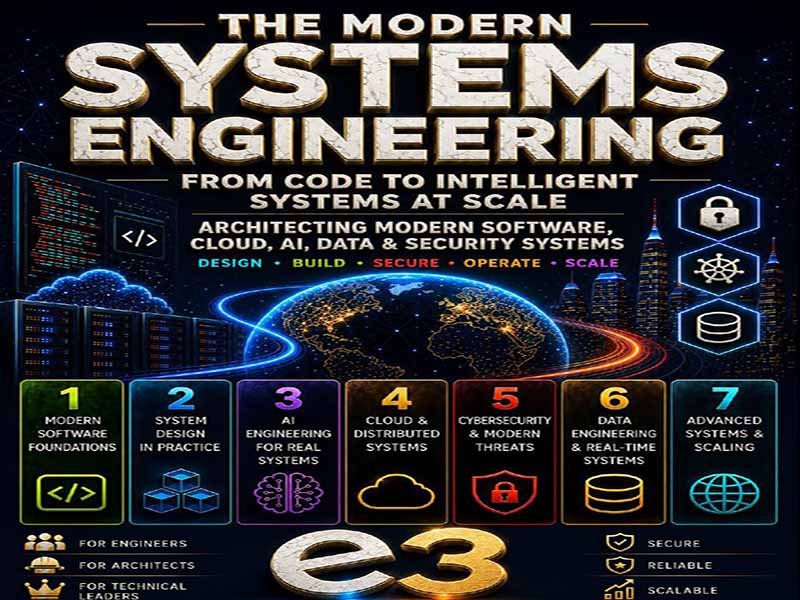
- عنوان کتاب: The Modern Systems Engineering : From Code to Intelligent Systems at Scale; Architecting Modern Software, Cloud, AI, Data & Security, Systems; Design, Build, Secure, Operate, Scale
- نویسنده: e3
- حوزه: مهندسی سیستم
- سال انتشار: 2026
- تعداد صفحه: 737
- زبان اصلی: انگلیسی
- نوع فایل: pdf
- حجم فایل: 12.7 مگابایت
فناوری دیگر در حوزههای مجزا پیشرفت نمیکند. سیستمهای نرمافزاری مدرن در تقاطع مهندسی نرمافزار، طراحی سیستم، هوش مصنوعی، محاسبات ابری، امنیت سایبری، مهندسی داده و عملیات توزیعشده در مقیاس بزرگ ساخته میشوند. از متخصصانی که امروزه وارد این حوزه میشوند، انتظار میرود نه تنها کد بنویسند، بلکه درک کنند که سیستمها در تولید چگونه رفتار میکنند، چگونه مقیاسپذیر میشوند، چگونه شکست میخورند، چگونه بازیابی میشوند و چگونه در محیطهای پیچیده دنیای واقعی ارزش ایجاد میکنند. این کتاب برای پرداختن به این واقعیت نوشته شده است. کتابچه راهنمای مهندسی سیستمهای مدرن، هفت فصل مستقل قبلی را در یک مرجع واحد و جامع گرد هم آورده است که سفر کامل از مبانی نرمافزار تا سیستمهای مقیاسپذیر جهانی را دنبال میکند. این کتابچه راهنما به جای اینکه نرمافزار، زیرساخت، امنیت، داده و هوش مصنوعی را به عنوان رشتههای جداگانه در نظر بگیرد، آنها را به عنوان بخشهای به هم پیوسته یک عمل مهندسی یکپارچه ارائه میدهد. این سفر با اصول توسعه نرمافزار مدرن و تفکر سیستمی آغاز میشود. سپس از طریق طراحی عملی سیستم، مهندسی هوش مصنوعی در سطح تولید، معماریهای بومی ابری، امنیت سایبری، مهندسی داده و در نهایت چالشهای بهرهبرداری از سیستمهای در مقیاس بزرگ در مناطق، سازمانها و قارهها پیش میرود. در سراسر کتاب، تأکید بر واقعیت تولید همچنان پابرجاست. خوانندگان با الگوهای معماری، بدهبستانهای مهندسی، درسهای عملیاتی، اصول قابلیت اطمینان، ملاحظات امنیتی و چالشهای مقیاسپذیری که در سازمانهای فناوری مدرن پدیدار میشوند، مواجه خواهند شد. هدف صرفاً توضیح نحوهی عملکرد فناوریها نیست، بلکه بررسی چگونگی بهکارگیری موفقیتآمیز آنها در محیطهایی است که در آنها عملکرد، قابلیت اطمینان، امنیت، قابلیت نگهداری و نتایج کسبوکار اهمیت دارد. حوزهی فناوری بهطور مداوم در حال تکامل است، اما اصول خاصی بهطور قابلتوجهی پایدار میمانند. تفکر روشن، طراحی منظم، تعالی عملیاتی، امنیت از طریق طراحی، تصمیمگیری مبتنی بر داده و یادگیری مداوم، پایههایی هستند که صرفنظر از تغییر ابزارها و چارچوبها، پابرجا میمانند. امید من این است که این کتاب نه تنها بهعنوان یک مرجع فنی، بلکه بهعنوان راهنمایی برای تفکر سیستمی – راهی برای مشاهدهی فناوری بهعنوان یک اکوسیستم بههمپیوسته بهجای مجموعهای از اجزای مجزا – نیز عمل کند. اگر این کتابچه راهنما به شما در طراحی سیستمهای قابل اعتمادتر، ساخت پلتفرمهای امنتر، ایجاد نرمافزارهای مؤثرتر یا درک بهتر چالشهای مهندسی پیچیدهی دنیای مدرن کمک کند، پس به هدف خود رسیده است.
Technology no longer advances in isolated domains. Modern software systems are built at the intersection of software engineering, system design, artificial intelligence, cloud computing, cybersecurity, data engineering, and large-scale distributed operations. Professionals entering the field today are expected not only to write code, but also to understand how systems behave in production, how they scale, how they fail, how they recover, and how they create value in complex real world environments. This book was created to address that reality. The Modern Systems Engineering Handbook brings together seven previously independent chapters into a single, comprehensive reference that follows the complete journey from software foundations to globally scaled systems. Rather than treating software, infrastructure, security, data, and artificial intelligence as separate disciplines, this handbook presents them as interconnected parts of a unified engineering practice. The journey begins with the principles of modern software development and systems thinking. It then progresses through practical system design, production-grade AI engineering, cloud-native architectures, cybersecurity, data engineering, and finally the challenges of operating large-scale systems across regions, organizations, and continents. Throughout the book, the emphasis remains firmly on production reality. Readers will encounter architectural patterns, engineering trade-offs, operational lessons, reliability principles, security considerations, and scalability challenges that emerge in modern technology organizations. The goal is not merely to explain how technologies work, but to explore how they are successfully applied in environments where performance, reliability, security, maintainability, and business outcomes matter. The field of technology evolves continuously, but certain principles remain remarkably stable. Clear thinking, disciplined design, operational excellence, security by design, data-driven decision making, and continuous learning are foundations that endure regardless of changing tools and frameworks. My hope is that this book serves not only as a technical reference, but also as a guide to systems thinking—a way of viewing technology as an interconnected ecosystem rather than a collection of isolated components. If this handbook helps you design more reliable systems, build more secure platforms, create more effective software, or better understand the complex engineering challenges of the modern world, then it has achieved its purpose.
این کتاب را میتوانید از لینک زیر بصورت رایگان دانلود کنید:
Download: The Modern Systems Engineering
















نظرات کاربران