













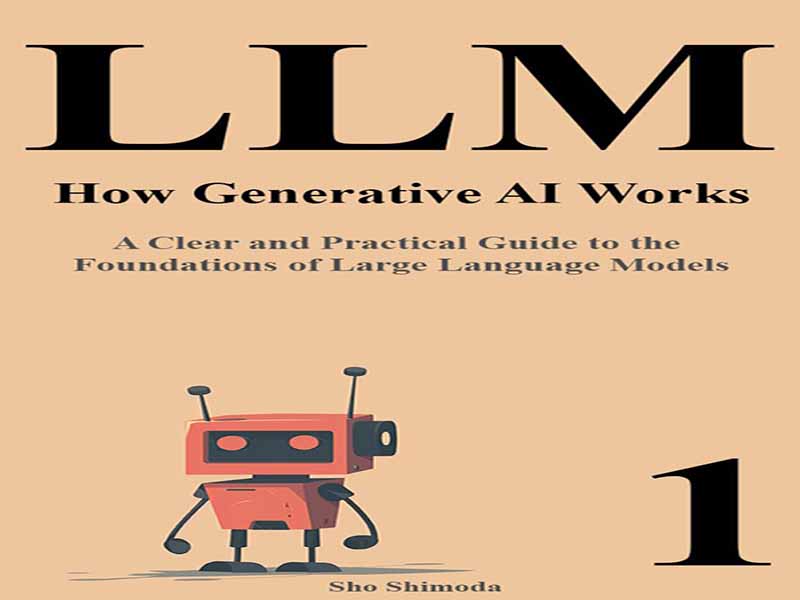
- عنوان کتاب: LLM Primer -How Generative AI Works A Clear and Practical Guide to the Foundations of Large Language Models
- نویسنده: SHIMODA, SHO
- حوزه: مدل زبانی بزرگ
- سال انتشار: 2026
- تعداد صفحه: 192
- زبان اصلی: انگلیسی
- نوع فایل: pdf
- حجم فایل: 5.49 مگابایت
چند سال پیش، ساخت سیستمی که بتواند یک پاراگراف را ترجمه کند، یک گزارش را خلاصه کند یا کد تولید کند، نیازمند مجموعهای از اجزای با دقت مهندسی شده بود. شما به قوانین، استخراجکنندههای ویژگی، مدلهای آماری و تخصص گسترده در حوزه نیاز داشتید. هر وظیفه جداگانه بود. هر سیستم هدفمند ساخته شده بود. این ایده که یک مدل کلی بتواند همه این وظایف را انجام دهد، غیرواقعی به نظر میرسید. یادداشتی در مورد این نسخه. این نسخه ۲۰۲۶ از LLM Primer I است. مکانیسمهای اساسی شرح داده شده در این کتاب – توکنسازی، توجه، بهینهسازی مبتنی بر گرادیان، مقیاسبندی، بازیابی و اصول پشت آموزش و استقرار – تغییر نکردهاند. آنچه تغییر کرده است، چشمانداز صنعتی است که این مکانیسمها اکنون در آن عمل میکنند. این نسخه انتظارات پنجره زمینه را برای انعکاس مدلهای مرزی مدرن بهروزرسانی میکند، معماریهای ترکیبی از متخصصان را از تحقیق تا تولید تغییر میدهد و به دو تحولی که از زمان نسخه اول، رویه مهندسی را تعریف کردهاند، میپردازد: روشهای بهینهسازی ترجیحی فراتر از یادگیری تقویتی از بازخورد انسانی، و ظهور مدلهای استدلالگرا که محاسبات اضافی را در زمان استنتاج انجام میدهند. یک بخش گردش کار عاملگرای مختصر نیز به فصل کاربردها اضافه شده است. خوانندگانی که با ویرایش اول آشنا هستند میتوانند بخشهای جدید را به عنوان مکملهای هدفمند مطالعه کنند؛ خوانندگانی که برای اولین بار به سراغ کتاب میآیند، مطالب را در بطن پیشرفت موجود خواهند یافت. امروزه، یک مدل زبانی بزرگ میتواند توضیحاتی تولید کند، نرمافزار بنویسد، قراردادها را پیشنویس کند و به سؤالات پیچیده در حوزههای مختلف پاسخ دهد. این تغییر آنقدر سریع بوده است که اغلب مرموز به نظر میرسد. اصطلاحاتی مانند «میلیاردها پارامتر»، «توجه به خود» و «قوانین مقیاسبندی» مکرراً مورد استفاده قرار میگیرند، اما به ندرت به گونهای توضیح داده میشوند که درک پایداری ایجاد کنند. بسیاری از توضیحات یا موضوع را بیش از حد به زبان بازاریابی ساده میکنند یا بلافاصله بدون شهود به ریاضیات میپردازند. این کتاب برای پر کردن این شکاف نوشته شده است.
A few years ago, building a system that could translate a paragraph, summarize a report, or generate code required a collection of carefully engineered components. You needed rules, feature extractors, statistical models, and extensive domain expertise. Each task was separate. Each system was purpose-built. The idea that one general model could perform all of these tasks would have seemed unrealistic. A note on this edition. This is the 2026 edition of LLM Primer I. The underlying mechanisms described in this book—tokenization, attention, gradient-based optimization, scaling, retrieval, and the principles behind training and deployment—have not changed. What has changed is the industrial landscape in which those mechanisms now operate. This edition updates context-window expectations to reflect modern frontier models, reframes mixture-of-experts architectures from research to production, and adds dedicated treatment of two developments that have defined engineering practice since the first edition: preference optimization methods beyond reinforcement learning from human feedback, and the emergence of reasoning-oriented models that spend additional computation at inference time. A concise agentic-workflow section has also been added to the chapter on applications. Readers who are familiar with the first edition can read the new sections as targeted supplements; readers coming to the book for the first time will find the material woven into the existing progression. Today, a single large language model can generate explanations, write software, draft contracts, and answer complex questions across domains. This shift has been so rapid that it often feels mysterious. Terms like “billions of parameters,” “self-attention,” and “scaling laws” are frequently cited, yet rarely unpacked in a way that builds durable understanding. Many explanations either oversimplify the subject into marketing language or dive immediately into mathematics without intuition. This book was written to close that gap. Its purpose is to explain how generative AI works in a way that is technically accurate, conceptually clear, and practically useful. At the center of modern generative AI is a simple idea: predicting the next token in a sequence. A token is a unit of text—often a word or sub word—that a model processes numerically. By learning the probability distribution over possible next tokens, a model gradually internalizes patterns of language, structure, and reasoning. From that objective emerges translation, summarization, coding, and dialogue. The power of large language models does not come from magic, but from scale, optimization, and architectural innovation layered on top of that core prediction task. Understanding this requires a progression of ideas. We begin with probability and tokens, because language modeling is fundamentally a statistical problem. We then move to neural networks, which provide the computational machinery for learning from data. From there, we explore the Transformer architecture, the design that enabled large-scale language understanding and generation. Finally, we connect these foundations to real world engineering concerns: training pipelines, fine-tuning, retrieval systems, performance tradeoffs, and safety. The goal is not merely to describe what these systems can do, but to explain why they behave the way they do. When you understand how attention distributes information across tokens, you can reason about context limits. When you understand how gradient descent updates parameters, you can reason about training stability. When you understand how scaling affects performance, you can reason about cost and deployment. In short, this book aims to replace intuition built on headlines with intuition built on mechanisms.
این کتاب را میتوانید از لینک زیر بصورت رایگان دانلود کنید:
Download: LLM Primer

























نظرات کاربران