












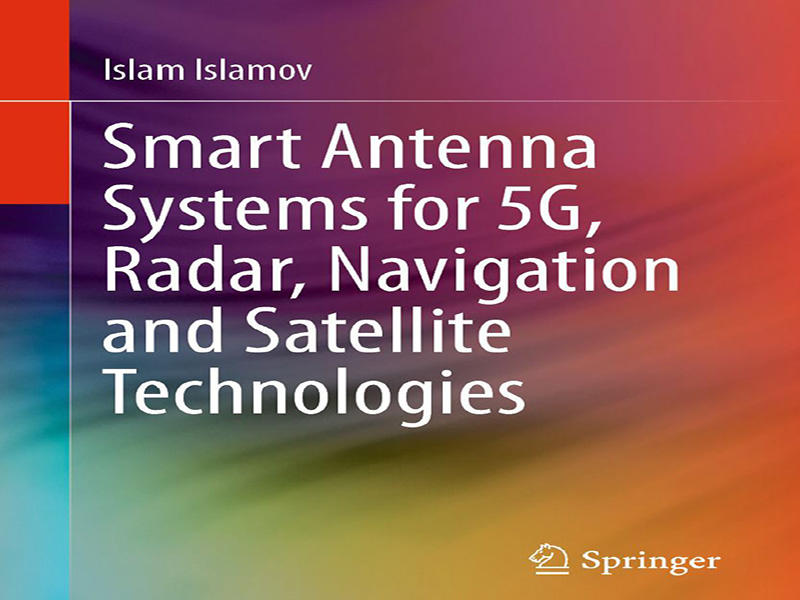
- عنوان کتاب: Smart Antenna Systems for 5G, Radar, Navigation and Satellite Technologies
- نویسنده: Islam Islamov
- حوزه: آنتن هوشمند
- سال انتشار: 2026
- تعداد صفحه: 202
- زبان اصلی: انگلیسی
- نوع فایل: pdf
- حجم فایل: 7.12 مگابایت
با توسعه فناوریهای بیسیم پهنباند، مهمترین مورد، استفاده از استانداردهای جدید انتقال داده 5G است. برای پیادهسازی این فناوری، استفاده از سیگنال پهنباند با مساحت پوشش کافی برای تعداد بیشتری از کاربران ضروری است. یکی از پارامترهای کلیدی این سلولها، تشکیل الگوهای تابش چند پرتویی، از جمله استفاده از فناوری MIMO است که تنها با استفاده از سیستمهای آنتن بسیار کارآمد پیادهسازی میشود. بنابراین، این پروژه با هدف توسعه نمونه اولیه آنتن SMART که بخشی از ایستگاههای پایه 5G است، انجام میشود. ارائه خدمات ارتباطی مدرن در حوزهها و زمینههای مختلف زندگی دولتی یکی از وظایف اصلی شرکتهای مخابراتی، بخشهای ساختاری و سازمانهای اجرای قانون کشور است. یکی از پرکاربردترین ابزارها در سیستمهای ارتباطی عمومی، امکانات رادیویی دسترسی بیسیم پهنباند است. این امکانات بر روی امکانات رله رادیویی Wi-Fi (2.4 تا 2.5 گیگاهرتز) پیادهسازی میشوند که به عنوان بخشی از گرههای ارتباطی مختلف برای تشکیل شبکههای دسترسی بیسیم پهنباند توزیعشده جغرافیایی استفاده میشوند. یک آرایه آنتن فازی با فرستندههای میکرواستریپ به عنوان دستگاه آنتن استفاده میشود. ارتباط این موضوع به شرح زیر است: امکانات رادیویی دسترسی بیسیم پهنباند در بخشهای مختلف نیروی انتظامی و سایر بخشها اغلب برای ساخت سیستمهای ارتباطی در شرایط بحرانی استفاده میشوند. از آنجایی که این سیستمها بر اساس شبکهها و سیستمهای ارتباطی موجود قبلی مستقر شدهاند، نیاز به تطبیق آنها با محیط الکترومغناطیسی موجود وجود دارد. محدوده 2.4 تا 2.5 گیگاهرتز به تداخل سایر منابع تابشی واقع در زمین کاملاً حساس است و این منجر به کاهش کیفیت ارتباط میشود. این مشکل را میتوان با استفاده از آنتنهای اسکن که میتوانند از تداخل وارد شده به کانال ارتباطی جلوگیری کنند، حل کرد. استفاده از آرایههای آنتن فازی برای ساخت آنتنهای اسکن، امکان اسکن فضایی با سرعت بالا و تعیین به موقع جهتها به سمت همه منابع تابش، چه تابش مجاز و چه غیرمجاز، را فراهم میکند. منبع تابش غیرمجاز منبعی است که قوانین کنترل دسترسی را نقض میکند و با تابش خود در کانال ارتباطی تداخل ایجاد میکند. این منابع قادر به سرکوب سیگنالهای مفید و ایجاد تداخل برای تجهیزات رادیویی هستند که در یک محدوده فرکانسی معین کار میکنند، که میتواند کیفیت خدمات ارائه شده را هنگام انجام وظایف مربوط به برنامهریزی و ارائه ارتباطات به طور قابل توجهی کاهش دهد. یکی از وظایف اصلی در برنامهریزی و سازماندهی ارتباطات، ارزیابی محیط الکترومغناطیسی و اطمینان از سازگاری الکترومغناطیسی تجهیزات رادیویی واقع در یک سایت، از جمله وجود منابع تابشی است که میتوانند تأثیر منفی بر عملکرد وظایف داشته باشند. ویژگیهای اصلی آرایههای آنتن فازی عبارتند از: برد اسکن، بهره آنتن، باند فرکانسی عملیاتی، قطبش میدان تابش، جهتگیری و ویژگیهای انرژی. در این حالت، این نوع آنتنها ممکن است از نظر نوع آرایه آنتن، چیدمان فرستندهها نسبت به یکدیگر، نوع فرستنده مورد استفاده، روش تحریک یا منبع تغذیه فرستندهها و همچنین روش اطمینان از حالت اسکن با یکدیگر متفاوت باشند. برای مقابله با تداخل، لازم است اقدامات ویژهای با هدف کاهش از دست رفتن اطلاعات در حین انتقال آن از طریق کانالهای ارتباطی رادیویی انجام شود. روشهای اصلی مقابله با تداخل شامل موارد زیر است: کاهش سطح تداخل در باند عبور گیرنده؛ افزایش انرژی سیگنال؛ پردازش بهینه سیگنال در گیرنده؛ انتخاب ساختار سیگنال بهینه؛ استفاده از سیگنالهای پیچیده؛ کدگذاری سیگنالها به منظور افزایش ایمنی نویز آنها؛ استفاده از روشهای مختلف جبران خسارت، از جمله جبرانکنندههای آنتن. با در نظر گرفتن عوامل فوق، توسعه چنین سیستمهای آنتنی که الزامات مدرن و ضروری برای دستگاههای آنتن بیسیم و ماهوارهای را برآورده کنند، ضروری است. شبیهسازی ساختاری فرکانس بالا (HFSS) بدون شک یکی از محبوبترین بستههای نرمافزاری برای تحقیقات علمی و محاسبات مهندسی است. این امر نه تنها توسط تعداد زیادی از کاربران در سراسر جهان، بلکه توسط افزونهها و اضافات مختلف نیز اثبات شده است. با انتشار بسته HFSS، قابلیتهای Matlab حتی غنیتر شده است. اکنون بسیاری از وظایف مهندسی آنتن و موجبر را میتوان در یک محیط نرمافزاری واحد و بدون دخالت برنامههای شخص ثالث حل کرد. نتایج مدلسازی دستگاههای آنتن و موجبر دیگر نیازی به خروجی گرفتن و قالببندی مجدد برای پردازش بیشتر ندارند و به لطف عملکرد پیشرفته HFSS، ابزارهای محاسبه و تحقیق بسیار مؤثر در دسترس قرار میگیرند. این مونوگراف به مدلسازی دستگاههای آنتن و موجبر برای سیستمهای ارتباطی بیسیم و ماهوارهای اختصاص داده شده است. این مونوگراف میتواند هم برای کسانی که تازه شروع به مطالعه تئوری مهندسی آنتن و موجبر کردهاند و هم برای یک محقق علمی و فنی باتجربه مفید باشد.
With the development of wireless broadband technologies, the most relevant is the use of new 5G data transmission standards. To implement this technology, it is necessary to use a broadband signal with a sufficient coverage area for a larger number of users. One of the key parameters of these cells is the formation of multi-beam radiation patterns, including using MIMO technology, which is implemented only with the use of highly efficient antenna systems. Therefore, this project is aimed at developing a prototype of a SMART antenna, which is part of 5G base stations. Providing modern communication services in various spheres and areas of state life is one of the main tasks of telecommunications companies, structural divisions, and law enforcement agencies of the country. One of the most widely used means in public communication systems is broadband wireless access radio facility. It is implemented on Wi-Fi radio relay facilities (2.4– 2.5 GHz), used as part of various communication nodes to form geographically distributed broadband wireless access networks. A phased antenna array with microstrip emitters is used as an antenna device. The relevance of the issue is as follows: broadband wireless access radio facilities in various law enforcement and other departments are often used to build communication systems in crisis situations. Since these systems are deployed on the basis of previously existing networks and communication systems, there is a need to adapt them to the existing electromagnetic environment. The 2.4–2.5 GHz range is quite sensitive to interference from other radiation sources located on the ground, and this leads to a deterioration in communication quality. This problem can be solved by using scanning antennas that can avoid interference introduced into the communication channel. The use of phased antenna arrays for constructing scanning antennas allows for high-speed space scanning and timely determination of directions to all radiation sources, both authorized and unauthorized radiation. An unauthorized radiation source is a source that violates access control rules and interferes with the communication channel with its radiation. These sources are capable of suppressing useful signals and creating interference for radio equipment operating in a given frequency range, which can significantly degrade the quality of services provided when performing tasks on communications planning and provision. One of the main tasks in communications planning and organization is to assess the electromagnetic environment and ensure electromagnetic compatibility of radio equipment located on a site, including the presence of radiation sources that can have a negative impact on the performance of tasks. The main characteristics of phased antenna arrays are: scanning range, antenna gain, operating frequency band, radiation field polarization, directivity, and energy characteristics. In this case, this type of antennas may differ from each other in the type of antenna array, in the arrangement of the emitters relative to each other, in the type of emitter used, in the method of excitation or power supply of the emitters, as well as in the method of ensuring the scanning mode. To combat interference, it is necessary to take special measures aimed at reducing the loss of information during its transmission over radio communication channels. The main methods of combating interference include the following: reducing the level of interference in the receiver passband; increasing the signal energy; optimal signal processing in the receiver; choosing the optimal signal structure; using complex signals; coding signals in order to increase their noise immunity; using various compensation methods, including antenna compensators. Taking into account the above factors, it is necessary to develop such antenna systems that will meet modern and necessary requirements for wireless and satellite antenna devices. High Frequency Structural Simulator (HFSS) is undoubtedly one of the most popular software packages for scientific research and engineering calculations. This is proven not only by the huge number of users around the world, but also by many different extensions and additions. With the release of the HFSS package, the capabilities of Matlab have become even richer. Many antenna and waveguide engineering tasks can now be solved in a single software environment without involving third-party applications. The results of modeling antenna and waveguide devices no longer need to be exported and reformatted for further processing, and thanks to the advanced functionality of HFSS, highly effective calculation and research tools become available. This monograph is devoted to modeling antenna and waveguide devices for wireless and satellite communication systems; it can be useful both for those who are just beginning to study the theory of antenna and waveguide engineering, and for an experienced scientific and technical researcher who wants to get acquainted with new possibilities in this area. The monograph is written for specialists in the field of radio engineering and telecommunications, as well as antenna technology. Some issues may be of interest to mathematicians, which will contribute to the further development of mathematical methods. It is known that any technology is best learned through practical examples. Therefore, most of the monograph is devoted to the analysis of specific examples of mathematical modeling of electromagnetic fields of antenna devices in radio engineering and telecommunications. While working on the book, the author discussed emerging issues with specialists from the Department of Automation, Telecommunications, and Energy of the Baku Engineering University, as well as with specialists from the National Aerospace Agency (NASA) of the Republic of Azerbaijan and the National Defense University. The author is grateful to all specialists from the above-mentioned institutions for their valuable, fundamental, and friendly comments, which contributed to improving the content of the monograph.
این کتاب را میتوانید از لینک زیر بصورت رایگان دانلود کنید:
Download: Smart Antenna Systems for 5G, Radar, Navigation and Satellite Technologies

























نظرات کاربران