



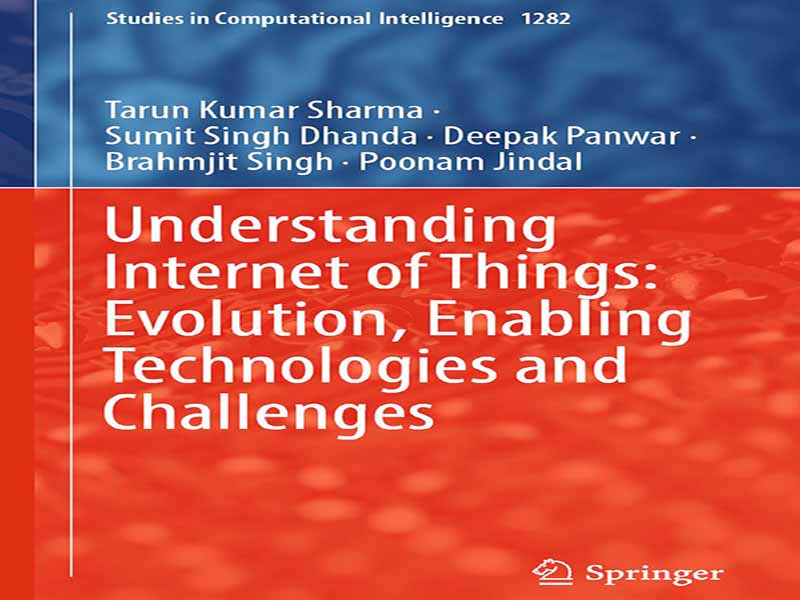
- عنوان کتاب: Understanding Internet of Things Evolution, Enabling Technologies and Challenges
- نویسنده: Tarun Kumar Sharma, Sumit Singh Dhanda
- حوزه: اینترنت اشیاء
- سال انتشار: 2026
- تعداد صفحه: 182
- زبان اصلی: انگلیسی
- نوع فایل: pdf
- حجم فایل: 12.2 مگابایت
اینترنت اشیا (IoT) تحقق الگوی محاسبات فراگیر است. اینترنت اشیا با ایده به حداقل رساندن ضایعات، تلفات و هزینه در مدیریت زنجیره تامین با استفاده از شناسایی فرکانس رادیویی (RFID) در سال ۱۹۹۹ توسط کوین آستون تصور شد. RFID برای اتصال اشیا استفاده شده است. این فناوری امکان شناسایی و ردیابی این اشیا را فراهم میکرد و این اطلاعات از طریق اینترنت به اشتراک گذاشته میشد که به نوبه خود به کاهش ضایعات، تلفات و هزینه کمک میکرد. در آن زمان، فناوری محدودیتهای خود را داشت و تلاشهای تحقیقاتی مورد نیاز بود. نه حسگرهای کوچک هیچ فناوری برای اتصال به اینترنت داشتند و نه هیچ زیرساختی برای تعداد زیادی از دستگاههای ارتباطی وجود داشت. اما با پیشرفت در فناوری مدارهای مجتمع (IC) و توسعه پروتکل اینترنت نسخه ۶ (IPv6)، که میتواند تقریباً همه چیز را در این سیاره به طور منحصر به فرد شناسایی کند، این چشمانداز امروزه قابل تحقق است. اشیا اینترنت اشیا میتوانند از طریق به اشتراک گذاری اطلاعات و تصمیمگیری هماهنگ بین یکدیگر، وظایف مختلفی را حس کرده و انجام دهند. اینترنت اشیا با استفاده از فناوریهای موجود، اشیا سنتی را به اشیا هوشمند تبدیل کرده است. سیسکو اینترنت اشیا را اولین تکامل اینترنت میداند. شناسایی، حسگری، ارتباط، محاسبه، معناشناسی و خدمات، شش عنصر یک سیستم اینترنت اشیا هستند. مهمترین پیشرفت فنی که این امر را ممکن ساخته است، IPv6 است. این فناوری قابلیت شناسایی منحصر به فرد هر شیء متصل روی زمین را فراهم کرده است. اینترنت اشیا تاکنون سه نسل توسعه را پشت سر گذاشته است. تکامل اینترنت اشیا به رشد دستگاههای اینترنت اشیا کمک کرده است. طبق گفته شانزی و همکاران، در سال ۲۰۱۴ حداقل ۹ میلیارد دستگاه متصل فقط در چین وجود داشت که این تعداد در سال ۲۰۲۰ به ۲۴ میلیارد خواهد رسید. طبق گفته سیسکو IBSG، اینترنت اشیا آن نقطه زمانی است که «اشیاء متصل» از تعداد افراد روی زمین بیشتر خواهند شد. در سال ۲۰۰۳، جمعیت ساکن روی زمین ۶.۳ میلیارد نفر بود در حالی که «دستگاههای متصل» ۵۰۰ میلیون نفر بودند. سیسکو IBSG در گزارش خود در سال ۲۰۱۱ پیشبینی کرد که در سال ۲۰۱۵ تعداد دستگاههای متصل به اینترنت ۲۵ میلیارد خواهد بود در حالی که این تعداد در سال ۲۰۲۰ به ۵۰ میلیارد خواهد رسید. الگوی اینترنت اشیا با اتصال هر دستگاهی در هر مکان و هر زمان، به تمام جنبههای زندگی روزمره سود میرساند. شبکههای حسگر بیسیم (WSN)، محاسبات ابری، تکنیکهای کلان داده، شبکههای تعریفشده توسط نرمافزار (SDN)، شبکههای متمرکز بر اطلاعات (ICN) و محاسبات مه، فناوریهایی هستند که به شکلگیری اینترنت اشیا کمک میکنند. در این بررسی، سعی کردهایم حوزه تحقیقاتی را که محققان میتوانند برای کار در زمینه اینترنت اشیا از آن استفاده کنند، شناسایی کنیم.
Internet of things (IoT) is the realization of ubiquitous computing paradigm. IoT was envisioned with the idea to minimize the wastage, loss and cost in supply chain management using Radio Frequency Identification (RFID), in 1999 by Kevin Aston. RFID has been used for connecting things. It enabled these things to be identified and tracked and this information was shared over the internet which in turn helped in reducing wastage, loss, and cost. At that time, technology had its limitations and research efforts were needed. Neither small sensors had any technology to connect with internet nor there any existing infrastructure to a huge number of communicating devices. But with the advancement in integrated circuits (IC)-technology and development of Internet Protocol version 6 (IPv6), which can uniquely identify nearly everything on this planet, that vision can be realized today. The IoT objects can sense and do various tasks via information sharing and coordinated decision making amongst each other. The IoT has converted the traditional objects into the smart ones by utilizing the existing technologies. Cisco considers IoT to be the first evolution of the Internet. Identification, sensing, communication, computation, semantics, and services are the six elements of an IoT system. The most important technical advancement that has made it possible is IPv6. It has given the capability of uniquely identifying each and every connected object on earth. IoT has gone through three generations of development till now. Evolution of IoT has helped in the growth of IoT devices. As per Shanzi et al., in 2014 there were at least 9 billion interconnected devices in China alone, number will touch the 24 billion in 2020. As per Cisco IBSG, IoT is that point in time when ‘connected objects’ will outnumber the people on earth. In 2003 the people living on the earth were 6.3 billion while the ‘connected devices’ were 500 million. Cisco IBSG predicted in its report in 2011 that in year 2015 the number of devices connected to Internet will be 25 billion while the same will rise to 50 billion in 2020. The Internet of things paradigm benefits all daily life aspects by connecting any device at any place that too any time. Wireless Sensor Networks (WSN), cloud computing, Big Data techniques, Software Defined Networking (SDN), Information Centred Networking (ICN) and Fog Computing are the technologies that help in formation of IoT. In this survey we have tried to identify the area of research that can be used by the researchers to work for IoT.
این کتاب را میتوانید از لینک زیر بصورت رایگان دانلود کنید:
Download: Understanding Internet of Things
















نظرات کاربران