



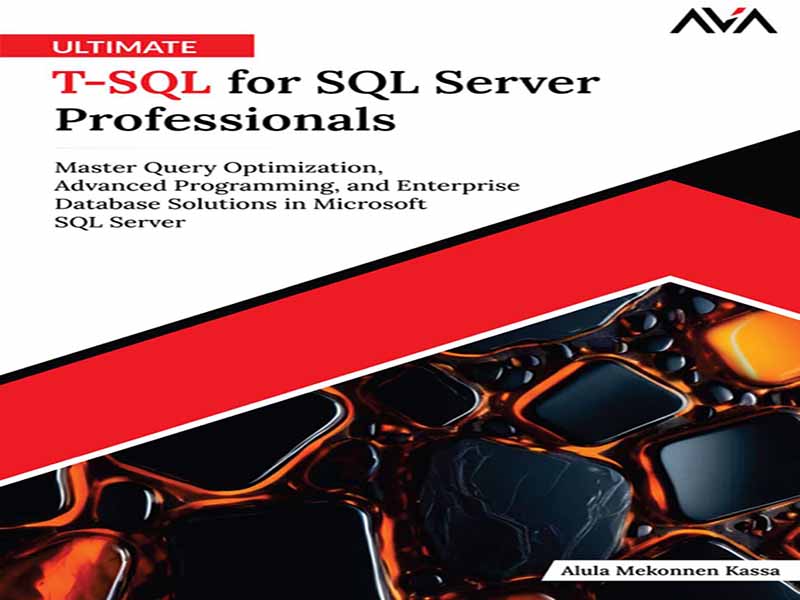
- عنوان کتاب: Ultimate T-SQL for SQL Server Professionals -Master Query Optimization, Advanced Programming, and Enterprise Database Solutions in Microsoft SQL Server
- نویسنده: Alula Mekonnen Kassa
- حوزه: SQL Server
- سال انتشار: 2026
- تعداد صفحه: 734
- زبان اصلی: انگلیسی
- نوع فایل: pdf
- حجم فایل: 7.80 مگابایت
کتاب «T-SQL نهایی برای متخصصان SQL Server»، راهنمای جامع شما برای تسلط بر T-SQL و SQL Server برای چالشهای دادههای دنیای واقعی است. بنابراین، چه یک متخصص، دانشجو یا علاقهمند به پایگاه داده باشید، این کتاب یک رویکرد عملی و مثالمحور برای پرسوجو، مدیریت و بهینهسازی دادهها در SQL Server ارائه میدهد. از مفاهیم بنیادی گرفته تا تکنیکهای پیشرفته، Ultimate T-SQL خوانندگان را قادر میسازد تا پرسوجوهای کارآمد بنویسند، وظایف را خودکار کنند و راهحلهای پایگاه داده قوی توسعه دهند. هر فصل به طور منطقی بر اساس فصل قبلی بنا شده است و اطمینان حاصل میکند که شما اعتماد به نفس پیدا میکنید، در حالی که مهارتهای T-SQL را در سناریوهای واقعی در صنایعی مانند مراقبتهای بهداشتی، مالی و فناوری به کار میبرید. چرا این کتاب متفاوت است: مثالها و تمرینهای دنیای واقعی برای یادگیری عملی. راهنمایی گام به گام از پرسوجوهای پایه تا مباحث پیشرفته. T-SQL را در یک زمینه حرفهای، عملی و مناسب برای صنعت پوشش میدهد. بینشهایی در مورد بهترین شیوهها، بهینهسازی و عیبیابی ارائه میدهد. نکات برجسته فصل: فصل 1 – شروع به کار با T-SQL: با اکوسیستم SQL Server، اشیاء اصلی پایگاه داده و اصول اولیه نوشتن دستورات SELECT آشنا شوید. این فصل، زمینه را برای درک چگونگی تعامل T-SQL با دادههای رابطهای فراهم میکند. فصل 2 – انواع دادهها، NULLها و تبدیلها: یاد بگیرید که SQL Server چگونه دادهها را ذخیره میکند و چگونه انواع دادههای صحیح را برای دقت و عملکرد انتخاب کنید. این فصل، مدیریت NULL و تبدیل نوع را برای جلوگیری از خطاهای منطقی و ناسازگاری دادهها توضیح میدهد. فصل 3 – دستورات SELECT و منطق فیلترینگ: بازیابی دادهها را با استفاده از فیلتر کردن، مرتبسازی، منطق شرطی و ترتیب اجرای پرسوجو، به طور کامل انجام دهید. این فصل بر نوشتن پرسوجوهای SELECT دقیق و خوانا که منعکسکننده قوانین کسبوکار در دنیای واقعی هستند، تمرکز دارد. فصل 4 – اتصالها، عملیات تنظیم و زیرپرسوجوها: نحوه ترکیب دادهها در چندین جدول با استفاده از اتصالها، اتحادیهها و زیرپرسوجوها را درک کنید. این فصل به شما میآموزد که چگونه روابط را مدلسازی کنید و مشکلات پیچیده دادهها را به طور موثر حل کنید. فصل 5 – نمایشها، توابع و رویههای ذخیره شده: منطق را در اشیاء پایگاه داده قابل استفاده مجدد برای کد تمیزتر و قابلیت نگهداری بهتر، کپسوله کنید. این فصل نحوه طراحی، مدیریت و بهینهسازی اشیاء پایگاه داده قابل برنامهریزی را پوشش میدهد. فصل 6 – CTEها، MERGE، Pivoting، JSON و XML: تکنیکهای پیشرفته پرسوجو برای تبدیل و تغییر شکل دادهها را بررسی کنید. این فصل نشان میدهد که چگونه SQL Server دادههای سلسله مراتبی و فرمتهای داده مدرن را مدیریت میکند. فصل 7 – SQL پویا، Triggers و توابع Table-Valued (TVFها): منطق پایگاه داده انعطافپذیر و خودکار را با استفاده از SQL پویا و برنامهنویسی رویداد محور پیادهسازی کنید. این فصل ملاحظات عملکرد و بهترین شیوهها را برای اتوماسیون پیشرفته پایگاه داده برجسته میکند. فصل 8 – بهینهسازی پرسوجو و تنظیم عملکرد: بیاموزید که چگونه SQL Server پرسوجوها را اجرا میکند و با استفاده از استراتژیهای نمایهسازی، آمار و بازنویسی پرسوجو، تنگناهای عملکرد را شناسایی میکند. این فصل بر نوشتن T-SQL کارآمد که به خوبی تحت بارهای کاری دنیای واقعی مقیاسپذیر است، تمرکز دارد. فصل 9 – برنامههای اجرایی و انبار پرسوجو: نحوه خواندن و تفسیر برنامههای اجرایی را برای تشخیص پرسوجوهای کند و عملیاتهای فشرده منابع درک کنید. انبار پرسوجو را برای ردیابی تغییرات عملکرد، مقایسه برنامهها و تثبیت رفتار پرسوجو در طول زمان بررسی کنید. فصل 10 – سطوح تراکنشها، همزمانی و جداسازی: تسلط بر کنترل تراکنش و مدیریت همزمانی برای حفظ سازگاری دادهها در محیطهای چند کاربره. این فصل سطوح جداسازی، قفل کردن، مسدود کردن و بنبستها را با مثالهای عملی توضیح میدهد. فصل 11 – اتوماسیون با SSIS، SQL Agent و PowerShell: خودکارسازی گردشهای کاری پایگاه داده با استفاده از سرویسهای یکپارچهسازی SQL Server، کارهای SQL Server Agent و اسکریپتنویسی PowerShell. یاد بگیرید چگونه عملیات تکرارپذیر پایگاه داده را به طور کارآمد برنامهریزی، نظارت و نگهداری کنید. فصل 12 – ادغام Azure SQL و Synapse: کشف کنید که چگونه T-SQL با Azure SQL Database و Azure Synapse Analytics به ابر گسترش مییابد. این فصل آمادگی ابر، ملاحظات عملکرد و سناریوهای یکپارچهسازی ترکیبی را پوشش میدهد. فصل 13 – امنیت، مجوزها و حسابرسی: از دادههای حساس با استفاده از ویژگیهای امنیتی SQL Server مانند نقشها، مجوزها و رمزگذاری محافظت کنید. همچنین، یاد بگیرید که چگونه حسابرسی و کنترلهای دسترسی را که با الزامات سازمانی و انطباق همسو هستند، پیادهسازی کنید. فصل ۱۴ – تست واحد T-SQL با tSQLt: اصول توسعه مبتنی بر تست را با استفاده از چارچوب tSQLt به لایه پایگاه داده معرفی کنید. این فصل نحوه اعتبارسنجی منطق، جلوگیری از رگرسیون و بهبود قابلیت اطمینان کد را نشان میدهد. فصل ۱۵ – مطالعات موردی و آینده T-SQL: مفاهیم T-SQL را از طریق مطالعات موردی دنیای واقعی که منعکس کننده چالشهای رایج سازمانی هستند، به کار ببرید. ویژگیهای نوظهور و بهترین شیوههای در حال تکامل را که آینده توسعه T-SQL را شکل میدهند، بررسی کنید. فصل ۱۶ – بهترین شیوهها برای توسعه T-SQL و طراحی پایگاه داده: الگوهای اثبات شده برای نوشتن کدهای T-SQL تمیز، قابل نگهداری و با کارایی بالا را تثبیت کنید. در واقع، این فصل …
The book, Ultimate T-SQL for SQL Server Professionals, is your comprehensive guide to mastering T-SQL and SQL Server for real-world data challenges. So, whether you are a professional, student, or database enthusiast, this book provides a practical, example-driven approach to querying, managing, and optimizing data in SQL Server. From foundational concepts to advanced techniques, Ultimate T-SQL empowers readers to write efficient queries, automate tasks, and develop robust database solutions. Each chapter builds logically on the previous one, ensuring that you gain confidence, while applying T-SQL skills in real scenarios across industries such as healthcare, finance, and technology. Why This Book is Different: Real-world examples and exercises for hands-on learning. Step-by-step guidance from basic queries to advanced topics. Covers T-SQL in a professional, practical, and industry-ready context. Provides insights on the best practices, optimization, and troubleshooting. Chapter Highlights: Chapter 1 – Getting Started with T-SQL: Get introduced to the SQL Server ecosystem, core database objects, and the fundamentals of writing SELECT statements. This chapter lays the groundwork for understanding how T-SQL interacts with relational data. Chapter 2 – Data Types, NULLs, and Conversions: Learn how SQL Server stores data, and how to choose the correct data types for accuracy and performance. This chapter explains NULL handling and type conversions to prevent logic errors and data inconsistencies. Chapter 3 – SELECT Statements and Filtering Logic: Master data retrieval using filtering, sorting, conditional logic, and query execution order. This chapter focuses on writing precise, readable SELECT queries that reflect real-world business rules. Chapter 4 – Joins, Set Operations, and Subqueries: Understand how to combine data across multiple tables using joins, unions, and subqueries. This chapter teaches you how to model relationships and solve complex data problems efficiently. Chapter 5 – Views, Functions, and Stored Procedures: Encapsulate logic into reusable database objects for cleaner code and better maintainability. This chapter covers how to design, manage, and optimize programmable database objects. Chapter 6 – CTEs, MERGE, Pivoting, JSON, and XML: Explore advanced querying techniques for transforming and reshaping data. This chapter demonstrates how SQL Server handles hierarchical data and modern data formats. Chapter 7 – Dynamic SQL, Triggers, and Table-Valued Functions (TVFs): Implement flexible and automated database logic using dynamic SQL and event-driven programming. This chapter highlights performance considerations and best practices for advanced database automation. Chapter 8 – Query Optimization and Performance Tuning: Learn how SQL Server executes queries, and identify performance bottlenecks using indexing strategies, statistics, and query rewrites. This chapter focuses on writing efficient T-SQL that scales well under real-world workloads. Chapter 9 – Execution Plans and Query Store: Understand how to read and interpret execution plans to diagnose slow queries and resource-intensive operations. Explore Query Store to track performance changes, compare plans, and stabilize query behavior over time. Chapter 10 – Transactions, Concurrency, and Isolation Levels: Master transaction control and concurrency management to maintain data consistency in multi-user environments. This chapter explains isolation levels, locking, blocking, and deadlocks with practical examples. Chapter 11 – Automation with SSIS, SQL Agent, and PowerShell: Automate database workflows using SQL Server Integration Services, SQL Server Agent jobs, and PowerShell scripting. Learn how to schedule, monitor, and maintain repeatable database operations efficiently. Chapter 12 – Azure SQL and Synapse Integration: Discover how T-SQL extends into the cloud with Azure SQL Database and Azure Synapse Analytics. This chapter covers cloud readiness, performance considerations, and hybrid integration scenarios. Chapter 13 – Security, Permissions, and Auditing: Protect the sensitive data using SQL Server security features such as roles, permissions, and encryption. Also, learn how to implement auditing and access controls that align with enterprise and compliance requirements. Chapter 14 – Unit Testing T-SQL with tSQLt: Introduce test-driven development principles to the database layer using the tSQLt framework. This chapter demonstrates how to validate logic, prevent regressions, and improve code reliability. Chapter 15 – Case Studies and the Future of T-SQL: Apply T-SQL concepts through real-world case studies that reflect common enterprise challenges. Explore the emerging features and evolving best practices shaping the future of T-SQL development. Chapter 16 – Best Practices for T-SQL Development and Database Design: Consolidate the proven patterns for writing clean, maintainable, and high-performance T-SQL codes. In fact, this chapter provides practical guidelines for schema design, coding standards, and long-term maintainability.
این کتاب را میتوانید از لینک زیر بصورت رایگان دانلود کنید:















نظرات کاربران