



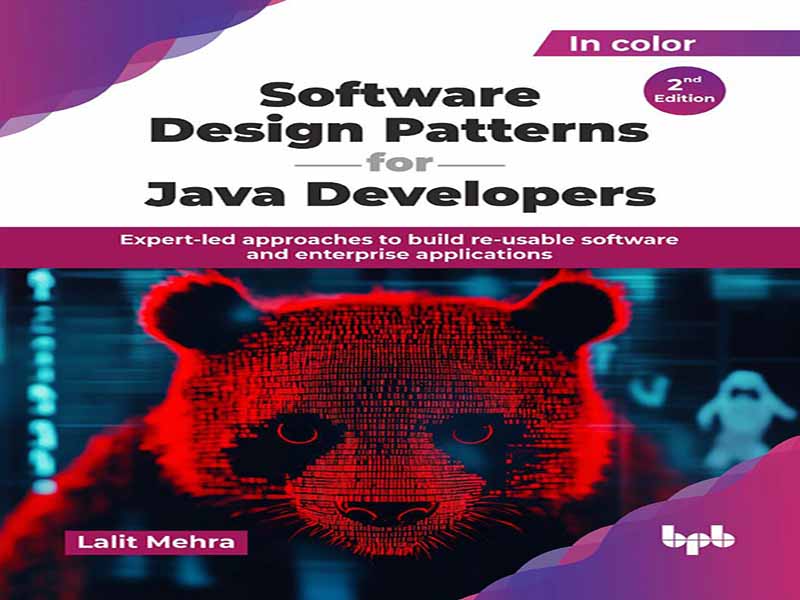
- عنوان کتاب: Software Design Patterns for Java Developers – 2nd Edition
- نویسنده: Lalit Mehra
- حوزه: جاوا
- سال انتشار: 2026
- تعداد صفحه: 395
- زبان اصلی: انگلیسی
- نوع فایل: pdf
- حجم فایل: 15.0 مگابایت
الگوهای طراحی نرمافزار دهههاست که وجود دارند، اما امروزه به همان اندازه که برای اولین بار مستندسازی شدند، مرتبط هستند. اگر زمانی را صرف ساخت سیستمهای واقعی کردهاید، قبلاً با آنها مواجه شدهاید. گاهی اوقات آنها را با نام میشناسید. اغلب، شما به سادگی یک مشکل را حل میکنید و به یک ساختار آشنا میرسید بدون اینکه متوجه شوید برچسبی دارد. این کتاب سه دسته اصلی الگوهای طراحی شیگرا را بررسی میکند که شامل خلقی، ساختاری و رفتاری است. این کتاب در پنج بخش سازماندهی شده است. بخش اول با پاسخ به یک سوال ساده اما مهم، که چرا الگوهای طراحی در وهله اول اهمیت دارند، زمینه را فراهم میکند؟ سه بخش بعدی با پیروی از یک رویکرد واضح تک فصلی و تک الگویی، به خود الگوها میپردازند تا بتوانید بدون حواسپرتی بر درک هر ایده تمرکز کنید. بخش آخر به عقب برمیگردد تا در مورد اصول طراحی و ضد الگوهای رایج بحث کند، زیرا دانستن اینکه چه چیزی نباید ساخته شود به همان اندازه دانستن اینکه چه چیزی باید ساخته شود، مهم است. تقریباً هر سیستم نرمافزاری کاربردی امروزه به یک یا چند مورد از این الگوها متکی است. آنها بیسروصدا معماری برنامهها را در صنایع و مقیاسها شکل میدهند. این کتاب بر برخی از پرکاربردترین الگوهای طراحی شیگرا تمرکز دارد و پیادهسازی آنها را با استفاده از جاوا نشان میدهد. هدف این نیست که شما را با تئوری غرق کنیم، بلکه میخواهیم به شما کمک کنیم تا بفهمید که چرا این الگوها وجود دارند، چه مشکلاتی را حل میکنند و چه زمانی منطقی هستند. هر فصل با یک مسئله طراحی عملی شروع میشود. به جای شروع با تعاریف انتزاعی، با موقعیتهایی شروع میکنیم که احتمالاً در توسعه دنیای واقعی با آنها مواجه خواهید شد. از آنجا، بررسی میکنیم که چگونه یک الگوی خاص به رفع چالش کمک میکند. تأکید در کل کتاب بر وضوح و شهود است. در صورت امکان، مثالها بر اساس سناریوهای واقعگرایانه ارائه شدهاند تا بتوانید الگو را به انواع سیستمهایی که ممکن است در حال ساخت آنها باشید، مرتبط کنید. این کتاب برای توسعهدهندگانی در نظر گرفته شده است که پایه قوی در توسعه نرمافزار دارند و تجربهای در کار بر روی سیستمهای متوسط تا بزرگ دارند. اگر با برنامههای چند ماژولی کار کردهاید، در تیمها همکاری کردهاید یا با حفظ پایگاههای کد در حال تکامل مشکل داشتهاید، این مفاهیم را به ویژه مفید خواهید یافت. چه به دنبال تقویت درک خود از طراحی باشید و چه به دنبال اصلاح نحوه برخورد با مشکلات پیچیده، این کتاب قصد دارد به عنوان یک راهنمای عملی و قابل اعتماد عمل کند. فصل 1: خود را روشن کنید – این فصل پایه و اساس درک الگوهای طراحی، دلیل وجود آنها و چگونگی ظهور آنها از چالشهای نرمافزاری مکرر را تعیین میکند. سپس طرز فکر لازم برای به کارگیری الگوها به صورت متفکرانه و نه مکانیکی را ایجاد میکند. فصل 2: منحصر به فرد – این فصل سناریوهای دنیای واقعی را بررسی میکند که در آنها نمونهسازی کنترلشده اهمیت دارد. سپس این فصل گزینههای پیادهسازی در جاوا، تصورات غلط رایج و اینکه چگونه سوءاستفاده میتواند خطرات طراحی پنهان را ایجاد کند، مورد بحث قرار میدهد. فصل 3: کارخانه شیء – این فصل چالشهای ایجاد شیء در سیستمهای در حال رشد را بررسی میکند و سپس پیادهسازیهای عملی جاوا را بررسی میکند و برجسته میکند که چگونه کارخانهها انعطافپذیری را در عین اجتناب از اتصال محکم بهبود میبخشند. فصل 4: ساخت شیء نماینده – این فصل به پیچیدگی ساخت اشیاء بزرگ یا قابل پیکربندی میپردازد. همچنین پیادهسازیهای تمیز جاوا را نشان میدهد و مزایای خوانایی، تغییرناپذیری و قابلیت نگهداری را مورد بحث قرار میدهد. فصل 5: بازیافت و استفاده مجدد – این فصل سناریوهای مبتنی بر عملکرد را که در آنها استفاده مجدد از شیء حیاتی است، تجزیه و تحلیل میکند. این فصل همچنین پیادهسازی بده بستانها و اینکه چه زمانی ادغام، کارایی را بهبود میبخشد در مقابل زمانی که پیچیدگی غیرضروری ایجاد میکند، توضیح میدهد. فصل 6: نمونه اولیه – این فصل استراتژیهای تکثیر در ایجاد شیء را بررسی میکند. در مورد تکنیکهای شبیهسازی در جاوا، کپی عمیق در مقابل کپی سطحی و اینکه چه زمانی نمونههای اولیه منطق نمونهسازی پیچیده را ساده میکنند، بحث میکند. فصل 7: آداپتور – این فصل بر چالشهای ادغام بین رابطهای ناسازگار تمرکز دارد و تطبیقهای عملی جاوا را نشان میدهد و در ادامه به بحث در مورد چگونگی گسترش ایمن سیستمهای قدیمی یا شخص ثالث میپردازد. فصل 8: تزئین اشیاء – این فصل به بررسی رفتار گسترش بدون تغییر کد موجود میپردازد، تکنیکهای لایهبندی عملی را توضیح میدهد و تزئینکنندهها را با رویکردهای مبتنی بر وراثت مقایسه میکند. فصل 9: گاردین – این فصل به بررسی دسترسی کنترلشده به اشیاء در سناریوهای دنیای واقعی، مانند ذخیرهسازی و امنیت میپردازد. این فصل جزئیات پیادهسازی و موارد استفاده معماری رایج را بیشتر برجسته میکند. فصل 10: سادهسازی پیچیدگی – این فصل سادهسازی زیرسیستمهای پیچیده را از طریق رابطهای یکپارچه نشان میدهد. این فصل همچنین در مورد چگونگی بهبود قابلیت نگهداری و کاهش وابستگیهای غیرضروری بحث میکند. فصل 11: پل – این فصل به سیستمهایی با ابعاد مختلف تنوع میپردازد. همچنین ساختاربندی انتزاعها و پیادهسازیها را به طور مستقل برای حفظ انعطافپذیری در طول زمان توضیح میدهد. فصل 12: اعمال فیلترها..
Software design patterns have been around for decades, yet they remain just as relevant today as they were when they were first documented. If you have spent any time building real systems, you have already encountered them. Sometimes you recognized them by name. Often, you simply solve a problem and arrive at a familiar structure without realizing it has a label. This book explores the three major categories of object-oriented design patterns, which include creational, structural, and behavioral. It is organized into five sections. The first section sets the stage by answering a simple but important question, which is why do design patterns matter in the first place? The next three sections dive into the patterns themselves, following a clear one-chapter, one-pattern approach so you can focus on understanding each idea without distraction. The final section steps back to discuss design principles and common anti-patterns, because knowing what not to build is just as important as knowing what to build. Almost every functional software system today relies on one or more of these patterns. They quietly shape the architecture of applications across industries and scales. This book focuses on some of the most widely used object-oriented design patterns and demonstrates their implementation using Java. The goal is not to overwhelm you with theory, but to help you understand why these patterns exist, what problems they solve, and when they make sense. Each chapter begins with a practical design problem. Instead of starting with abstract definitions, we begin with situations you are likely to encounter in real-world development. From there, we examine how a particular pattern helps address the challenge. The emphasis throughout is on clarity and intuition. Wherever possible, examples are grounded in realistic scenarios so you can connect the pattern to the kinds of systems you may already be building. This book is intended for developers who have a strong foundation in software development and some experience working on medium to largescale systems. If you have worked with multi-module applications, collaborated across teams, or struggled with maintaining evolving codebases, you will find these concepts especially useful. Whether you are looking to strengthen your understanding of design or refine the way you approach complex problems, this book aims to serve as a practical and reliable guide. Chapter 1: Enlighten Yourself– This chapter sets the foundation for understanding design patterns, why they exist, and how they emerged from recurring software challenges. It then establishes the mindset required to apply patterns thoughtfully rather than mechanically. Chapter 2: One of a Kind – This chapter explores the real-world scenarios where controlled instantiation matters. The chapter then discusses the implementation choices in Java, common misconceptions, and how misuse can introduce hidden design risks. Chapter 3: Object Factory – This chapter examines object creation challenges in growing systems and then walks through practical Java implementations and highlights how factories improve flexibility while avoiding tight coupling. Chapter 4: Delegate Object Construction– This chapter addresses the complexity of constructing large or configurable objects. It also demonstrates clean Java implementations and discusses readability, immutability, and maintainability benefits. Chapter 5: Recycle and Reuse– This chapter analyzes performance-driven scenarios where object reuse is critical. The chapter also explains the implementation of trade-offs and when pooling improves efficiency versus when it adds unnecessary complexity. Chapter 6: Prototype– This chapter explores duplication strategies in object creation. It discusses the cloning techniques in Java, deep versus shallow copying, and when prototypes simplify complex instantiation logic. Chapter 7: Adapter– This chapter focuses on integration challenges between incompatible interfaces and demonstrates practical Java adaptations, further discussing how to extend legacy or third-party systems safely. Chapter 8: Decorating Objects– This chapter examines extending behavior without modifying existing code, explains practical layering techniques, and compares decorators with inheritance-based approaches. Chapter 9: The Guardian– This chapter explores controlled access to objects in real-world scenarios, such as caching and security. The chapter further highlights implementation details and common architectural use cases. Chapter 10: Simplifying the Complexity– This chapter demonstrates simplifying complex subsystems through unified interfaces. The chapter also discusses how this improves maintainability and reduces unnecessary dependencies. Chapter 11: Bridge– This chapter addresses systems with multiple dimensions of variation. It also explains structuring abstractions and implementations independently to maintain flexibility over time. Chapter 12: Applying Filters– This chapter explores designing modular filtering logic. It further discusses combining criteria effectively while preserving clarity and maintainability. Chapter 13: Composite– This chapter covers modeling hierarchical data structures and explains how uniform treatment of objects simplifies recursive and tree-based designs. Chapter 14: Template– This chapter examines defining algorithm structure while allowing customization. The chapter also highlights controlled extensibility and reuse in Java implementations. Chapter 15: Keep a Close Eye– This chapter explores event-driven communication between objects. It demonstrates how to implement observer relationships cleanly and avoid tight coupling. Chapter 16: State and Behaviors– This chapter analyzes managing behavior transitions without excessive conditionals. It also shows how structured state modeling improves clarity and maintainability. Chapter 17: Executing Commands– This chapter explores encapsulating actions for flexibility and traceability. It further discusses undo functionality, logging, and decoupled execution models. Chapter 18: Strategy– This chapter examines replacing conditional logic with interchangeable algorithms and demonstrates runtime flexibility and improved design clarity. Chapter 19: Pipeline– This chapter explores structuring sequential data processing stages. It also highlights modularity, testability, and extensibility in workflow-based systems. Chapter 20: Beyond Design Patterns– This chapter reflects on responsible pattern usage, anti-patterns, and design principles, and encourages critical thinking over blind application.
این کتاب را میتوانید از لینک زیر بصورت رایگان دانلود کنید:
Download: Software Design Patterns for Java Developers – 2nd Edition
















نظرات کاربران