



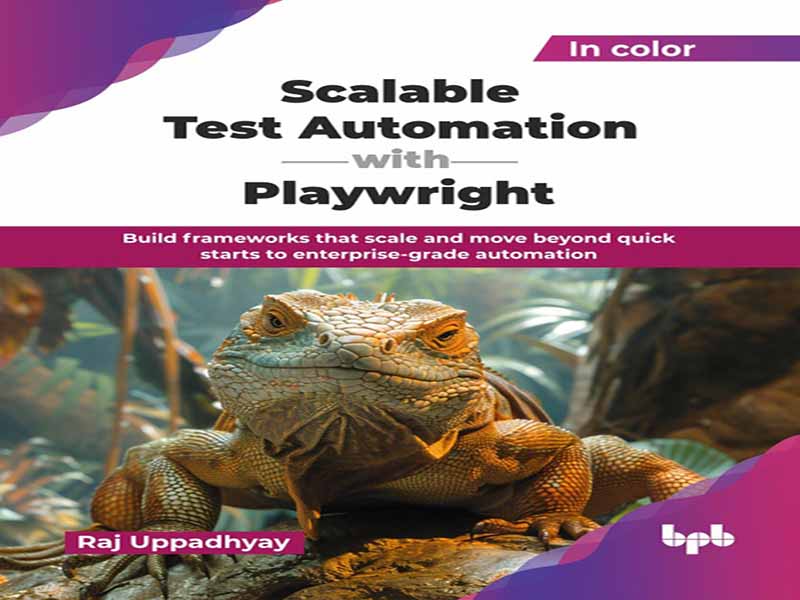
- عنوان کتاب: Scalable Test Automation with Playwright
- نویسنده: Raj Uppadhyay
- حوزه: آزمون نرمافزار
- سال انتشار: 2026
- تعداد صفحه: 401
- زبان اصلی: انگلیسی
- نوع فایل: pdf
- حجم فایل: 4.18 مگابایت
Playwright یک ابزار اتوماسیون قدرتمند برای برنامههای وب مدرن است که از هر دو جنبه برنامه وب، یعنی رابط کاربری (UI) و رابط برنامهنویسی برنامه (API)، پشتیبانی قابل اعتمادی ارائه میدهد. در حالی که Playwright مسیری سرراست برای ایجاد اسکریپتهای اتوماسیون پایه ارائه میدهد، گسترش این تلاش به تست برنامههای کاربردی در سطح سازمانی، رویکردی کاملاً متفاوت، یعنی استفاده و بهکارگیری اصول مهندسی نرمافزار و تفکر پیشرفته را در بر میگیرد. هدف اصلی این کتاب، پر کردن این شکاف با ارائه یک رویکرد گام به گام برای ساخت یک چارچوب مقاوم در برابر آینده، مقیاسپذیر و قابل نگهداری است. این کتاب با درک الگوهای طراحی بنیادی در تئوری، بهکارگیری این الگوها در عمل با مثالهای کد و ساخت چارچوبهای اتوماسیون تست UI و API پایه آغاز میشود. سپس این کتاب شما را راهنمایی میکند تا استراتژیهای امتحان شده و آزمایش شده را برای تبدیل چارچوبها به یک راهحل در سطح سازمانی که مقاوم در برابر آینده، بدون وابستگی به ابزار، مقیاسپذیر و آسان برای نگهداری باشد، دنبال کنید. در سراسر این کتاب، خوانندگان در مورد توضیح الگوهای طراحی کلیدی، از جمله مدل شیء صفحه (POM)، Factory و Singleton، همراه با اصول راهنمای قابلیت نگهداری، مانند SOLID و DRY، اطلاعات کسب خواهند کرد. سپس این کتاب، توسعه چارچوبهای API و UI را پوشش میدهد و در عین حال بر ماژولاریتی و انتزاع مستقل از ابزار و سناریوهای واقعی مانند مهاجرت از Playwright به Puppeteer تأکید میکند. سایر مباحثی که مورد بحث قرار خواهند گرفت عبارتند از ادغام CI/CD، استراتژیهای دادههای تست، گزارشدهی دقیق و نحوه پیادهسازی قابلیت مشاهده در مجموعههای تست بزرگ. فصل آخر، خوانندگان را با نقش نوظهور هوش مصنوعی مولد در تست نرمافزار آشنا میکند. این کتاب با نشان دادن روشهای عملی برای استفاده از هوش مصنوعی در اتوماسیون تست با مثالهای کد، به عنوان کاوشی در امکانات عمل میکند. الگوها و اصول فصلهای قبلی در پایه شما باقی میمانند. ابزارهای هوش مصنوعی، افزونههای بالقوهای برای جعبه ابزار در حال تکامل شما هستند. در پایان این کتاب، خوانندگان اعتماد به نفس و شایستگی در طراحی، ساخت و مقیاسبندی چارچوبهای اتوماسیون تست مناسب برای محیطهای سازمانی را به دست خواهند آورد. آنها فراتر از اسکریپتنویسی ساده حرکت خواهند کرد تا به معماران تستی تبدیل شوند که میتوانند توسعه را در ایجاد راهحلهای اتوماسیون تست مقیاسپذیر و مقاوم در برابر آینده رهبری کنند. فصل 1: اتوماسیون تست مقیاسپذیر و الگوهای طراحی – نیاز به اتوماسیون تست مقیاسپذیر را توضیح میدهد، همراه با برجسته کردن برخی از کاستیهای شروع کار با راهنماهای سریع. این فصل مفاهیم الگوهای طراحی کلیدی، POM، Factory، Singleton و Template Methods را پوشش میدهد. این الگوهای طراحی، چارچوبهای مقیاسپذیر را تقویت میکنند. این فصل پایه خوبی از مفاهیمی را ارائه میدهد که تئوری را با عمل مرتبط میکند تا به نوشتن کد ماژولار، قابل استفاده مجدد و قابل مشاهده کمک کند، که به نوبه خود به آسان شدن نگهداری چارچوب کمک میکند. فصل 2: ساخت اولین چارچوب اتوماسیون تست API شما – انتقال از الگوها به عمل با توسعه/ساخت یک چارچوب API با استفاده از Playwright و Typescript. شما الگوهای کلیدی را پیادهسازی خواهید کرد، مدیریت زمینه تست را درک خواهید کرد و پایه محکمی را برای یک چارچوب تست API قابل استفاده مجدد، مقیاسپذیر و قابل نگهداری ایجاد خواهید کرد. فصل ۳: ساخت یک چارچوب رابط کاربری مقیاسپذیر – در ادامه سفر فصل قبل، این فصل شما را در طراحی یک چارچوب تست رابط کاربری ماژولار، قابل استفاده مجدد و قابل نگهداری با استفاده از الگوهای طراحی آموخته شده، همراه با معرفی تست مبتنی بر داده برای اطمینان از آماده بودن راهحل برای پیچیدگی تولید، راهنمایی میکند. فصل ۴: مهاجرت چارچوب برای اتوماسیون مقاوم در برابر آینده – بر نشان دادن قدرت واقعی دنبال کردن/ساخت چارچوبهای مقیاسپذیر، یعنی مهاجرت چارچوب Playwright به Puppeteer با حداقل تغییرات کد، همراه با مشاهده اینکه چگونه طراحی مستقل از ابزار به ما کمک میکند تا برای تغییرات آینده سازگار باشیم و از سرمایهگذاری که در اتوماسیون انجام دادهایم محافظت کنیم، تمرکز دارد. فصل ۵: اصول مهندسی برای اتوماسیون سازمانی – درک عمیقی از اصول کلیدی مهندسی، یعنی SOLID و DRY، ارائه میدهد که به ارتقاء اتوماسیون از اسکریپت به معماری کمک میکند. این فصل در مورد بهکارگیری این اصول در عمل برای بهبود قابلیت نگهداری، قابلیت توسعه و پایداری در اتوماسیون تست راهنمایی میکند. فصل 6: استراتژیهایی برای اتوماسیون تست مقیاسپذیر – الگوهای طراحی و مفاهیم مهندسی را با نیازهای مقیاسپذیری دنیای واقعی مرتبط میکند. این فصل استراتژیهایی پیرامون مدیریت پیچیدگی، افزایش پوشش تست و آمادهسازی چارچوبها برای مقیاسپذیری/تکامل با رشد سازمانی و الزامات اجرای موازی را پوشش میدهد. فصل 7: مدیریت دادههای تست، محیطها و پیکربندی – روشهای پیشرفتهای را برای مدیریت دادههای تست، پیکربندیها و مدیریت محیط تست کشف میکند. این فصل همچنین برخی از استراتژیهای کلیدی برای ایجاد دادههای واقعگرایانه و پویا و مدیریت متغیرهای محیطی را پوشش میدهد. این مفاهیم به شما در ایجاد اکوسیستمهای تست پایدار و قابل استفاده مجدد کمک میکنند. فصل 8: گزارشدهی و تحلیل نتایج تست – بر یادگیری تمرکز دارد
Playwright is a powerful automation tool for modern web applications with reliable support for both aspects of the web application, i.e., user interface (UI) and application programming interface (API). While Playwright provides a straightforward path to creating basic automation scripts, scaling this effort into enterprise-level application testing involves an entirely different approach, i.e., utilizing and applying software engineering principles and advanced thinking. The main aim of this book is to bridge this gap by providing a step-by-step approach for building a future-proof, scalable, and maintainable framework. This book begins with understanding foundational design patterns in theory, applying these in practice with code examples, and building basic UI and API test automation frameworks. The book then guides you to follow tried and tested strategies to turn the frameworks into an enterprise-level solution that is future-proof, tool-agnostic, scalable, and easy to maintain. Throughout this book, readers will learn about the explanation of key design patterns, including Page Object Model (POM), Factory, and Singleton, along with the principles guiding maintainability, such as SOLID and DRY. The book then covers the development of both API and UI frameworks while placing emphasis on modularity and tool-agnostic abstraction, and real-life scenarios, such as migrating from Playwright to Puppeteer. Other topics that will be discussed include CI/CD integration, strategies for test data, detailed reporting, and how observability can be implemented on large test suites. The last chapter introduces readers to the emerging role of generative AI in software testing. The book serves as an exploration of possibilities by demonstrating practical ways to utilize AI in test automation with code examples. The patterns and principles from earlier chapters remain in your foundation; AI tools are potential additions to your evolving toolkit. By the end of this book, readers will gain confidence and competency in designing, building, and scaling test automation frameworks suited for enterprise environments. They will move beyond simple scripting to become test architects who can lead development in creating future-proof, scalable test automation solutions. Chapter 1: Scalable Test Automation and Design Patterns – Explains the need for scalable test automation, along with highlighting some shortcomings of getting-started with quick-start guides. This chapter covers the concepts of key design patterns, POM, Factory, Singleton, and Template Methods. These design patterns power scalable frameworks. This chapter lays down a good foundation of concepts that connect theory with practice to help write modular, reusable, and observable code, which in turn helps in making the framework easy to maintain. Chapter 2: Building Your First API Test Automation Framework – Transitions from patterns to practice by developing/building an API framework using Playwright and Typescript. You will be implementing key patterns, understanding test context handling, and laying out the solid foundation for a reusable, scalable, and maintainable API testing framework. Chapter 3: Building a Scalable UI Framework – Continuing the journey from the previous chapter, this chapter guides you through designing a modular, reusable, and maintainable UI testing framework using the learned design patterns, along with introducing data-driven testing to make sure the solution is ready for production complexity. Chapter 4: Framework Migration for Future-proof Automation – Focuses on demonstrating the real power of following/building scalable frameworks, i.e., migrating the Playwright framework to Puppeteer with minimal code changes, along with observing how tool-agnostic design helps us in being adaptable for future change and protects the investment that we made in automation. Chapter 5: Engineering Principles for Enterprise Automation – Gives a deep understanding of key engineering principles, i.e., SOLID and DRY, which helps in elevating automation from script to architecture. This chapter guides around putting these principles into practice to improve maintainability, extendibility, and stability in test automation. Chapter 6: Strategies for Scalable Test Automation – Connects design patterns and engineering concepts with real-world scaling needs. This chapter covers strategies around managing complexity, increasing test coverage, and preparing frameworks to scale/evolve with organizational growth and parallel execution requirements. Chapter 7: Managing Test Data, Environments, and Configuration – Discovers advanced methods for test data management, configurations, and test environment management. This chapter also covers some key strategies for creating realistic and dynamic data and handling environment variables. These concepts will help you create stable, reusable test ecosystems. Chapter 8: Reporting and Analyzing Test Results – Focuses on learning to generate meaningful reports that present trends, highlight flakiness, and help in improving decision-making. Effective reporting ensures frameworks deliver not just pass/fail outcomes, but key quality drives actionable insights. Chapter 9: CI/CD Integration and Test Execution – Integrates testing frameworks into a CI/CD environment, e.g., GitHub Action. In this chapter, you will learn how to create a repository, check in code, optimize execution for CI/CD pipelines, implement parallel runs, and use automated feedback as quality gates, which in turn helps increase the deployment speed. Chapter 10: Observability and Governance in Test Automation – Explores how test observability tools and governance standards help in managing growing test suites with some hands-on code examples. In this chapter, you will learn to track test performance, enforce best practices, observe, and monitor test runs, which helps in making sure the framework is scalable. Chapter 11: Advanced Test Maintenance and Optimization Strategies – Explains key proactive strategies for your ongoing health, performance, and long-term sustainability of the test automation suite. It provides techniques to manage test flakiness, ensure test code quality, optimize execution speed, and increase collaborative maintenance. These help in transforming the test framework(s) into continuously reliable and efficient assets. Chapter 12: Reflections on Test Automation – Reflects on the engineering mindset, patterns, and strategies learned. This last chapter of the book emphasizes continuous evolution as a test leader, being ready for the future by learning and adapting, and building an automation framework that stands the test of time, technically and economically. Along with this, you will also learn how to utilize generative AI in testing.
این کتاب را میتوانید از لینک زیر بصورت رایگان دانلود کنید:
Download: Scalable Test Automation with Playwright
















نظرات کاربران