



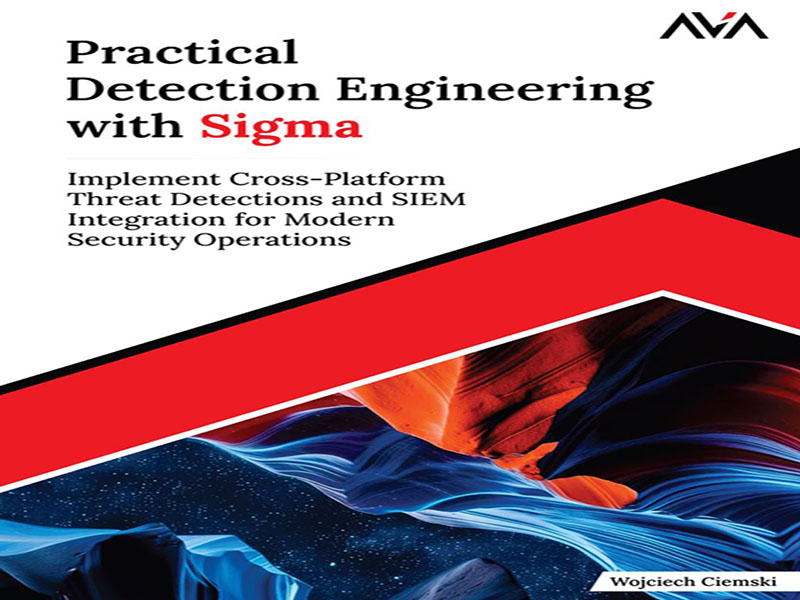
- عنوان کتاب: Practical Detection Engineering with Sigma -Implement Cross-Platform Threat Detections and SIEM Integration for Modern Security Operations
- نویسنده: Wojciech Ciemski
- حوزه: شکار تهدیدات
- سال انتشار: 2026
- تعداد صفحه: 556
- زبان اصلی: انگلیسی
- نوع فایل: pdf
- حجم فایل: 5.40 مگابایت
تشخیص مؤثر یک ویژگی محصول نیست – بلکه یک رشته مهندسی است. لاگها معادل تشخیص نیستند و هشدارهای بدون زمینه به سرعت به نویز تبدیل میشوند. عملیات امنیتی مدرن نیاز به یک رویکرد ساختاریافته، قابل آزمایش و تکرارپذیر برای تبدیل تلهمتری خام به سیگنالهای معناداری دارد که تحلیلگران بتوانند به آنها اعتماد کنند. این کتاب بر زبان قواعد سیگما به عنوان یک پایه عملی برای مهندسی تشخیص تمرکز دارد. سیگما روشی مستقل از فروشنده برای توصیف منطق تشخیص ارائه میدهد که میتواند به پرسوجوهایی برای چندین پلتفرم SIEM و XDR تبدیل شود. به جای حفظ مجموعه قوانین جداگانه برای هر backend، متخصصان میتوانند یک بار قصد تشخیص را بیان کنند و آن را در محیطهای ناهمگن عملیاتی کنند. فصلهای بعدی یک رویکرد عملی و مبتنی بر تحقیق را در پیش میگیرند. شما با منابع لاگ واقعی از ویندوز، لینوکس و تلهمتری شبکه کار خواهید کرد، تشخیصهایی را که با تکنیکهای MITRE ATT&CK نگاشت شدهاند، طراحی خواهید کرد، قوانین را با استفاده از دادههای شبیهسازی شده و واقعی اعتبارسنجی خواهید کرد و سیگما را در خطوط لوله تشخیص ساخته شده پیرامون کنترل نسخه و گردشهای کاری CI/CD ادغام خواهید کرد. این کتاب برای متخصصانی نوشته شده است که میخواهند بفهمند چرا یک تشخیص کار میکند، نه فقط اینکه آیا کار میکند یا خیر. این کتاب به ۱۸ فصل تقسیم شده است که به تدریج درک عملی از مهندسی تشخیص با استفاده از زبان قانون سیگما را ایجاد میکند. فصلها از مفاهیم بنیادی به سمت کاربرد در دنیای واقعی حرکت میکنند و ایجاد قانون، آزمایش، استقرار، اتوماسیون و نگهداری طولانیمدت منطق تشخیص در محیطهای مدرن SOC را پوشش میدهند. هر فصل بر ارتباط عملیاتی تمرکز دارد و بر وضوح، تکرارپذیری و همسویی با رفتار واقعی دشمن تأکید میکند. فصل ۱: درک سیگما و اهمیت آن این فصل زبان قانون سیگما را به عنوان پایهای برای مهندسی تشخیص مدرن معرفی میکند. این فصل توضیح میدهد که چرا تشخیص مبتنی بر شاخص و قالبهای قانون خاص فروشنده در محیطهای واقعی SOC مقیاسپذیر نیستند. این فصل تشخیص را به عنوان یک رشته مهندسی مطرح میکند و سیگما را در عملیات امنیتی مدرن قرار میدهد. فصل ۲: آناتومی یک قانون سیگما این فصل ساختار یک قانون سیگما را تجزیه میکند و توضیح میدهد که چگونه فیلدهای منفرد برای بیان هدف تشخیص با هم کار میکنند. این فصل بر وضوح، صحت و قابلیت نگهداری تمرکز دارد، نه ترفندهای نحوی. خوانندگان یک مدل ذهنی قوی از نحوه ساخت و تفسیر قوانین سیگما به دست خواهند آورد. فصل ۳: منطق و شرایط قوانین سیگما این فصل به بررسی منطق پشت تشخیصهای سیگما و چگونگی تأثیر شرایط بر رفتار قوانین میپردازد. این فصل توضیح میدهد که چگونه انتخابهای چندگانه ترکیب میشوند و اشتباهات منطقی معمولاً در کجا رخ میدهند. تمرکز بر نوشتن قوانینی است که در مجموعه دادههای مختلف به طور قابل پیشبینی رفتار میکنند. فصل ۴: ایجاد قوانین برای گزارشهای ویندوز این فصل سیگما را در تلهمتری ویندوز و منابع رویداد مرتبط با امنیت رایج اعمال میکند. این فصل نشان میدهد که چگونه رفتار دشمن در گزارشهای ویندوز ظاهر میشود و چگونه میتوان آن رفتار را به تشخیصهای قابل اعتماد تبدیل کرد. تأکید بر اجرای فرآیند، پایداری و سوءاستفاده از ابزارهای داخلی است. فصل ۵: ایجاد قوانین برای گزارشهای لینوکس و شبکه این فصل استفاده از سیگما را به سیستمهای لینوکس و تلهمتری مبتنی بر شبکه گسترش میدهد. این فصل نشان میدهد که چگونه میتوان از رویدادهای احراز هویت، فعالیت سیستم و ترافیک شبکه برای تشخیص مبتنی بر رفتار استفاده کرد. این فصل چالشهای مربوط به قالبهای ناسازگار گزارش و نگاشت فیلد را برجسته میکند. فصل ۶: نگاشت ATT&CK و تشخیص مبتنی بر TTP این فصل قوانین سیگما را با چارچوب MITRE ATT&CK مرتبط میکند. این فصل توضیح میدهد که چگونه تشخیصها را به تاکتیکها و تکنیکها نگاشت کنیم و چرا تشخیص مبتنی بر TTP نسبت به رویکردهای مبتنی بر شاخص، مقاومتر است. خوانندگان یاد میگیرند که چگونه پوشش تشخیص را حول رفتار دشمن ساختاربندی کنند. فصل 7: شبیهسازی تهدید و آزمایش قانون این فصل بر اعتبارسنجی تشخیصها از طریق آزمایش، به جای فرضیات، تمرکز دارد. این فصل تکنیکهای شبیهسازی تهدید را معرفی میکند و توضیح میدهد که چگونه میتوان تأیید کرد که قوانین واقعاً تحت شرایط مورد انتظار فعال میشوند. این فصل بر کاهش اعتماد کاذب در تشخیصهای آزمایش نشده تأکید دارد. فصل 8: ضدالگوهای قانون سیگما و بهترین شیوهها این فصل اشتباهات رایج هنگام نوشتن قوانین سیگما را بررسی میکند. این فصل توضیح میدهد که چرا الگوهای خاص منجر به نویز، شکنندگی یا نقاط کور میشوند. هدف این است که به خوانندگان کمک کند تا تشخیصهایی را که به نظر درست میرسند اما از نظر عملیاتی شکست میخورند، تشخیص دهند و از آنها اجتناب کنند. فصل 9: موارد استفاده از تشخیص در دنیای واقعی این فصل سناریوهای تشخیص واقعبینانهای را ارائه میدهد که از تکنیکهای مهاجم واقعی الهام گرفته شدهاند. این فصل نشان میدهد که چگونه میتوان از قوانین سیگما برای تشخیص سوءاستفاده از اعتبارنامه، مکانیسمهای پایداری و استخراج دادهها استفاده کرد. تمرکز بر تبدیل رفتار به تشخیصهای عملی است. فصل 10: قوانین سیگما در گردشهای کاری SOC این فصل، تشخیصهای سیگما را در چارچوب عملیات روزمره SOC قرار میدهد. توضیح میدهد که چگونه قوانین باید از اولویتبندی، بررسی و پاسخ تحلیلگر پشتیبانی کنند، نه اینکه هشدارهای جداگانه ایجاد کنند. این فصل بر اهمیت زمینه و وضوح در طراحی تشخیص تأکید میکند. فصل 11: تبدیل سیگما به SIEM
Effective detection is not a product feature — it is an engineering discipline. Logs do not equal detections, and alerts without context quickly become noise. Modern security operations require a structured, testable, and repeatable approach to turning raw telemetry into meaningful signals that analysts can trust. This book focuses on Sigma Rule Language as a practical foundation for detection engineering. Sigma provides a vendor-agnostic way to describe detection logic that can be converted into queries for multiple SIEM and XDR platforms. Instead of maintaining separate rule sets for each backend, practitioners can express detection intent once, and operationalize it across heterogeneous environments. The chapters that follow take a hands-on, research-driven approach. You will work with real log sources from Windows, Linux, and network telemetry, design detections mapped to MITRE ATT&CK techniques, validate rules using simulated and real data, and integrate Sigma into detection pipelines built around version control and CI/CD workflows. This book is written for practitioners who want to understand why a detection works, not only that it works. This book is divided into 18 chapters that gradually build a practical understanding of detection engineering using the Sigma Rule Language. The chapters move from foundational concepts to real-world application, covering rule creation, testing, deployment, automation, and long-term maintenance of detection logic in modern SOC environments. Each chapter focuses on operational relevance, emphasizing clarity, repeatability, and alignment with real adversary behavior. Chapter 1: Understanding Sigma and Its Importance This chapter introduces the Sigma Rule Language as a foundation for modern detection engineering. It explains why indicator-based detection and vendor-specific rule formats do not scale in real SOC environments. The chapter establishes detection as an engineering discipline, and positions Sigma within modern security operations. Chapter 2: Anatomy of a Sigma Rule This chapter breaks down the structure of a Sigma rule, and explains how individual fields work together to express detection intent. It focuses on clarity, correctness, and maintainability, rather than syntactic tricks. Readers will gain a solid mental model of how Sigma rules are constructed and interpreted. Chapter 3: Sigma Rule Logic and Conditions This chapter explores the logic behind Sigma detections and how conditions influence rule behavior. It explains how multiple selections are combined and where logical mistakes commonly occur. The focus is on writing rules that behave predictably across different datasets. Chapter 4: Creating Rules for Windows Logs This chapter applies Sigma to Windows telemetry and common securityrelevant event sources. It demonstrates how adversary behavior appears in Windows logs, and how to translate that behavior into reliable detections. Emphasis is placed on process execution, persistence, and abuse of built-in tools. Chapter 5: Creating Rules for Linux and Network Logs This chapter extends Sigma usage to Linux systems, and network-based telemetry. It shows how authentication events, system activity, and network traffic can be used for behavior-based detection. The chapter highlights challenges related to inconsistent log formats and field mapping. Chapter 6: ATT&CK Mapping and TTP-Based Detection This chapter connects Sigma rules with the MITRE ATT&CK framework. It explains how to map detections to tactics and techniques, and why TTPbased detection is more resilient than indicator-based approaches. Readers learn how to structure detection coverage around adversary behavior. Chapter 7: Threat Simulation and Rule Testing This chapter focuses on validating detections through testing, rather than assumptions. It introduces threat simulation techniques, and explains how to verify that rules actually trigger under expected conditions. The chapter emphasizes reducing false confidence in untested detections. Chapter 8: Sigma Rule Anti-Patterns and Best Practices This chapter examines common mistakes made when writing Sigma rules. It explains why certain patterns lead to noise, fragility, or blind spots. The goal is to help readers recognize, and avoid detections that look correct but fail operationally. Chapter 9: Real-World Detection Use Cases This chapter presents realistic detection scenarios inspired by real attacker techniques. It demonstrates how Sigma rules can be used to detect credential abuse, persistence mechanisms, and data exfiltration. The focus is on translating behavior into actionable detections. Chapter 10: Sigma Rules in SOC Workflows This chapter places Sigma detections in the context of day-to-day SOC operations. It explains how rules should support analyst triage, investigation, and response rather than generate isolated alerts. The chapter highlights the importance of context and clarity in detection design. Chapter 11: Converting Sigma to SIEM Queries This chapter explains how Sigma rules are converted into backend-specific queries. It discusses the practical implications of using different SIEM platforms, and how conversion affects detection behavior. Chapter 12: Backend Limitations and Field Mapping Challenges This chapter explores the challenges of running vendor-agnostic detections on vendor-specific platforms. It explains how differences in schemas, query engines, and features impact rule accuracy. The focus is on maintaining detection intent despite technical constraints. Chapter 13: Automating Detection Delivery with CI/CD This chapter introduces automation as a necessity for scalable detection engineering. It explains how version control, testing, and continuous integration can be applied to Sigma rules. The chapter frames detection logic as a managed software artifact. Chapter 14: Managing Rule Packs and Rule Versioning This chapter focuses on long-term maintenance of detection content. It explains how to organize, version, and document large rule sets, without losing context. The emphasis is on sustainability, rather than rapid rule accumulation. Chapter 15: Threat Hunting with Sigma This chapter shows how Sigma can be used beyond alerting. It explains how detection logic can support hypothesis-driven threat hunting and exploratory analysis. Readers learn how to adapt Sigma rules for investigative workflows. Chapter 16: Intelligence-Driven Detection Engineering This chapter connects threat intelligence with detection development. It explains how adversary reports and research can be translated into behavioral detections. The focus is on operationalizing intelligence, rather than collecting indicators. Chapter 17: Sigma in Open Source XDR This chapter examines how Sigma fits into open-source XDR platforms. It shows how host and network telemetry can be correlated using a shared detection language. The chapter emphasizes transparency and flexibility over black-box detection. Chapter 18: The Future of Sigma and Detection-as-Code The final chapter looks ahead at the evolution of Sigma and detection engineering. It discusses emerging trends, including automation and AIassisted detection, while highlighting their limitations. The chapter closes with practical guidance for building durable detection programs.
این کتاب را میتوانید از لینک زیر بصورت رایگان دانلود کنید:















نظرات کاربران