



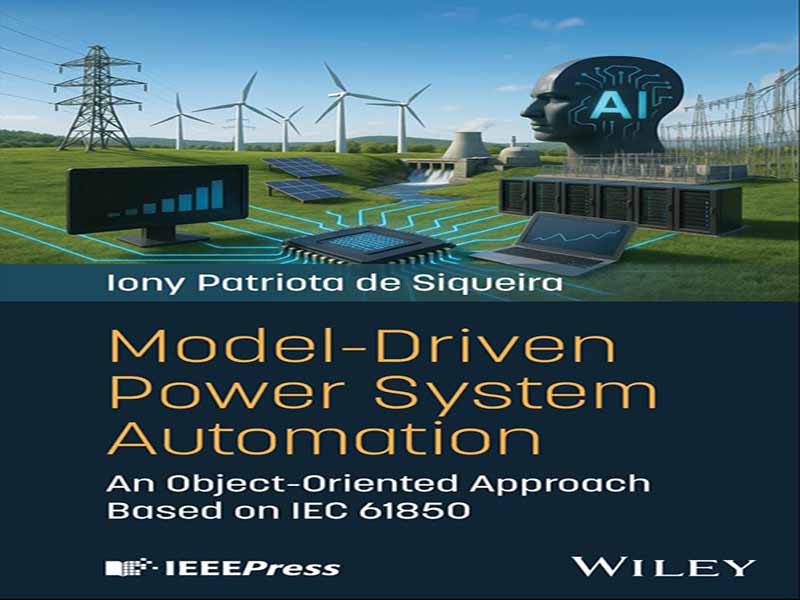
- عنوان کتاب: Model-Driven Power System Automation – An Object-Oriented Approach Based on IEC 61850
- نویسنده: Iony Patriota de Siqueira
- حوزه: اتوماسیون صنعتی
- سال انتشار: 2026
- تعداد صفحه: 719
- زبان اصلی: انگلیسی
- نوع فایل: pdf
- حجم فایل: 17.5 مگابایت
معرفی دستگاههای الکترونیکی هوشمند چندمنظوره (IED) در سیستمهای اتوماسیون پستهای برق (SAS) و نیروگاهها، نحوه طراحی، بهرهبرداری و نگهداری این سیستمها توسط تولیدکنندگان، یکپارچهسازان، مشاوران، شرکتهای برق و صنعت انرژی را متحول کرده است. از رلههای آنالوگ الکترومکانیکی ساده گرفته تا رلههای استاتیک و اکنون به دستگاههای دیجیتال و مجازی مدرن که از طریق شبکههای ارتباطی پرسرعت در داخل و خارج از پستهای برق متصل میشوند، مهندسان اتوماسیون شاهد تغییر از سختافزار خالص به میانافزار و سیستمهای مبتنی بر نرمافزار فعلی بودهاند. امروزه، SASها سیستمهای توزیعشده پیچیده و گستردهای هستند که باید نه تنها با انسانها و فرآیندهای صنعتی که بر آنها نظارت و کنترل میکنند، بلکه با سایر پستهای برق، نیروگاهها، منابع تولید پراکنده، سیستمهای کنترل نظارتی و جمعآوری دادهها از راه دور (SCADA) و سیستمهای مدیریت دارایی نیز به صورت بلادرنگ تعامل داشته باشند. برخلاف فناوریهای قبلی SAS که به سختافزار و نرمافزار محلی با اجزای همزمان و وابسته به زمان متکی بودند، این سیستمهای جدیدتر از سختافزار و نرمافزار توزیعشدهای استفاده میکنند که با رفتار ناهمزمان و بلادرنگ مشخص میشوند و روشهای سنتی طراحی، آزمایش و عملیاتی را به چالش میکشند. این تکامل عمدتاً با معرفی استاندارد IEC 61850 (شبکهها و سیستمهای ارتباطی برای اتوماسیون تأسیسات برق) هدایت شد. این استاندارد یک رویکرد نرمافزاری شیگرا و مبتنی بر مدل را برای تعامل با IEDها، چه در داخل و چه بین پستهای برق، نیروگاهها و ایستگاههای منابع توزیعشده، تعریف میکند. اگرچه این استاندارد، توابعی را که باید توسط یک SAS انجام شوند، استانداردسازی نکرد، اما نحوه ارتباط این توابع را نه تنها بین خودشان و با فرآیند کنترلشده، بلکه با سایر ایستگاهها و نیروگاههای توزیعشده نیز استانداردسازی کرد. استانداردسازی در سطح انتزاع بالایی، مربوط به لایه کاربرد – بالاترین سطح پشته ارتباطی اتصال متقابل سیستمهای باز (OSI) که توسط سازمان بینالمللی استانداردسازی (ISO) تعریف شده است – رخ داد و راه را برای پذیرش آن در بسیاری از زمینههای دیگر هموار کرد. از دیدگاه یک طراح، معمار سیستم یا یکپارچهساز، مهندسی یک SAS مبتنی بر IEC 61850 شامل انتخاب و اتصال سختافزار، نرمافزار، خدمات و ساختارهای داده (یا گرههای منطقی) مختلف ارائه شده توسط تولیدکنندگان رله یا ارائهدهندگان نرمافزار است. این اجزا از طریق شبکههای محلی و گسترده پرسرعت که از یک استاندارد مشترک پیروی میکنند، به هم متصل میشوند. این استانداردسازی، در اصل، تضمین میکند که گرههای منطقی یا سرورهای فروشندگان مختلف میتوانند هنگام اتصال از طریق یک شبکه مناسب، با هم ارتباط برقرار کرده و کار کنند. آزمونهای انطباق استاندارد در دسترس هستند و قابلیت همکاری توسط تأمینکنندگان اصلی، یکپارچهسازان و شرکتهای برق نشان داده شده است و این راهحلها در کشورها و پروژههای متعدد در سراسر جهان مستقر شدهاند. از دیدگاه یک مهندس برق یا تعمیر و نگهداری، ماهیت توزیعشده این سیستمها، استفاده از اکثر روشهای سنتی راهاندازی، تعمیر و نگهداری و تست را چالشبرانگیز میکند. جداسازی یک رله یا عملکرد واحد برای آزمایش دیگر به سادگی رلههای تککارکردی الکترومکانیکی، استاتیک یا دیجیتال نیست. اکنون ممکن است عملکردها در چندین IED پخش شوند که میتوانند در چندین عملکرد شرکت کنند و نیاز به یک رویکرد سیستماتیک برای طراحی، آزمایش و نگهداری آنها دارند. این الزامات و سایر الزامات به طور کامل توسط گروههای کاری CIGRE، IEC و IEEE و در نسخههای اخیر IEC 61850 مورد توجه قرار گرفتهاند و محور این کتاب هستند.
The introduction of multifunctional Intelligent Electronic Devices (IEDs) in Substation Automation Systems (SAS) and power plants has revolutionized how these systems are designed, operated, and maintained by manufacturers, integrators, consultants, utilities, and the energy industry. From simple electromechanical analog relays to static relays, and now to modern digital and virtual devices connected through high-speed communication networks both inside and outside substations, automation engineers have seen a shift from pure hardware to firmware and current software-based systems. Today, SAS are complex, wide-area distributed systems that must interact in real time not only with humans and the industrial processes they oversee and control but also with other substations, power plants, distributed generation sources, remote Supervisory Control and Data Acquisition (SCADA) systems, and Asset Management systems. Unlike earlier SAS technologies, which rely on localized hardware and software with synchronous, time-dependent components, these newer systems utilize distributed hardware and software characterized by asynchronous, real-time behavior that challenges traditional design, testing, and operational methods. This evolution was mainly driven by the introduction of the IEC 61850 standard (Communication Networks and Systems for Power Utility Automation). This standard defines an object-oriented, model-based software approach for interacting with IEDs, both within and between electric substations, power plants, and distributed resource stations. Although it did not standardize the functions to be performed by an SAS, it standardized how these functions should communicate, not only among themselves and with the controlled process but also with other stations and distributed power plants. Standardization occurred at a high abstraction level, related to the application layer—the highest level of the Open Systems Interconnection (OSI) communication stack defined by the International Organization for Standardization (ISO)— paving the way for its adoption in many other fields. From a designer, system architect, or integrator perspective, engineering an SAS based on IEC 61850 involves choosing and connecting various hardware, software, services, and data structures (or logical nodes) provided by relay manufacturers or software providers. These components are linked through high-speed local and wide-area networks that follow a common standard. This standardization, in principle, guarantees that logical nodes or servers from different vendors can communicate and work together when connected via an appropriate network. Standardized conformance tests are available, and interoperability has been demonstrated by major suppliers, integrators, and utilities, with these solutions deployed in numerous countries and projects worldwide. From a utility or maintenance engineer’s perspective, the distributed nature of these systems makes it challenging to use most traditional commissioning, maintenance, and testing methods. Isolating a single relay or function for testing is no longer as simple as it was with electromechanical, static, or digital monofunctional relays. Functions may now be spread across multiple IEDs that can participate in several functions, requiring a systematic approach to their design, testing, and maintenance. These and other requirements are thoroughly addressed by CIGRE, IEC, and IEEE working groups and in recent editions of IEC 61850, and are the focus of this book.
این کتاب را میتوانید از لینک زیر بصورت رایگان دانلود کنید:
Download: Model-Driven Power System Automation















نظرات کاربران