



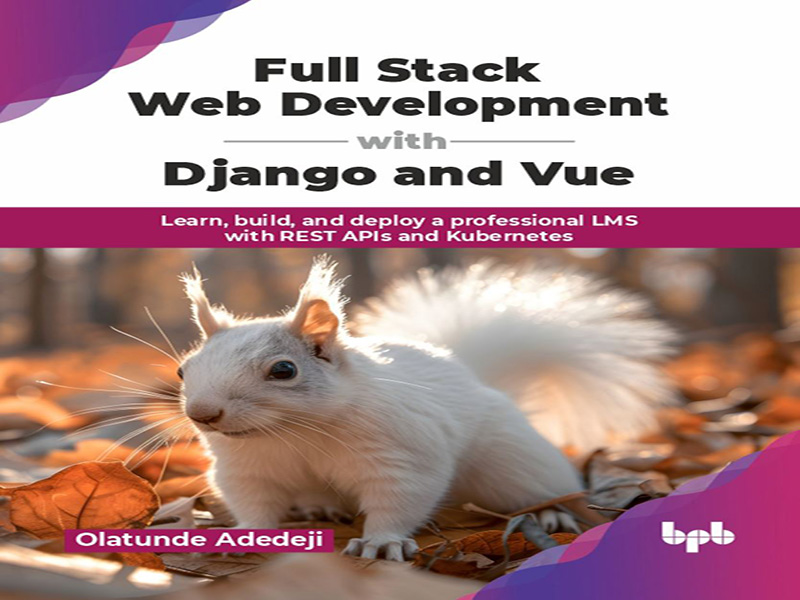
- عنوان کتاب: Full Stack Web Development with Django and Vue
- نویسنده: Olatunde Adedeji
- حوزه: برنامهنویسی فولاستک
- سال انتشار: 2026
- تعداد صفحه: 475
- زبان اصلی: انگلیسی
- نوع فایل: pdf
- حجم فایل: 6.31 مگابایت
مهندسی فولاستک مدرن به معنای نمایش ابزارهای فرانتاند و بکاند نیست. بلکه به معنای پنهان کردن آن پیچیدگی است تا افرادی که از برنامه شما استفاده میکنند، نگران آنچه در زیر آن اجرا میشود، نباشند. اگر تا به حال یک برنامه وب ساده ساختهاید که به آرامی با نقاط پایانی و رابط کاربری (UI) نیمهکاره، آشفته شده است، تبریک میگویم، شما رسماً یک مهندس همکار در جنگل یادگیری هستید. خبر خوب این است که شما در جمع خوبی هستید. من هم این شرایط را تجربه کردهام: این برنامه به عنوان یک پروژه کوچک ایجاد، خواندن، بهروزرسانی، حذف (CRUD) شروع میشود، سپس چند نقطه پایانی اضافی، سپس یک داشبورد، و سپس فقط یک تغییر سریع فرانتاند دیگر ایجاد میشود که به نوعی همه چیز را خراب میکند. ناگهان، استقرارها خطرناک به نظر میرسند، اضطراب انباشته میشود، هر نیاز جدید سنگینتر از آنچه باید به نظر میرسد و شما شروع به فکر کردن میکنید که آیا راه کماسترستری برای انجام توسعه فولاستک وجود دارد یا خیر. این کتاب تلاش من برای نشان دادن راهی بهتر با استفاده از یک پروژه ملموس و واقعبینانه است: یک سیستم مدیریت یادگیری (LMS) ساخته شده با Django 5 در بکاند و Vue 3 در فرانتاند. من حرفه توسعه خود را با چارچوبهای بینقص و ابزارهای مبتنی بر هوش مصنوعی مانند امروز شروع نکردم. توسعه وب من با Microsoft FrontPage آغاز شد، زمانی که طراحی وب به معنای کشیدن کادرها به اطراف و امید به رفتار HTML بود. از آنجا به PHP روی آوردم و دوران چارچوب Zend، CodeIgniter و Laravel را تجربه کردم که بسیاری از آنها هنوز هم بسیار زنده و مرتبط هستند. پروژههای بعدی من را به سمت Django به دلیل وعده backend پرقدرتش سوق دادند، و سپس Vue و React، زمانی که مشخص شد کاربران انتظار frontendهای غنیتر و تعاملیتری دارند. در سراسر این پروژهها، نقاط درد به طرز چشمگیری ثابت بودند: مرزهای نامشخص بین backend و frontend، نشت احراز هویت و مجوزها در همه جهات، مدیریت وضعیت، استقرارهایی که روی دستگاه من کار میکردند اما در تولید شکست میخوردند، و توجه بسیار کم به آزمایش، نظارت یا قابلیت نگهداری. این کتاب از آن زخمهای دردناک میآید. منابع عالی وجود دارد که Django را به طور عمیق آموزش میدهند، و منابع دیگری که بر Vue 3 و الگوهای frontend مدرن تمرکز دارند. چیزی که پیدا کردنش سختتر است، یک راهنمای عملی و نظرورزانه است که بین آنها قرار بگیرد، جایی که APIها، مسیریابی، احراز هویت، وضعیت و استقرار، همگی باید روی یک محصول واقعی با هم کار کنند. این خلائی است که این کتاب سعی در پر کردن آن دارد. با این کتاب، ما یک LMS جدی طراحی و خواهیم ساخت. شما خواهید دید که چگونه در مورد دامنه فکر کنید، مدلها و APIهای جنگو را شکل دهید، آنها را به یک رابط کاربری Vue 3 متصل کنید و کل چیز را بدون تظاهر به اینکه استقرار فقط اجرای docker compose up است، به مرحله تولید برسانید. امیدوارم فصلهای این کتاب را در مورد توسعه فولاستک با جنگو و Vue که میتوانید در پروژههای خود استفاده کنید، آموزنده بیابید. فصل 1: معرفی جنگو 5 و Vue 3- اکوسیستم جنگو 5 و Vue 3 را معرفی میکند، توضیح میدهد که چرا این ترکیب برای برنامههای وب مدرن قدرتمند است و نحوه تقسیم مسئولیتهای بکاند و فرانتاند را تشریح میکند. شما مفاهیم اصلی و دلایل پشت این پشته را درک خواهید کرد. فصل 2: راهاندازی محیطهای توسعه – شما را در انتخاب ابزارها، پیکربندی پروژه و پایگاه داده Django 5، مقداردهی اولیه رابط کاربری Vue 3 و سیمکشی ارتباط رابط کاربری-پشتیبانی راهنمایی میکند. در پایان، یک محیط توسعه کارآمد، کنترل نسخه و اولین چارچوب LMS خود را خواهید ساخت. فصل 3: طراحی نقاط پایانی API – بر طراحی API برای LMS شما تمرکز دارد. شما منابع کلیدی مانند دورهها، درسها، کاربران، ثبتنامها را شناسایی خواهید کرد، عملیات CRUD را تعریف خواهید کرد و بهترین شیوهها را برای صفحهبندی، فیلتر کردن، مدیریت خطا و آزمایش نقاط پایانی API با استفاده از چارچوب Django REST به کار خواهید گرفت. فصل 4: توسعه اجزای Vue 3 – اجزای Vue 3، ساختار پروژه، مسیریابی و مدیریت حالت را با Pinia معرفی میکند. شما نماهای اصلی LMS مانند لیست دورهها و صفحات جزئیات دوره، و همچنین اجزای احراز هویت و پروفایل که از APIهای Django شما استفاده میکنند را خواهید ساخت. فصل 5: فرمهای Vue 3 و تعامل کاربر – به بررسی مدیریت فرم و تعاملات کاربر در رابط کاربری میپردازد. شما فرمهایی برای ثبت نام، ورود به سیستم، ایجاد دوره و ثبتنام ایجاد و اعتبارسنجی خواهید کرد و یاد خواهید گرفت که چگونه مدل واکنشپذیری Vue به شما در ایجاد تجربیات واکنشگرا و کاربرپسند کمک میکند. فصل 6: مدیریت احراز هویت و مجوز کاربر – احراز هویت و مجوز را از ابتدا تا انتها پوشش میدهد. شما سیستم احراز هویت Django را بررسی خواهید کرد، احراز هویت مبتنی بر توکن را پیادهسازی میکنید، آن را با ظاهر Vue ادغام میکنید، مسیرهای امن را طی میکنید، نقشها و مجوزهای کاربر را مدیریت میکنید و جلسات و موارد خاص را به طرز ماهرانهای مدیریت میکنید. فصل 7: مدیریت پیشرفته LMS – نحوه سفارشیسازی مدیریت Django را برای یک LMS بررسی میکند. شما مدلهای خاص LMS را اضافه خواهید کرد، نماهای سفارشی مدیر، مربی و دانشآموز را خواهید ساخت، جستجوی پیشرفته و فیلتر را برای ابزار داخلی غنیتر پیادهسازی خواهید کرد. فصل 8: ساخت یک داشبورد تعاملی – نحوه طراحی و پیادهسازی داشبوردهای تعاملی برای مربیان و مدیران را نشان میدهد. شما یک کتابخانه تجسم را انتخاب خواهید کرد،
Modern full-stack engineering is not about showing off the tools across the frontend and backend. It is about hiding that complexity so the people who are using your app do not have to care about what is running underneath. If you have ever built a simple web app that slowly turned chaotic with endpoints, and half-working user interface (UI), congratulations, you are officially a partner engineer in the learning jungle. The good news is that you are in good company. I have been there: it starts as a small Create, Read, Update, Delete (CRUD) project, then grows a few extra endpoints, then a dashboard, then just one more quick frontend change that somehow breaks everything. Suddenly, deployments feel risky, anxiety piles up, every new requirement feels heavier than it should, and you start wondering if there is a less stressful way to do full-stack development. This book is my attempt to show you a better way, using a concrete, realistic project: a learning management system (LMS) built with Django 5 on the backend and Vue 3 on the frontend. I did not start my development career with polished frameworks and AIpowered tooling as we do today. My web development began with Microsoft FrontPage, when web design meant dragging boxes around, and hoping the HTML behaved. From there I moved into PHP, living through the eras of Zend framework, CodeIgniter, and Laravel, many of which are still very much alive and relevant today. Later projects nudged me toward Django for its batteries-included backend promise, and then Vue and React, when it became obvious that users expected richer, more interactive frontends. Across those projects, the pain points were remarkably consistent: unclear boundaries between backend and frontend, authentication and permissions leaking in all directions, state management, deployments that worked on my machine but failed in production, and very little attention to testing, monitoring, or maintainability. This book comes from those painful scars. There are excellent resources that teach Django in depth, and others that focus on Vue 3 and modern frontend patterns. What is harder to find is a practical, opinionated guide that lives between them, where APIs, routing, auth, state, and deployment all have to work together on a real product. That is the gap this book tries to fill. With this book, we will design and build a serious LMS. You will see how to think about the domain, shape the Django models and APIs, connect them to a Vue 3 frontend, and push the whole thing into production without pretending deployment is just run docker compose up. I hope you will find the chapters in this book informative about full-stack development with Django and Vue that you can carry into your own projects. Chapter 1: Introducing Django 5 and Vue 3- introduces the Django 5 and Vue 3 ecosystem, explains why this combination is powerful for modern web applications, and outlines how backend and frontend responsibilities are divided. You will understand the core concepts and the understanding of the reasons behind this stack. Chapter 2: Setting up Your Development Environments- guide you through selecting tools, configuring your Django 5 project and database, initializing the Vue 3 frontend, and wiring backend–frontend communication. You will finish with a working development environment, version control, and the first scaffolding of your LMS. Chapter 3: Designing API Endpoints- focuses on API design for your LMS. You will identify key resources like courses, lessons, users, enrollments, define CRUD operations, and apply best practices for pagination, filtering, error handling, and testing API endpoints using Django REST Framework. Chapter 4: Developing Vue 3 Components- introduces Vue 3 components, project structure, routing, and state management with Pinia. You will build core LMS views such as course lists and course detail pages, as well as authentication and profile components that consume your Django APIs. Chapter 5: Vue 3 Forms and User Interaction- explores form handling and user interactions on the frontend. You will create and validate forms for registration, login, course creation, and enrollment, and learn how Vue’s reactivity model helps you build responsive, user-friendly experiences. Chapter 6: Managing User Authentication and Authorization- covers authentication and authorization end to end. You will explore Django’s authentication system, implement token-based auth, integrate it with the Vue frontend, secure routes, handle user roles and permissions, and manage sessions and edge cases gracefully. Chapter 7: Advanced LMS Admin- explores how to customize the Django admin for an LMS. You will add LMS-specific models, build custom admin, instructor and student views, implement advanced search and filter for a richer internal tooling. Chapter 8: Building an Interactive Dashboard- shows how to design and implement interactive dashboards for instructors and admins. You will pick up a visualization library, expose dashboard APIs, and use Vue 3 to render charts with real-time updates driven by LMS activity and progress data. Chapter 9: Implementing Real-time Features- introduces Django Channels, WebSockets, and real-time communication between Django and Vue. You will add live notifications, real-time content updates, and other collaborative features that make your LMS feel modern and engaging. Chapter 10: Testing Django and Vue Applications- establishes a testing strategy for both backend and frontend. You will configure test environments, write unit tests for models and APIs, unit test Vue components, mock dependencies, and run integration tests that cover the full request flow. Chapter 11: Performance Optimization- helps you to understand, measure, and improve performance. You will benchmark your LMS, optimize Django queries, introduce caching, refine Vue components, use efficient data transfer patterns, apply lazy loading and code splitting, and set up performance monitoring and analytics. Chapter 12: Deploying LMS with Cloud Computing- guides you through preparing the application for production. You will configure a production database and web server, containerize your stack with Docker, orchestrate it with Kubernetes, and deploy your Django 5 and Vue 3 LMS to a cloud environment.
این کتاب را میتوانید از لینک زیر بصورت رایگان دانلود کنید:
















نظرات کاربران