



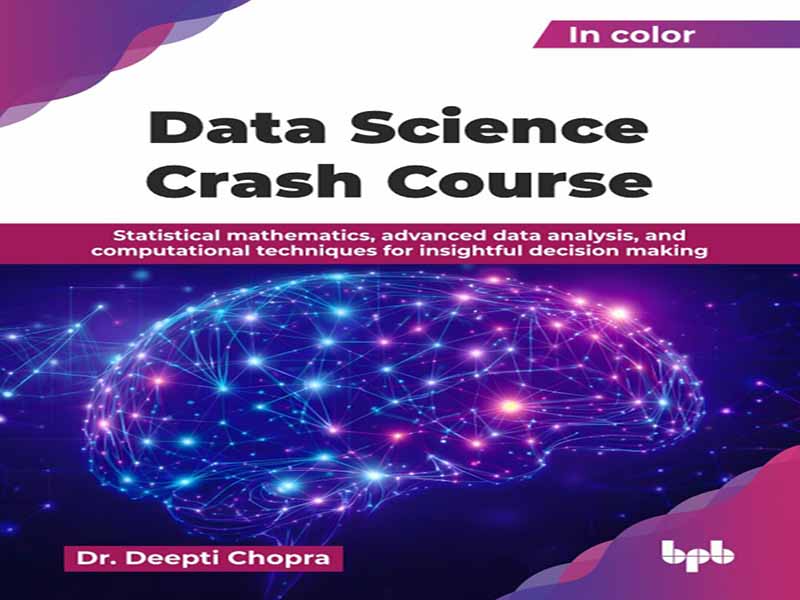
- عنوان کتاب: Data Science Crash Course
- نویسنده: Dr. Deepti Chopra
- حوزه: علوم داده
- سال انتشار: 2026
- تعداد صفحه: 372
- زبان اصلی: انگلیسی
- نوع فایل: pdf
- حجم فایل: 2.88 مگابایت
این روزها دادهها همه جا هستند: در کسبوکارها، مراقبتهای بهداشتی، آموزش، تحقیقات و حتی در زندگی روزمره ما. کتاب «علم داده و دوره فشرده» برای کمک به خوانندگان در ایجاد بینشهای مفید از دادهها نوشته شده است. این کتاب هم برای مبتدیانی که برای اولین بار وارد علم داده میشوند و هم برای متخصصانی که مایل به تقویت پایههای خود هستند، طراحی شده است. این کتاب مفاهیم اصلی آمار و ریاضیات را با ابزارهای عملی مانند پایتون، NumPy، Pandas، Matplotlib و سایر کتابخانههای ضروری ترکیب میکند. از درک دادههای ساختاریافته و بدون ساختار گرفته تا تمیز کردن، تجزیه و تحلیل و تجسم مجموعه دادهها، این کتاب فرآیند کامل تجزیه و تحلیل دادهها را به شیوهای ساده و قابل فهم بررسی میکند. شما ایدههای کلیدی مانند پیشپردازش دادهها، تجسم، یادگیری نظارتشده و بدون نظارت، تجزیه و تحلیل پیشبینیکننده و حتی مباحث پیشرفته مانند سیستمهای توصیهگر را بررسی خواهید کرد که همگی با مثالها و تمرینهای عملی پشتیبانی میشوند. تأکید ویژه بر پایتون و نقش آن در تجزیه و تحلیل دادههای مدرن است. این کتاب شامل فصلهای زیر است: فصل 1: مقدمهای بر علم داده – این فصل مروری بر علم داده، ردیابی تاریخچه و تکامل آن و تأکید بر اهمیت آن در زمینههای مختلف ارائه میدهد. این فصل با توضیح دامنه و گردش کار علم داده، زمینه را برای ادامه کتاب فراهم میکند. فصل 2: نقشها و مسئولیتهای یک دانشمند داده – این فصل به نقشهای مختلف در حوزه علم داده میپردازد و مسئولیتها و مهارتهای مورد نیاز برای هر موقعیت را برجسته میکند. همچنین مسیرهای شغلی را مورد بحث قرار میدهد و یک مطالعه موردی برای درک عملی ارائه میدهد. فصل 3: ضرورت پایتون در علم داده – این فصل توضیح میدهد که چرا پایتون زبان ترجیحی برای علم داده است و آن را با سایر زبانهای برنامهنویسی مقایسه میکند. همچنین راهاندازی محیط پایتون را پوشش میدهد و کتابخانههای ضروری را معرفی میکند. فصل 4: مقدمهای بر درک دادهها – این فصل بر درک انواع مختلف دادهها و اهمیت دانش دامنه تمرکز دارد. همچنین ابزارها و تکنیکهای مختلفی برای کاوش دادهها را پوشش میدهد. فصل 5: پیشپردازش دادهها – این فصل مراحل اساسی پیشپردازش دادهها، از جمله پاکسازی، تبدیل و مهندسی ویژگی را پوشش میدهد. همچنین ابزارها و کتابخانههای مختلفی را که برای پیشپردازش استفاده میشوند، معرفی میکند. فصل 6: ایجاد مجموعه دادههای مصنوعی در MS Excel – این فصل اهمیت دادههای مصنوعی را توضیح میدهد و یک راهنمای گام به گام برای ایجاد مجموعه دادههای مصنوعی با استفاده از MS Excel ارائه میدهد. فصل 7: مبانی برنامهنویسی پایتون – این فصل اصول برنامهنویسی پایتون، از جمله نحو، متغیرها، ساختارهای کنترلی و توابع را معرفی میکند. فصل 8: کار با ساختارهای داده پایتون – این فصل ساختارهای داده اصلی پایتون، از جمله لیستها، تاپلها، دیکشنریها و مجموعهها را پوشش میدهد و نحوه دستکاری این ساختارها را توضیح میدهد. فصل 9: فرآیند تحلیل دادهها – این فصل مراحل مربوط به فرآیند تحلیل دادهها، از جمعآوری دادهها تا تحلیل اکتشافی دادهها را تشریح میکند. فصل 10: کتابخانههای ضروری پایتون برای علم داده – این فصل کتابخانههای ضروری پایتون مورد استفاده در علم داده، از جمله NumPy، Pandas، Matplotlib و SciPy را با مثالهای عملی معرفی میکند. فصل 11: پردازش و مصورسازی دادهها – این فصل تکنیکهای پردازش دادهها را پوشش میدهد و ابزارهای مختلفی را برای مصورسازی دادهها، از جمله ابزارهای اولیه و پیشرفته، معرفی میکند. فصل ۱۲: کاربردهای ریاضی و علمی – این فصل بر مبانی ریاضی و کاربردهای علمی علم داده، از جمله تکنیکهای یادگیری نظارتشده و بدون نظارت، تمرکز دارد. فصل ۱۳: توسعه سیستمهای توصیهگر – این فصل یک راهنمای جامع برای ساخت سیستمهای توصیهگر، از مفاهیم اولیه تا تکنیکهای پیشرفته و کاربردهای عملی ارائه میدهد. فصل ۱۴: کاربردهای دنیای واقعی و مطالعات موردی – این فصل کاربردهای مختلف دنیای واقعی علم داده را از طریق مطالعات موردی دقیق بررسی میکند و استفاده عملی از تکنیکهای علم داده را در صنایع مختلف برجسته میکند. فصل ۱۵: مثالها و تمرینهای عملی – این فصل پروژهها و تمرینهای عملی را برای تقویت مفاهیم آموختهشده در سراسر کتاب ارائه میدهد و به خوانندگان کمک میکند تا یک سبد جامع از پروژههای علم داده ایجاد کنند.
Data is everywhere these days : in businesses, healthcare, education, research, and even in our daily lives. The book on data science and crash course was written to help readers build useful insights from data. This book is designed for both beginners stepping into data science for the first time and professionals who wish to strengthen their foundations. It blends core concepts of statistics and mathematics with hands-on tools like Python, NumPy, Pandas, Matplotlib, and other essential libraries. From understanding structured and unstructured data to cleaning, analyzing, and visualizing datasets, the book walks through the complete data analysis process in a simple and approachable manner. You will explore key ideas such as data preprocessing, visualization, supervised and unsupervised learning, predictive analysis, and even advanced topics like recommender systems, all supported with practical examples and exercises. Special emphasis is given to Python and its role in modern data analysis. This book comprises of the following chapters: Chapter 1: Introduction to Data Science — This chapter provides an overview of data science, tracing its history and evolution, and emphasizing its importance in various fields. It sets the stage for the rest of the book by explaining the scope and workflow of data science. Chapter 2: Roles and Responsibilities of a Data Scientist — This chapter delves into the various roles within the data science field, highlighting the responsibilities and skills required for each position. It also discusses career pathways and offers a case study for practical understanding. Chapter 3: The Necessity of Python in Data Science — This chapter explains why Python is the preferred language for data science, comparing it with other programming languages. It also covers the setup of the Python environment and introduces essential libraries. Chapter 4: Introduction to Data Understanding — This chapter focuses on understanding different types of data and the importance of domain knowledge. It also covers various tools and techniques for data exploration. Chapter 5: Data Preprocessing — This chapter covers the essential steps of data preprocessing, including cleaning, transformation, and feature engineering. It also introduces various tools and libraries used for preprocessing. Chapter 6: Creating Synthetic Datasets in MS Excel — This chapter explains the importance of synthetic data and provides a step-by-step guide to creating synthetic datasets using MS Excel. Chapter 7: Basics of Python Programming — This chapter introduces the fundamentals of Python programming, including syntax, variables, control structures, and functions. Chapter 8: Working with Python Data Structures — This chapter covers Python’s core data structures, including lists, tuples, dictionaries, and sets, and explains how to manipulate these structures. Chapter 9: Data Analysis Process — This chapter outlines the steps involved in the data analysis process, from data collection to exploratory data analysis. Chapter 10: Essential Python Libraries for Data Science — This chapter introduces essential Python libraries used in data science, including NumPy, Pandas, Matplotlib, and SciPy, with practical examples. Chapter 11: Data Processing and Visualization — This chapter covers data processing techniques and introduces various tools for data visualization, including basic and advanced tools. Chapter 12: Mathematical and Scientific Applications — This chapter focuses on the mathematical foundations and scientific applications of data science, including supervised and unsupervised learning techniques. Chapter 13: Developing Recommender Systems — This chapter provides a comprehensive guide to building recommender systems, from basic concepts to advanced techniques and practical applications. Chapter 14: Real-world Applications and Case Studies — This chapter explores various real-world applications of data science through detailed case studies, highlighting the practical use of data science techniques in different industries. Chapter 15: Practical Examples and Exercises — This chapter provides hands-on projects and exercises to reinforce the concepts learned throughout the book, helping readers build a solid portfolio of data science projects.
این کتاب را میتوانید از لینک زیر بصورت رایگان دانلود کنید:
Download: Data Science Crash Course















نظرات کاربران