



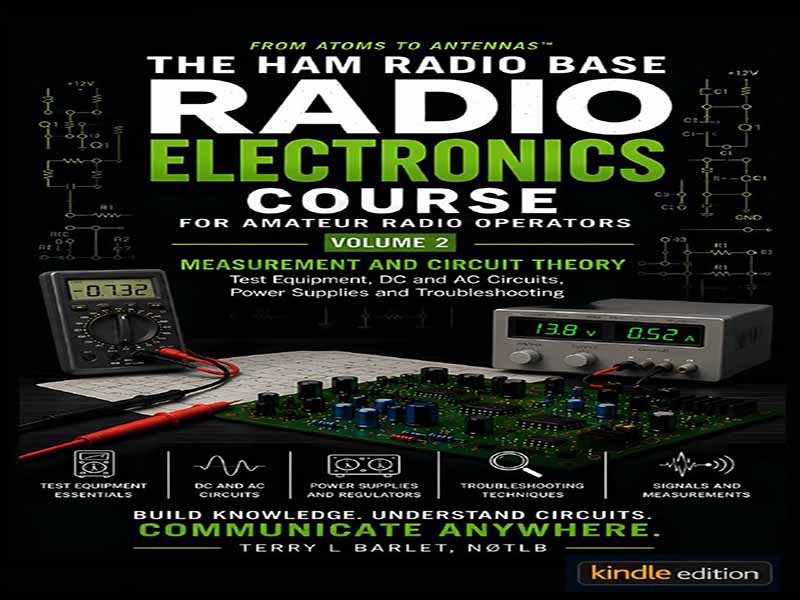
- عنوان کتاب: Radio Electronics for Amateur Radio Operators – Measurement And Circuit Theory From Atoms to AntennasTM
- نویسنده: Barlet, Terry
- حوزه: آنتن
- سال انتشار: 2026
- تعداد صفحه: 827
- زبان اصلی: انگلیسی
- نوع فایل: pdf
- حجم فایل: 12.7 مگابایت
ماژول ۵ ابزارهای اندازهگیری عملی را پوشش میدهد که شکاف بین تئوری و دنیای واقعی را پر میکنند. تا اینجای دوره نحوه کار اجزا و مدارها توضیح داده شده است. این ماژول ابزارهایی را که برای تأیید عملکرد واقعی مدارهای شما مطابق انتظار، تشخیص خطاها در صورت عدم عملکرد و بررسی مطابقت سیگنال ارسالی شما با استانداردهای مورد نیاز یک آماتور دارای مجوز نیاز دارید، اضافه میکند. مولتیمتر دیجیتال مفیدترین ابزار در هر کارگاه الکترونیک است. این دستگاه ولتاژ DC و AC، جریان DC و AC، مقاومت، پیوستگی و ولتاژ مستقیم دیود را اندازهگیری میکند – اغلب در یک واحد دستی. چهار درس اول این ماژول دو نوع نمایشگر مولتیمتر (آنالوگ و دیجیتال)، مفهوم حیاتی بارگذاری متر (نحوه تغییر امپدانس ورودی خود متر در مداری که اندازهگیری میکند) و تکنیک صحیح برای هر نوع اندازهگیری را پوشش میدهد. درک این اصول از رایجترین خطاهای اندازهگیری جلوگیری میکند و تضمین میکند که میتوانید به آنچه میخوانید اعتماد کنید. در حالی که یک مولتیمتر DC و AC با فرکانس پایین را کنترل میکند، سیگنالهای فرکانس رادیویی به ابزارهای تخصصی نیاز دارند. یک بار ساختگی به فرستنده شما یک بار مقاومتی ۵۰ درجهای تعریف شده میدهد تا بتوانید بدون تابش و ایجاد تداخل، تنظیم و آزمایش کنید. یک متر SWR نسبت موج ایستاده بین فرستنده و آنتن را به شما نشان میدهد — SWR برابر با ۱:۱ کاملاً با هم مطابقت دارند؛ SWR بالا به این معنی است که توان به سمت آنتنهای شما بازتاب میشود. یک واتمتر جهتدار، توان RF واقعی جاری در هر دو جهت روی خط تغذیه را اندازهگیری میکند و به شما امکان میدهد PEP (توان پوشش اوج) را برای حالتهای SSB محاسبه کنید. این سه ابزار با هم، حداقل میز تست RF را تشکیل میدهند که هر آماتور دارای مجوز باید به آن دسترسی داشته باشد. اندازهگیری ذاتاً ایمن نیست. ولتاژ خط و منابع PA ولتاژ بالا میتوانند کشنده باشند و اتصال نادرست یک مولتیمتر میتواند دستگاه را خراب کند یا به کاربر آسیب برساند. درس ۹ سیستم رتبهبندی IEC CAT برای سیمهای تست، قانون یک دست برای کار با ولتاژ بالا و روش صحیح تخلیه خازنها قبل از لمس داخل هر تجهیزات متصل به ولتاژ خط را پوشش میدهد.
Module 5 covers the practical measurement instruments that bridge the gap between theory and the real world. Up to now the course has explained how components and circuits work; this module adds the tools you need to verify that your circuits actually behave as expected, to diagnose faults when they do not, and to check that your transmitted signal meets the standards required of a licensed amateur. The digital multimeter is the single most useful instrument in any electronics workshop. It measures DC and AC voltage, DC and AC current, resistance, continuity and diode forward voltage — often in a single handheld unit. The first four lessons of this module cover the two types of multimeter display (analog and digital), the critical concept of meter loading (how the meter’s own input impedance changes the circuit it is measuring), and the correct technique for each measurement type. Understanding these fundamentals prevents the most common measurement errors and ensures you can trust what you read. While a multimeter handles DC and low-frequency AC, radio-frequency signals require specialized instruments. A dummy load gives your transmitter a well-defined 50 ? resistive load so you can tune and test without radiating and causing interference. An SWR meter shows you the standing wave ratio between transmitter and antenna — an SWR of 1:1 is a perfect match; a high SWR means power is being reflected back into your finals. A directional wattmeter measures the actual RF power flowing in both directions on the feedline, and lets you calculate PEP (Peak Envelope Power) for SSB modes. Together these three instruments form the minimum RF test bench every licensed amateur should have access to. Measurement is not inherently safe. Line voltage and high-voltage PA supplies can be lethal, and connecting a multimeter incorrectly can destroy the instrument or injure the user. Lesson 9 covers the IEC CAT rating system for test leads, the one-hand rule for high-voltage work, and the correct procedure for discharging capacitors before touching the inside of any line voltage-connected equipment.
این کتاب را میتوانید از لینک زیر بصورت رایگان دانلود کنید:
Download: Radio Electronics
















نظرات کاربران