



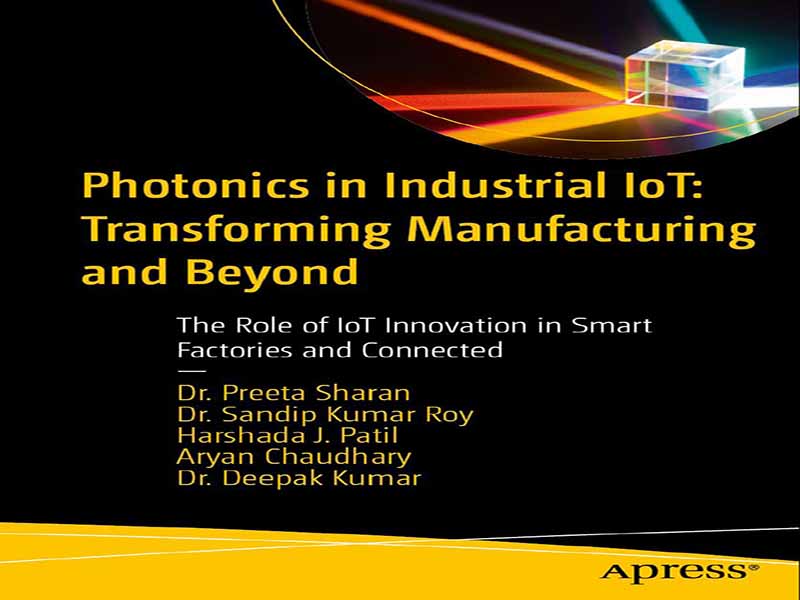
- عنوان کتاب: Photonics in Industrial IoT Transforming Manufacturing and Beyond -The Role of IoT Innovation in Smart Factories and Connected
- نویسنده: Preeta Sharan, Sandip Kumar Roy
- حوزه: کاربرد اینترنت اشیاء
- سال انتشار: 2026
- تعداد صفحه: 262
- زبان اصلی: انگلیسی
- نوع فایل: pdf
- حجم فایل: 8.62 مگابایت
سیستمهای صنعتی از اتوماسیون ایزوله به محیطهای متصل، مبتنی بر داده و به طور فزایندهای مستقل تبدیل میشوند. اینترنت صنعتی اشیا (IIoT) این تغییر را با پیوند دادن ماشینها، حسگرها و نرمافزارها امکانپذیر میسازد تا عملیات صنعتی در زمان واقعی نظارت و بهینهسازی شود. با این حال، همانطور که صنعت 4.0 مقیاس میشود، روشهای سنجش سنتی و اتصال اغلب توسط واقعیتهای صنعتی – تداخل الکترومغناطیسی، انتقال سیگنال از راه دور، شرایط عملیاتی سخت، جریانهای داده با سرعت بالا، و نیاز به تصمیمگیری با تأخیر کم قابل اعتماد، تحت فشار قرار میگیرند. اینجاست که فوتونیک – علم و مهندسی نور – به یک توانمندساز حیاتی تبدیل میشود. Photonics in Industrial IoT بررسی می کند که چگونه فناوری های فوتونیک IIoT را از لایه حسگر به ستون فقرات ارتباطی و خط لوله تجزیه و تحلیل تقویت می کند. شبکههای فیبر نوری از انتقال داده با پهنای باند بالا و تأخیر کم پشتیبانی میکنند و در محیطهای دارای نویز الکتریکی انعطافپذیر باقی میمانند. سنسورهای فوتونیک و سیستمهای تصویربرداری دقت بالایی را برای کاربردهای اندازهشناسی، نظارت بر وضعیت، بازرسی و ایمنی ارائه میدهند. هنگامی که این قابلیتها در پلتفرمهای IIoT ادغام میشوند، دید در سراسر عملیات را بهبود میبخشند، اثربخشی کنترل کیفیت را افزایش میدهند، از طریق تعمیر و نگهداری پیشبینیشده زمان خرابی را کاهش میدهند و از فرآیندهای صنعتی ایمنتر و کارآمدتر پشتیبانی میکنند. این کتاب برای مهندسان، محققین، دانشجویان فارغ التحصیل، معماران راه حل، و دست اندرکاران صنعتی که در زمینه تولید هوشمند، اتوماسیون صنعتی، سنجش و ابزار دقیق، شبکه های صنعتی و تحول دیجیتال کار می کنند، نوشته شده است. همچنین برای رهبران فناوری که استراتژیهای سنجش و اتصال مدرن را برای کارخانهها، تاسیسات و زیرساختهای حیاتی ارزیابی میکنند، مفید است. خوانندگان به تخصص قبلی در فوتونیک نیاز ندارند. این کتاب مفاهیم اصلی را قبل از حرکت به موارد کاربرد صنعتی معرفی می کند. یک موضوع تکراری در سراسر کتاب این است که پذیرش صنعتی ناشی از نتایج است، نه تازگی. فوتونیک در اینجا بهعنوان «فناوری به خاطر فناوری» ارائه نمیشود، بلکه بهعنوان مجموعهای از ابزارها ارائه میشود که میتوانند مزایای عملیاتی قابل اندازهگیری را در صورت مهندسی متفکرانه در سیستمهای IIoT ارائه کنند. فصلها برای کمک به خوانندگان نوشته شدهاند تا بفهمند از چه چیزی استفاده کنند، کجا از آن استفاده کنند، و چگونه آن را به طور قابل اعتماد ادغام کنند – به طوری که راهحلهای IIoT دارای فوتونیک میتوانند از مفاهیم آزمایشگاهی به استقرار صنعتی قوی حرکت کنند.
Industrial systems are evolving from isolated automation into connected, data-driven, and increasingly autonomous environments. The industrial Internet of Things (IIoT) enables this shift by linking machines, sensors, and software so that industrial operations can be monitored and optimized in real time. However, as Industry 4.0 scales, traditional sensing and connectivity methods are often stressed by industrial realities—electromagnetic interference, long-distance signal transmission, harsh operating conditions, high-speed data streams, and the need for reliable low-latency decision-making. This is where photonics—the science and engineering of light—becomes a critical enabler. Photonics in Industrial IoT explores how photonics technologies strengthen IIoT from the sensing layer to the communication backbone and analytics pipeline. Optical fiber networks support high-bandwidth, low-latency data transfer and remain resilient in electrically noisy environments. Photonic sensors and imaging systems deliver high precision for metrology, condition monitoring, inspection, and safety applications. When integrated into IIoT platforms, these capabilities improve visibility across operations, increase quality control effectiveness, reduce downtime through predictive maintenance, and support safer, more energy-efficient industrial processes. This book is written for engineers, researchers, graduate students, solution architects, and industrial practitioners working across smart manufacturing, industrial automation, sensing and instrumentation, industrial networking, and digital transformation. It is also useful for technology leaders evaluating modern sensing and connectivity strategies for factories, utilities, and critical infrastructure. Readers do not need deep prior expertise in photonics; the book introduces core concepts before moving into applied industrial use cases. A recurring theme throughout the book is that industrial adoption is driven by outcomes, not novelty. Photonics is not presented here as “technology for technology’s sake,” but as a set of tools that can deliver measurable operational advantages when engineered thoughtfully into IIoT systems. The chapters are written to help readers understand what to use, where to use it, and how to integrate it reliably—so that photonics-enabled IIoT solutions can move from lab concepts to robust industrial deployments.
این کتاب را میتوانید از لینک زیر بصورت رایگان دانلود کنید:
Download: Photonics in Industrial IoT Transforming Manufacturing and Beyond
















نظرات کاربران