











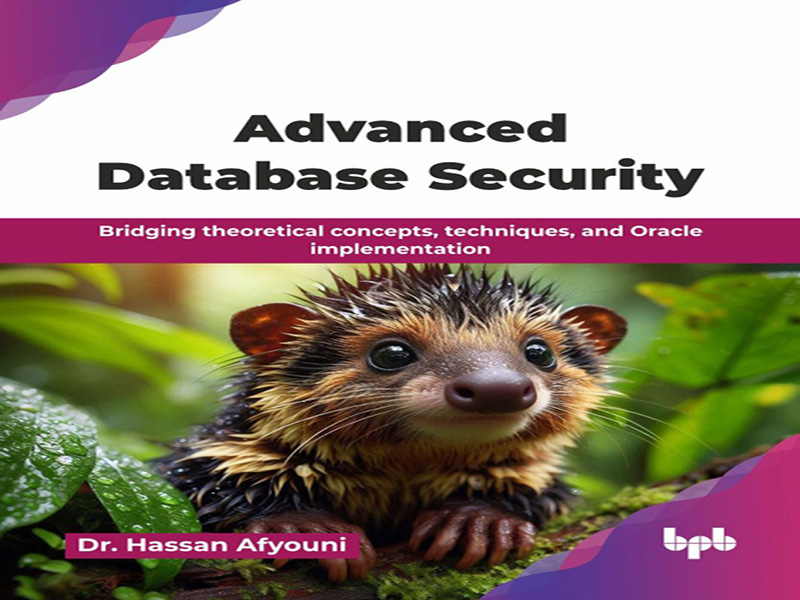
- عنوان کتاب: Advanced Database Security
- نویسنده: Dr. Hassan Afyouni
- حوزه: امنیت پایگاه داه
- سال انتشار: 2026
- تعداد صفحه: 923
- زبان اصلی: انگلیسی
- نوع فایل: pdf
- حجم فایل: 12.9 مگابایت
داده ها دیگر فقط یک دارایی پشتیبان نیستند. این هسته اصلی هر سیستم مدرن است و پایگاه داده جایی است که داده ها زندگی می کنند، تکامل می یابند و در نهایت در معرض یا محافظت می شوند. همانطور که سازمان ها در پلتفرم های ابری، سیستم های توزیع شده و برنامه های کاربردی یکپارچه گسترش می یابند، چالش دیگر این نیست که آیا داده ها را ایمن کنند، بلکه این است که چگونه این کار را به شیوه ای کنترل شده، سازگار و قابل اجرا انجام دهیم. در این زمینه، پلتفرمهای سازمانی مانند اوراکل نقش مهمی را ایفا میکنند و مکانیسمها، معماری و لایههای اجرایی مورد نیاز برای اجرای امنیت در مقیاس را فراهم میکنند. این کتاب به امنیت پایگاه داده به عنوان یک عملکرد منضبط و مهندسی شده می پردازد. امنیت بهعنوان مجموعهای از ویژگیهای مجزا یا کنترلهای اختیاری در نظر گرفته نمیشود، بلکه بهعنوان یک چارچوب ساختاریافته که باید طراحی، پیادهسازی و بهطور مداوم تأیید شود، تلقی میشود. این مطالب عمداً پیشرفته است و برای تحصیلات تکمیلی و متخصصان در نظر گرفته شده است، در حالی که از دانشجویان ارشد در مقطع کارشناسی که به دنبال تخصص عمیق تر هستند نیز پشتیبانی می کند. این فراتر از مفاهیم مقدماتی است و بر نحوه اعمال مدلهای امنیتی، نحوه تعامل کنترلها و نحوه تأثیر تصمیمها بر سیستمهای واقعی تمرکز میکند، با فناوریهای Oracle که در سرتاسر آن به عنوان مرجع اصلی برای پیادهسازی عملی استفاده میشود. فصلها از مدلهای پایه به تکنیکهای اجرایی پیشرفته، شامل کنترل دسترسی، مکانیسمهای امنیتی، ممیزی، حفاظت از دادهها، تشخیص نفوذ، انعطافپذیری و حاکمیت، پیشرفت میکنند. این بحث تئوری را با پیادهسازی ادغام میکند و نشان میدهد که چگونه مفاهیم امنیتی در محیطهای اوراکل اعمال میشوند و چگونه به معماریهای مدرن مانند ابر و سیستمهای توزیعشده گسترش مییابند. هدف این کتاب ارائه مسیری روشن و ساختار یافته برای درک و اجرای پیشرفته است. در پایان، خواننده باید بتواند محیط های پایگاه داده ایمن را طراحی کند، کنترل ها را با دقت اعمال کند و وضعیت امنیتی را با اطمینان و انضباط ارزیابی کند، به ویژه در سیستم های سازمانی مبتنی بر اوراکل.
Data is no longer just a supporting asset. It is the core of every modern system, and the database is where that data lives, evolves, and is ultimately exposed or protected. As organizations expand across cloud platforms, distributed systems, and integrated applications, the challenge is no longer whether to secure data, but how to do so in a controlled, consistent, and enforceable manner. In this context, enterprise platforms such as Oracle play a critical role, providing the mechanisms, architecture, and enforcement layers required to implement security at scale. This book approaches database security as a disciplined and engineered function. Security is not treated as a set of isolated features or optional controls, but as a structured framework that must be designed, implemented, and continuously validated. The material is intentionally advanced and is intended for graduate-level study and professionals, while also supporting senior undergraduate students seeking deeper expertise. It moves beyond introductory concepts and focuses on how security models are enforced, how controls interact, and how decisions impact real systems, with Oracle technologies used throughout as a primary reference for practical implementation. The chapters progress from foundational models to advanced enforcement techniques, covering access control, security mechanisms, auditing, data protection, intrusion detection, resilience, and governance. The discussion integrates theory with implementation, demonstrating how security concepts are applied within Oracle environments and how they extend to modern architectures such as cloud and distributed systems. The objective of this book is to provide a clear and structured path to advanced understanding and execution. By the end, the reader should be able to design secure database environments, enforce controls with precision, and evaluate security posture with confidence and discipline, particularly within Oracle-based enterprise systems. Chapter 1: Introduction to Database Security and Principles – This chapter establishes the conceptual foundation of database security by defining its scope, objectives, and role in modern data-driven systems. It introduces core principles such as confidentiality, integrity, and availability, along with threat models, attack surfaces, and risk considerations. Security is framed as a structured discipline that must be embedded into database design, development, and operations. Chapter 2: Regulations and Data Security- This chapter examines the regulatory and compliance landscape that shapes database security practices. It discusses how legal frameworks, industry standards, and governance requirements influence data protection strategies, accountability, and operational controls. The focus is on translating compliance requirements into enforceable technical and procedural measures. Chapter 3: Classical Security Models of Access Control – This chapter introduces foundational access control models such as discretionary access control and role-based access control. It explains how permissions are defined, delegated, and enforced within database systems, and evaluates their effectiveness in different operational contexts. Chapter 4: Mandatory Access Control Models – This chapter explores formal mandatory access control models, including Bell-LaPadula, Biba, and lattice-based approaches. It focuses on how classification, labeling, and dominance relationships enforce strict confidentiality and integrity policies in high-assurance environments. Chapter 5: Advanced Access Control Models – This chapter presents advanced access control frameworks such as Clark-Wilson and Chinese Wall models. It emphasizes transaction integrity, separation of duties, and conflict-of-interest controls, showing how these models address complex enterprise security requirements. Chapter 6: Securing Data – This chapter examines techniques for protecting data across its lifecycle, including encryption, masking, and classification. It focuses on how protection strategies align with data sensitivity, performance considerations, and operational constraints while maintaining usability. Chapter 7: Security Mechanisms in Database Systems – This chapter provides a detailed analysis of database-native security mechanisms, including authentication, authorization, session control, and resource governance. It explains how these mechanisms interact to enforce policies and maintain control within database environments. Chapter 8: High Availability Security – This chapter examines the role of backup and recovery in maintaining data availability and trust. It discusses recovery objectives, architectural considerations, and techniques that ensure consistent and reliable restoration following failure, corruption, or compromise. Chapter 9: Intrusion Detection in Database Environments – This chapter focuses on detecting and responding to abnormal or malicious behavior within database systems. It explores monitoring architectures, behavioral analysis, alerting strategies, and response mechanisms that support continuous security visibility. Chapter 10: Security in Modern Data Architectures – This chapter addresses governance, policy lifecycle management, and organizational control over database security. It examines risk management, compliance alignment, separation of duties, and the integration of security practices across enterprise environments. Chapter 11: Enterprise Security Management – This chapter explores architectural patterns that ensure continuous operation while maintaining strong security controls. It examines clustering, replication, and distributed configurations, focusing on how availability mechanisms must align with security enforcement. Chapter 12: Emerging Security Technologies in Databases – This chapter examines the security challenges introduced by cloud platforms and distributed data systems. It focuses on identity management, data isolation, shared responsibility models, and adapting traditional controls to modern, dynamic environments. Chapter 13: Cloud, AI, and the Future of Database Security – This chapter explores the impact of emerging technologies such as artificial intelligence, automation, and advanced analytics on database security. It discusses new risks, evolving threat patterns, and the need for adaptive and intelligent security mechanisms. Chapter 14: Critical Cybersecurity Breaches – This chapter looks ahead to the evolution of database security in increasingly autonomous and datacentric systems. It examines trends such as continuous enforcement, policydriven architectures, and adaptive security models that respond to changing conditions.
این کتاب را میتوانید از لینک زیر بصورت رایگان دانلود کنید:
Download: Advanced Database Security



























نظرات کاربران