











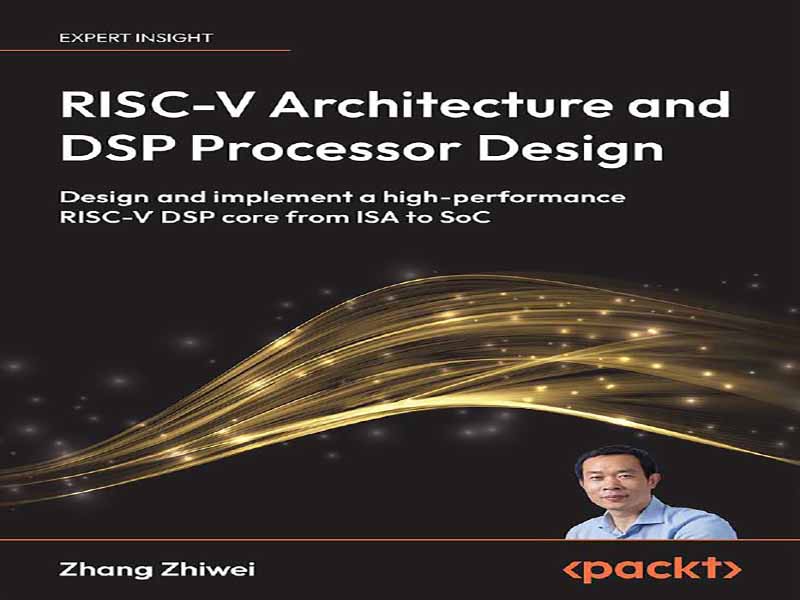
- عنوان کتاب: RISC-V Architecture and DSP Processor Design -Design and implement a high-performance RISC-V DSP core from ISA to SoC
- نویسنده: Zhang Zhiwei
- حوزه: معماری RISC-V
- سال انتشار: 2026
- تعداد صفحه: 311
- زبان اصلی: انگلیسی
- نوع فایل: pdf
- حجم فایل: 17.8 مگابایت
DSP مخفف عبارت Digital Signal Processor (پردازنده سیگنال دیجیتال) است. این یک ریزپردازنده است که به طور خاص برای کاربردهای پردازش سیگنال دیجیتال بهینه شده است. با قابلیت برنامهریزی، قابلیت پردازش بلادرنگ و راندمان محاسباتی بالا، به طور گسترده در کنترل صنعتی، انرژیهای تجدیدپذیر، ارتباطات بیسیم، وسایل نقلیه الکتریکی، حمل و نقل ریلی و لوازم خانگی هوشمند استفاده میشود. فناوری DSP بیش از 40 سال است که تکامل یافته و پیشرفتهای مداومی در سرعت کلاک، حداکثر قدرت پردازش و ظرفیت حافظه داشته است. شرکت Texas Instruments (TI) با توسعه خطوط تولید مانند C6000، C5000 و C2000، یک شرکت پیشرو در این زمینه بوده و سهم بزرگی از بازار جهانی را به خود اختصاص داده است. صنعت DSP چین مدتهاست که به واردات متکی بوده و سطح بومیسازی پایینی دارد. این موضوع هم یک چالش جدی و هم یک فرصت بزرگ برای توسعه داخلی است. طراحی DSP بسیار پیچیده است. این یک مسئله مهندسی در مقیاس بزرگ است که شامل ادغام چندین فناوری، از جمله الگوریتمها، طراحی تراشه، نرمافزار و سیستمها میشود. موفقیت نه به یک پیشرفت واحد، بلکه به دستیابی به صحت، اهداف عملکرد و ادغام در سطح سیستم بستگی دارد. RISC-V به دلیل باز بودن، سادگی، ماژولار بودن و قابلیت توسعهاش، در طول دهه گذشته به سرعت توسعه یافته است. این فناوری به طور گسترده به عنوان فناوریای دیده میشود که میتواند چشمانداز جهانی تراشه را تغییر دهد. RISC-V به عنوان یک کاتالیزور عمل میکند. تکامل آن مهم است اما تعیینکننده نیست. اگر نتواند با اکوسیستم جدید همگام شود، باید خود را وفق دهد یا با یک معماری باز مناسبتر جایگزین شود. در واقع، RISC-V به سرعت در حال تکامل است. اکنون شامل افزونههای برداری است و در حال توسعه افزونههای امنیتی، رمزگذاری و شتابدهی هوش مصنوعی است. نگرانیها در مورد قطعه قطعه شدن از طریق con_gurable pro_les برطرف میشود که ترکیبات استاندارد ماژولهای دستورالعمل را تعریف میکنند و مشکلات سازگاری نرمافزار را کاهش میدهند. موج جدیدی از نوآوری در طراحی تراشه در حال انجام است که به طور بالقوه صنعت را در 10 تا 20 سال آینده تغییر شکل میدهد. RISC-V به عنوان یک فناوری پیشرفته شناخته شده است زیرا نشان دهنده تغییر به سمت طراحی تراشه باز و انعطافپذیر است. از نظر تاریخی، آخرین تحول بزرگ در دهههای ۱۹۷۰ و ۱۹۸۰ رخ داد، زمانی که معماریها از CISC به RISC تغییر کردند و VLSI روشهای طراحی جدیدی را ممکن ساخت. آن دوران شرکتهایی مانند ARM، MIPS، Synopsys و Cadence را ایجاد کرد. امروزه، RISC-V در حال ایجاد تحول مشابهی است. صنعت تراشه چین این فرصت را دارد که به جهشی رو به جلو، مشابه موفقیت خود در وسایل نقلیه الکتریکی، دست یابد. بسیاری از مردم RISC-V را صرفاً به عنوان “ISA دیگری” برای جایگزینی ARM میبینند، اما این امر مزیت واقعی آن را نادیده میگیرد: انعطافپذیری و سفارشیسازی. این به توسعهدهندگان اجازه میدهد تا پردازندههایی متناسب با کاربردهای خاص طراحی کنند و در عین حال از موانع مالکیت معنوی اجتناب کنند. با وجود مزایای آن، اتخاذ RISC-V برای DSP نیاز به بررسی دقیق داشت. معماریهای DSP تفاوت قابل توجهی با معماریهای CPU دارند و دستیابی به عملکرد بهینه چالش برانگیز است. دو رویکرد در نظر گرفته شد:
– طراحی یک معماری DSP سفارشی از ابتدا (بهینه اما با منابع فشرده)
– استفاده از RISC-V و گسترش آن با دستورالعملهای DSP و بهینهسازیهای ریزمعماری (سریعتر و کاربردیتر)
رویکرد دوم انتخاب شد. نتایج نشان میدهد که DSPهای بهینه مبتنی بر RISC-V میتوانند با محصولات بینالمللی مطابقت داشته باشند یا حتی از آنها پیشی بگیرند. عملکرد DSP را نمیتوان صرفاً با سرعت کلاک یا اوج محاسبات قضاوت کرد. عوامل کلیدی شامل عملکرد پردازش سیگنال در زمان واقعی، کارایی الگوریتم و کیفیت زنجیره ابزار است. این کتاب از DSP SpringCore RISC-V به عنوان مثال استفاده میکند و به طور سیستماتیک طراحی DSP را توضیح میدهد و موارد زیر را پوشش میدهد:
– طراحی مجموعه دستورالعمل
– واحدهای محاسباتی
DSP stands for Digital Signal Processor. It is a microprocessor speci_cally optimized for digital signal processing applications. With its programmability, real-time processing capability, and high computational ef_ciency, it is widely used in industrial control, renewable energy, wireless communication, electric vehicles, rail transport, and smart appliances. DSP technology has evolved for over 40 years, with continuous improvements in clock speed, peak processing power, and memory capacity. Texas Instruments (TI) has been a leading company in this _eld, developing product lines such as C6000, C5000, and C2000, and capturing a large share of the global market. China’s DSP industry has long relied on imports, with a low level of localization. This presents both a serious challenge and a major opportunity for domestic development. DSP design is highly complex. It is a large-scale engineering problem involving the integration of multiple technologies, including algorithms, chip design, software, and systems. Success depends not on a single breakthrough but on achieving correctness, performance targets, and system-level integration. RISC-V has rapidly developed over the past decade due to its openness, simplicity, modularity, and extensibility. It is widely seen as a technology that could reshape the global chip landscape. RISC-V serves as a catalyst. Its evolution is important but not decisive. If it fails to keep pace with the new ecosystem, it will need to adapt or risk being replaced by a more suitable open architecture. In fact, RISC-V is evolving rapidly. It now includes vector extensions and is developing security, encryption, and AI acceleration extensions. Concerns about fragmentation are addressed through con_gurable pro_les, which de_ne standard combinations of instruction modules and reduce software compatibility issues. A new wave of chip design innovation is underway, potentially reshaping the industry over the next 10–20 years. RISC-V has been recognized as a breakthrough technology because it represents a shift toward open and àexible chip design. Historically, the last major transformation occurred in the 1970s–80s, when architectures shifted from CISC to RISC and VLSI enabled new design methodologies. That era produced companies like ARM, MIPS, Synopsys, and Cadence. Today, RISC-V is driving a similar transformation. China’s chip industry has the opportunity to achieve a leap forward, similar to its success in electric vehicles. Many people see RISC-V merely as “another ISA” to replace ARM, but this overlooks its real advantage: àexibility and customization. It allows developers to design processors tailored to speciفc applications while avoiding intellectual property barriers. Despite its advantages, adopting RISC-V for DSP required careful consideration. DSP architectures differ signiفcantly from CPU architectures, and achieving optimal performance is challenging. Two approaches were considered:
-Designing a custom DSP architecture from scratch (optimal but resource-intensive)
-Using RISC-V and extending it with DSP instructions and microarchitecture optimizations (faster and more practical)
The latter approach was chosen. Results show that optimized RISC-V-based DSPs can match or even exceed international products. DSP performance cannot be judged solely by clock speed or peak computation. Key factors include real-time signal processing performance, algorithm efفciency, and toolchain quality. This book uses the SpringCore RISC-V DSP as an example and systematically explains DSP design, covering:
-Instruction set design
-Computational units
این کتاب را میتوانید از لینک زیر بصورت رایگان دانلود کنید:
























نظرات کاربران