













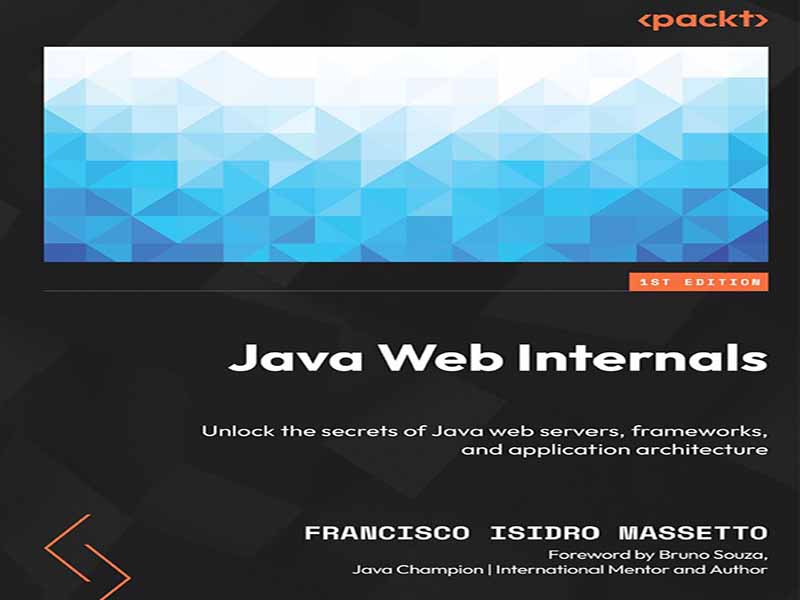
- عنوان کتاب: Java Web Internals -Unlock the secrets of Java web servers, frameworks, and application architecture
- نویسنده: Francisco Isidro Massetto
- حوزه: برنامهنویسی جاوا
- سال انتشار: 2026
- تعداد صفحه: 214
- زبان اصلی: انگلیسی
- نوع فایل: pdf
- حجم فایل: 8.87 مگابایت
این کتاب با یک پیشنهاد واضح و در عین حال چالش برانگیز متولد شده است: برای راهنمایی شما در یک سفر کامل ساخت یک چارچوب وب از اساسی ترین اصول آن. در سناریویی که فریمورکهای مدرن تقریباً تمام پیچیدگی توسعه وب را انتزاعی میکنند، بسیاری از توسعهدهندگان در نهایت از ابزارهای قدرتمند استفاده میکنند بدون اینکه بفهمند واقعاً در پشت لایههای انتزاع چه اتفاقی میافتد. در اینجا، ما رویکرد مخالف را در پیش خواهیم گرفت. به جای شروع در سطح بالا، ما این دانش را از پایه ایجاد خواهیم کرد و هر قطعه ای که اکوسیستم وب را تشکیل می دهد را درک خواهیم کرد. در طول زندگی حرفه ای خود به عنوان استاد دانشگاه، همیشه خودم را وقف آموزش اصول علوم کامپیوتر به دانشجویانم کرده ام. این جرقه در من و در دانش آموزانم شیفتگی به درک فناوری فراتر از سطح را برانگیخته است. و این موضوع تفاوتی نداشت. توسعه وب در حال حاضر به لطف چارچوب های موجود، به ویژه با توجه به اکوسیستم جاوا، بسیار آسان تر است. با این حال، چارچوبهای وب چیزی بیش از انتزاع چیزی نیستند که از اولین نسخههای آنها همیشه در مشخصات وب وجود داشته است. امروزه وقتی از فریم ورکهایی مانند Spring یا Quakus استفاده میکنیم، بیشتر مواردی که استفاده میکنیم نتیجه لایههای انتزاعی است که در گذشته تقریباً به صورت دستی انجام میدادیم. در طول این سفر، شما از اساسی ترین مفاهیم ارتباط شبکه، از طریق استفاده از سوکت ها، به اجرای یک وب سرور کاربردی هدایت خواهید شد. این رویکرد نه تنها درک فنی را تقویت میکند، بلکه به شما امکان میدهد دیدگاهی انتقادی از نحوه عملکرد برنامههای کاربردی توزیع شده ایجاد کنید. از این گذشته، هر برنامه وب به قوانین واضح ارتباط بین مشتری و سرور، بر اساس پروتکل های کاملاً تعریف شده، همانطور که در سراسر کتاب مورد بحث قرار گرفته است، بستگی دارد. با ایجاد این پایه، ما به سمت ساخت یک سرور برنامه حرکت خواهیم کرد و به طور قابل توجهی قابلیت های خود را گسترش خواهیم داد. برخلاف وب سرور سنتی که فقط محتوای ثابت را ارائه می دهد، یک سرور برنامه قادر به اجرای منطق تجاری و ایجاد پاسخ های پویا بر اساس درخواست های دریافتی است. این انتقال یکی از مهمترین لحظات کتاب را نشان میدهد، زیرا جایی است که ما از ارائه ساده فایلها به پردازش واقعی اطلاعات و ساختن برنامههای کاربردی کامل حرکت میکنیم. برای ایجاد این امکان، درک عمیق نحوه عملکرد پروتکل HTTP ضروری است. در سرتاسر فصلها، خواهید دید که درخواستها چگونه ساختار میشوند، چگونه پاسخها جمعآوری میشوند، و چگونه همه جزئیات – از هدر گرفته تا متن پیام – بر رفتار برنامه تأثیر میگذارند.
This book is born with a clear, yet challenging, proposition: to guide you through a complete journey of building a web framework from its most basic fundamentals. In a scenario where modern frameworks abstract almost all the complexity of web development, many developers end up using powerful tools without understanding what really happens behind the layers of abstraction. Here, we will take the opposite approach. Instead of starting at a high level, we will build this knowledge from the ground up, understanding each piece that makes up the web ecosystem. Throughout my career as a university professor, I have always dedicated myself to teaching the fundamentals of Computer Science to my students. This has sparked in me, and in my students, a fascination with understanding technology beyond the surface. And this subject was no different. Web development is currently much easier thanks to the frameworks available, especially considering the Java ecosystem. However, web frameworks are nothing more than abstractions of something that has always existed in web specifications since their earliest versions. Today, when we use a framework like Spring or Quakus, for example, much of what we use is the result of abstraction layers that, in the past, we did almost manually. Throughout this journey, you will be guided from the most fundamental concepts of network communication, through the use of sockets, to the implementation of a functional web server. This approach not only strengthens technical understanding but also allows you to develop a critical view of how distributed applications actually work. After all, every web application depends on clear rules of communication between client and server, based on well-defined protocols, as discussed throughout the book. With this foundation established, we will move on to building an application server, significantly expanding our capabilities. Unlike a traditional web server, which only delivers static content, an application server is capable of executing business logic and generating dynamic responses based on received requests. This transition represents one of the most important moments in the book, as it’s where we move from simply serving files to actually processing information and building complete applications. To make this possible, a deep understanding of how the HTTP protocol works will be essential. Throughout the chapters, you will see how requests are structured, how responses are assembled, and how every detail – from headers to the message body – influences the application’s behavior. More than just using HTTP, you will implement it in practice, understanding its nuances and limitations, which provides a much more solid mastery of web development. All this construction will be done using Java, exploring everything from its most basic concepts to more advanced features. We will start with fundamental language structures and essential APIs, such as sockets and I/O, gradually evolving to the use of reflection, annotations, and architectural patterns that allow the creation of more sophisticated solutions. This progression was carefully planned to ensure that each new concept builds upon the previous one, creating a consistent and natural learning curve. By the end of the journey, you will not only have built a functional web framework, but you will also have developed a deep understanding of how real frameworks operate internally. This means that when using tools like Spring, Quarkus, or any other modern framework, you will be able to see beyond the abstraction, understanding their design decisions, their strengths, and their limitations. This book, therefore, is not just about writing code. It’s about training a developer with a systemic vision, capable of understanding, building, and evolving solutions with autonomy and confidence. If you want to move beyond the superficial level and truly master the inner workings of web development, this journey is for you – and I hope you enjoy it!
این کتاب را میتوانید از لینک زیر بصورت رایگان دانلود کنید:
Download: Java Web Internals

























نظرات کاربران