













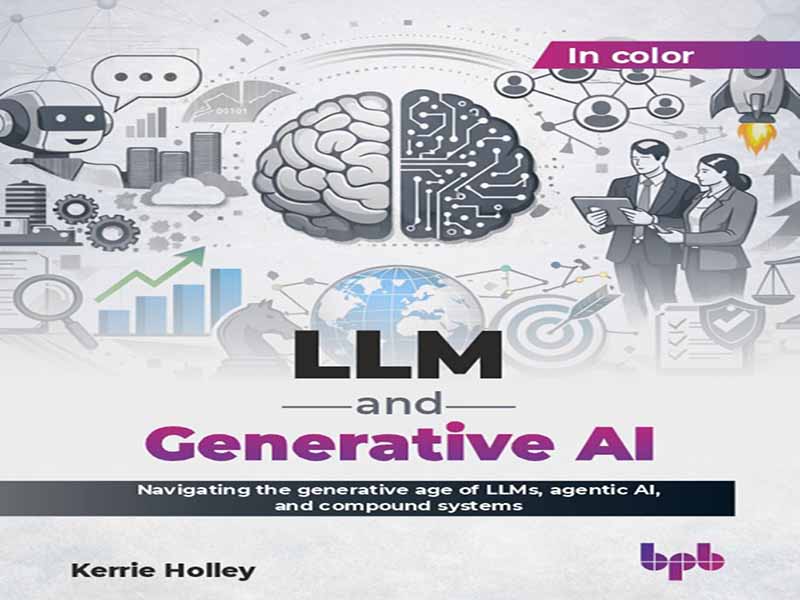
- عنوان کتاب: LLM and Generative AI
- نویسنده: Kerrie Holley
- حوزه: هوش مصنوعی مولد
- سال انتشار: 2026
- تعداد صفحه: 431
- زبان اصلی: انگلیسی
- نوع فایل: pdf
- حجم فایل: 4.08 مگابایت
GenAI به سرعت از تحقیقات گسترده به یکی از متحولکنندهترین فناوریها در کسبوکار مدرن تبدیل شده است. مدلهای زبان بزرگ (LLM) و هوش مصنوعی مولد اکنون بر هر صنعتی تأثیر میگذارند و اشکال جدیدی از خلاقیت، اتوماسیون و بینش را ممکن میسازند. GenAI به یک ضرورت استراتژیک برای سازمانهایی تبدیل شده است که به دنبال دستیابی به راههای جدید کارایی و افزایش بهرهوری در جهانی هستند که با دادهها و هوش تعریف میشود. این کتاب، کاوشی جامع در مورد چگونگی تغییر شکل استراتژی، عملیات و نوآوری کسبوکار توسط LLMها و GenAI ارائه میدهد. این کتاب با توضیح نحوه کار این فناوریها آغاز میشود، سپس کاربردهای دنیای واقعی آنها را در صنایع مختلف بررسی میکند. خوانندگان درک روشنی از نحوه طراحی یک استراتژی هوش مصنوعی، ایجاد تیمهای توانمند، اجرای شیوههای مسئولانه هوش مصنوعی و سنجش موفقیت به دست خواهند آورد. با پیشرفت کتاب، ایدههای پیشرفتهای مانند سیستمهای هوش مصنوعی مرکب و هوش مصنوعی عامل، اشکال جدیدی از هوش که قادر به استدلال، برنامهریزی و همکاری با انسانها هستند، معرفی میشود. فصلهای پایانی، آینده هوش مصنوعی و بحثهای جاری پیرامون هوش عمومی مصنوعی (AGI) را بررسی میکنند و بینشهای عملی و فلسفی در مورد آنچه در پیش است، ارائه میدهند. این کتاب برای رهبران کسبوکار، مدیران، نوآوران و متخصصانی در نظر گرفته شده است که میخواهند قدرت و پتانسیل GenAI را بدون نیاز به پیشینه فنی عمیق درک کنند. این کتاب شکاف بین فناوری و رهبری را پر میکند و به خوانندگان کمک میکند تا فرصتها، چالشها و مسئولیتهای این عصر جدید را هدایت کنند. با این کتاب، خواهید فهمید که چگونه LLMها و هوش مصنوعی مولد، چشمانداز کسبوکار را تغییر میدهند و خواهید دانست که چگونه آنها را به صورت استراتژیک و مسئولانه برای ایجاد تأثیر پایدار در سازمان خود به کار ببرید. امیدوارم این کتاب برای شما آموزنده و مفید باشد. فصل 1: مدلهای زبان بزرگ – این فصل پایه و اساس هوش مصنوعی مدرن را معرفی میکند و توضیح میدهد که چگونه LLMها زبان را پردازش میکنند، از دادهها یاد میگیرند و پاسخهای شبیه انسان تولید میکنند. این فصل مفاهیم پیچیدهای مانند شبکههای عصبی، توکنسازی و آموزش در مقیاس بزرگ را بیشتر توضیح میدهد و پایه روشنی را برای خوانندگان تازه وارد در این زمینه فراهم میکند. فصل 2: درک هوش مصنوعی مولد – این فصل اصول هوش مصنوعی مولد و چگونگی گسترش آن فراتر از متن برای ایجاد تصاویر، صدا و کد را بررسی میکند. خوانندگان تفاوتهای بین پیادهسازیهای قبلی هوش مصنوعی و سیستمهای مولد را میآموزند و درک میکنند که چگونه خلاقیت، زمینه و سازگاری از طریق معماریهای مدل پیشرفته حاصل میشود. فصل 3: تبدیل صنایع با هوش مصنوعی مولد – این فصل بررسی میکند که چگونه هوش مصنوعی مولد، کسبوکار را در بخشهایی مانند مراقبتهای بهداشتی، امور مالی، تولید، خردهفروشی و آموزش متحول میکند. هر مثال نشان میدهد که چگونه سازمانها از هوش مصنوعی برای نوآوری، بهبود کارایی و کسب مزیت رقابتی استفاده میکنند. فصل 4: افزایش تعامل و تجربه مشتری – این فصل نشان میدهد که چگونه شخصیسازی مبتنی بر هوش مصنوعی، چتباتهای هوشمند و دستیاران مجازی، روابط مشتری را بازتعریف میکنند. این فصل همچنین استراتژیهایی را برای ساخت مدلهای تعامل معنادار، پاسخگو و مقیاسپذیر مورد بحث قرار میدهد. فصل 5: سادهسازی عملیات و افزایش بهرهوری – این فصل جزئیات چگونگی افزایش فرآیندهای داخلی توسط هوش مصنوعی از طریق اتوماسیون، مدیریت دانش و پشتیبانی تصمیمگیری را شرح میدهد. خوانندگان همچنین یاد خواهند گرفت که چگونه هوش مصنوعی مولد میتواند کارکنان را تقویت کند، پیچیدگی را کاهش دهد و گردشهای کاری کسبوکار را بهینه کند. فصل 6: هدایت نوآوری و مزیت رقابتی – این فصل بر چگونگی عملکرد هوش مصنوعی مولد به عنوان کاتالیزوری برای خلاقیت و نوآوری تمرکز دارد. این فصل همچنین به چگونگی استفاده کسبوکارها از هوش مصنوعی برای تسریع طراحی محصول، شناسایی فرصتهای بازار و ایجاد مدلهای جدید کسبوکار میپردازد. فصل 7: تدوین استراتژی هوش مصنوعی برای کسبوکار شما – این فصل خوانندگان را در ساخت یک نقشه راه عملی هوش مصنوعی راهنمایی میکند. این فصل شامل شناسایی فرصتها، همسوسازی ابتکارات هوش مصنوعی با اهداف کسبوکار، مدیریت ریسکها و ایجاد چارچوبهای حاکمیتی برای اجرای پایدار است. فصل 8: ایجاد تیم و مشارکتهای مناسب هوش مصنوعی – این فصل نحوه جمعآوری ترکیب مناسبی از استعدادها را با ترکیب علم داده، تخصص در حوزه مربوطه و رهبری استراتژیک توضیح میدهد. سپس این فصل مدلهای همکاری، توسعه مهارت و مشارکت با ارائهدهندگان فناوری را بررسی میکند. فصل 9: ملاحظات اخلاقی و مسئولیتپذیری GenAI – این فصل به ابعاد اخلاقی پذیرش هوش مصنوعی، از جمله انصاف، شفافیت، کاهش سوگیری و پاسخگویی میپردازد. خوانندگان بهترین شیوهها را برای توسعه سیستمهای هوش مصنوعی که با ارزشهای انسانی و یکپارچگی شرکتها همسو هستند، خواهند آموخت. فصل 10: اندازهگیری موفقیت و بازگشت سرمایه – این فصل ابزارها و معیارهایی را برای ارزیابی عملکرد و ارزش تجاری ابتکارات هوش مصنوعی ارائه میدهد. این فصل همچنین بر ارزیابی مبتنی بر داده، یادگیری مداوم و مقیاسبندی نتایج موفق تأکید خواهد کرد. فصل 11: آینده LLMها و هوش مصنوعی مولد – این فصل موج بعدی نوآوری را بررسی میکند که شامل موارد زیر است:
GenAI has rapidly evolved from largely research into one of the most transformative technologies in modern business. Large language models (LLMs) and generative AI now influence every industry, enabling new forms of creativity, automation, and insight. GenAI has become a strategic imperative for organizations seeking to gain new ways of efficiency and increased productivity in a world defined by data and intelligence. This book provides a comprehensive exploration of how LLMs and GenAI are reshaping business strategy, operations, and innovation. It begins by explaining how these technologies work, then examines their real-world applications across multiple industries. Readers will gain a clear understanding of how to design an AI strategy, build capable teams, implement responsible AI practices, and measure success. As the book progresses, it introduces advanced ideas such as compound AI systems and agentic AI, new forms of intelligence capable of reasoning, planning, and collaborating with humans. The final chapters explore the future of AI and the ongoing debate around artificial general intelligence (AGI), offering practical and philosophical insights on what lies ahead. This book is intended for business leaders, executives, innovators, and professionals who want to understand the power and potential of GenAI without needing a deep technical background. It bridges the gap between technology and leadership, helping readers navigate the opportunities, challenges, and responsibilities of this new era. With this book, you will understand how LLMs and generative AI are changing the business landscape, and you will know how to apply them strategically and responsibly to create lasting impact in your organization. I hope you will find this book informative and helpful. Chapter 1: Large Language Models- This chapter introduces the foundation of modern AI, explaining how LLMs process language, learn from data, and generate human-like responses. The chapter further demystifies complex concepts such as neural networks, tokenization, and training at scale, providing a clear base for readers new to the field. Chapter 2: Understanding Generative AI- This chapter explores the principles of generative AI and how it extends beyond text to create images, audio, and code. Readers learn the differences between previous AI implementations and generative systems and understand how creativity, context, and adaptability are achieved through advanced model architectures. Chapter 3: Transforming Industries with Generative AI- This chapter examines how generative AI is transforming business across sectors such as healthcare, finance, manufacturing, retail, and education. Each example illustrates how organizations are using AI to innovate, improve efficiency, and gain a competitive advantage. Chapter 4: Enhancing Customer Engagement and Experience- This chapter shows how AI-powered personalization, intelligent chatbots, and virtual assistants are redefining customer relationships. The chapter also discusses strategies for building meaningful, responsive, and scalable engagement models. Chapter 5: Streamlining Operations and Boosting Productivity- This chapter details how AI enhances internal processes through automation, knowledge management, and decision support. The readers will also learn how generative AI can augment employees, reduce complexity, and optimize business workflows. Chapter 6: Driving Innovation and Competitive Advantage- This chapter focuses on how generative AI acts as a catalyst for creativity and innovation. The chapter further highlights how businesses are using AI to accelerate product design, identify market opportunities, and create new business models. Chapter 7: Developing an AI Strategy for Your Business- This chapter guides the readers through building a practical AI roadmap. It covers identifying opportunities, aligning AI initiatives with business objectives, managing risks, and establishing governance frameworks for sustainable implementation. Chapter 8: Building the Right AI Team and Partnerships- This chapter explains how to assemble the right mix of talent by combining data science, domain expertise, and strategic leadership. The chapter then explores collaboration models, skill development, and partnering with technology providers. Chapter 9: Ethical Considerations and GenAI Responsibility- This chapter addresses the ethical dimensions of AI adoption, including fairness, transparency, bias mitigation, and accountability. The readers will learn best practices for developing AI systems that align with human values and corporate integrity. Chapter 10: Measuring Success and ROI- This chapter provides tools and metrics to evaluate the performance and business value of AI initiatives. The chapter will also emphasize data-driven evaluation, continuous learning, and scaling successful outcomes. Chapter 11: Future of LLMs and Generative AI- This chapter explores the next wave of innovation, which includes compound AI systems, domain-specific models, and agentic AI that can reason and act autonomously. The chapter also presents a forward-looking view of where AI is heading and what it means for business leaders. Chapter 12: Impact of AGI on Business- This chapter concludes the book with a critical discussion on AGI. The readers are encouraged to separate scientific reality from speculation and to focus on how today’s generative technologies can create meaningful impact while preparing for tomorrow’s unknowns.
این کتاب را میتوانید از لینک زیر بصورت رایگان دانلود کنید:
Download: LLM and Generative AI























نظرات کاربران