













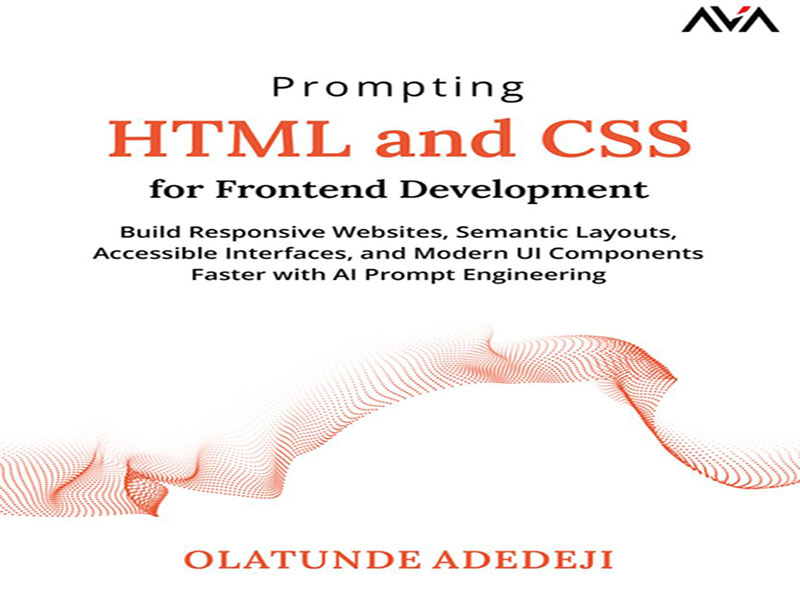
- عنوان کتاب: Prompting HTML and CSS for Frontend Development Build Responsive Websites
- نویسنده: Olatunde Adedeji
- حوزه: توسعه فرانتاند
- سال انتشار: 2026
- تعداد صفحه: 349
- زبان اصلی: انگلیسی
- نوع فایل: pdf
- حجم فایل: 7.65 مگابایت
این کتاب در نقطه تلاقی هوش مصنوعی و توسعه فرانتاند قرار دارد. ما در حال ورود به مرحله جدیدی هستیم؛ سالها، ساخت رابطها به معنای ساخت دستی هر تگ HTML، هر انتخابگر CSS و هر تنظیم واکنشگرا بود. امروزه، ظهور فرانتاند با کمک هوش مصنوعی، اساساً این گردش کار را تغییر میدهد. طراحان و توسعهدهندگان اکنون میتوانند یک رابط را به زبان طبیعی توصیف کنند و در عوض کد ساختاریافته و سبکدار دریافت کنند. این تغییر جایگزین توسعه فرانتاند نمیشود؛ بلکه نحوه رویکرد ما به آن را تغییر میدهد. این کتاب برای کمک به توسعهدهندگان، طراحان محصول و سایر سازندگان دیجیتال نوشته شده است تا این تغییر را به روشنی و عملی درک کنند. HTML و CSS فرانتاند نشان میدهد که چگونه ایدهها را با استفاده از گردشهای کاری مبتنی بر فرانتاند به کدهای فرانتاند ساختاریافته، قابل نگهداری و قابل دسترس تبدیل کنید. این کتاب به جای اینکه هوش مصنوعی (AI) را به عنوان یک میانبر در نظر بگیرد، آن را به عنوان یک شریک توسعه ارائه میدهد، شریکی که نیاز به جهتدهی، قضاوت و استانداردهای بالا دارد. در توسعه فرانتاند مدرن، مهارت اصلی دیگر فقط نوشتن نشانهگذاری و سبکها از ابتدا نیست؛ بلکه یادگیری نحوه هدایت هوش مصنوعی به سمت خروجیهای مفید و نحوه اصلاح آن نتایج به هنر دیجیتال آماده تولید است. هدف این کتاب ساده است: کمک به شما برای حرکت سریعتر از مفاهیم به سمت ساخت رابط کاربری بدون از دست دادن کیفیت کد. در طول مسیر، یاد خواهید گرفت که چگونه دستورالعملهای مؤثر بنویسید، HTML معنایی تولید کنید، CSS واکنشگرا ایجاد کنید، اجزای قابل استفاده مجدد بسازید، با ابزارهای دستورالعمل بصری آزمایش کنید، خروجی تولید شده توسط هوش مصنوعی را اصلاح کنید و کار نهایی را در وب مستقر کنید. ما همچنین بر دسترسیپذیری و کد تمیز تأکید میکنیم، زیرا سرعت به تنهایی کافی نیست. مهندسی حرفهای همچنان به وضوح، قابلیت استفاده و هدفمندی نیاز دارد. این یک راهنمای عملی برای سازندگان در هر سطحی است. بنابراین، چه تازه شروع کرده باشید و چه یک متخصص باتجربه که سعی در مدرنسازی گردشهای کاری دارید، این کتاب شما را در تقاطع اصول وب و توسعه به کمک هوش مصنوعی ملاقات میکند. این کتاب در ۱۳ فصل پیشرو، چرخه عمر کامل توسعه frontend را پوشش میدهد. این کتاب با مبانی ارتباطات هوش مصنوعی و راهاندازی محیط شروع میشود، به اجرای طرحبندیهای معنایی و واکنشگرا میپردازد و با اصلاح تولید به پایان میرسد، جایی که شما بر ابزارهای بصری و استراتژیهای استقرار برای ارائه رابطهای وب با کیفیت بالا تسلط خواهید یافت. فصل 1: مقدمهای بر توسعه وب مبتنی بر Prompt این فصل به معرفی شیوه نوظهور توسعه frontend مبتنی بر Prompt میپردازد و بررسی میکند که چگونه هوش مصنوعی (AI) در حال تغییر شکل نحوه نوشتن HTML و CSS توسط توسعهدهندگان است. شما یاد خواهید گرفت که Prompt را به عنوان یک مهارت حیاتی که مکمل تخصص سنتی است، ببینید، در حالی که تکامل فناوری از کدنویسی دستی تا گردشهای کاری تقویتشده با هوش مصنوعی را دنبال میکنید. فصل 2: ابزارها و تنظیمات برای توسعه مبتنی بر Prompt قبل از تولید کد، با تنظیم ابزارهای ضروری مانند ChatGPT و GitHub Copilot، محیط توسعه خود را با گردشهای کاری تقویتشده با هوش مصنوعی مدرن همسو خواهید کرد. این فصل تضمین میکند که میتوانید این ابزارها را به طور مؤثر در Visual Studio Code ادغام کنید تا بهرهوری را افزایش داده و خروجی HTML و CSS خود را به طور قابل اعتمادی آزمایش کنید. فصل 3: مهندسی Prompt برای HTML و CSS این فصل به بررسی اصول ساخت Promptهای مؤثر میپردازد که کد تمیز، معنایی و واکنشگرا را از طریق وضوح و زمینه تولید میکنند. شما بر تکنیکهای اصلی مانند Prompt با تعداد کم و زنجیرهای Prompt برای اصلاح تدریجی نتایج خود و اشکالزدایی دستورالعملهای مبهم تسلط خواهید یافت. فصل ۴: HTML اصلی با کمک هوش مصنوعی در این فصل، شما از ابزارهای هوش مصنوعی برای ایجاد ساختار بنیادی یک صفحه وب با سازماندهی محتوا با عناصر معنایی مانند هدرها، ناوبری و بخشهای اصلی استفاده خواهید کرد. این رویکرد به شما کمک میکند تا طرحبندیهای منطقی ایجاد کنید که دسترسیپذیری و سئو را بهبود میبخشد، در حالی که استانداردهای بالایی را برای وضوح ساختاری حفظ میکند. فصل ۵: HTML ویژه محتوا با هوش مصنوعی این فصل بر تولید محتوای وب تعاملی و غنی از رسانه، مانند فرمهای ساختاریافته و جداول داده، از طریق کمک عملی هوش مصنوعی تمرکز دارد. شما تمرین خواهید کرد که بهترین شیوههای دسترسیپذیری را مستقیماً در اعلانهای خود بگنجانید تا اطمینان حاصل شود که تجربیات دیجیتالی شما از ابتدا فراگیر باقی میمانند. فصل ۶: سبکبندی با CSS مبتنی بر Prompt در این فصل، بررسی خواهید کرد که چگونه هوش مصنوعی با استفاده از CSS سنتی و چارچوبهای کاربردی مانند Tailwind CSS، فرآیند سبکبندی را تسریع میکند. این فصل نحوه ساخت سیستمهای طرحبندی مدرن مانند Flexbox و Grid را نشان میدهد، در حالی که اطمینان حاصل میشود که طرحهای شما به طور روان با اندازههای مختلف صفحه نمایش سازگار میشوند. فصل 7: تکنیکهای پیشرفته CSS با کمک هوش مصنوعی این فصل ویژگیهای پیشرفته استایلبندی را برای افزایش غنای بصری رابطهای شما از طریق انتقالهای روان و انیمیشنهای چشمنواز معرفی میکند. شما یاد خواهید گرفت که با استفاده از هوش مصنوعی، دستورات را برای استایلدهی پویا به عناصر رابط کاربری اصلاح کنید و به اجزای استاتیک با جلوههای ویژه جان ببخشید. فصل 8: ساخت اجزای رابط کاربری در این فصل، یاد خواهید گرفت که چگونه یک رابط کاربری را به بخشهای ماژولار و مجزا تقسیم کنید.
This book sits at the intersection of AI prompting and frontend development. We are entering a new phase; for years, building interfaces meant manually crafting every HTML tag, every CSS selector, and every responsive adjustment. Today, the emergence of AI-assisted prompting is fundamentally changing that workflow. Designers and developers can now describe an interface in natural language, and receive structured, styled code in return. This shift is not replacing frontend development; it is transforming how we approach it. This book was written to help developers, product designers, and other digital creators understand this shift clearly and practically. Prompt HTML and CSS shows how to turn ideas into well-structured, maintainable, and accessible frontend code using prompt-based workflows. Rather than treating Artificial Intelligence (AI) as a shortcut, this book presents it as a development partner, the one that requires direction, judgment, and high standards. In modern frontend development, the primary skill is no longer just writing markup and styles from scratch; it is learning how to navigate AI toward useful outputs and how to refine those results into productionready digital art. The goal of this book is simple: To help you move from concepts to building interface faster without losing code quality. Along the way, you will learn how to write effective prompts, generate semantic HTML, create responsive CSS, build reusable components, experiment with visual prompting tools, refine AI-generated output, and deploy finished work to the web. We also emphasize accessibility and clean code, because speed alone is not enough; professional engineering still requires clarity, usability, and intent. This is a hands-on guide for creators at any level. Thus, whether you are just beginning or an experienced professional, trying to modernize workflows, this book meets you at the intersection of web fundamentals and AI-assisted development. Across 13 progressive chapters, this book covers the full frontend development lifecycle. It starts with the foundations of AI communication and environment setup, moves into the execution of semantic and responsive layouts, and concludes with production refinement, where you will master visual tools and deployment strategies to ship high-quality web interfaces. Chapter 1: Introduction to Prompt-Driven Web Development This chapter introduces the emerging practice of prompt-driven frontend development, and explores how Artificial Intelligence (AI) is reshaping the way developers write HTML and CSS. You will learn to see prompting as a critical skill that complements traditional expertise, while tracing the technological evolution from manual coding to AI-augmented workflows. Chapter 2: Tools and Setup for Prompt-Based Development Before generating code, you will align your development environment with modern AI-augmented workflows by setting up essential tools like ChatGPT and GitHub Copilot. This chapter ensures that you can effectively integrate these tools into Visual Studio Code to increase productivity and reliably test your HTML and CSS output. Chapter 3: Prompt Engineering for HTML and CSS This chapter explores the principles of crafting effective prompts that produce clean, semantic, and responsive code through clarity and context. You will master the core techniques such as few-shot prompting and prompt chaining to progressively refine your results, and debug ambiguous instructions. Chapter 4: Core HTML with AI Assistance In this chapter, you will use AI tools to build the foundational structure of a web page by organizing content with semantic elements such as headers, navigation, and main sections. This approach helps you create logical layouts that improve accessibility and SEO, while maintaining high standards for structural clarity. Chapter 5: Content-Specific HTML with AI This chapter focuses on generating interactive and media-rich web content, such as structured forms and data tables, through practical AI assistance. You will practice incorporating accessibility best practices directly into your prompts to ensure that your digital experiences remain inclusive from the start. Chapter 6: Styling with Prompt-Based CSS In this chapter, you will explore how AI accelerates the styling process using traditional CSS and utility-first frameworks like Tailwind CSS. The chapter demonstrates how to construct modern layout systems such as Flexbox and Grid, while ensuring your designs adapt fluidly to various screen sizes. Chapter 7: Advanced CSS Techniques with AI Assistance This chapter introduces advanced styling features to enhance the visual richness of your interfaces through smooth transitions and eye-catching animations. You will learn to refine prompts to style UI elements dynamically, using AI to bring static components to life with polished effects. Chapter 8: Building UI Components In this chapter, you will learn how to break down a user interface into modular, reusable components like navigation bars, cards, and modals using prompt-based workflows. This chapter demonstrates strategies for producing consistent patterns and styled variations of the same component with minimal manual effort. Chapter 9: Applied Prompt Workflows This chapter transitions into real-world interface building through structured case studies, moving from initial design ideas to functional layouts. You will build projects such as a fintech landing page and an IoT dashboard to understand how to move fluidly between ideation and implementation. Chapter 10: Visual Prompting in Design Tools In this chapter, you are introduced to visual prompting, the practice of guiding tools like Framer AI to prototype layouts using natural language commands. This section explores the best practices for structuring prompts that respect visual hierarchy, while identifying the current limitations in AIpowered design tools. Chapter 11: From AI Code to Live Website This chapter guides you through the deployment pipeline to turn your generated code into a fully functional, publicly accessible website. You will learn to clean up the AI-generated code to meet industry standards and use platforms like GitHub and Vercel to launch your project. Chapter 12: Refining AI-Generated Code In this chapter, you will explore the crucial process of identifying and correcting AI hallucinations or inconsistencies to meet professional standards. This chapter teaches techniques for optimizing performance and accessibility compliance, ensuring that your final drafts are polished and production-ready. Chapter 13: AI-Driven Frontend Mastery and Future Readiness This is the final chapter that focuses on maintaining clean and sustainable code, while building a personalized prompt library to boost your long-term productivity. You will learn strategies to embrace evolving AI ecosystems confidently, and stay relevant in the ever-changing developer’s job market!
این کتاب را میتوانید از لینک زیر بصورت رایگان دانلود کنید:
























نظرات کاربران