











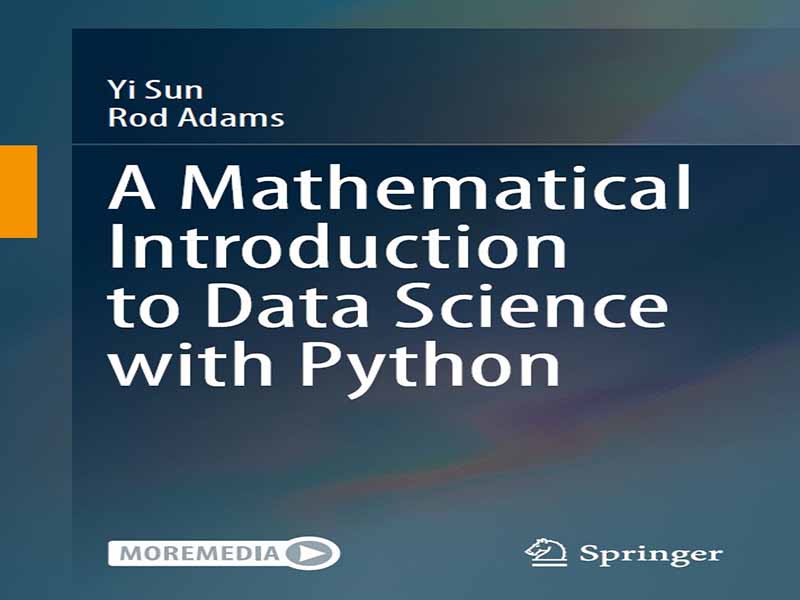
- عنوان کتاب: A Mathematical Introduction to Data Science with Python
- نویسنده: Yi Sun, Rod Adams
- حوزه: علوم داده
- سال انتشار: 2026
- تعداد صفحه: 406
- زبان اصلی: انگلیسی
- نوع فایل: pdf
- حجم فایل: 5.81 مگابایت
این کتاب درسی به عنوان مکمل کتاب ما، مقدمهای ریاضی بر علم داده، منتشر شده توسط اشپرینگر، عمل میکند. این کتاب همراه شامل نمونه کد پایتون است که بیشتر ریاضیات موجود در مقدمهای ریاضی بر علم داده را پیادهسازی و نشان میدهد. این کتابی نیست که برای آموزش برنامهنویسی در پایتون یا در واقع برنامهنویسی به طور کلی در نظر گرفته شده باشد. هدف اصلی ما کمک به خوانندگان برای تعمیق درک خود از مفاهیم ریاضی از طریق برنامهنویسی، به ویژه برنامهنویسی در پایتون، است. با یادگیری کد نمونه و درک اصول ریاضی پشت آن، امیدواریم خواننده بتواند برنامههای پیچیدهتری را که شامل الگوریتمهای ریاضی هستند، درک کند و یک برنامه کامل بسازد که در صورت نیاز، کاربرد خاص خود را پیادهسازی کند. ما پایتون را به دو دلیل به عنوان زبان برنامهنویسی برای این منظور انتخاب کردهایم. اولاً، این زبان به طور گسترده در زمینه علم داده استفاده میشود و ثانیاً، منابع قابل دسترس زیادی برای تکمیل هرگونه شکاف در کد ما وجود دارد، زیرا ما ادعا نمیکنیم که متخصص پایتون هستیم. ما همچنین ادعا نمیکنیم که کد ارائه شده تنها یا بهترین راه برای پیادهسازی مفاهیم ریاضی انتخاب شده است، اما یکی از راههای انجام این کار است. ما سعی کردهایم مثالها و تمرینهایی از کد ارائه دهیم که طیف گستردهای از ساختارهای پایتون را پوشش میدهد و به خوانندگان تجربه کار با جنبههای مختلف پایتون را میدهد. در واقع، خوانندگان را تشویق میکنیم تا پس از درک اصول ریاضی اساسی، راهحلهای برنامهنویسی بهتری را بررسی کنند. کتابخانههای زیادی وجود دارند که شامل تعداد شگفتانگیزی از ماژولهای توابع قابل دسترس در پایتون هستند که میتوانند مورد بررسی قرار گیرند و ما فقط با ارائه نسخههای اولیه، سطح را خراشیدهایم – پس ادامه دهید و آزمایش کنید. این کتاب، پایه و اساس جامعی در ریاضیات از طریق برنامهنویسی پایتون برای هر کسی که پیشینه ریاضی پایه دارد، از جمله دانشآموزان و خودآموزان علاقهمند به علوم داده، ارائه میدهد. انتظار میرود خوانندگان در کار با اعداد در قالبهای مختلف، از جمله کسرها، اعشار، درصدها و اعداد مختلط، مهارت داشته باشند. آنها همچنین باید دانش جبر مقدماتی، مانند دستکاری عبارات جبری ساده، حل معادلات ساده و رسم نمودار توابع ابتدایی، همراه با درک اولیه از هندسه، از جمله زاویهها، مثلثات و قضیه فیثاغورث، داشته باشند. برخی از مثالهای کتاب «مقدمهای ریاضی بر علم داده» برای نشان دادن مفاهیم کلیدی مانند مجموعهها، توابع، جبر خطی، حساب دیفرانسیل و انتگرال و احتمال و آمار ضروری برای درک الگوریتمهایی که کاربردهای علم داده امروزی را از طریق برنامهنویسی پایتون تقویت میکنند، استفاده شدهاند. علاوه بر این، این کتاب درسی نشان میدهد که چگونه میتوان این مفاهیم ریاضی را در الگوریتمهای محاسباتی پرکاربرد، مانند تحلیل مؤلفههای اصلی، رگرسیون خطی و شبکههای عصبی، به کار برد. در حالت ایدهآل، خوانندگان باید هم این کتاب و هم کتاب همراه آن، «مقدمهای ریاضی بر علم داده» را داشته باشند. با این حال، کسانی که پیشینه ریاضی قوی و علاقهای به پیادهسازیهای برنامهنویسی دارند، میتوانند از خواندن این کتاب درسی به تنهایی بهرهمند شوند.
This textbook serves as a companion to our book, A Mathematical Introduction to Data Science, published by Springer. This companion book contains sample Python code that will implement and illustrate most of the mathematics found in A Mathematical Introduction to Data Science. This is not a book intended to teach program-ming in Python, or indeed programming in general. Our primary goal is to help readers deepen their understanding of mathematical concepts through programming, in particular programming in Python. By learning the sample code and understanding the mathematical principles behind it, we hope the reader will be able to grasp more complex programs involving mathematical algorithms and construct a full program that implements their own particular application whenever needed. We have chosen Python as the programming language for this purpose for two reasons. Firstly, it is widely used in the field of data science, and secondly, there are many accessible resources available to supplement any gaps in our code, as we do not claim to be Python experts. We also do not claim that the code presented is the only, or best, way of implementing the chosen mathematical concepts, but is one way of doing so. We have tried to give code examples and exercises that cover a wide range of Python constructs and so give readers experience with many different facets of Python. In fact, we encourage readers to explore better programming solutions once they grasp the underlying mathematical principles. There are lots of libraries, containing an amazing number of modules of functions accessible in Python that can be explored, and we have only scratched the surface by giving the basic versions—so go ahead and experiment. This book provides a comprehensive foundation in mathematics through Python programming for anyone with a basic mathematical background, including students and self-learners interested in data science. Readers are expected to be proficient in handling numbers in various formats, including fractions, decimals, percentages and surds. They should also have a knowledge of introductory algebra, such as manipulating simple algebraic expressions, solving simple equations and graphing elementary functions, along with a basic understanding of geometry, including angles, trigonometry and Pythagoras’ theorem. Some examples from A Mathematical Introduction to Data Science are used to illustrate key concepts such as sets, functions, linear algebra, calculus and probability and statistics essential for understanding the algorithms that power today’s data science applications through Python programming. Further, this textbook shows how those mathematical concepts can be applied in widely used computational algorithms, such as principal component analysis, linear regression and neural networks. Ideally, readers should have both this book and its companion, A Mathematical Introduction to Data Science. However, those with a strong mathematical back-ground and an interest in programming implementations can benefit from reading this textbook on its own.
این کتاب را میتوانید از لینک زیر بصورت رایگان دانلود کنید:
Download: A Mathematical Introduction to Data Science with Python























نظرات کاربران