











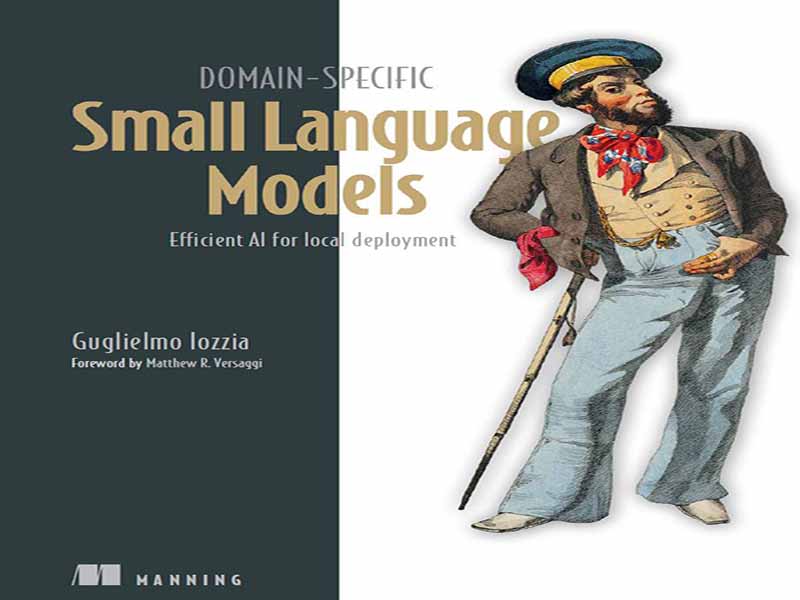
- عنوان کتاب: Domain-Specific Small Language Models -Efficient AI for local deployment
- نویسنده: Guglielmo Iozzia
- حوزه: مدل زبانی
- سال انتشار: 2026
- تعداد صفحه: 376
- زبان اصلی: انگلیسی
- نوع فایل: pdf
- حجم فایل: 5.70 مگابایت
واقعاً مایه افتخار است که درخواستی برای نوشتن پیشگفتاری برای کتابی مانند این، در این فضای خاص، در این زمان خاص از تاریخ، و توسط نویسندهای که به اعتقاد من در طول دوران تصدی خود سهم قابل توجهی در این صنعت خواهد داشت، دریافت میکنم. آن کتاب «مدلهای زبانی کوچک مختص دامنه» است، فضا «هوش مصنوعی مولد» است، زمان در تاریخ «شتاب تکاملی عظیم هوش مصنوعی» است، و نویسنده گوگلیلمو ایوزیا است. در دورانی که گفتمان هوش مصنوعی تحت سلطه مدلهای مرزی بزرگتر و نمایشهای چشمنواز است، این کتاب موضعی عملگرایانه و طراوتبخش اتخاذ میکند: این کتاب در مورد ایجاد مدلهای زبانی است که واقعاً برای دامنه، دادههای و محدودیتهای سختافزاری شما کار کنند. این کتاب با در نظر گرفتن منحنی یادگیری متخصصان نوشته شده است و از مفاهیم بنیادی به سمت تجربه عملی حرکت میکند، به طوری که وقتی آخرین صفحه را ورق میزنید، نه تنها خواهید فهمید که چرا مدلهای زبانی کوچک مختص دامنه اهمیت دارند، بلکه آنها را اجرا، تنظیم، بهینهسازی و در زیرساختهای دنیای واقعی مستقر کردهاید. آنچه این اثر را متمایز میکند، تمرکز بیوقفه آن بر واقعیتهای هوش مصنوعی توزیعشده و لبهای است. نویسنده به جای اینکه پردازندههای گرافیکی (GPU) را در فضای ابری به عنوان یک منبع نامحدود در نظر بگیرد، به محدودیتهایی که اکثر سازمانها در واقع با آن مواجه هستند، میپردازد: بودجههای محدود، خوشههای آماده، لپتاپها و حتی دستگاههای موبایل یا تعبیهشده. از فصلهای آغازین در مورد تعریف و نقش مدلهای زبانی کوچک (SLM)، مشخص میشود که هدف ستایش مقیاس نیست، بلکه نشان دادن این است که چگونه مدلهای با دقت انتخاب شده و تنظیمشده در محدوده پارامتر ۱۰۰M تا ۱۰B میتوانند ارزش تجاری فوقالعادهای را ارائه دهند، زمانی که تا حد امکان به جایی که دادهها تولید میشوند و تصمیمات گرفته میشوند، نزدیک شوند. بررسیهای ONNX، تکنیکهای کوانتیزاسیون و بهینهسازیهای آگاه از سختافزار، بحث را در شیوههای ملموسی قرار میدهند که به طور قابل توجهی تأخیر و هزینه را در لبه کاهش میدهند و در عین حال دقت مفید را حفظ میکنند. این همچنین یک متن پایه عالی برای هر کسی است که سعی میکند با صداقت فکری، فضای تصمیمگیری LLM در مقابل SLM را پیمایش کند. فصلهای اولیه، گشت و گذاری روشن و بدون اغراق در معماری Transformer، الگوهای آموزشی، اکوسیستمهای متنباز و بدهبستانهای بین LLMهای بسته عمومی و مدلهای خاص دامنه ارائه میدهند. از آنجا، کتاب به طور پیوسته به یک جعبه ابزار تبدیل میشود: آمادهسازی دادهها، تنظیم دقیق کلاسیک، روشهای PEFT مانند LoRA و تولید افزوده بازیابی، همگی با عمق کافی و کد قابل اجرا ارائه شدهاند که میتوانید مثالها را برای محیط خود بازتولید، تطبیق و گسترش دهید. نتیجه، ترکیبی نادر از وضوح مفهومی و راهنمایی عملی است که هم به عنوان مقدمهای برای افراد تازه وارد در این حوزه و هم به عنوان مرجعی ساختاریافته برای متخصصان باتجربه که رویکرد خود را رسمی میکنند، عمل میکند. شاید جذابترین نکته، نحوه بازگشت مکرر کتاب به واقعیت دامنه باشد. دستیاران کدنویسی نه به عنوان مفاهیم انتزاعی، بلکه از طریق تنظیم دقیق سرتاسری GPT-2 روی کد Manim، همراه با گردشهای کاری جستجو و ارزیابی هایپرپارامتر که منعکس کننده مهندسی ML در سطح تولید هستند، بررسی میشوند. شیمی و علوم زیستی با جدیت یکسانی مورد بررسی قرار گرفتهاند، از تولید توالی پروتئین و آنتیبادی گرفته تا بحث در مورد گردشهای کاری اعتبارسنجی و ابزارهای تخصصی، و نشان میدهند که چگونه SLMها موارد استفاده با ارزش بالا را در صنایع حساس به دادهها و تحت نظارت، آزاد میکنند. فصلهای بعدی این قابلیتها را به الگوهای کاربردی مدرن – خطوط لوله RAG، سیستمهای عامل، الگوهای استقرار و سرویسدهی و اجرا بر روی سختافزارهای معمولی – متصل میکنند تا خوانندگان با یک مدل ذهنی که از تئوری تا معماری و کد را در بر میگیرد، به پایان برسانند. اگر در مورد بهکارگیری هوش مصنوعی مولد فراتر از نمونههای اولیه براق جدی هستید – بهویژه در حوزههایی که دادهها حساس هستند، مقررات سختگیرانه است یا زیرساختها محدود هستند – این کتاب ارزش وقت گذاشتن را دارد. این کتاب نه تنها به شما میگوید که مدلهای زبانی کوچک مهم هستند، بلکه گام به گام به شما نشان میدهد که چگونه آنها را بهطور مسئولانه در محیطهایی که بیشترین اهمیت را دارند، بسازید، تطبیق دهید و ارسال کنید.
It is truly an honor to receive a request to write a foreword for a book like this, in this particular space, at this specific time in history, and by an author who I believe will make significant contributions to this industry during his tenure. That book is Domain-Specific Small Language Models, the space is generative AI, the time in history is the tremendous evolutionary acceleration of AI, and the author is Guglielmo Iozzia. In an era when AI discourse is dominated by ever-larger frontier models and eye-catching demos, this book takes a refreshingly pragmatic stance: it is about making language models actually work for your domain, your data, and your hardware constraints. It is written with the practitioner’s learning curve squarely in mind, moving from foundational concepts to hands-on experience so that by the time you turn the last page, you will not only understand why small, domain-specific language models matter, you will have run them, tuned them, optimized them, and deployed them on real-world infrastructure. What distinguishes this work is its relentless focus on the realities of distributed and edge AI. Rather than treating GPUs in the cloud as an infinite resource, the author leans into the constraints most organizations actually face: tight budgets, on-prem clusters, laptops, and even mobile or embedded devices. From the opening chapters on the definition and role of small language models (SLMs), it becomes clear that the goal is not to worship scale, but to show how carefully chosen, well-tuned models in the 100M to 10B parameter range can deliver outsized business value when pushed as close as possible to where data is generated and decisions are made. The walkthroughs of ONNX, quantization techniques, and hardware-aware optimizations anchor the discussion in concrete practices that materially reduce latency and cost at the edge while preserving useful accuracy. This is also an excellent grounding text for anyone trying to navigate the LLMversus- SLM decision space with intellectual honesty. The early chapters provide a clear, hype-free tour of the Transformer architecture, training paradigms, open source ecosystems, and the tradeoffs between generalist closed LLMs and domain-specific models. From there, the book steadily builds into a toolkit: data preparation, classic fine-tuning, PEFT methods such as LoRA, and retrieval-augmented generation are all presented with enough depth and runnable code that you can reproduce, adapt, and extend the examples for your own environment. The result is a rare combination of conceptual clarity and practical guidance that serves both as an introduction for those new to the field and as a structured reference for experienced practitioners formalizing their approach. Perhaps most compelling is the way the book repeatedly returns to domain reality. Coding assistants are explored not as abstractions but via end-to-end fine-tuning of GPT-2 on Manim code, complete with hyperparameter search and evaluation workflows that mirror production-grade ML engineering. Chemistry and life sciences are treated with equal seriousness, from protein and antibody sequence generation to discussion of validation workflows and specialized tooling, illustrating how SLMs unlock high-value use cases in regulated, data-sensitive industries. Later chapters connect these capabilities to modern application patterns—RAG pipelines, agentic systems, deployment and serving patterns, and running on commodity hardware—so that readers finish with a mental model that spans from theory to architecture to code. If you are serious about applying generative AI beyond glossy prototypes—especially in domains where data is sensitive, regulation is strict, or infrastructure is constrained— this book is worthy of your time. It will not just tell you that small language models are important; it will show you, step by step, how to build, adapt, and ship them responsibly in the environments where they matter most.
این کتاب را میتوانید از لینک زیر بصورت رایگان دانلود کنید:
Download: Domain-Specific Small Language Models
























نظرات کاربران