











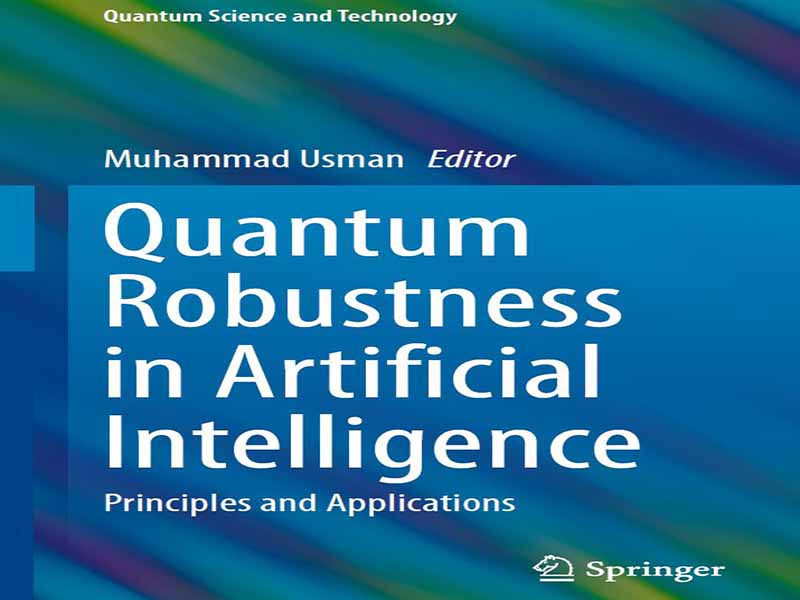
- عنوان کتاب: Quantum Robustness in Artificial Intelligence
- نویسنده: Muhammad Usman
- حوزه: استحکام کوانتومی
- سال انتشار: 2026
- تعداد صفحه: 457
- زبان اصلی: انگلیسی
- نوع فایل: pdf
- حجم فایل: 23.9 مگابایت
امروزه هوش مصنوعی به طور فزاینده ای در بسیاری از فرآیندهای تصمیم گیری در زندگی واقعی که شامل سناریوهایی است که اعتماد یا استحکام یک پارامتر کلیدی مورد علاقه است، استفاده می شود. وسایل نقلیه خودران، سیستمهای تسلیحات نظامی خودمختار و تشخیصهای پزشکی تنها برخی از نمونههای کلیدی از طیف وسیعی از کاربردها هستند که در آن هر اشتباهی توسط الگوریتم هوش مصنوعی میتواند منجر به عواقب جدی شود. همچنین به خوبی شناخته شده است که مدلهای هوش مصنوعی معمولی یا کلاسیک – علیرغم کارایی و سرعتشان – در برابر دستکاری دادهها، نویز و مسمومیت آسیبپذیر هستند. حتی دستکاری چند پیکسل در یک تصویر میتواند باعث شود که یک مدل هوش مصنوعی آموزشدیده، کاملاً تصویر را اشتباه برچسبگذاری کند، برای مثال، تصویر سیگنال STOP را به عنوان سیگنال «YIELD» تشخیص دهد یا سیگنالهای نور سبز را بهعنوان سیگنالهای نور قرمز تفسیر کند. چنین اشتباهاتی می تواند منجر به عواقب بسیار مخرب از جمله از دست دادن زندگی شود. با وجود حجم عظیم تحقیقات در مورد ارزیابی استحکام مدلهای هوش مصنوعی و توسعه استراتژیهایی برای کاهش آسیبپذیریهای آنها، یک راهحل جهانی روشن هنوز یک چالش باز است. هوش مصنوعی کوانتومی به سرعت به عنوان یک زمینه تحقیقاتی جدید با جاه طلبی برای ادغام ویژگی های منحصر به فرد مکانیک کوانتومی مانند برهم نهی و درهم تنیدگی در هوش مصنوعی پدیدار شده است که منجر به الگوریتم ها و معماری های اساساً جدیدی می شود که می تواند چالش های پیش روی مدل های کلاسیک مرسوم را برطرف کند. در واقع، کار اخیر استحکام الگوریتمهای هوش مصنوعی کوانتومی را در زمینه جعل دادهها و دستکاریها بررسی کرده است. هر دو نتایج تجربی و تحلیلی پتانسیل دستیابی به قابلیت اطمینان در هوش مصنوعی کوانتومی را نشان دادهاند که منجر به سیستمهای مستقل قابل اعتماد در آینده میشود. اگر درست باشد، این میتواند راه جدیدی برای مزیت کوانتومی فراتر از افزایش سرعت محاسباتی و دقت طبقهبندی برتر باشد که الهامبخش اولیه برای توسعه مدلهای هوش مصنوعی کوانتومی بوده است. این کتاب، تا به امروز، اولین مجموعه تحقیقاتی با تمرکز اولیه بر روی استحکام کوانتومی در هوش مصنوعی است. این کار دعوت شده از جامعه تحقیقاتی پیشرو جهانی را ارائه می دهد که سهم قابل توجهی در پیشرفت این زمینه داشته اند.
Artificial Intelligence is nowadays increasingly deployed in many real-life decisionmaking processes which include scenarios where trust or robustness is a key parameter of interest. Self-driving vehicles, autonomous military weapon systems, and medical diagnostics are just some of the key examples from a vast range of applications where any mistake by the underpinning Artificial Intelligence algorithm could lead to serious consequences. It is also well-known that conventional or classical Artificial Intelligence models—despite their efficiency and speed—are vulnerable to data manipulations, noise, and poisoning. Even manipulating a few pixels in an image could lead a well-trained state-of-the-art Artificial Intelligence model to completely mislabel the image, for example, identifying the image of a “STOP” signal as a “YIELD” signal or misinterpret Green light signals as Red light signals. Such mistakes could result in highly damaging consequences including the loss of life. Despite tremendous amount of research on evaluating the robustness of Artificial Intelligence models and developing strategies to mitigate their vulnerabilities, a clear universal solution is still an open challenge. Quantum Artificial Intelligence has rapidly emerged as a new field of research with the ambition to integrate unique properties of quantum mechanics such as superposition and entanglement into Artificial Intelligence, leading to fundamentally new algorithms and architectures which can address challenges faced by the conventional classical models. Indeed, recent work has investigated the robustness of Quantum Artificial Intelligence algorithms in the context of data spoofing and manipulations. Both empirical and analytical results have demonstrated the potential for achieving reliability in Quantum Artificial Intelligence, leading to the trustworthy autonomous systems in the future. If true, this could be a new avenue for quantum advantage beyond computational speed-up and superior classification accuracies which had been the original inspiration for developing Quantum Artificial Intelligence models. This book is, to date, the first collection of research with a primary focus on Quantum Robustness in Artificial Intelligence. It presents invited work from the leading global research community who have made significant contributions to advance the field. The content list includes a broad range of topics which cover not only fundamental aspects and open questions around Robustness in Quantum Artificial Intelligence but also address some of the key challenges facing its practical implementation such as efficient data encoding and mitigating quantum hardware errors. Although adversarial robustness of Quantum Artificial Intelligence remains the primary focus of the book, a few chapters discuss emerging topics such as Geometric Quantum Machine Learning, Quantum Transfer Learning, Differential Privacy, and Distributed Quantum Machine Learning to give the readers a flavor of the diversity in the field of Quantum Artificial Intelligence. The book starts with Chap. 1 which provides a high-level introduction and definitions of robustness in classical and quantum artificial intelligence. This chapter is meant to be accessible for a general reader and set the tone for the rest of the book. Chapter 2 introduces classical and quantum adversarial attacks and their impact on artificial intelligence models. Specifically, this chapter covers the important concept of transferability of adversarial attacks under the black-box setting, i.e., attacks generated from one model (classical or quantum) impact the performance of a different model. Chapters 3 and 4 broadly cover adversarial attacks in the context of quantum machine learning and provide a literature survey, as well as related challenges and opportunities. Chapters 6 and 7 aim to provide mathematical formulations underpinning quantum adversarial machine learning and layout analytical bounds for quantum robustness in quantum models. Together, the first seven chapters comprehensively cover foundational aspects pertaining the field of quantum adversarial machine learning and serve as a useful resource for any new researcher or industry engineer who would like to start in the field. Advanced topics from the latest research are covered in Chaps. 8, 9, and 10, which highlight some new research results from the literature. Chapters 11 and 12 discuss adversarial robustness in special cases of distributed quantum machine learning and transfer learning. In particular, the authors in Chap. 12 show that quantum robustness is retained when learning is transferred from classical to quantum models, leading to the possibility that classical models can be trained on complex datasets and the learning can be transferred to quantum models allowing the best of both worlds. Chapter 13 addresses one of the main challenges hindering practical implementation of quantum machine learning which stems from encoding classical data in quantum states, leading to deep and resource intensive quantum circuits. In this chapter, the authors propose an efficient method based on matrix product states to approximately prepare quantum state which allows significant resource reduction without compromising accuracy and robustness of quantum models. Chapters 14, 15, and 16 broaden the scope of the book beyond adversarial quantum machine learning and cover interesting recent work from the literature. Chapters 17 and 18 discuss the impact of hardware noise on the performance of quantum machine learning models in the NISQ era and the effectiveness of noise mitigation and correction methods. Specifically, Chap. 17 reports an important discovery that quantum machine learning models may not require full quantum error correction and only partial error correction may be sufficient to train quantum machine learning with high fidelities. This will drastically reduce qubit requirements for the fault-tolerant implementation of quantum machine learning models. As for any other application of quantum computing in the current era, Quantum Artificial Intelligence also faces significant challenges before its real-world applications can be realized. These include limitations imposed by the current generation of small and noisy quantum hardware, intensive resource requirements for data encoding and error correction, and the issues related to trainability of models such as barren plateaus. Therefore, the research and development in the field of Quantum Artificial Intelligence is primarily focused on the theoretical and simulation fronts with only a handful of small-scale experimental demonstrations to date. Nevertheless, with tremendous progress in both hardware and software fronts as well as ambitious quantum processor roadmaps pursued by many developers around the world, there is a strong reason to be optimistic about Quantum Artificial Intelligence transitioning from lab research to practical workflows in the coming years. Special thanks to all authors who have shared their work and insights in putting together this book, which will be a key reference and a useful learning resource for academic researchers and industry engineers alike. For anyone who is worried about the reliability of Artificial Intelligence models, this book hopefully offers a detailed understanding of how quantum computing could address such challenges and may usher the world into an era of trustable autonomous systems.
این کتاب را میتوانید از لینک زیر بصورت رایگان دانلود کنید:
























نظرات کاربران