












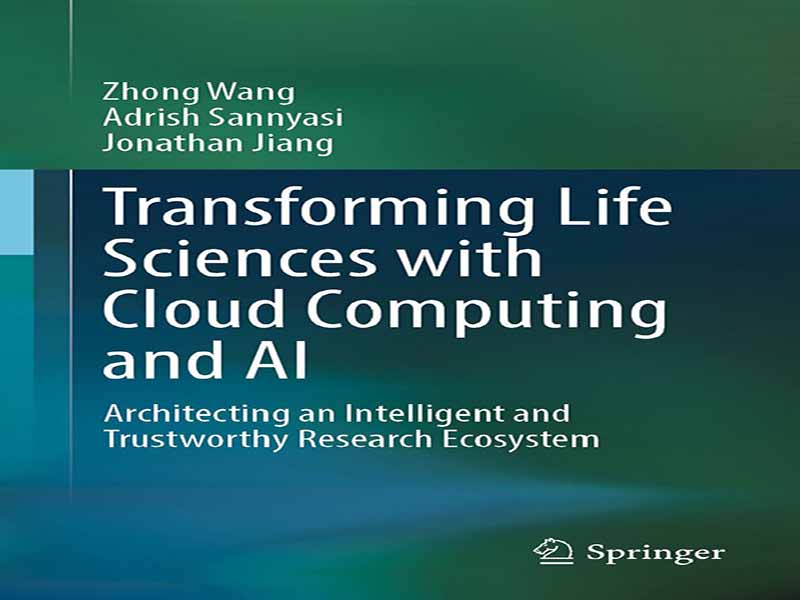
- عنوان کتاب: Transforming Life Sciences with Cloud Computing and AI Architecting -an Intelligent and Trustworthy Research Ecosystem
- نویسنده: Zhong Wang, Adrish Sannyasi, Jonathan Jiang
- حوزه: علوم زیستی
- سال انتشار: 2026
- تعداد صفحه: 467
- زبان اصلی: انگلیسی
- نوع فایل: pdf
- حجم فایل: 7.91 مگابایت
توضیح تحول از سال ۱۹۹۷ تا ۲۰۲۵ چالش قابل توجهی را ارائه میدهد، زیرا چشمانداز فعلی تحقیقات علوم زیستی برای من که دانشجوی کارشناسی ارشد هستم به سختی قابل تشخیص خواهد بود. پیشرفتهای تکنولوژیکی در تمام حوزههای این حوزه موج زدهاند و خلاصه کردن آنها در یک جلد واحد، کاری غیرممکن خواهد بود. با این حال، چند موضوع مشترک ممکن است به آن دانشجوی تقریباً ۳۰ سال پیش کمک کند تا آنچه را که اتفاق افتاده است درک کند. اولین موضوع، رشد نمایی قدرت محاسبات است. پیشرفتهای بیوقفه در سرعت پردازش و تراکم ذخیرهسازی، که اغلب به اختصار “قانون مور” نامیده میشود، امکان پردازش و ذخیرهسازی کارآمد مجموعه دادههای عظیم را فراهم کرده است. فناوریهای ابری، به نوبه خود، محاسبات را به یک ابزار کاربردی تبدیل کردهاند که به اندازه آب یا برق در دسترس است – در هر زمان و هر کجا که لازم باشد. در یک سخنرانی اصلی در کنفرانس ابر محاسبات ۲۰۱۲، فیزیکدان نظری مشهور، دکتر میچیو کاکو، پیشبینی کرد که محاسبات همهگیر خواهد شد و میکروچیپها در همه چیز از دیوارها و کاغذ گرفته تا لباسها و لنزهای تماسی تعبیه میشوند. امروزه، رویای او تا حد زیادی به واقعیت تبدیل شده است. ما توسط دستگاههای محاسباتی احاطه شدهایم: تلفنهای هوشمند، ساعتهای هوشمند، حلقههای هوشمند، عینکهای هوشمند و کتابخوانهای الکترونیکی. محققان دیگر محدود به خوشههای کوچک رایانهای در مؤسسات خود نیستند. آنها اکنون به طور معمول برای نیازهای محاسباتی، داده و نرمافزاری خود به زیرساختهای مبتنی بر ابر دسترسی دارند. این تغییر اساساً نحوه انجام تحقیقات علمی را تغییر میدهد. موضوع دوم، انفجار دادههای بیولوژیکی است که علوم زیستی را به عصر اطلاعات سوق داده است. تولید دادههای با کیفیت بالا، چندوجهی و در مقیاس بزرگ به یک هنجار در ژنومیک و سایر زمینهها تبدیل شده است. طبق گزارش سال 2021 از مرکز نوآوری سلامت AHA، بیمارستانهای ایالات متحده به تنهایی سالانه تقریباً 50 پتابایت داده تولید میکنند، از جمله پروندههای الکترونیکی سلامت، بازخوانی دستگاههای پزشکی، نتایج آزمایش ژنتیک و دادههای حسگرهای پوشیدنی – حجمی که سالانه 47 درصد رشد میکند. دکتر اریک توپول، پزشک-دانشمند، در کتاب خود با عنوان «بیمار اکنون شما را خواهد دید» که در سال 2016 منتشر شد، آیندهای از پزشکی با کیفیت بالا، شخصیسازی شده و مقرون به صرفه مبتنی بر داده را پیشبینی کرد. این رویکرد دادهمحور اکنون در بسیاری از حوزههای علوم زیستی فراتر از مراقبتهای بهداشتی نفوذ میکند. حتی زندگی شخصی ما – تصمیمات ما در مورد ازدواج، ثروت و شادی – به طور فزایندهای مبتنی بر داده است، همانطور که نویسنده ست استفنز-دیویدویتز به زیبایی در کتاب خود با عنوان «به غریزه خود اعتماد نکنید» توضیح میدهد. برای ساختن این آینده مبتنی بر داده در علوم زیستی، ما در حال توسعه فناوریهای پیشرفته ذخیرهسازی، ایجاد ابزارهای تجزیه و تحلیل مقیاسپذیر و آموزش نسل بعدی دانشمندان داده هستیم. شاید چشمگیرترین موضوع، ظهور هوش مصنوعی مولد (GenAI) باشد. از دهه 2020، این هوش مصنوعی تقریباً در هر زمینهای در علوم زیستی، از تجزیه و تحلیل دادههای ژنومی و پیشبینی ساختار پروتئین گرفته تا طراحی دارو، شروع به ایجاد اختلال کرده است. درو هوستون، مدیرعامل دراپباکس، اهمیت آن را با کشف «_خشم، برق یا انقلاب صنعتی» مقایسه کرد. GenAI که توسط مدلهای زبان بزرگ (LLM) آموزش دیده بر روی مجموعه دادههای عظیم تغذیه میشود، در حال دستیابی به دستاوردهای قابل توجهی است. در سال 2024، AlphaFold3 از DeepMind ادعا کرد که ساختار تقریباً هر پروتئین شناخته شده و تعاملات اتصال آن را پیشبینی کرده است. در همان سال، ESM3، بزرگترین مدل زبان پروتئین، که بر روی ۲.۷۸ میلیارد توالی پروتئین آموزش دیده بود، توانایی تولید پروتئینهای جدید با عملکردهای مشخص را نشان داد. با تکیه بر این پیشرفتها، سیستمهای هوش مصنوعی چندعامله اکنون میتوانند به طور مستقل فرضیهها را تولید، ارزیابی و اصلاح کنند. در فوریه ۲۰۲۵، محققان کالج امپریال لندن و گوگل، یک سیستم هوش مصنوعی به نام Co-Scientist به طور مستقل یک مشکل مقاومت ضدمیکروبی را تنها در ۴۸ ساعت حل کردند – کاری که دانشمندان انسانی تقریباً یک دهه طول کشید. ESM3 و سایر مدلهای هوش مصنوعی که به عنوان “لحظهای ChatGPT برای زیستشناسی” مورد ستایش قرار گرفتهاند، با استفاده از رایانههای مقیاس اگزا و دادههای بیولوژیکی در مقیاس پتابایت، به طور گسترده انتظار میرود که علوم زیستی را تغییر شکل دهند. با این حال، این حوزه تا حد زیادی بدون تغییر باقی مانده است. حداقل فعلاً. ما قبلاً این الگو را دیدهایم. پروژه ژنوم انسان، که در سال ۲۰۰۳ تکمیل شد، یک دستاورد بزرگ بود و انقلاب بعدی در فناوری توالییابی، هزینه ژنوم انسان را از ۳ میلیارد دلار به چند صد دلار کاهش داده است. با این حال، ما هنوز همه بیماریها را درمان نکردهایم، نکتهای که در مقاله اخیر مجله Discover مورد تأکید قرار گرفته است. بسیاری از شرکتهایی که بر اساس وعده HGP تأسیس شدهاند، با مشکل مواجه شدهاند؛ یکی از پیشگامان، 23andMe، در مارس 2025 اعلام ورشکستگی کرد. دادههای بیشتر، به ویژه زمانی که ساختار نیافته باشند، همیشه پاسخ نبوده است. همانطور که سیدنی برنر، برنده جایزه نوبل، در سخنرانی نوبل خود در سال 2002 ابراز تاسف کرد، “ما در اقیانوسی از دادهها غرق میشویم، اما تشنه دانش هستیم.” او هشدار داد که “اطلاعات کاملاً ساختار نیافته، درک را افزایش نمیدهد… افرادی که فقط دادهها را جمعآوری میکنند، کار علمی انجام نمیدهند.” ثابت شده است که بیماریهایی مانند سرطان بسیار پیچیدهتر از آن چیزی هستند که تصور میکردیم. در بسیاری از موارد، جمعآوری دادههای بیشتر فقط به پیچیدگی افزوده و نیاز به اطلاعات بیشتری را ایجاب میکند.
Explaining the transformation from 1997 to 2025 presents a considerable challenge, as the current landscape of life science research would be barely recognizable to my graduate-student self. Technological breakthroughs have rippled through every domain of the field, and summarizing them in a single volume would be an impossible task. A few common themes, however, may help that student of nearly 30 years ago comprehend what has transpired. The first theme is the exponential growth in computing power. The relentless improvements in processing speed and storage density, often shorthanded as “Moore’s Law,” have enabled massive datasets to be processed and stored efficiently. Cloud technologies, in turn, have transformed computing into a utility, as accessible as water or electricity—available whenever and wherever it is needed. In a keynote speech at the 2012 Super Computing Conference, the renowned theoretical physicist Dr. Michio Kaku predicted that computing would become ubiquitous, with microchips embedded in everything from walls and paper to clothing and contact lenses. Today, his vision is largely a reality. We are surrounded by computing devices: smartphones, smart watches, smart rings, smart glasses, and e-readers. Researchers are no longer confined to the small computer clusters within their own institutions; they now routinely access cloud-based infrastructures for their computing, data, and software needs. This shift is fundamentally changing how scientific research is done. A second theme is the explosion of biological data, which has propelled life science into the information age. High-definition, multimodal, and large-scale data generation has become the norm in genomics and other fields. According to a 2021 report from the AHA Center for Health Innovation, US hospitals alone produce roughly 50 petabytes of data annually, including electronic health records, medical device readouts, genetic testing results, and wearable sensor data—a volume growing at 47% per year. Physician-scientist Dr. Eric Topol, in his 2016 book The Patient Will See You Now, envisioned a future of data-driven, individualized, and affordable high-quality medicine. This data-centric approach now permeates many life science domains beyond healthcare. Even our personal lives—our decisions about marriage, wealth, and happiness—are increasingly data-informed, as author Seth Stephens-Davidowitz elegantly explains in his book, Don’t Trust Your Gut. To build this data-driven future in life science, we are developing advanced storage technologies, creating scalable analysis tools, and training the next generation of data scientists. Perhaps the most dramatic theme is the rise of generative AI (GenAI). Since the 2020s, it has begun to disrupt nearly every field in life science, from genomic data analysis and protein structure prediction, to drug design. Dropbox CEO Drew Houston compared its significance to the discovery of “_ire, electricity, or the industrial revolution.” Fueled by large language models (LLMs) trained on enormous datasets, GenAI is achieving remarkable feats. In 2024, DeepMind’s AlphaFold3 claimed to have predicted the structure of nearly every known protein and its binding interactions. That same year, ESM3, the largest protein language model, trained on 2.78 billion protein sequences, demonstrated the ability to generate novel proteins with specified functions. Building on these advances, multi-agent AI systems can now autonomously generate, evaluate, and refine hypotheses. In a February 2025 demonstration by researchers at Imperial College London and Google, an AI system called Co-Scientist independently solved an antimicrobial resistance problem in just 48 h —a task that took human scientists roughly a decade. Hailed as a “ChatGPT moment for biology,” ESM3 and other AI models, powered by exascale computers and petabyte-scale biological data, are widely expected to reshape life science. Yet the field remains largely unchanged. At least for now. We have seen this pattern before. The Human Genome Project, completed in 2003, was a monumental achievement, and the subsequent revolution in sequencing technology has dropped the cost of a human genome from $3 billion to a few hundred dollars. Still, we have not cured every disease, a point underscored in a recent Discover magazine article. Many companies founded on the promise of the HGP have struggled; one of the pioneers, 23andMe, filed for bankruptcy in March 2025. More data, especially when unstructured, has not always been the answer. As Nobel laureate Sydney Brenner lamented in his 2002 Nobel Lecture, “We’re drowning in an ocean of data, but we are starved for knowledge.” He warned that “completely unstructured information does not enhance understanding… people who just collect data are not doing science.” Diseases like cancer have proven to be far more complex than we imagined. In many cases, collecting more data has only added to the complexity, demanding ever more sophisticated algorithms to find a signal in the noise. Is Artificial General Intelligence (AGI) the answer to this complexity? Perhaps not. The field of AI has already weathered two major “winters”—periods of diminished funding and fading interest that followed cycles of intense hype (1974–1980 and 1987–1993). While the achievements of systems like Co-Scientist are admirable, they may be outliers rather than the new norm. Reports are emerging that current LLMs are unlikely to reach AGI, as the high-quality data needed to train bigger and better models is becoming scarce. AI has not yet demonstrated an ability to navigate the complex physical world that humans inhabit so effortlessly. Even in its area of strength, natural language generation, I have found that while AI is useful for organizing content and correcting grammar, it has not yet been able to generate unique insights for this book. The capabilities of AI are growing exponentially, but so is the complexity of the problems we face. Furthermore, many challenges involve messy, human-centric factors like politics, culture, and competing incentives. These problems lack clear “solutions” and instead require nuanced, human-driven trade-offs. There is another worrisome trend. Driven by a “Fear of Missing Out” (FOMO), many organizations—research teams, venture capital firms, and government agencies—are now laser-focused on AI, concentrating their efforts on a few high-profile areas like drug development. As a consequence, other important fields are being neglected, particularly in basic science. This AI hype cycle threatens to divert vital resources— funding, computing power, and data generation—away from the foundational research on which AI itself depends. The problem is compounded by technical barriers. Many life scientists struggle to interpret and implement state-of-the-art AI models. The underlying cloud computing infrastructure required for these applications often presents a further obstacle, hindering rather than empowering their research. At this point, I can picture my graduate-student self, eyes wide with a puzzled expression. I have just presented a dichotomous view of the last two decades. Just as modern communication technologies can counterintuitively make communication more difficult by creating information overload and digital echo chambers, so too can advances in data analysis, computing, and AI fail to drive life science forward if we do not ask the right questions. It is time to pause and reflect. From a technological perspective, what specific biological problems remain unsolved despite our data abundance? How can we better architect computing and AI technologies to derive knowledge from data, rather than merely amass more of it? And how can we build automation that augments the creativity and expertise of human researchers, rather than creating new complexities for them to overcome? When Susan Grove, a Senior Editor at Springer Nature, first reached out to me about writing a book on cloud computing and AI in life sciences, I recognized it as the perfect opportunity to explore these questions. Yet I also felt daunted. Although I have spent the past decade conducting genomics research using cloud and AI technologies, I do not consider myself an expert in either field. Fortunately, I was soon joined by two true experts. Jon Jiang, with whom I had the good fortune to work while consulting at MemVerge Inc., brings deep knowledge of cloud computing and bioinformatics workflows. Adrish Sannyasi, whom I met through a mutual friend, contributes extensive expertise in AI applications for healthcare and life sciences from his tenure at Google Cloud. Their involvement offers another benefit: both possess deep industry experience, a welcome counterpoint to my academic background. Together, we hope to address the questions raised earlier and guide the community through this pivotal period. This book will intentionally not focus solely on AI, as hundreds of other books are already being published on the topic. Instead, we aim to explore the synergy between data, computing, and AI. To us, the AI train will eventually grind to a halt if it runs out of fuel (data) or suffers a broken engine (computing).
این کتاب را میتوانید از لینک زیر بصورت رایگان دانلود کنید:
Download: Transforming Life Sciences with Cloud Computing and AI Architecting





















نظرات کاربران