











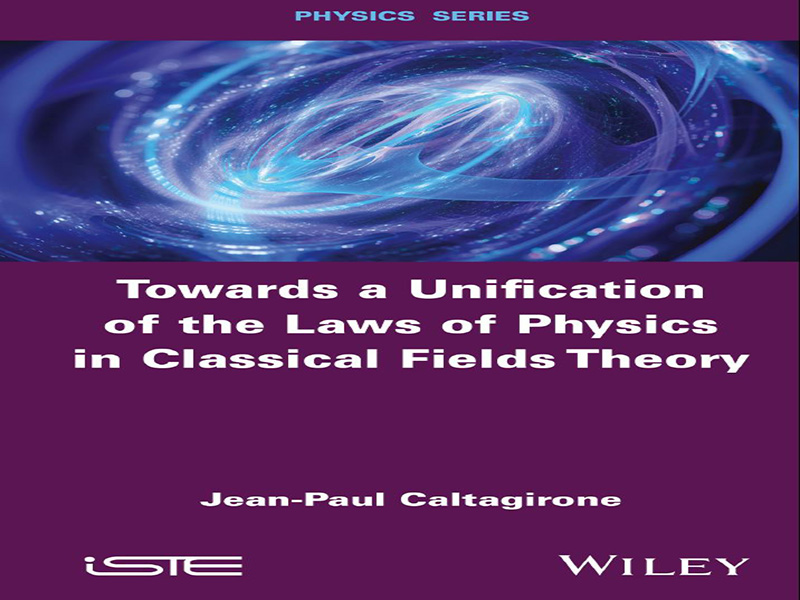
- عنوان کتاب: Towards a Unification of the Laws of Physics in Classical Fields Theory
- نویسنده: Jean-Paul Caltagirone
- حوزه: قوانین فیزیک
- سال انتشار: 2026
- تعداد صفحه: 1967
- زبان اصلی: انگلیسی
- نوع فایل: pdf
- حجم فایل: 9.29 مگابایت
کامل بودن یک نظریه مبتنی بر توانایی آن در نمایش تمام پدیدههای فیزیکی مشاهده شده است. اگر یک راهحل فیزیکی قابل قبول، این نظریه را به چالش بکشد، کل ساختار تضعیف میشود. برای زیر سوال بردن مشروع مدل موجود، دلایل اساسی اختلاف بین این مدل و مشاهدات باید به طور ضروری توضیح داده شود. بازسازی یک ساختمان قویتر باید امکان حل مسئله را بدون تغییر ویژگیهای مدل فراهم کند. با این وجود، اصلاح یک نظریه موجود با اضافه کردن یک پارامتر اضافی، توصیف بهتری از پدیده فیزیکی را تضمین نمیکند. گاهی اوقات لازم است معنای عمیقتر یک قانون تثبیتشده که توسط کل جامعه تأیید و پذیرفته شده است، مورد بازنگری قرار گیرد. حتی اگر نادرست نباشد، ممکن است به اشتباه تفسیر یا بیش از حد تفسیر شود. یک راه برای بازسازی یک مدل حداقلی، اعمال اصل صرفهجویی است که شامل نگه داشتن فقط عناصری است که برای توسعه آن کاملاً ضروری هستند. نمونه بارز آن احتمالاً مثال سقوط آزاد اجسام تحت تأثیر گرانش زمین است. در قرن هفدهم، گالیله ادعا کرد که همه اجسام، صرف نظر از ماهیت و جرم آنها، با سرعت یکسانی در خلاء سقوط میکنند. این فرضیه جهانشمولی، که با دقت بسیار زیادی توسط آزمایشهای متعددی که هنوز هم انجام میشوند، تأیید شده است، اصل همارزی ضعیف (WEP) نامیده میشود. گالیله و جانشینانش به این نتیجه رسیدند که جرم مربوط به اینرسی یک جسم برابر با جرم مرتبط با گرانش است، از این رو جمله “جرم اینرسی برابر با جرم گرانشی است” مطرح شد. این ارتباط بین مشاهدات از کمیتهای صرفاً سینماتیکی مانند سرعت یا شتاب و مفهوم جرم، عقل سلیم ما را زیر سوال میبرد، زیرا یافتهای که منجر به اصل همارزی میشود، دقیقاً استقلال سرعت نسبت به جرم است. همانطور که فهمیده میشود، اصل همارزی اشتباه نیست: قانونی که آن را توصیف میکند، صرفاً زائد است. جرم هیچ ارتباطی با این پدیده ندارد، یک ذره بدون جرم در حالت سکون با همان سرعت تحت تأثیر گرانش سقوط میکند، این یک اصل محلی است. این امر مانع از تدوین قانون دوم نیوتن که مفهوم نیرو و تکانه را به هم پیوند میدهد، نشد و همچنین مانع از آن نشد که فیزیکدانان قرن نوزدهم و بیستم جرم در حال سکون و جرم در حال حرکت را در چارچوب نظریه نسبیت خاص (SR) تعریف کنند. این مفهوم از جرم، با وجود معادل بودن آن با مفهوم انرژی، امروزه نیز معتبر است. با در نظر گرفتن اصل صرفهجویی، در این مورد، اصل اساسی دینامیک نیوتن را میتوان به صورت برابری بین شتابها بیان کرد: اینرسی و گرانش. این پیشنهاد با همان دکترین مطابقت دارد. مشاهدات انجام شده مورد تردید قرار نمیگیرند و هر مدل جدیدی باید لزوماً بتواند آنها را نشان دهد. با این حال، ممکن است روش دیگری برای درک جهانی که در آن زندگی میکنیم و قوانین جایگزین دیگری برای قوانین کلاسیک که قبلاً ابداع شدهاند، وجود داشته باشد. برای اولین بار، مفاهیم جدید فضا و زمان که معرفی میشوند، از چارچوب مرجع کلاسیک مکانیک فاصله میگیرند یا به مفهوم فضا-زمان نسبیت خاص اشاره میکنند. چارچوب مرجع جهانی فیزیک که مفهوم مختصات را در فضای سهبعدی توصیف میکند، با یک چارچوب مرجع محلی یکبعدی به نام چارچوب مرجع ماکسول جایگزین میشود، که در آن برهمکنشهای فضای سهبعدی علت و معلول هستند. این امر امکان نمایش بسیار سادهی انتقال در امتداد جهت ترجیحی و همچنین چرخش حول همین محور را فراهم میکند. سپس شتاب و سرعت به صورت اسکالر روی یک بخش جهتدار در میآیند. سادهسازی شدید قوانین موجود، که با دقت انجام شده است، منجر به یک قانون جایگزین میشود که در آن شتاب ذاتی یک ذره با یا بدون جرم یا یک محیط مادی برابر با مجموع دو عبارت متعامد است، یک عبارت انتقالی که به صورت گرادیان پتانسیل اسکالر نوشته میشود و دیگری، کرنش دوگانه یک پتانسیل برداری. در این شکل، قانون حرکت خواص خاصی را نشان میدهد، به ویژه نسبیتی بودن؛ تقارنها و ناورداییهای آن به آن خواص پایستگی خاصی میبخشد. تمام کمیتهایی که در این قانون ظاهر میشوند تنها با دو واحد اساسی، یعنی طول و زمان، بیان میشوند. قانون حرکت مکانیک گسسته در تعدادی از زمینههای شاخههای کلاسیک فیزیک – مکانیک، سیالات و جامدات، الکترومغناطیس، انتقال حرارت و جرم – عمومیت دارد، ضمن اینکه نتایج نسبیت خاص و عام را نیز در نظر میگیرد. بسیاری از مفاهیم خاص توسعهیافته توسط این شاخههای مختلف کنار گذاشته شده و با تعداد کمی از کمیتهای واحد جایگزین شدهاند، در حالی که معنای عمیقتر قوانین کلاسیک حفظ شده است. در حال حاضر، این اثر در حد یک مقاله باقی میماند؛ هدف آن جایگزینی قوانین فیزیک که قبلاً اعتبارسنجی شدهاند نیست، بلکه جستجوی یک قانون معتبر است.
The completeness of a theory is based on its capability to represent all the physical phenomena observed. If a physically acceptable solution challenges this theory, the whole structure is weakened. To legitimately call into question the existing model, the underlying reasons for the discrepancy between this model and the observations should imperatively be explained. The reconstruction of a more robust building should allow the problem to be solved without changing the properties of the model. Nonetheless, modifying an existing theory by adding an additional parameter does not guarantee a better description of the physical phenomenon. It is sometimes necessary to reconsider the deeper meaning of an established law that was validated and accepted by the whole community; even if it is not false, it may be misinterpreted or over-interpreted. One way to reconstruct a minimal model is to apply the parsimony principle, which consists of keeping only the elements strictly necessary to its development. The most representative example is probably the one of free-falling bodies subjected to the Earth’s gravitation. In the 17th century, Galileo asserted that all bodies, regardless of their nature and mass, fall in a vacuum at the same velocity. This hypothesis of universality, verified with great accuracy by numerous experiments which are still being carried out today, is called the Weak Equivalence Principle (WEP). Galileo and his successors concluded that the mass related to the inertia of a body is equal to the mass associated with gravity, hence the statement “inertial mass is equal to gravitational mass”. This connection between observations from purely kinematic quantities such as velocity or acceleration and the notion of mass puts our common sense into question, because the finding that leads to the principle of equivalence is precisely the independence of velocity with respect to mass. As it is understood, the principle of equivalence is not erroneous: the law that describes it is simply redundant. Mass has no relation to the phenomenon, a massless particle at rest would fall with the same velocity under the effect of gravity, this is a local principle. This did not prevent Newton from formulating his second law linking the notion of force and momentum, nor did it prevent the 19th and 20th century physicists from defining a mass at rest and a mass in motion within the framework of the Special Relativity theory (SR). This concept of mass is still valid today despite its equivalence with that of energy. With the principle of parsimony in mind, in this case the fundamental principle of Newton’s dynamics can be expressed as an equality between accelerations: inertia and gravity. This proposal is in line with the same doctrine. The observations made are not questioned and any new model must imperatively be able to represent them; however, there may be another way of understanding the world in which we live and other alternative laws to the classical laws already devised. For the first time, the new concepts of space and time that are being introduced are distancing themselves from the classical frame of reference of mechanics or referring back to the concept of space–time of special relativity. The global frame of reference of physics that describes the notion of coordinates in a three-dimensional space is replaced by a local one-dimensional frame of reference called Maxwell’s frame of reference, where the interactions of three-dimensional space are cause and effect. This makes it possible to very simply represent the translation along the preferred direction, but also the rotation around this same axis. Acceleration and velocity then become scalars on an oriented segment. The drastic simplification of the existing laws, carefully performed, results in an alternative law where the intrinsic acceleration of a particle with or without mass or of a material medium is equal to the sum of two orthogonal terms, a translational term written as a gradient of the scalar potential and another, the dual curl of a vector potential. In this form, the law of motion exhibits specific properties, in particular that of being relativistic; its symmetries and invariances endows it with particular conservation properties. All of the quantities that appear in this law are expressed with only two fundamental units, those of length and time. The law of motion of discrete mechanics is generic to a number of fields of the classical branches of physics – mechanics, fluids and solids, electromagnetism, heat and mass transfers – while respecting the results of special and general relativity. Many of the specific concepts developed by these different branches have been abandoned and replaced by a small number of unified quantities, while preserving the deeper meaning of the classical laws. For the moment, this work remains an essay; its purpose is not to replace the laws of physics that have already been validated, but to look for a credible alternative to independently established equations and reduce the redundancies observed for some of them. This discrete formulation of physics constitutes in itself a rupture from existing laws, it can only be accepted or not after a long scientific debate.
این کتاب را میتوانید از لینک زیر بصورت رایگان دانلود کنید:
Download: Towards a Unification of the Laws of Physics in Classical Fields Theory

























نظرات کاربران