












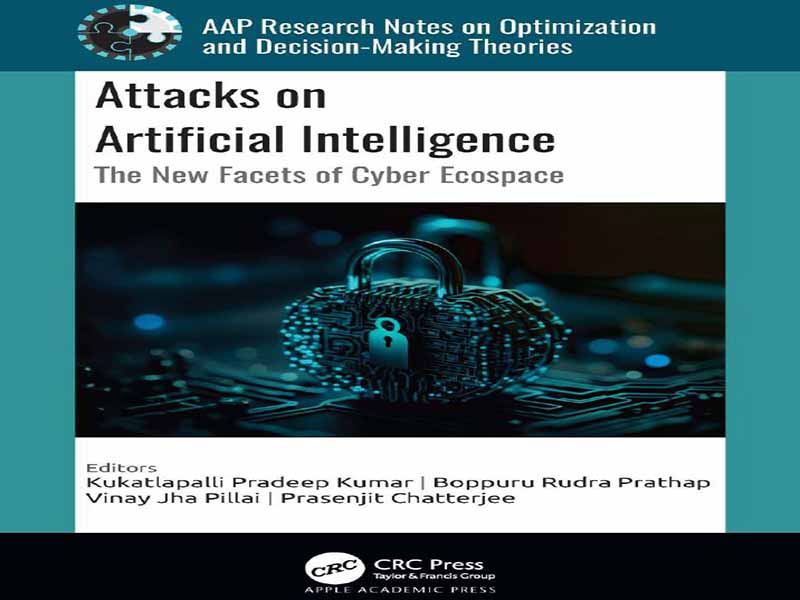
- عنوان کتاب: Attacks on Artificial Intelligence -The New Facets of Cyber Ecospace
- نویسنده: Dr. Kukatlapalli Pradeep Kumar
- حوزه: حملات سایبری
- سال انتشار: 2026
- تعداد صفحه: 296
- زبان اصلی: انگلیسی
- نوع فایل: pdf
- حجم فایل: 3.36 مگابایت
هوش مصنوعی (AI) یکی از فناوریهای جدید و پیشرفته است و مفهومی میانرشتهای است که تقریباً در تمام زمینههای فناوری و توسعه تحقیقات مشاهده میشود. در چنین شرایطی، «حملات به هوش مصنوعی» تهدیدی جدیدتر برای فناوری و اتوماسیون است. هوش مصنوعی با توجه به کاربرد و هیاهوی آن در انقلاب صنعتی ۴.۰، در تمام زمینههای فناوری توجه زیادی را به خود جلب کرده است. از آنجایی که هوش مصنوعی در مقیاس وسیعتری در حال تکامل و بهبود است، نیاز به ایمنسازی آن، ضرورت زمانه است. با توجه به وضعیت پیشرفته هوش مصنوعی، محدودیتهایی وجود دارد که توسعهدهندگان در طراحی الگوریتم از آنها غافل میشوند، با این حال، مهاجمان میتوانند از آنها به نفع خود استفاده کنند. حملات سایبری به راحتی میتوانند از طریق نقص در طراحی الگوریتم، مانند ایجاد سیگنال راهنمایی گمراهکننده برای یک وسیله نقلیه خودران، انجام شوند. در چنین شرایطی، چهره زیرساخت سایبری باید مسیر متفاوتی را در پیش بگیرد که مستلزم رویکردهای جامع برای ایمنسازی هوش مصنوعی و اکوسیستمهای سایبری اطراف آن است. حمله به سیستمهای مبتنی بر هوش مصنوعی، سلاح جدید مهاجمان بر روی شبکههای داخلی غیرقابل اعتماد است، بنابراین محققان باید بیشتر بر درک و تحلیل تکنیکهای یادگیری عمیق و الگوریتمهای یادگیری ماشین تمرکز کنند تا به این جنبه امنیتی نادیده گرفته شده از مشکل بپردازند. حملات را میتوان در زمینههایی مانند خودروهای بدون راننده/خودران، پهپادهایی مانند پهپادها، عوامل مجازی، رباتهای چت دستکاری شده، اتوماسیون فرآیند رباتیک، تشخیص احساسات کاذب، بیومتریکهای جعلی، تشخیص تصویر مورد مناقشه و غیره پیشبینی کرد. هوش مصنوعی میتواند برای حمله به سیستمهای فیزیکی سایبری و اطلاعات حساس فردی استفاده شود. حملات خودکار هوش مصنوعی توسط مهاجمان برای سرقت و دستکاری دادهها انجام میشود. با این وجود، تمرکز کتاب بر حملات به هوش مصنوعی (برعکس) و نحوه عملکرد واکنش به حادثه است. سیستمهای ستون فقرات ملی و بینالمللی در دنیای فنی مدرن در حال پذیرش هوش مصنوعی هستند. ایمنسازی این سیستمها یک سناریوی چالش برانگیز مداوم برای مقامات درگیر است. مفاهیم مرتبط با واکنش به حادثه، برنامهریزی بازیابی پس از فاجعه و برنامهریزی تداوم کسب و کار پس از حملات هوش مصنوعی نیز بخشی از این موضوع هستند. ایمنسازی سیستمهای فیزیکی-سایبری ملی و بینالمللی در برابر حملات هوش مصنوعی، مواردی از کاربرد را در زمینه خودروهای بدون راننده، اتوماسیون در تولید، رباتیک و تشخیص الگو به خود اختصاص داده و با توجه به نگرانیهای مربوط به آسیبپذیری، امری همزیستی است.
Artificial intelligence (AI) is one of the new state-of-the-art technologies and is an interdisciplinary concept that is observed in almost all the fields of technology and research development. In such context, “attacks on AI” is a newer threat to technology and automation. AI has received a lot of attention in all fields of technology with respect to its application and its hype in industrial revolution 4.0. As AI is evolving and improving on a wider scale, the need for securing the same is the necessity of the hour. With the state-of-the-art situation of AI, there are some limitations that developers overlook in algorithm design, which, however, attackers can use to their advantage. Cyberattacks can easily be deployed in via flaws in algorithm design, such as causing a misleading traffic signal for an autonomous vehicle. In such conditions, the face of cyber infrastructure needs to take a different path requiring comprehensive approaches for securing AI and surrounding cyber ecosystems. Attacking artificial-intelligence-based systems is the new weapon for attackers over untrusted inter–networks, so researchers need to focus more on understanding and analyzing the deep learning techniques and machine learning algorithms to address this neglected security facet of the problem. Attacks could be anticipated in the areas such as driverless/autonomous cars, UAVs such as drones, virtual agents, manipulated chat bots, robotic process automation, false emotion recognition, fake biometrics, disputed image recognition, etc. AI can be used to attack cyber-physical systems and individual sensitive information. Automatic AI attacks are deployed by attackers to steal and manipulate the data. Nonetheless, the focus of the book is on attacks on AI (the other way around) and how to operate incident response. National and international backbone systems are adopting AI in the modern technical world. Securing these systems is a continuous challenging scenario for the officials involved. Concepts associated to incident response, disaster recovery planning, and business continuity planning post-AI attacks are also part of this theme. Securing national and international cyber-physical systems toward AI attacks use cases in the field of driverless cars, automation in manufacturing, robotics and pattern recognition and is symbiotic with regard to vulnerability concerns.
این کتاب را میتوانید از لینک زیر بصورت رایگان دانلود کنید:
Download: Attacks on Artificial Intelligence


























نظرات کاربران