











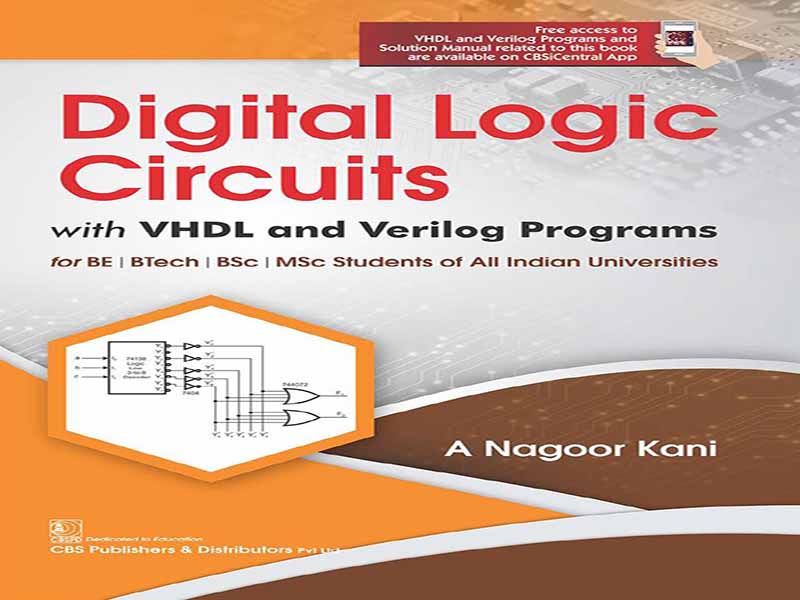
- عنوان کتاب: Digital Logic Circuits With VHDL and Verilog Programs
- نویسنده: A. Nagoor Kani
- حوزه: برنامهنویسی VHDL, مدار منطقی
- سال انتشار: 2025
- تعداد صفحه: 1410
- زبان اصلی: انگلیسی
- نوع فایل: pdf
- حجم فایل: 24.8 مگابایت
هدف اصلی این کتاب، بررسی مفاهیم اساسی مدارها و سیستمهای منطقی دیجیتال به شیوهای ساده و قابل فهم است. این متن در مورد مدارهای منطقی دیجیتال با برنامههای VHDL و Verilog برای همه دانشجویان دانشکدههای مهندسی، هنر و علوم دانشگاههای مختلف هند تهیه شده است. با توجه به دشواری تحلیل منطقی مورد نیاز در این موضوع، تأکید بیشتری بر روششناسی حل مسئله شده است. تلاش قابل توجهی برای روشن کردن توضیحات منطقی به صورت گام به گام صورت گرفته است. مسائل تمرینی با سطوح دشواری مختلف در متن ارائه شده است تا به دانشجویان کمک کند درک شهودی از موضوع داشته باشند. این کتاب با سبک نگارش روان و ویژگیهای آموزشی مرتبط، به یک متن اصلی برای دانشجویان مهندسی تبدیل خواهد شد. ویژگیهای برجسته • اثبات مفاهیم و قضایای مهم به وضوح توسط کادرهای سایهدار برجسته شدهاند • در صورت نیاز، مسائل با روشهای متعدد حل شدهاند • توضیحات تکمیلی برای راهحلها و اثباتها در کادرهای جداگانه ارائه شده است • برای وضوح بهتر، از انواع مختلف فونت برای متن، اثبات، مسائل و برنامههای VHDL/Verilog استفاده شده است • کلمات کلیدی با فونتهای پررنگ و ایتالیک برجسته شدهاند • شکلها و مثالهای فراوان برای افزایش درک دانشجویان • پیادهسازی سیستم یا تابع دیجیتال با استفاده از ICهای استاندارد • برنامههای VHDL و Verilog که برای تمرین آزمایشگاهی و سایر پروژهها مفید هستند این کتاب در 15 فصل سازماندهی شده است • فصل 1 مقدمهای ساده بر جنبههای مختلف سیستم دیجیتال ارائه میدهد. فصل 2 با بحث در مورد سیستمهای عددی مختلف و عملیات حسابی پایه در این سیستمهای عددی شروع میشود. نمایش اعداد منفی با اعداد مکمل و حساب در سیستمهای عددی مکمل نیز در این فصل با مثال ارائه شده است. • فصل 3 به انواع مختلف کدهای دودویی اختصاص داده شده است. کدهای BCD، کدهای الفبایی-عددی و کدهای تشخیص و تصحیح خطا به وضوح با مثالهای مناسب توضیح داده شدهاند. جمع و تفریق در کد اضافی-3 نیز با مثال توضیح داده شده است. • فصل ۴ شامل جبر بولی و قضایای آن، توابع بولی و مفاهیم اولیه گیتهای منطقی است. اشکال استاندارد توابع بولی نیز در این فصل ارائه شده است. پیادهسازی توابع بولی با استفاده از گیتهای جهانی و آیسیهای گیت منطقی استاندارد، کمینهسازی توابع بولی با استفاده از قضایا، نقشههای K و روشهای کواین-مککلاسکی نیز در این فصل مورد بحث قرار گرفتهاند. تشکیل استلزامات اول با استفاده از ۱ها و ۰ها به روشنی با مثالها توضیح داده شده است. • فصل ۵ به تحلیل و طراحی مدارهای منطقی ترکیبی اختصاص داده شده است. تحلیل و طراحی مبدلهای کد، رمزگشاها، رمزگذارها، مالتیپلکسرها، دیمالتیپلکسرها، جمعکنندهها، تفریقکنندهها، ضربکنندهها و مقایسهکنندههای قدرمطلق با مثالهای واضح ارائه شده است. پیادهسازی مدارهای منطقی ترکیبی با استفاده از مالتیپلکسرها، رمزگشاها و آیسیهای استاندارد نیز در این فصل مورد بحث قرار گرفته است. تحلیل و طراحی واحد حساب و منطق (ALU) با استفاده از مدارهای ترکیبی در این فصل گنجانده شده است. برخی از مثالهای کاربردی سیستمهای منطقی ترکیبی مانند فرستنده-گیرنده دیجیتال، مولد و بررسیکننده توازن و رمزگشای BCD به سون-سگمنت در این فصل گنجانده شدهاند. • فصل 6 با نحوه کار دقیق انواع مختلف فلیپ فلاپهای مورد استفاده در ساخت مدارهای سنکرون آغاز میشود. ویژگیهای فلیپ فلاپها و تحلیل زمانبندی ورودیها و خروجیها با نمودارهای زمانبندی مناسب ارائه شده است. تبدیل فلیپ فلاپها از یک نوع به نوع دیگر در این فصل به روشنی توضیح داده شده است. • فصل 7 به مدارهای ترتیبی سنکرون اختصاص داده شده است. تحلیل و طراحی مدلهای میلی و مور از مدارهای منطقی سنکرون با توضیحات گام به گام ارائه شده است. مفاهیم اساسی حالت و متغیرهای حالت به روشنی توضیح داده شده است. پیادهسازی مدارهای منطقی ترتیبی با استفاده از فلیپ فلاپها و آیسیهای استاندارد نیز در این فصل مورد بحث قرار گرفته است. • تحلیل و طراحی مدارهای سنکرون مانند شمارندهها، آشکارسازهای توالی و ثباتها با مثالهای مناسب در فصل 8 توضیح داده شده است. طراحی و پیادهسازی انواع مختلف شمارندهها با استفاده از فلیپ فلاپها و آیسیهای استاندارد در این فصل ارائه شده است. مثالهای کاربردی از سیستم منطقی سنکرون مانند نمایشگر چرخان و ساعت زمان واقعی در این فصل گنجانده شده است. • فصل 9 به تحلیل و طراحی مدارهای منطقی آسنکرون اختصاص داده شده است. کاهش حالت با استفاده از جدول استلزام و نمودار ادغام و تخصیص حالت بدون رقابت به روشنی با مثالهای مناسب توضیح داده شده است. طراحی مدارهای ترتیبی آسنکرون حالت بنیادی با استفاده از لچها و مدارهای ترتیبی حالت پالس با استفاده از فلیپ فلاپهای بدون ساعت با توضیحات گام به گام ارائه شده است. • بحث مفصل در مورد رقابتها و خطرات در فصل 10 ارائه شده است. همچنین، روشهای مختلفی برای حذف رقابتها و خطرات با مثالهایی مورد بحث قرار گرفته است. ویژگیهای دستگاههای خانوادههای منطقی مختلف در فصل 11 ارائه شده است. توسعه گیتهای منطقی در انواع مختلف
The main objective of this book is to explore the basic concepts of digital logic circuits and Systems in a simple and easy-to-understand manner. This text on digital logic circuits with VHDL and Verilog programs has been crafted for all students of engineering, arts and science colleges of various universities in India. Considering the difficulty in logical analysis needed in this subject, more emphasis has been given on the problem-solving methodology. Considerable effort has been made to elucidate the logical explanations in a step-by-step manner. Exercise problems with various difficulty levels are given in the text to help students get an intuitive grasp on the subject. This book with its lucid writing style and germane pedagogical features will prove to be a master text for engineering students. Salient Features • Proof of important concepts and theorems are clearly highlighted by shaded boxes • Wherever required, problems are solved in multiple methods • Additional explanations for solutions and proofs are provided in separate boxes • Different types of fonts are used for text, proof, problems and VHDL/Verilog programs for better clarity • Keywords are highlighted by bold, italic fonts • Ample figures and examples to enhance students understanding • Digital system or function implementation using standard ICs • VHDL and Verilog programs which are useful for laboratory practice and other projects This book is organized with 15 Chapters • Chapter 1 provides a simple introduction to various aspects of digital system. Chapter 2 starts with a discussion of various number systems and basic arithmetic operations in these number systems. Representation of negative numbers by complement numbers and arithmetic in complement number systems are also presented in this chapter with examples. • Chapter 3 is devoted to various types of binary codes. BCD codes, alphanumeric codes and error detection and correction codes are clearly explained with appropriate examples. Addition and subtraction in excess-3 code is also explained with examples. • Chapter 4 includes Boolean algebra and theorems, Boolean functions and basic concepts of logic gates. The standard forms of Boolean functions are also presented in this chapter. Implementation of Boolean functions using universal gates and standard logic gate ICs, Boolean function minimization using theorems, K-maps and Quine-McCluskey methods are also discussed in this chapter. The formation of prime implicants using 1’s and 0’s are clearly explained with examples. • Chapter 5 is devoted to combinational logic circuit analysis and design. The analysis and design of code converters, decoders, encoders, multiplexers, demultiplexers, adders, subtractors, multipliers and magnitude comparator are presented with clear examples. Implementation of combinational logic circuits using multiplexers, decoders and standard ICs are also discussed in this chapter. Analysis and design of ALU (Arithmetic Logic Unit) using combinational circuits are included in this chapter. Some application examples of combinational logic systems like digital trans-receiver, Parity generator and checker and BCD to 7-segment decoder are included in this chapter. • Chapter 6 starts with detailed working of various types of flip-flops used to build synchronous circuits. The characteristics of flip-flops and timing analysis of inputs and outputs are presented with appropriate timing diagrams. The conversion of flip-flops from one type to another types are clearly explained in this chapter. • Chapter 7 is devoted to synchronous sequential circuit. Analysis and design of Mealy and Moore models of synchronous logic circuits are presented with step-by-step explanations. The basic concepts of state and state variables are explained clearly. Implementation of sequential logic circuits using flip-flops and standard ICs are also discussed in this chapter. • The analysis and design of synchronous circuits like counters, sequence detectors and registers are explained with appropriate examples in Chapter 8. Design and implementation of various types of counters using flip-flops and standard ICs are presented in this chapter. Application examples of synchronous logic system like rolling display and real time clock are included in this chapter. • Chapter 9 is devoted to the analysis and design of asynchronous logic circuits. State reduction using implication table and merger diagram and race-free state assignment are clearly explained with appropriate examples. Design of fundamental mode asynchronous sequential circuits using latches and pulse mode sequential circuits using unclocked flip-flops are presented with step-by-step explanations. • The detailed discussion on races and hazards are presented in Chapter 10. Also, various methods for eliminating races and hazards are discussed with examples. The characteristics of the devices of various logic families are presented in Chapter 11. The development of logic gates in various logic families are explained in detail in this chapter. Implementation of combinational logic circuit in CMOS is explained with examples in this chapter. • A brief discussion on various types of semiconductor memory and programmable logic devices are presented in Chapter 12. The digital system design using programmable ICs like PROM, PLA and PAL are explained with appropriate examples. A short note on advanced programmable ICs CPLD and FPGA are also included in this chapter. • Basic concepts of DAC and ADC are discussed in Chapter 13. Some popular types of DAC and ADC are explained clearly with appropriate diagrams. The standard and commonly used digital ICs are listed in Appendix for ready reference to implement digital systems using standard ICs • Chapters 14 and 15 are dedicated to Hardware Description Languages (HDLs). A brief introduction to VHDL language is presented in Chapter 14 and Verilog language in Chapter 15 for better understanding of the readers. VHDL and Verilog programs for combinational and sequential circuit design are presented in chapters 14 and 15. Test bench is also included for some of the VHDL and Verilog programs. A brief introduction about RTL design methodology is included with programming examples. All VHDL/Verilog statement/program examples in this book are simulated and verified in license free Xilinx VHDL tool Vivado 2019.2 web edition which can be directly downloaded from the following link. https://www.xilinx.com/support/download/index.html/content/xilinx/en/downloadNav/vivado-designtools/ archive.html
این کتاب را میتوانید از لینک زیر بصورت رایگان دانلود کنید:
Download: Digital Logic Circuits With VHDL and Verilog Programs


























نظرات کاربران