












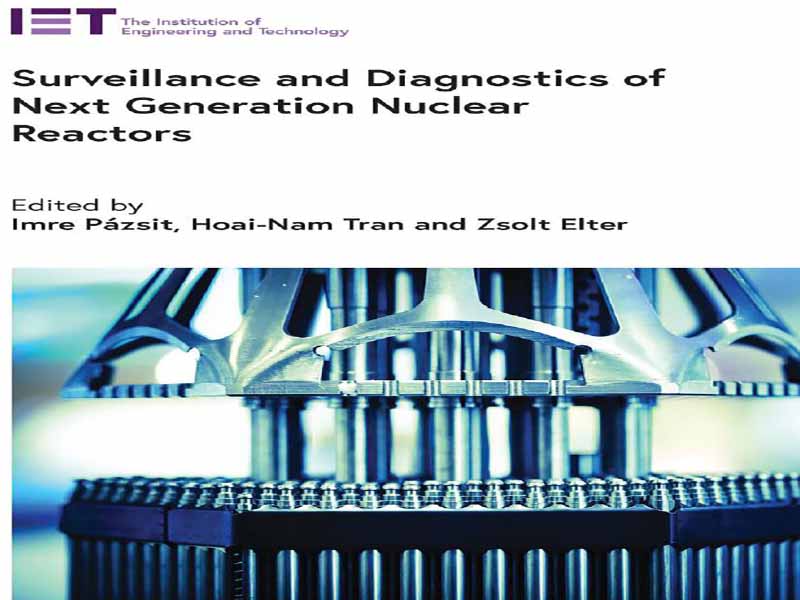
- عنوان کتاب: Surveillance and Diagnostics of Next Generation Nuclear Reactors
- نویسنده: Imre P zsit, Hoai Nam Tran, Zsolt Elter
- حوزه: راکتور
- سال انتشار: 2025
- تعداد صفحه: 318
- زبان اصلی: انگلیسی
- نوع فایل: pdf
- حجم فایل: 4.43 مگابایت
تشخیص راکتورهای هستهای با استفاده از تحلیل نویز سیگنالهای فرآیند، عمدتاً نویز نوترون، طی دهههای متمادی توسعه یافته است. این تحقیقات از اوایل دهه 1960 آغاز شد و اولین کاربردهای آزمایشی در اوایل دهه 1970 انجام شد. انواع اصلی راکتور مورد بررسی، راکتورهای آب سبک غالب، راکتورهای آب تحت فشار (PWR) و راکتورهای آب جوش (BWR) بودند. از زمان توسعه آن در دهه 1970، این فناوری برای راکتورهای آب سبک و سنگین بسیار مهم بوده و به تشخیص و شناسایی زودهنگام خرابیها و نظارت بر پارامترهای عملیاتی کمک کرده است. از زمان ظهور سیستمهای زیر بحرانی مبتنی بر شتابدهنده (ADS) که چند دهه پیش نوید تبدیل شدن به نسل بعدی راکتورهای هستهای را میدادند، مشاهده شد که روشهای تشخیصی موجود برای سیستمهای زیر بحرانی مبتنی بر منبع باید اصلاح و با سیستمهای جدید متناسب شوند. این امر در درجه اول مربوط به روشهای نویز با توان صفر، مانند روشهای فاینمن-آلفا و روسی-آلفا برای اندازهگیری و نظارت آنلاین بر واکنشپذیری زیر بحرانی ADS در حین کار بود. نیاز به بهروزرسانی روشهای سنتی به دلیل تفاوتهای بین سیستمهای سنتی (منبع ثابت با آمار پواسون ساده) و ADS (منبع پالسی با آمار پواسون مرکب) ایجاد شد. جدا از چند مقاله منفرد، روشهای تشخیص راکتور قدرت به طور خاص برای ADS در آن دوره بررسی نشدند. در این میان، سیستمهای نسل چهارم (Gen-IV) و راکتورهای مدولار کوچک (SMR) جایگاه سیستمهای نسل بعدی را به دست گرفتند. از بسیاری جهات، این سیستمها ویژگیهای متفاوتی با راکتورهای سنتی نسل دوم یا سوم دارند: طیف انرژی سریع، نرخ شمارش بالاتر، محدوده متفاوت مؤلفه محلی، منابع نویز متفاوت، دامنههای مختلف اعتبار تقریبهای سینتیکی راکتور و غیره. این تفاوتها در وهله اول مربوط به حوزه تشخیص راکتور قدرت است. با این حال، هیچ مطالعه مشابهی در مورد متناسبسازی یا گسترش روشهای تشخیصی توسعهیافته برای ناوگان فعلی سیستمهای نسل دوم برای ویژگیهای خاص راکتورها و SMRهای نسل چهارم، همانطور که برای توسعه روشهای نویز توان صفر برای ADS انجام شد، انجام نشد. بخش عمدهای از کتاب او به تلاش برای پر کردن این شکاف اختصاص داده شده است. طبیعتاً، گسترش روشهای نویز با توان صفر برای سیستمهای آینده نیز از این منظر مورد بحث قرار گرفته است. یکی از دلایل احتمالی فقدان چنین مطالعاتی، تنوع زیاد طرحهای برنامهریزیشده و این واقعیت است که اکثر طرحها هنوز با جزئیات کافی مشخص نشدهاند. علاوه بر این، از آنجایی که هیچ تجربه عملیاتی با چنین راکتورهایی وجود ندارد، همه سناریوهای ممکن برای تشخیص خطاها یا پارامترهای مورد نظارت شناخته نشدهاند. انواع طرحها نیز به صورت پویا در حال تکامل هستند که مشکل دیگری را نشان میدهد. برای رسیدگی به این وضعیت، چند نوع کلی از راکتورهای نسل بعدی انتخاب شدند و ناهنجاریهای احتمالی (منابع نویز) از راکتورهای موجود استخراج شدند. روشهای تشخیصی مربوطه از این منظر توسعه داده و مورد بحث قرار گرفتند و خواص سیستمهای مختلف برای تشخیص نویز راکتور قدرت مورد تجزیه و تحلیل قرار گرفت. بدون شک، برخی از مشکلات مورد بحث در این کتاب ممکن است با انتشار این کتاب منسوخ شوند. با این وجود، تلاشهایی برای ثبت ویژگیهای اصلی راکتورهای نسل بعدی انجام شد که با وجود چشمانداز مداوم در حال تغییر طرحهای جدید راکتور، همچنان ادامه خواهند داشت. هدف نهایی این کتاب افزایش آگاهی طراحان در مورد لزوم در نظر گرفتن کاربرد سیستمهای نظارت و پایش در مراحل بسیار اولیه است. با تکامل طرحهای راکتورهای نسل چهارم و همچنین راکتورهای مدولار کوچک و متوسط، ادغام تشخیص از مرحله طراحی برای جلوگیری از مشکلات مقاومسازی حیاتی است. با تجزیه و تحلیل امکانات و اثربخشی تشخیص نویز برای انواع اصلی طرحهای جدید، مطالب این کتاب میتواند به ادغام سریعتر و مؤثرتر روشهای تشخیص نویز در طرحهای جدید کمک کند.
Diagnostics of nuclear power reactors with noise analysis of process signals, primarily that of the neutron noise, have been developed over many decades. The research started as early as the 1960s, and the first pilot applications were made in the early 1970s. The main reactor types considered were the dominating light water reactors, pressurised water reactors (PWRs) and boiling water reactors (BWRs). Since its development in the 1970s, this technology has been crucial for light and heavy water reactors, aiding in early detection and identification of failures and operational parameter monitoring. It was seen already at the appearance of accelerator-driven subcritical systems (ADSs), which a couple of decades ago held the promise to become the next generation of nuclear power reactors, that the existing diagnostic methods for source-driven subcritical systems had to be revised and suited to the new systems. This concerned primarily the zero-power noise methods, such as the Feynman-alpha and Rossi-alpha methods for the measuring and online monitoring of the subcritical reactivity of the ADS during operation. The need for updating the traditional methods arose because of the differences between the traditional systems (stationary source with simple Poisson statistics) and the ADS (pulsed source with compound Poisson statistics). Apart from a few singular papers, power reactor diagnostic methods specifically for ADS were not investigated during that period. In the meantime, Generation-IV (Gen-IV) systems and small modular reactors (SMRs) took over the status of next generation systems. In many aspects, these systems also have differing characteristics from the traditional Gen-II or Gen-III reactors: fast energy spectrum, higher count rates, different range of the local component, different noise sources, different domains of the validity of the reactor kinetic approximations, etc. These differences concern in the first place the field of power reactor diagnostics. Yet, no similar studies were made regarding the tailoring or extending the diagnostic methods developed for the current fleet of Gen-II systems for the specific characteristics of Gen-IV reactors and SMRs, as was done for the development of zero-power noise methods for ADS. A major part of his book is devoted to an attempt to fill this gap. Naturally, the extension of zero-power noise methods for the future systems is also discussed from this perspective. One possible reason for the lack of such studies is the large variety of the planned designs and the fact that a majority of the designs are not yet fixed in sufficient detail. Further, since there is no operational experience with such reactors, not all the possible scenarios for faults to be detected or parameters to monitor are known. The types of designs are also evolving dynamically, which represents a further problem. To handle the situation, a few generic types of next generation reactors were selected, and the possible anomalies (noise sources) were extrapolated from the existing reactors. The corresponding diagnostic methods were developed and discussed from this perspective, and the properties of the various systems were analysed for power reactor noise diagnostics. No doubt, some of the problems discussed in this book might become obsolete already by the publication of this book. Nevertheless, efforts were made to capture the main characteristics of next generation reactors, which will persist despite the continuously changing landscape of new reactor designs. A final goal of this book is to increase the awareness of designers about the need of considering the application of monitoring and surveillance systems at a very early stage. As the designs of Gen-IV reactors, as well as small and medium modular reactors, evolve, integrating diagnostics from the design phase is vital to avoid retrofitting issues. By analysing the possibilities and effectiveness of noise diagnostics for the main types of new designs, the material in this book might contribute to earlier and more effective integration of noise diagnostic methods into the new designs.
این کتاب را میتوانید از لینک زیر بصورت رایگان دانلود کنید:
Download: Surveillance and Diagnostics of Next Generation Nuclear Reactors

























نظرات کاربران