













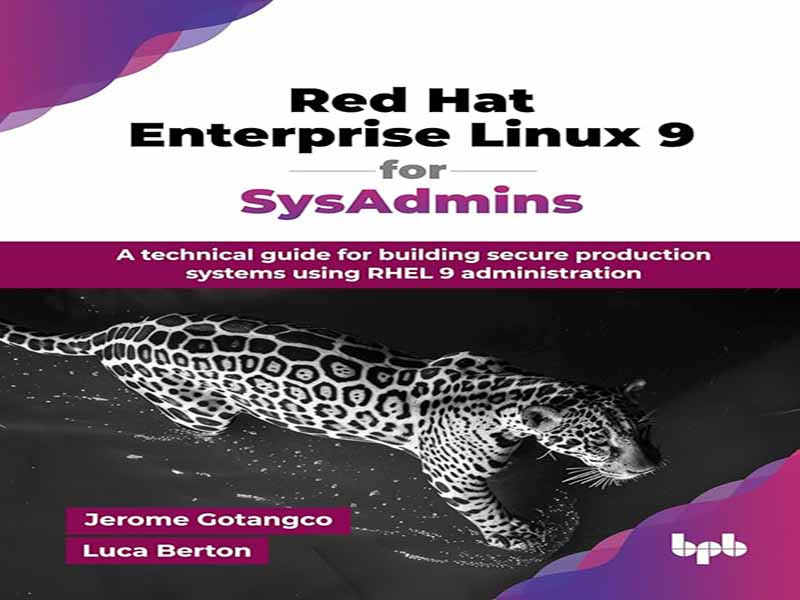
- عنوان کتاب: Red Hat Enterprise Linux 9 for SysAdmins
- نویسنده: Jerome Gotangco
- حوزه: آموزش لینوکس
- سال انتشار: 2026
- تعداد صفحه: 328
- زبان اصلی: انگلیسی
- نوع فایل: pdf
- حجم فایل: 3.36 مگابایت
اول، مایلیم از شما به خاطر تهیه این کتاب تشکر کنیم، چه برای یادگیری مداوم شما با استفاده از توزیعهای لینوکس به عنوان سرگرمی، و چه صرفاً علاقهمند به یادگیری یک سیستم عامل جدید. دوم، این کتاب برای شما، مدیران عزیز سیستم در سراسر جهان، نوشته شده است تا شما را قادر سازد تا با آخرین نسخه از توزیع لینوکس پرچمدار Red Hat، Red Hat Enterprise Linux 9 (RHEL 9)، به طور مؤثر کار کنید. این کتاب به گونهای نوشته شده است که میتواند به عنوان یک مرجع مفید هر زمان که نیاز به انجام کاری با سیستم RHEL 9 من دارید، مانند نصب سرویس پایگاه داده، راهاندازی یک نمونه گره واحد برای Kubernetes و موارد دیگر، مورد استفاده قرار گیرد! اگر مایلید، با آن مانند یک کتاب آشپزی رفتار کنید – همیشه آماده است تا سریعترین و بهترین راه برای پخت یک دستور غذا را به شما ارائه دهد. در واقع، این نحوه ساختار کتاب است! این کتاب برای چه کسی است و چگونه از کتاب آشپزی استفاده کنیم؟ همانطور که از عنوان پیداست، Red Hat Enterprise Linux 9 برای SysAdmins برای مدیران سیستم یا SysAdmins نوشته شده است که مسئول نصب، پیکربندی و مدیریت یک سرور RHEL 9 در محیطهای فناوری اطلاعات مربوطه خود هستند، چه در یک سرور رک مرکز داده مستقر باشد، چه در محل شرکت به عنوان یک سرور مستقل، چه یک ماشین مجازی در حال اجرا در یک hypervisor یا حتی در فضای ابری عمومی و خصوصی به عنوان یک ماشین مجازی مستقر باشد. از دیدگاه روزمره، SysAdmins مسئول اطمینان از عملکرد سیستمهای کامپیوتری، مانند سرورها، در شرایط اوج و تنظیم شده برای مدیریت حجم تراکنشها هستند. SysAdmins همچنین برنامهریزی و نظارت پیشگیرانه انجام میدهد. این سیستمها به صورت ایمن قابل دسترسی هستند و بر بهرهوری کاربرانی که به سرویسهای در حال اجرا در سیستمهایی که توسط SysAdmins مدیریت میشوند، متکی هستند، تأثیری نمیگذارد. خلاصه اینکه، آنها قهرمانان گمنام دنیای بیش از حد متصل امروز هستند و تضمین میکنند که برنامههایی که هر روز از آنها استفاده میکنیم، چه یک شبکه اجتماعی، یک کیف پول دیجیتال یا یک برنامه بانکداری آنلاین و غیره، همیشه در دسترس و سریع برای تراکنشهای روزانه ما باشند. این کتاب برای مدیران سیستم سطح پایین تا متوسط نوشته شده است که قبلاً یک سرور لینوکس را مدیریت کردهاند و نیاز دارند در مدت زمان کوتاهی با RHEL 9 به بهرهوری برسند. این کتاب شامل بیش از 107 دستور العمل برای ساخت و مدیریت یک سیستم RHEL 9 به همراه برنامهها است – از نصب RHEL 9، ساخت یک سرور پایگاه داده، طراحی یک خوشه برای دسترسی بالا و ایجاد یک پلتفرم برای هوش مصنوعی، به سبک یک کتاب آشپزی. هر فصل بر روی یک موضوع خاص تمرکز دارد و حداقل 5 دستور العمل برای انجام کار شما در مدت زمان کوتاهتر دارد. فهرست مطالب به این صورت ساختار یافته است تا بازگشت به دستور العملهای مورد علاقهتان در هر زمان آسان باشد! ما این کتاب را به سبک کتاب آشپزی نوشتهایم و در زیر تنها برخی از نکات عالی که در هر فصل یاد خواهید گرفت، آورده شده است: فصل 1: معرفی Red Hat Enterprise Linux 9 – شما خواهید آموخت که Red Hat Enterprise Linux (یا RHEL)، منشأ آن چیست و این سیستم عامل چقدر در سازمانها حیاتی است. همچنین اطلاعات بیشتری در مورد دریافت پشتیبانی از RHEL و همچنین جایگزینهای شناخته شده برای RHEL دریافت خواهید کرد. فصل 2: راهاندازی RHEL 9 – شما اطلاعاتی در مورد دانلود RHEL 9 و ایجاد رسانه قابل بوت برای نصب دریافت خواهید کرد. هنگامی که نصب را انجام میدهید، اصول اولیه و همچنین درسهای پیشرفته در مورد پارتیشنبندی دیسک و خودکارسازی نصب RHEL 9 برای استقرارهای انبوه با استفاده از Kickstart را خواهید آموخت. فصل 3: راهاندازی RHEL 9 بر روی ابر – محاسبات ابری راهی عالی برای یادگیری در مورد RHEL است و یاد خواهید گرفت که چگونه RHEL 9 را بر روی ارائه دهندگان اصلی ابر: AWS، Microsoft Azure و Google Cloud Platform مستقر و پیکربندی کنید. همچنین یاد خواهید گرفت که چگونه استقرارهای RHEL 9 خود را با کنسول Red Hat Hybrid Cloud مدیریت کنید و از اشتراکهای موجود برای صرفهجویی در هزینههای استقرارهای ابری با Red Hat Cloud Access استفاده کنید. فصل 4: پیکربندیهای متفرقه RHEL 9 – وقتی میخواهید یک سیستم RHEL 9 را نصب و راهاندازی کنید، باید برخی سفارشیسازیها و پیکربندیها را انجام دهید تا آن را قابل استفاده و ایمن کنید. این فصل شما را در پیکربندیهای اساسی و ضروری در RHEL 9 راهنمایی میکند. فصل 5: مدیریت اشتراکهای RHEL 9 – اجرای RHEL 9 نیاز به اشتراکی از Red Hat دارد و در این فصل یاد خواهید گرفت که چگونه یک اشتراک توسعهدهنده رایگان برای سفر یادگیری خود دریافت کنید، و همچنین سیستمهای RHEL 9 خود را برای دریافت بهروزرسانیهای نرمافزاری ثبت کنید و گزارشهای تشخیصی را برای دریافت پشتیبانی فنی به Red Hat ارسال کنید. فصل 6: پیکربندی مخازن نرمافزاری و بهروزرسانیهای RHEL 9 – یاد خواهید گرفت که مخازن نرمافزاری شخص ثالث را اضافه کنید تا بتوانید نرمافزار جدید را نصب کنید و همچنین نرمافزارهای از قبل نصب شده را بهروزرسانی کنید. فصل 7: مدیریت RHEL 9 با دسکتاپ GNOME – RHEL 9 شامل دسکتاپ GNOME است و شما یاد خواهید گرفت که چگونه با استفاده از این رابط کاربری گرافیکی ساده، سیستم RHEL 9 خود را پیکربندی و پیمایش کنید. فصل 8: مدیریت زیرساخت و پایگاههای داده – RHEL 9 مخزن بزرگی از زیرساختهای متنباز و نرمافزارهای پایگاه داده در سطح سازمانی را ارائه میدهد که میتوانید از آنها استفاده کنید.
First, we wish to thank you for getting this book, be it for your continued learning using Linux distributions as a hobby, or just simply interested in learning a new operating system. Second, this book has been written for you, dear system administrators of the world, to enable and empower you to be productive with the latest edition of Red Hat’s flagship Linux distribution Red Hat Enterprise Linux 9 (RHEL 9). This book is written in such a way that it can be used as a handy reference whenever you need to do something with my RHEL 9 system, like installing a database service, spinning up a single node instance for Kubernetes, and more! Treat it like a cookbook if you will – always ready to give you the quickest and best way to cook up a recipe. In fact, it is the way the book is structured! Who is this book for and how to use the cookbook? As the title suggests, Red Hat Enterprise Linux 9 for SysAdmins is written for System Administrators or SysAdmins who are responsible for installing, configuring, and managing an RHEL 9 server in their respective IT environments, be it deployed in a data center rack server, on-premises in the company as a stand-alone server, a virtual machine running in a hypervisor, or even in public and private cloud as a virtual machine deployment. From a day-to-day point of view, SysAdmins are responsible for ensuring computer systems, such as servers, are running in peak condition and tuned to handle volumes of transactions. SysAdmins also do proactive planning and monitoring; these systems are accessed securely and don’t affect the productivity of users relying on the services running in the systems being managed by SysAdmins. In short, they are the unsung heroes of today’s hyper-connected world, making sure the applications that we use every day, be it a social network, a digital wallet, or an online banking application, just among others, are always available and fast for our day-to-day transactions. This book is written for junior to mid-level SysAdmins who have managed a Linux server before and need to become productive with RHEL 9 in a short amount of time. The book contains over 107 recipes of tasks in building and managing a RHEL 9 system along with applications – from installing RHEL 9, building a database server, designing a cluster for high availability, and creating a platform for artificial intelligence, in the style of a cookbook. Each chapter will focus on a particular topic and will contain at least 5 recipes to get your task done in a shorter amount of time. The table of contents is structured this way along to make it easy to go back to your favorite recipes anytime! We have written this book in a cookbook style and below are just some of the great things you’ll learn in each chapter: Chapter 1: Introducing Red Hat Enterprise Linux 9 – You will learn what Red Hat Enterprise Linux (or RHEL), its origin, and how critical this operating system is in the enterprise. You will also get additional information on getting support for RHEL, as well as known alternatives to RHEL. Chapter 2: Setting Up RHEL 9 – You will get information on downloading RHEL 9 and creating bootable media to be used for the installation. When you get to do an installation, you will learn the basics as well as advance lessons on disk partitioning and automating the RHEL 9 installation for mass deployments using Kickstart. Chapter 3: Establish RHEL 9 on Cloud – Cloud computing is a great way to learn about RHEL and you will learn how to deploy and configure RHEL 9 on the major cloud providers: AWS, Microsoft Azure, and Google Cloud Platform. You will also learn how to manage your RHEL 9 deployments with the Red Hat Hybrid Cloud Console and use existing subscriptions to save money on cloud deployments with Red Hat Cloud Access. Chapter 4: Miscellaneous Configurations of RHEL 9 – When you get to install and set up a RHEL 9 system, you will need to do some customizations and configurations to make it usable and secure. This chapter will guide you through basic and essential configurations in RHEL 9. Chapter 5: Managing RHEL 9 Subscriptions – Running RHEL 9 requires a subscription from Red Hat and you will learn in this chapter how to obtain a no-cost developer subscription for your learning journey, as well as registering your RHEL 9 systems to receive software updates and send diagnostic reports to Red Hat to get technical support. Chapter 6: Configuring Software Repositories and RHEL 9 Updates – You will learn to add third-party software repositories to be able to install new software as well as update already installed software. Chapter 7: Managing RHEL 9 with GNOME Desktop – RHEL 9 includes the GNOME Desktop and you will learn how to configure and navigate with this simple graphical user interface to use and manage your RHEL 9 system. Chapter 8: Managing Infrastructure and Databases – RHEL 9 provides a large repository of enterprise-grade open-source infrastructure and database software that you can install and configure in this chapter. Chapter 9: Administration of Virtualization Workloads – You will learn how to create virtual machines and manage them in RHEL 9. Chapter 10: Create, Manage, and Monitor Containers – RHEL 9 has robust container support with Podman and Buildah and you will have a good grasp of the tools by creating and managing container workloads in RHEL 9. Chapter 11: Working Around Networks, Files, and Storage Services – This chapter covers the essentials of networking, file systems, and storage in RHEL 9. You will learn to configure and manage network interfaces, implement firewall rules, and set up DNS and DHCP services. Additionally, you will delve into managing file systems, including creating and mounting file systems, configuring NFS and SMB for file sharing, and working with advanced storage solutions like Logical Volume Manager (LVM) and Stratis. Chapter 12: Source Codes, DevOps Pipelines, and Application Development – This chapter explores how RHEL seamlessly integrates with modern development practices. It teaches you to set up development environments, manage source code repositories with Git, and build CI/CD pipelines using tools like Jenkins, Ansible, and Podman. You will also explore RHEL debugging utilities and performance profilers to streamline application development and deployment. Chapter 13: Administration of Clusters and Servers – RHEL is a trusted choice for enterprise-grade clustering and server management. This chapter focuses on creating and managing high-availability clusters with tools like Pacemaker and Corosync. You will learn to configure load balancers, optimize server performance, and maintain uptime for critical services. You will also explore distributed file systems and shared storage for clusters. Chapter 14: Security Hardening of RHEL – Securing systems is vital in the enterprise landscape. This chapter provides comprehensive guidance on hardening your RHEL installations. Topics include SELinux configuration, managing firewalls with FirewallD, implementing audit rules, and enforcing security policies. Learn about Red Hat Insights, the SCAP Security Guide, and automating security compliance checks to ensure your systems meet enterprise security standards. Chapter 15: Capacity Planning, Log Analysis, and System Audits – Efficient resource management and monitoring are crucial for RHEL administrators. In this chapter, you will explore tools like top, vmstat, and iotop to monitor system performance and plan for future capacity needs. You’ll also learn to manage and analyze logs using Rsyslog and Logrotate and conduct system audits using tools like Auditd to maintain compliance and traceability. Chapter 16: Artificial Intelligence and Machine Learning – Discover how RHEL supports AI/ML workloads. This chapter introduces you to deploying and managing AI frameworks and libraries like TensorFlow, PyTorch, and Scikit-learn on RHEL. Learn to optimize hardware for AI/ML, and leverage containerized environments for machine learning pipelines to accelerate AI/ML application development.
این کتاب را میتوانید از لینک زیر بصورت رایگان دانلود کنید:
Download: Red Hat Enterprise Linux 9 for SysAdmins

























نظرات کاربران