










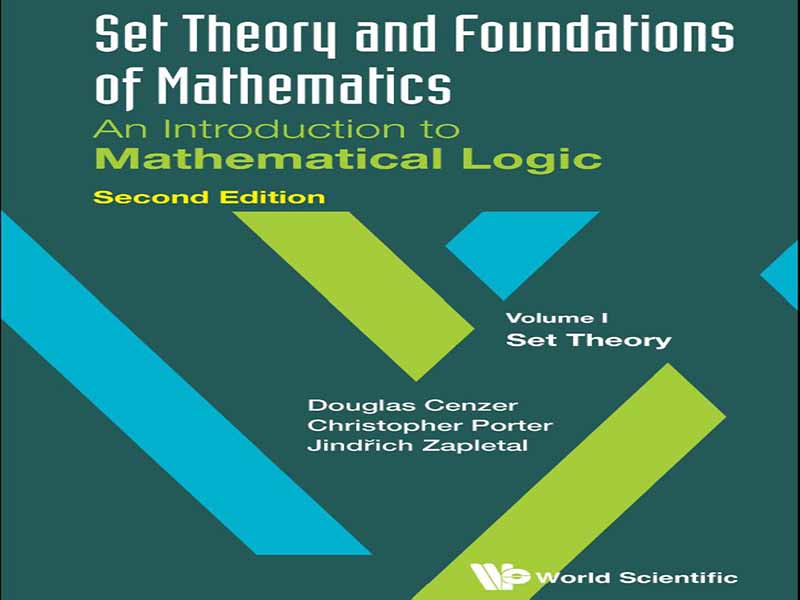
- عنوان کتاب: SET THEORY AND FOUNDATIONS OF MATHEMATICS -AN INTRODUCTION TO MATHEMATICAL LOGIC
- نویسنده: Douglas Cenzer, Christopher P. Porter
- حوزه: نظریه ریاضی
- سال انتشار: 2025
- تعداد صفحه: 195
- زبان اصلی: انگلیسی
- نوع فایل: pdf
- حجم فایل: 3.18 مگابایت
این کتاب طی سالها از یادداشتهای کلاسی برای یک دوره نظریه مجموعهها در دانشگاه فلوریدا تهیه شده است. این دوره به دانشجویان کارشناسی پیشرفته و همچنین دانشجویان تحصیلات تکمیلی سطوح پایینتر تدریس شده است. این یادداشتها بیش از 30 بار مورد استفاده قرار گرفتهاند، زیرا این دوره از سبک سمینار به سمت سخنرانی سنتیتر تکامل یافته است. نظریه مجموعههای بدیهی، همراه با منطق، پایه و اساس ریاضیات عالی را فراهم میکند. این کتاب بر اصول موضوعه و نحوه استفاده از آنها برای توسعه جهان مجموعهها، از جمله اعداد صحیح، اعداد گویا و حقیقی، و اعداد ترتیبی و کاردینال ترامتناهی، متمرکز است. تلاشی برای پیوند نظریه مجموعهها با ریاضیات اعداد حقیقی وجود دارد. جزئیاتی در مورد فرمولبندیها و کاربردهای مختلف اصل انتخاب وجود دارد. چندین موضوع ویژه پوشش داده شده است. اعداد گویا و حقیقی به عنوان ترتیبهای خطی متراکم بدون نقاط پایانی مطالعه میشوند. انواع ممکن زیرمجموعههای خوشترتیب اعداد گویا و حقیقی بررسی میشوند. کاردینالیتی ممکن مجموعههای اعداد حقیقی مورد مطالعه قرار میگیرد. فضای کانتور 2N و فضای بیر NN به عنوان فضاهای توپولوژیکی ارائه میشوند. حساب ترتیبی با جزئیات زیادی توسعه داده شده است. موضوع مدلهای ممکن از بخشهایی از اصول موضوعه بررسی شده است. به عنوان بخشی از مطالب مربوط به اصول موضوعه نظریه مجموعهها، مدلهای زیرمجموعههای مختلف اصول موضوعه را به عنوان مقدمهای بر سازگاری و استقلال در نظر میگیریم. موضوع جالب دیگری که پوشش میدهیم، مقدمهای بر نظریه رمزی است. منطقی است که بیشتر مطالب را در یک دوره یک ترمی، با حذفهای انتخابی، پوشش دهیم. فصل 2 مروری بر مجموعهها و منطق است و در صورت نیاز باید در یک یا دو هفته پوشش داده شود. فصل 3 اصول موضوعه زرملو-فرانکل و همچنین اصل موضوعه انتخاب را در حدود دو هفته معرفی میکند. فصل 4 اعداد طبیعی، استقراء و بازگشت را توسعه میدهد و کاردینالیتی را معرفی میکند که دو یا سه هفته طول میکشد. فصل 5 در مورد اعداد ترتیبی شامل استقراء و بازگشت ترامتناهی، مرتبسازیهای خوب و حساب ترتیبی در دو یا سه هفته است. فصل ۶ نسخههای معادل و کاربردهای اصل انتخاب و همچنین اصل کاردینالیتی را در حدود دو یا سه هفته پوشش میدهد. اعداد حقیقی در فصل ۷، با بحث در مورد ترتیبهای متراکم و کامل، مجموعههای شمارشپذیر و شمارشناپذیر اعداد حقیقی، و مقدمهای مختصر بر فضاهای توپولوژیکی مانند فضای بائر و فضای کانتور، دوباره در دو یا سه هفته، توسعه داده شدهاند. اگر همه چیز خوب پیش برود، حدود یک هفته برای هر دو فصل آخر باقی میماند: مدلهای نظریه مجموعهها و مقدمهای بر نظریه رمزی. این کتاب شامل بیش از ۳۰۰ تمرین است که درک دانشآموزان را میسنجد و همچنین مطالب را بهبود میبخشد. نویسندگان از تدریس این یادداشتها لذت بردهاند و بسیار خوشحال هستند که آنها را با مخاطبان گستردهتری به اشتراک میگذارند. از خوانندگان ویرایش اول برای پیشنهادات مفید فراوان تشکر میکنیم. تشکر ویژه از جیمز دودزیاک برای فهرست مفصلی از نظرات.
This book was developed over many years from class notes for a set theory course at the University of Florida. This course has been taught to advanced undergraduates as well as lower level graduate students. The notes have been used more than 30 times as the course has evolved from seminar-style toward a more traditional lecture. Axiomatic set theory, along with logic, provides the foundation for higher mathematics. This book is focused on the axioms and how they are used to develop the universe of sets, including the integers, rational and real numbers, and transfinite ordinal and cardinal numbers. There is an effort to connect set theory with the mathematics of the real numbers. There are details on various formulations and applications of the Axiom of Choice. Several special topics are covered. The rationals and the reals are studied as dense linear orderings without end points. The possible types of well-ordered subsets of the rationals and reals are examined. The possible cardinality of sets of reals is studied. The Cantor space 2N and Baire space NN are presented as topological spaces. Ordinal arithmetic is developed in great detail. The topic of the possible models of fragments of the axioms is examined. As part of the material on the axioms of set theory, we consider models of various subsets of the axioms, as an introduction to consistency and independence. Another interesting topic we cover is an introduction to Ramsey theory. It is reasonable to cover most of the material in a one-semester course, with selective omissions. Chapter 2 is a review of sets and logic and should be covered as needed in one or two weeks. Chapter 3 introduces the Axioms of Zermelo–Fraenkel, as well as the Axiom of Choice, in about two weeks. Chapter 4 develops the Natural Numbers, induction and recursion, and introduces cardinality, taking two or three weeks. Chapter 5 on Ordinal Numbers includes transfinite induction and recursion, well orderings, and ordinal arithmetic, in two or three weeks. Chapter 6 covers equivalent versions and applications of the Axiom of Choice, as well as Cardinality, in about two or three weeks. The Real Numbers are developed in Chapter 7, with discussion of dense and complete orders, countable and uncountable sets of reals, and a brief introduction to topological spaces such as the Baire space and Cantor space, again in two or three weeks. If all goes well, this leaves about one week each for the final two chapters: models of set theory and an introduction to Ramsey theory. This book contains more than 300 exercises which test the students understanding and also enhance the material. The authors have enjoyed teaching from these notes and are very pleased to share them with a broader audience. We would like to thank the readers of the first edition for many helpful suggestions. A special thanks to James Dudziak for a detailed list of comments.
این کتاب را میتوانید از لینک زیر بصورت رایگان دانلود کنید:



















نظرات کاربران