











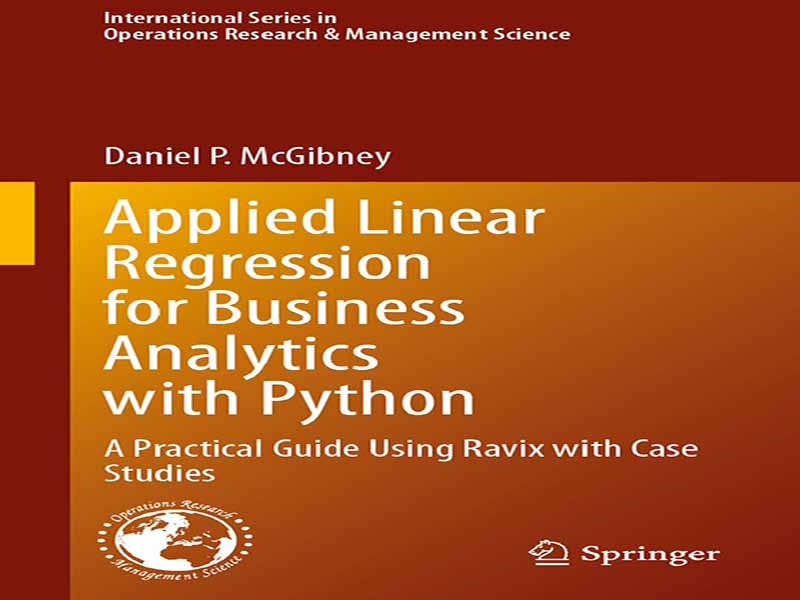
- عنوان کتاب: Applied Linear Regression for Business Analytics with Python
- نویسنده: Daniel P. McGibney
- حوزه: تجزیه و تحلیل کسب و کار
- سال انتشار: 2026
- تعداد صفحه: 447
- زبان اصلی: انگلیسی
- نوع فایل: pdf
- حجم فایل: 15.3 مگابایت
در تحلیل رگرسیون، مفاهیمی که باید آموخته شوند، ریاضی هستند و نیاز به برنامهنویسی و شهود دارند. محتوای مبتنی بر ریاضی و شهود را میتوان به معنای سنتی آموزش داد، اما سناریوهای دنیای واقعی برای الهام بخشیدن به دانشجویان و حفظ علاقهشان ضروری است. این کتاب بر تحلیل رگرسیون کاربردی برای دانشجویان بازرگانی با مقدمهای بر زبان برنامهنویسی پایتون تمرکز دارد. این کتاب بر تصویرسازی و حل مسائل مدرن تأکید دارد. مطالعات موردی از بازرگانی، همراه با توضیحات واضح و مختصر از نظریه، شهود، مثالهای عملی و کدنویسی مورد نیاز برای استفاده از مدلسازی رگرسیون، در متن موجود است. هر فصل شامل فرمولبندی ریاضی و جزئیات تحلیل رگرسیون است و با استفاده از زبان برنامهنویسی پایتون، تجزیه و تحلیل عمیق و کاربردی ارائه میدهد. در سراسر کتاب، مثالها از یک بسته ابزار سبک پایتون که برای وضوح آموزشی، ساخته شده بر روی کتابخانههای استاندارد پایتون، برای سادهسازی وظایف تکراری و در عین حال حفظ شفافیت در فرآیند مدلسازی، استفاده میکنند. علاقه من به تحلیل رگرسیون کاربردی از طریق کار پروژهای برای وزارت دفاع ایالات متحده ایجاد شد، جایی که مدلهای رگرسیون برای تخمین زمان تحویل درخواستهای مبدا ایالات متحده و مقصد فرماندهیهای رزمی توسعه داده شدند. این تجربه، اهمیت ساخت مدلهایی را که نه تنها از نظر آماری صحیح هستند، بلکه در محیطهای عملیاتی واقعی نیز قابل تفسیر و اجرا هستند، برجسته کرد. این کتاب بر کاربرد عملی تحلیل رگرسیون تأکید دارد و آن را برای مجموعه دادههایی که در کسبوکار روزمره با آنها مواجه میشویم، قابل استفاده میکند. به طور خاص، در حالی که کتابهای سنتی حاوی نظریهها و فرمولهای ریاضی بیش از حد هستند، میتوانند دانشجویان کسبوکار را بدون دانش ریاضی پیشرفته، گیج کنند. برعکس، برخی از کتابهایی که بر درسهای شهودی تأکید دارند، اغلب اجزای کدنویسی را حذف میکنند که مانع از درک فرآیند توسط دانشجویان میشود. برای رفع این شکاف، کتاب، نظریه و کاربرد را از طریق مثالهای کاملاً عملی دنیای واقعی همراه با کدهای دقیق و قابل تکرار، ترکیب میکند. یادگیری از طریق موارد تجاری مرتبط در دنیای کسبوکار امروز ضروری است. به همین منظور، کاربردها و تمرینهای عملی متعددی در این کتاب موجود است که به دانشجویان اجازه میدهد تا به سرعت ریاضیات پیچیده را در مجموعه دادههایی که جمعآوری میکنند، اعمال کنند. در این عصر دیجیتال، کسبوکارها برای هدایت فرآیند تصمیمگیری خود به شدت به تجزیه و تحلیل مبتنی بر داده وابسته شدهاند. یک نظرسنجی توسط GMAC حتی نشان داد که شرکتها به طور فزایندهای به دنبال استخدام استعدادهایی در علوم داده و تجزیه و تحلیل کسبوکار برای موقعیتهای پیشرفته هستند. با توجه به افزایش تقاضا، تعداد برنامهها و دورهها در تجزیه و تحلیل کسبوکار و علم داده در سالهای اخیر به طرز چشمگیری افزایش یافته است. برای مثال، دانشکده بازرگانی میامی هربرت در دانشگاه میامی در حال حاضر چندین بخش سالانه را به تحلیل رگرسیون اختصاص میدهد. با این حال، هیچ کتاب درسی واحدی وجود ندارد که به طور کامل به تحلیل رگرسیون کاربردی برای دانشجویان بازرگانی که از پایتون به عنوان ابزار تحلیلی اصلی استفاده میکنند، بپردازد. از این رو، مخاطبان اصلی این کتاب (1) دانشجویان مقطع کارشناسی پیشرفته که در رشته تحلیل بازرگانی تحصیل میکنند و (2) دانشجویان تحصیلات تکمیلی که در رشته بازرگانی تحصیل میکنند، خواهند بود: از جمله اما نه محدود به دانشجویانی که در رشتههای کارشناسی ارشد علوم در تحلیل بازرگانی، کارشناسی ارشد علوم در حسابداری، کارشناسی ارشد علوم در مالیات و کارشناسی ارشد مدیریت بازرگانی تحصیل میکنند. با این وجود، این کتاب برای دانشجویان مقطع کارشناسی ارشد پیشرفته که در رشتههای مهندسی، ریاضی و آمار تحصیل میکنند، مناسب است.
In regression analysis, the concepts to be learned are mathematical and require programming and intuition. The mathematical and intuition based content can be taught in a traditional sense, but real-world scenarios are necessary to inspire students to remain interested. This book focuses on applied regression analysis for business students with an introduction to the Python programming language. It emphasizes illustrating and solving modern problems. Case studies from business are available within the text, along with clear and concise explanations of the theory, intuition, hands-on examples, and the coding required to use regression modeling. Each chapter contains the mathematical formulation and details of regression analysis and provides a practical in-depth breakdown using the Python programming language. Throughout the book, examples make use of a lightweight Python utility package developed for instructional clarity, built on standard Python libraries, to streamline repetitive tasks while preserving transparency in the modeling process. My interest in applied regression analysis developed through project work for the US Department of Defense, where regression models were developed to estimate delivery timelines for requisitions originating in the United States and destined for combatant commands. The experience underscored the importance of building models that are not only statistically sound, but also interpretable and actionable in real operational settings. This book stresses the practical usage of regression analysis, making it applicable to data sets encountered in everyday business. Specifically, while traditional books contain excessive theories and mathematical formulas, they can overwhelm business students without advanced mathematical knowledge. On the contrary, some books that stress intuitive lessons often omit the coding components, which prevents students from understanding the process. To address this gap, the book blends theory and application through fully worked real world examples accompanied by detailed, reproducible code. Learning through relevant business cases is essential in today’s business world. To that end, numerous practical applications and exercises are available in this book, allowing students to quickly apply complex math to the data sets they collect. In this digital era, businesses have become highly dependent on data-driven analytics to guide their decision process. A survey by the GMAC even found that companies are increasingly looking to hire talent in data science and business analytics for advanced positions. Due to the increasing demand, the number of programs and courses in business analytics and data science has drastically grown in recent years. For example, Miami Herbert Business School at the University of Miami currently offers multiple annual sections dedicated to regression analysis. However, there is no single textbook that fully addresses applied regression analysis for business students using Python as the primary analytical tool. Hence, the primary audience of this book will be (1) advanced undergraduate-level students studying business analytics and (2) graduate students studying business: including but not limited to students who study Master of Science in Business Analytics, Master of Science in Accounting, Master of Science in Tax, and Master of Business Administration. Nevertheless, this book suits advanced under graduate level students studying engineering, math, and statistics.
این کتاب را میتوانید از لینک زیر بصورت رایگان دانلود کنید:
Download: Applied Linear Regression for Business Analytics with Python























نظرات کاربران