













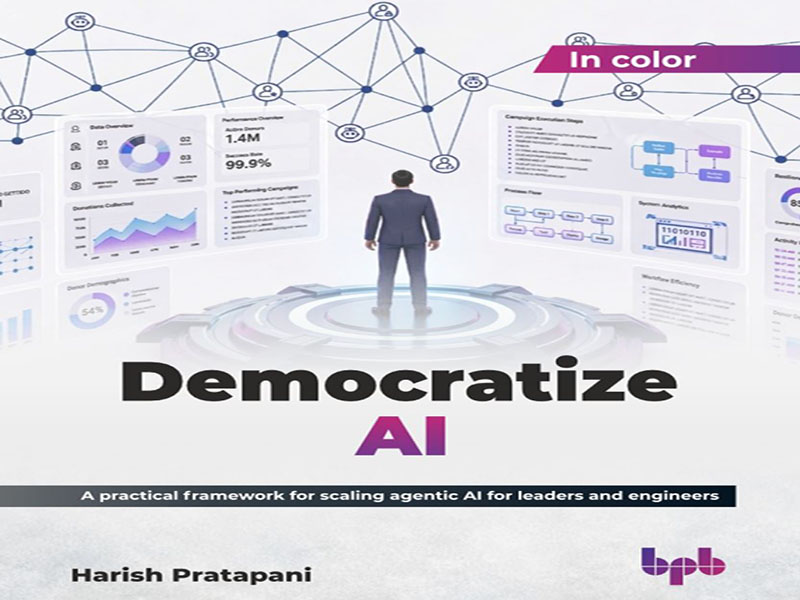
- عنوان کتاب: Democratize AI
- نویسنده: Harish Pratapani
- حوزه: اخلاق در هوش مصنوعی
- سال انتشار: 2026
- تعداد صفحه: 319
- زبان اصلی: انگلیسی
- نوع فایل: pdf
- حجم فایل: 5.35 مگابایت
من بخش زیادی از دوران حرفهایام را در تقاطع زیرساخت و هوش گذراندهام و متوجه یک الگوی تکرارشونده شدهام: قدرتمندترین فناوریها، فناوریهایی هستند که از خاص بودن دست میکشند و همهجا حضور پیدا میکنند. هوش مصنوعی در حال حاضر در حال جهش است. دیگر یک موج نوظهور نیست؛ بلکه بستری است که ما روی آن ایستادهایم. هوش مصنوعی در حال تغییر شکل نحوه ساخت نرمافزار، نحوه تصمیمگیری و نحوه ایجاد ارزش است. با وجود این، شکاف بزرگی بین کسانی که از هوش مصنوعی استفاده میکنند و کسانی که واقعاً میدانند چگونه آن را در مقیاس بزرگ به کار گیرند، وجود دارد. این کتاب تلاش من برای پر کردن این شکاف است، بدون اینکه بین استراتژی سطح بالا و عمق فنی سخت مورد نیاز برای عملکرد واقعی این سیستمها یکی را انتخاب کنم. دموکراتیزه کردن هوش مصنوعی فقط به معنای دادن امکان ورود به یک چتبات به همه نیست. این در مورد یک تغییر اساسی در معماریها و طرز فکر ماست. فصلهای زیر نقشه راه این تحول را ارائه میدهند: فصل 1: هوش مصنوعی برای همه – هوش مصنوعی از یک ایده به چیزی که هر روز از آن استفاده میکنیم تبدیل شده است و کسبوکارها و زندگی ما را متحول میکند. با قدرتمندتر شدن آن، بسیار مهم است که همه بتوانند از آن استفاده کنند و از آن بهرهمند شوند. شما سفر را از ریشههای فلسفی تا پیشرفتهایی مانند یادگیری عمیق و هوش مصنوعی مولد دنبال خواهید کرد، بررسی خواهید کرد که چگونه هوش مصنوعی رشد کرده است و چرا در دسترس قرار دادن این فناوری برای همه برای آیندهای بهتر ضروری است. در نهایت، قدرت واقعی آن در کاربرد اخلاقی، فراگیر و خردمندانه آن برای منفعت جمعی بشر نهفته است. فصل 2: آزمایشگاهها تا اتاقهای نشیمن – هوش مصنوعی دیگر محدود به آزمایشگاههای دانشگاهی نیست. اکنون نحوه ارتباط، یادگیری، خلق و کار مردم را شکل میدهد. شما چگونگی تکامل مدلهای پیچیده به ابزارهایی که توسط میلیاردها نفر استفاده میشوند را دنبال خواهید کرد و شاهد معماری و شناخت اکوسیستم متنوع نوآورانی خواهید بود که دموکراتیزاسیون جهانی را هدایت میکنند. آنچه زمانی یک حرفه دانشگاهی بود، به نیرویی در دسترس تبدیل شده است که مردم را قادر میسازد مشکلات واقعی را حل کنند و توانایی انسان را گسترش دهند. فصل 3: طرز فکر اولویت با هوش مصنوعی – تغییر اساسی به سمت طرز فکر اولویت با هوش مصنوعی، اضافه کردن هوش مصنوعی به کارهای موجود نیست. بلکه بازسازی پایه و اساس پیرامون آن است. شما پیشرفت از استفاده از هوش مصنوعی به عنوان ابزاری مختص به وظیفه تا پذیرش آن به عنوان بستری که دسترسی به خود هوش مصنوعی را دموکراتیزه میکند، دنبال خواهید کرد. این امر مستلزم آن است که رهبران آن را به عنوان زیرساختی در هم تنیده در هر تصمیم و گردش کار ببینند و قضاوت انسانی را در سراسر آن محور قرار دهند. فصل ۴: عملیاتی کردن هوش مصنوعی – طرز فکر تنها آغاز است؛ تأثیر واقعی زمانی حاصل میشود که باور به عمل ملموس تبدیل شود. شما با استفاده از نمونههای واقعی هوش مصنوعی به عنوان یک همکار، یک طرح عملی برای جاسازی هوش مصنوعی در گردشهای کاری روزانه و فرهنگ شرکت دریافت خواهید کرد. هدف، ساخت ماشینهای هوشمندتر برای چند متخصص نیست، بلکه توانمندسازی افراد بیشتر در سراسر سازمان برای تفکر، تصمیمگیری و خلق در کنار ماشینها است. فصل ۵: هوش مصنوعی عامل – تجربیات اولیه با مدلهای زبانی مانند صحبت با یک دانشجوی باهوش اما فراموشکار بود، اما خواستههای امروزی نیازمند سیستمهایی است که مانند دستیاران واقعی رفتار کنند. شما تکامل را از LLM های پایه تا سیستمهای چندعاملی پیشرفته که در آنها عاملهای متخصص مانند تیمهای انسانی با هم کار میکنند، با استفاده از بازیابی، حلقههای استدلال و حافظه، دنبال خواهید کرد. با توانمندتر شدن عاملها، چالش به اطمینان از همکاری روان آنها در پلتفرمها و سازمانها تغییر میکند و راه را برای یک اکوسیستم عامل باز و استاندارد هموار میکند. فصل 6: قابلیت همکاری عاملها – عاملهای منفرد در حال هوشمندتر شدن هستند، اما سیستمها وقتی سعی میکنند بدون استانداردهای مشترک با هم کار کنند، دچار شکست میشوند. شما بررسی خواهید کرد که چگونه پروتکلهایی مانند MCP و A2A مشکل هماهنگی را حل میکنند و عاملهای منزوی را به سیستمهای منسجمی تبدیل میکنند که میتوانند زمینه را تبادل کرده و کار را به طور ایمن واگذار کنند. همانطور که APIها نرمافزار را تغییر شکل میدهند، این پشته عاملها را به زیرساختهای قابل اعتماد و قابل همکاری تبدیل میکند که در آن هوش به طور قابل اعتماد، در مقیاس و با گذشت زمان با هم کار میکند. فصل 7: کدنویسی Vibe – یک الگوی جدید در حال ظهور است که در آن ساخت نرمافزار به معنای توصیف هدف به زبان طبیعی به جای نوشتن خط به خط کد است. خواهید دید که چگونه هوش مصنوعی به عنوان یک همکار عمل میکند، کد کاربردی تولید میکند که میتواند بررسی و اصلاح شود و نقش انسان را از نوشتن دستی به هماهنگسازی نتایج تغییر میدهد. در حالی که کدنویسی Vibe موانع را برای سازندگان کاهش میدهد، پایدارترین مسیر، سرعت هوش مصنوعی را با نظم و انضباط انسانی ترکیب میکند تا محصولاتی بسازد که با اطمینان مقیاسپذیر باشند. فصل 8: مشاهدهپذیری هوش مصنوعی – در سیستمهای هوش مصنوعی، رفتار قطعی نیست. با دادهها، دستورالعملها و زمینه تغییر میکند. شما کشف خواهید کرد که چگونه مشاهدهپذیری معنایی فراتر از تلهمتری سنتی میرود و نه تنها آنچه اتفاق افتاده را آشکار میکند، بلکه دلیل آن را نیز با نشان دادن چگونگی تفسیر ورودیها توسط یک مدل و چگونگی شکلگیری نتیجه توسط استدلال درونی آن، آشکار میکند. از طریق لایههای داده، مدل و مشاهدهپذیری رفتاری، یاد خواهید گرفت که هوش مصنوعی را به عنوان یک سیستم زنده ببینید که در آن اعتماد و پاسخگویی قابل مشاهده هستند. فصل 9: امنیت و حریم خصوصی هوش مصنوعی – هوش مصنوعی اهمیت یک محیط امنیتی ثابت را تضعیف کرده است…
I have spent much of my career at the intersection of infrastructure and intelligence, and have noticed a recurring pattern: the most powerful technologies are the ones that stop being special and start being everywhere. AI is currently making that leap. It is no longer a coming wave; it is the floor we stand on. It is reshaping how software gets built, how decisions are made, and how value is created. Despite that, there is a massive gap between those who are using AI and those who truly understand how to operate it at scale. This book is my attempt to bridge that gap, without choosing between high-level strategy and the hard technical depth required to make these systems actually work. Democratizing AI is not just about giving everyone a login to a chatbot. It is about a fundamental rewiring of our architectures and our mindsets. The following chapters provide the roadmap for that transformation: Chapter 1: AI for Everyone – Artificial intelligence has gone from an idea to something we use every day, transforming businesses and our lives. As it becomes more powerful, it is vital that everyone can use and benefit from it. You will trace the journey from philosophical origins to breakthroughs like deep learning and generative AI, exploring how AI has grown and why making this technology accessible to all is essential for a better future. Ultimately, its true power lies in its ethical, inclusive, and wisely guided application for collective human benefit. Chapter 2: Labs to Living Rooms – AI is no longer confined to academic labs; it now shapes how people communicate, learn, create, and work. You will trace how complex models evolved into tools used by billions, witnessing the architecture and recognizing the diverse ecosystem of innovators driving global democratization. What was once an academic pursuit has become an accessible force that enables people to solve real problems and extend human capability. Chapter 3: AI-first Mindset – The critical shift toward an AI-first mindset is not about adding AI on top of existing work. It is about rebuilding the foundation around it. You will trace the progression from using AI as a task-specific tool to adopting it as a platform that democratizes access to AI itself. This requires leaders to see it as infrastructure woven into every decision and workflow, keeping human judgment central throughout. Chapter 4: Operationalizing AI – Mindset is only the beginning; real impact comes when belief translates into concrete action. You will get a practical blueprint for embedding AI into daily workflows and company culture, drawing on real-world examples of AI as a collaborator. The goal is not building smarter machines for a few specialists, but enabling more people across the organization to think, decide, and create alongside machines. Chapter 5: Agentic AI – Early experiences with language models felt like talking to a smart but forgetful student, but today’s demands require systems that behave like true assistants. You will trace the evolution from basic LLMs to advanced multi-agent systems where specialized agents work together like human teams, powered by retrieval, reasoning loops, and memory. As agents grow more capable, the challenge shifts to ensuring they work together smoothly across platforms and organizations, paving the way for an open, standardized agentic ecosystem. Chapter 6: Agent Interoperability – Individual agents are becoming smarter, but systems fracture when they try to work together without shared standards. You will explore how protocols like MCP and A2A solve the coordination problem, transforming isolated agents into cohesive systems that can exchange context and delegate work securely. Just as APIs reshaped software, this stack transforms agents into dependable, interoperable infrastructure where intelligence works together reliably, at scale, and over time. Chapter 7: Vibe Coding – A new paradigm is emerging where building software means describing intent in natural language rather than writing code line by line. You will see how AI acts as a collaborator, producing functional code that can be reviewed and refined, shifting the human role from manual writing to orchestrating outcomes. While vibe coding lowers barriers for creators, the most sustainable path blends the speed of AI with human discipline and governance to build products that scale with confidence. Chapter 8: AI Observability – In AI systems, behavior is not deterministic. It shifts with data, prompts, and context. You will discover how semantic observability goes beyond traditional telemetry, revealing not just what happened but why, by showing how a model interpreted inputs and how its internal reasoning shaped the outcome. Through layers of data, model, and behavioral observability, you will learn to see AI as a living system where trust and accountability are made visible. Chapter 9: AI Security and Privacy – AI has weakened the relevance of a fixed security perimeter. Vulnerabilities now reside in the logic that drives intelligence itself. You will see why principles like data integrity, context control, and accountability must be embedded into engineering workflows from the start, not bolted on after deployment. By building trust at every layer, you will learn to transform security from a constraint into an enabler, turning responsible AI into a lasting competitive advantage. Chapter 10: Lessons from Real-world AI Deployment – The transition from a successful pilot to a scalable operation is where the most meaningful lessons are learned. You will examine the friction and unexpected behavior that emerge when AI meets real-world users, costs, and accountability, and discover that the most successful enterprises are not those with the most advanced models, but those that adapt how they operate to match the nature of intelligence. The future will be defined by how thoughtfully you translate breakthroughs into reliable, trustworthy systems. The core philosophy of this work is that the true power of AI lies in its reach. It is about moving beyond building smarter machines for a few specialists and toward empowering every individual to innovate alongside intelligent collaborators. Whether you are a leader, an engineer, a builder, an entrepreneur, or navigating the rigorous landscape of the AI interview, this book provides the frameworks and real-world lessons for navigating this shift. The future of AI will be defined not just by technical breakthroughs, but by how thoughtfully we integrate them into the fabric of everyday life.
این کتاب را میتوانید از لینک زیر بصورت رایگان دانلود کنید:
Download: Democratize AI
























نظرات کاربران