













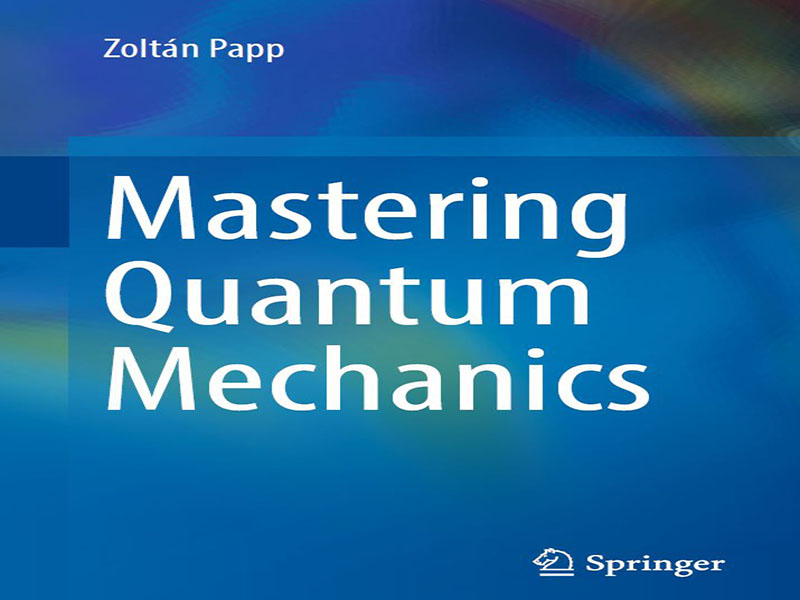
- عنوان کتاب: Mastering Quantum Mechanics
- نویسنده: Zoltán Papp
- حوزه: مکانیک کوانتومی
- سال انتشار: 2026
- تعداد صفحه: 421
- زبان اصلی: انگلیسی
- نوع فایل: pdf
- حجم فایل: 4.54 مگابایت
این کتاب حاصل بیش از چهل سال تحقیق و تدریس مکانیک کوانتومی توسط نویسنده است. این کتاب برای دانشجویانی در نظر گرفته شده است که قبلاً با مکانیک کوانتومی آشنا بودهاند و میخواهند به سطح بعدی بروند. هدف این کتاب ارتقای سطح کسانی است که کمی عقب هستند و در عین حال، ارائه دیدگاهی جدید به کسانی که پیشرفتهتر هستند. این کتاب مطالبی را برای یک دوره دو ترم یا سه چهارم ارائه میدهد. پیشنیازهای فرض شده شامل برخی از مکانیک کلاسیک و الکترودینامیک است. از آنجایی که مقداری آشنایی قبلی با مکانیک کوانتومی نیز فرض شده است، در اینجا به نشانههای تجربی پرداخته نشده و اساسیترین مباحث فقط به طور خلاصه مرور شدهاند. از سوی دیگر، مفاهیم مهمی که احتمالاً قبلاً مورد بحث قرار گرفتهاند را نمیتوان بدون خطر نقض منطق این ارائه، کنار گذاشت. این کتاب سعی دارد مباحث اساسی را از دیدگاههای مختلف و احتمالاً پیشرفتهتر پوشش دهد. متن با مبانی ریاضی شروع میشود که مقدمهای صحیح بر ریاضیات مورد نیاز، مانند فضاهای هیلبرت، عملگرهای هرمیتی و واحدی، کمیتهای ناوردا، تبدیلهای پایه و توابع عملگرها ارائه میدهد. فصل بعدی در مورد مبانی مکانیک کوانتومی است. در اینجا اصول موضوعه، همراه با تصاویر مختلف، نمایش عملگرها، روابط عدم قطعیت و برخی از پیامدهای تقارنهای پیوسته و گسسته ارائه شدهاند. بسیاری از مباحث فیزیک را میتوان با استفاده از مثالهای مسائل یک بعدی توضیح داد. خواص کلی تابع موج در این فصل شرح داده شده است. ارتباط بین کمیتهای حالت مقید و پراکندگی، همراه با جنبههای وابسته به زمان، با استفاده از تکنیک ادامه تحلیلی برقرار میشود. همچنین، نوسانگرهای هارمونیک و مدلهای پتانسیل تناوبی به تفصیل مورد بررسی قرار میگیرند. بخش عمدهای از مکانیک کوانتومی با تکانه زاویهای آغاز میشود. این فصل کوانتیزاسیون تکانه زاویهای، تکانه زاویهای مداری، اسپین، ماتریسهای چرخش، طرحهای کوپلینگ، عملگرهای چرخش، تانسورهای کروی و قضیه ویگنر-اکارت را پوشش میدهد. فصل بعدی در مورد مسائل کوانتومی در ابعاد بالاتر است. مباحث تحت پوشش شامل مسائل نوسانگر هارمونیک معمول و مسائل کولمب، ذرات باردار در میدان مغناطیسی و پیامدهای تبدیل پیمانهای پتانسیلهای الکترومغناطیسی، از جمله اثر آهارونوف-بوم با کوانتیزاسیون شار مغناطیسی است. در فصل «ذرات یکسان در مکانیک کوانتومی»، نشان داده شده است که چگونه مفهوم عدم تمایز ذرات کوانتومی منجر به تقارن تابع موج میشود. در «روشهای تقریب برای مسائل مستقل از زمان»، طیف گستردهای از روشها ارائه شده است، از جمله قضیه هلمن-فاینمن، روشهای اختلال ریلی-شرودینگر و بریلوئن-ویگنر، روشهای وردشی، روش تقریب نیمهکلاسیک و کاربردهای مرتبط. «مکانیک کوانتومی وابسته به زمان» با نظریه اختلال وابسته به زمان شروع میشود و آن را برای اختلالات ثابت و هارمونیک اعمال میکند. سپس تقریبهای ناگهانی و آدیاباتیک با فازهای دینامیکی و هندسی، همراه با تجزیه و تحلیل دقیق سیستمهای دو حالته ارائه میشود. در فصل مربوط به تابش الکترومغناطیسی، میدان الکترومغناطیسی کوانتیزه شده است که منجر به مفهوم فوتون و انتظار خلاء میدان میشود. سپس اتمهای موجود در یک میدان تابشی، همراه با دامنههای گذار برای گسیل و جذب، قوانین انتخاب و پهنشدگی طبیعی خطوط طیفی در نظر گرفته میشوند. در نهایت، فرمولهای تابش جسم سیاه دوباره استخراج میشوند و اثر کازیمیر مورد بحث قرار میگیرد. نظریه پراکندگی در مورد بررسی همیلتونی است. دانستن چند حالت مقید، اطلاعات نسبتاً محدودی در مورد سیستم فیزیکی ارائه میدهد. برای به دست آوردن تصویر کامل، به اطلاعات پراکندگی نیز نیاز داریم. بررسی پراکندگی کوانتومی از طریق حالتهای مجانبی و عملگرهای حلکننده انجام میشود تا خواص تابع موج از تحلیل مجانبی معادلات انتگرالی استخراج شود. سپس تغییر فاز، تابع جاست، تأخیر زمانی و قضیه لوینسون معرفی میشوند. بررسی نظریه پراکندگی بدون در نظر گرفتن دو موضوع اضافی نمیتواند کامل باشد: پراکندگی کولن و مسائل سه جسمی با استفاده از رویکرد فادیف. روابط نزدیکی بین دو ستون اصلی فیزیک مدرن، نسبیت و مکانیک کوانتومی وجود دارد. اتحاد آنها در مکانیک کوانتومی نسبیتی، کشف پادذرات، اسپین الکترون، جفت شدن آن با میدان الکترومغناطیسی و غیره را برای ما به ارمغان آورد. در پیوست، برخی از کدهای فورترن برای حل مسائل ساده حالت مقید و پراکندگی ارائه شده است. این کتاب باید دانشجویان را برای گذراندن کلاسهای پیشرفتهتر در زمینه فیزیک بسذرهای، نظریه میدان کوانتومی، اپتیک کوانتومی، فیزیک هستهای و ذرات، فیزیک ماده چگال و رشتههای مشابه آماده کند. من از دوستان و همکارانم بنجامین پی. کارتر، اسکات ام. کلر، درک وینگارد و رابرت وو سپاسگزارم.
This book is the result of the author’s forty plus years of researching and teaching quantum mechanics. It is meant for students who have had some prior exposure to quantum mechanics and want to move to the next level. This book aims to lift those who are a little behind, and at the same time, give a new perspective for those who are more advanced. The book covers material for a two-semester or a three-quarter course. The assumed prerequisites include some classical mechanics and electrodynamics. As some prior exposure to quantum mechanics is also assumed, experimental indications are not treated here, and the most basic topics are reviewed only briefly. On the other hand, important concepts that probably have been discussed before cannot be left out without risk of breaking the logic of this presentation. The book tries to cover the basic topics from different, possibly more advanced, perspectives. The text starts with Mathematical Foundations, which provides a sound introduction to the required mathematics, like Hilbert spaces, Hermitian and unitary operators, invariant quantities, basis transformations, and functions of operators. The next chapter is about the Basics of Quantum Mechanics. Here the postulates are presented, together with the various pictures, the representation of operators, uncertainty relations and some consequences of continuous and discrete symmetries. A lot of physics can be explained by using the examples of One-Dimensional Problems. The general properties of the wave function are described in this chapter. The connection between bound-state and scattering quantities, together with timedependent aspects, are established by using the technique of analytic continuation. Also, harmonic oscillators and periodic potential models are treated in detail. The heavy industry of quantum mechanics starts with Angular Momentum. This chapter covers the quantization of angular momentum, orbital angular momentum, spin, rotation matrices, coupling schemes, rotation operators, spherical tensors and the Wigner-Eckart theorem. The next chapter is about Quantum Problems in Higher Dimensions. The covered topics include the usual harmonic-oscillator and Coulomb problems, charged particles in a magnetic field, and the consequences of the gauge transformation of the electromagnetic potentials, including the Aharonov-Bohm effect with the quantization of magnetic flux. In the chapter on Identical Particles in Quantum Mechanics, it is shown how the concept of indistinguishability of quantum particles leads to the symmetry of the wave function. In Approximation Methods for Time-Independent Problems, a wide range of methods are presented, including the Hellmann-Feynman theorem, the Rayleigh- Schrodinger and Brillouin-Wigner perturbation methods, variational methods, the semiclassical approximation method, and related applications. The Time-Dependent Quantum Mechanics starts with the time-dependent perturbation theory and applies it to constant and harmonic perturbations. Then sudden and adiabatic approximations with dynamical and geometric phases are presented, together with detailed analysis of two-state systems. In the chapter about Electromagnetic Radiation, the electromagnetic field is quantized, which leads to the photon concept and the vacuum expectation of the field. Then atoms in a radiation field are considered, together with transition amplitudes for emission and absorption, the selection rules, and the natural broadening of spectral lines. Finally, the black-body radiation formulae are re-derived and the Casimir effect is discussed. Scattering Theory is about exploring the Hamiltonian. Knowing a few bound states gives rather limited information about the physical system. To get the full picture, we need scattering information as well. The treatment of quantum scattering goes through asymptotic states and resolvent operators in order to derive the properties of the wave function from the asymptotic analysis of the integral equations. Then the phase shift, the Jost function, the time delay, and the Levinson theorem are introduced. The treatment of scattering theory cannot be complete without considering two additional topics: the Coulomb scattering and three-body problems using the Faddeev approach. There are intimate relations between the two main pillars of modern physics, relativity and quantum mechanics. Their unification in Relativistic Quantum Mechanics presented us with the discovery of antiparticles, the electron spin, its coupling to the electromagnetic field, and so on. In Appendix, some Fortran codes for solving simple bound and scattering state problems are presented. This book should prepare students to take more advanced classes in the direction of many-body physics, quantum field theory, quantum optics, nuclear and particle physics, condensed-matter physics, and similar disciplines. I am thankful to my friends and colleagues Benjamin P. Carter, Scott M. Keller, DerekWingard and Robert Woodhouse for critical reading of the manuscript and to Attila Csótó for his help in clarifying some items. While I was on sabbatical leave, colleagues Michael R. Peterson and Andreas Bill taught my class from this manuscript and provided feedback with pertinent suggestions. Special thanks is due to Sergey L. Yakovlev for his help and several constructive suggestions.
این کتاب را میتوانید از لینک زیر بصورت رایگان دانلود کنید:
Download: Mastering Quantum Mechanics
























نظرات کاربران