













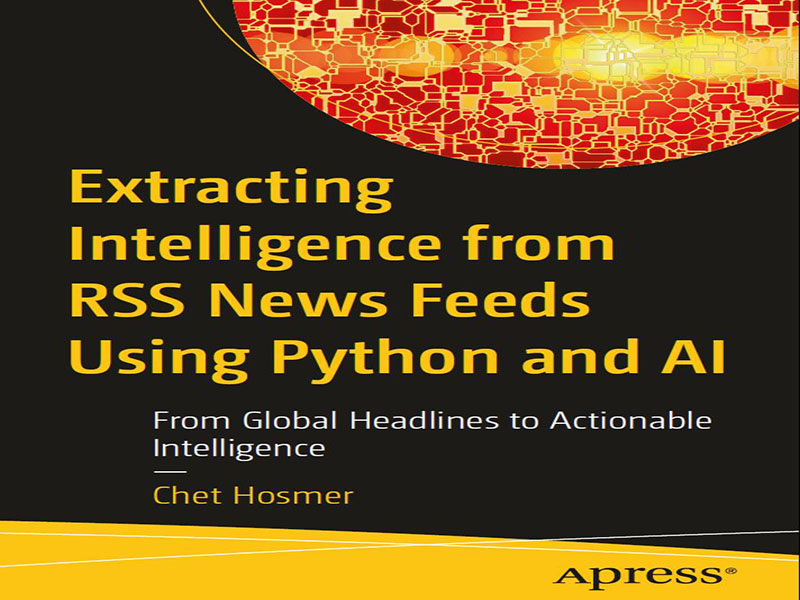
- عنوان کتاب: Extracting Intelligence from RSS News Feeds Using Python and AI From Global Headlines to Actionable Intelligence
- نویسنده: Chet Hosmer
- حوزه: فیدهای خبری
- سال انتشار: 2026
- تعداد صفحه: 185
- زبان اصلی: انگلیسی
- نوع فایل: pdf
- حجم فایل: 14.1 مگابایت
با وجود فیدهای RSS (Real-Simple-Syndication) و میلیونها از آنها، تنها کسری از آنها به طور فعال برای بینشهای معنادار استخراج میشوند. با استفاده از پایتون و هوش مصنوعی، حتی این جریانهای نادیده گرفته شده از اطلاعات را میتوان به هوش عملی تبدیل کرد. و در حالی که هیچ شمارش جهانی معتبری وجود ندارد، پلتفرمهای تحلیل وب مانند BuiltWith تخمین زدهاند که بیش از ۳۶ میلیون وبسایت فیدهای RSS منتشر میکنند. هنگام ساخت یک خط لوله استخراج خودکار اطلاعات، کیفیت و یکپارچگی منبع داده اساسی است. فیدهای RSS مزیت منحصر به فردی ارائه میدهند زیرا اطلاعات تولید شده، بررسی شده و با ساختار منسجم را مستقیماً از ناشران معتبر ارائه میدهند. هر ورودی فید معمولاً شامل یک عنوان، نویسنده، مهر زمانی، خلاصه، دسته و پیوند به مقاله کامل با ساختار مناسب است. این یکنواختی به طور چشمگیری سربار پیشپردازش را کاهش میدهد و تضمین میکند که مدلهای هوش مصنوعی پاییندست، محتوای تمیز، غنی از متن و با سیگنال بالا دریافت میکنند که برای خلاصهسازی، ترجمه، تحلیل احساسات و طبقهبندی موضوع ایدهآل است. در مقابل، پلتفرمهایی مانند توییتر (X) و ردیت تحت سلطه محتوای کوتاه و تولید شده توسط کاربر هستند که از نظر دستور زبان، ساختار، اعتبار و نیت بسیار متفاوت هستند. توییتها، که اغلب احساسی، کنایهآمیز یا مشاهدات بیربط هستند، فاقد زمینه لازم برای تفسیر قابل اعتماد هستند و از همه مهمتر، هر دو پلتفرم به شدت توسط رباتها، هرزنامهها و اطلاعات نادرست و گمراهکننده هماهنگ شده آلوده شدهاند. پستهای ردیت میتوانند بحثهای عمیقتری ارائه دهند، اما همچنان غیررسمی، محاورهای و تحت تأثیر پویایی جامعه هستند تا استانداردهای روزنامهنگاری. در هر دو مورد، فرادادهها متناقض هستند، نویسندگان اغلب ناشناس هستند و محتوا اغلب قبل از اینکه قابل استفاده شود، نیاز به تمیزکاری گسترده دارد. به همین دلایل، فیدهای RSS به عنوان بستری حاصلخیز برای استخراج اطلاعات معنادار و کاربردی عمل میکنند. قالب ساختاریافته، قابلیت اطمینان ویرایشی و سطح نویز پایین آنها، آنها را به ویژه هنگامی که با ابزارها، الگوریتمها و تکنیکهای مدرن ترکیب میشوند، برای خطوط لوله تجزیه و تحلیل خودکار بسیار مناسب میکند. توجه به این نکته مهم است که تجزیه و تحلیلهای هوشمند هوش مصنوعی با ورودی با کیفیت بالا رونق میگیرند. اگرچه پلتفرمهای رسانههای اجتماعی هنوز میتوانند سیگنالهای تکمیلی مانند نشانههای اولیه رویدادهای نوظهور را ارائه دهند، اما فیدهای RSS همچنان پایدارترین، قابل اعتمادترین و از نظر تحلیلی ارزشمندترین منبع برای ایجاد یک گردش کار قوی پردازش اطلاعات هستند.
with RSS feeds (Real-Simple-Syndication) and millions of them, yet only a fraction are actively mined for meaningful insights. Using Python and artificial intelligence, even these overlooked streams of information can be converted into actionable intelligence. And while no authoritative global count exists, web analysis platforms such as BuiltWith have estimated that more than 36 million websites publish RSS feeds. When building an automated intelligence-extraction pipeline, the quality and integrity of the underlying data source are fundamental. RSS feeds offer a unique advantage because they deliver professionally produced, fact-checked, and consistently structured information directly from established publishers. Each feed entry typically includes a well-formed title, author, timestamp, summary, category, and link to the full article. This uniformity dramatically reduces preprocessing overhead and ensures that downstream AI models receive clean, context-rich, and high-signal content that is ideal for summarization, translation, sentiment analysis, and topic classification. In contrast, platforms such as Twitter (X) and Reddit are dominated by short-form, user-generated content that varies widely in grammar, structure, credibility, and intent. Tweets, often emotional, sarcastic, or loose observations, lack the context necessary for reliable interpretation, and most importantly both platforms are heavily polluted by bots, spam, and coordinated mis- and disinformation. Reddit posts can offer deeper discussions, but they remain informal, conversational, and influenced by community dynamics rather than journalistic standards. In both cases, metadata is inconsistent, authors are frequently anonymous, and content often requires extensive cleaning before it becomes usable. For these reasons, RSS feeds serve as a fertile platform for extracting meaningful and actionable intelligence. Their structured format, editorial reliability, and low noise level make them exceptionally well-suited for automated analysis pipelines, especially when combined with modern tools, algorithms, and techniques. It is important to note that AI intelligent analyses thrive on high-quality input. While social media platforms can still contribute supplemental signals such as early indications of emerging events, RSS feeds remain the most stable, trustworthy, and analytically valuable source for building a robust intelligence-processing workflow.
این کتاب را میتوانید از لینک زیر بصورت رایگان دانلود کنید:
























نظرات کاربران