












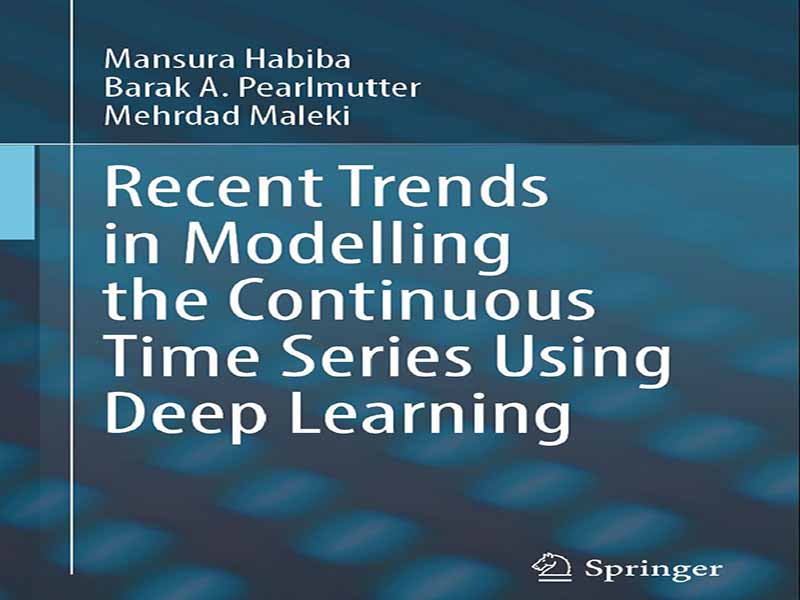
- عنوان کتاب: The Enigma of Time
- نویسنده: Mansura Habiba, Barak A. Pearlmutter
- حوزه: یادگیری عمیق
- سال انتشار: 2026
- تعداد صفحه: 337
- زبان اصلی: انگلیسی
- نوع فایل: pdf
- حجم فایل: 11.2 مگابایت
تکامل تحلیل سریهای زمانی، یکی از عمیقترین تغییرات در علوم محاسباتی مدرن را نشان میدهد. این حوزه از ریشههای اولیه خود در نظریه فرآیند تصادفی و مدلسازی خودهمبستگی، به مجموعهای غنی از معادلات دیفرانسیل، معماریهای عصبی عمیق، استدلال احتمالاتی و اخیراً محاسبات کوانتومی گسترش یافته است. با افزایش نامنظمی، ناهمزمانی و چندبعدی شدن جریانهای داده دنیای واقعی، مدلهای سنتی زمان گسسته به محدودیتهای نمایشی خود رسیدهاند. در این چشمانداز در حال تغییر است که مطالعه سریهای زمانی پیوسته به عنوان یک الگوی واحد – که قادر به ایجاد پل بین دینامیک فیزیکی، یادگیری آماری و پیشبینی هوشمند است – ظهور میکند. انگیزه این کتاب، نیاز روزافزون به درک و عملیاتی کردن مدلسازی زمان پیوسته در زمینههای عملی و دادهمحور است. هدف ما ارائه روایتی منسجم است که مبانی ریاضی را با پیادهسازیهای مدرن یادگیری ماشین مرتبط میکند. ما تأکید میکنیم که چگونه فرمولبندیهای پیوسته – مانند معادلات دیفرانسیل معمولی عصبی (ODEهای عصبی) و معادلات دیفرانسیل تصادفی عصبی (SDEهای عصبی) – قدرت بیان مدلهای عمیق را به دادههای نمونهبرداری نامنظم، درهمتنیدگی زمانی و تکامل پویا گسترش میدهند. با ترکیب بینش نظری با عمل تجربی، امیدواریم استدلال زمان پیوسته را برای محققان، مهندسان و متخصصان دقیق و در دسترس کنیم. فصل 1، مقدمهای بر سریهای زمانی پیوسته، مبانی مفهومی و ریاضی مدلسازی زمان پیوسته را مشخص میکند. این فصل، چارچوبهای گسسته کلاسیک را با فرمولبندیهای دیفرانسیلی مقایسه میکند، محدودیتهای فرضیات ایستایی را توضیح میدهد و در مورد چگونگی ارائه راهحلهای زیبا برای نمونههای نامنظم، دادههای از دست رفته و سیستمهای پویا توسط مدلهای پیوسته بحث میکند. فصل 2، مدلهای مختلف شبکه عصبی برای پردازش سریهای زمانی، چشمانداز معماریهای عصبی – RNNها، LSTMها، GRUها، CNNها و ترانسفورماتورها – هر کدام با بایاسهای القایی زمانی خاص خود را بررسی میکند. ما عملکرد مقایسهای آنها را تجزیه و تحلیل میکنیم و در مورد چگونگی تعمیم بسطهای زمان پیوسته مدرن فراتر از بازگشت گام محدود بحث میکنیم. فصل ۳، روندهای نوظهور و چالشهای باز در مدلسازی سریهای زمانی، به بررسی مرزهایی مانند دینامیکهای الهامگرفته از کوانتوم، مدلهای بنیادی برای سریهای زمانی و ادغام زمانی چندوجهی میپردازد. این فصل، شکافهای تحقیقاتی مداوم در تفسیرپذیری، مقیاسپذیری و استحکام را تشریح میکند و پیشبینی میکند که چگونه این چالشها ممکن است دهه بعدی نوآوری را هدایت کنند. فصل ۴، تکنیکهای شبکه عصبی در پیشبینی سریهای زمانی پیوسته، به جنبههای ریاضی و الگوریتمی مدلسازی پیشبینی میپردازد. این فصل، طراحی تلفات، منظمسازی، حلکنندههای مبتنی بر گرادیان برای ODE/SDEهای عصبی و استراتژیهای بهینهسازی برای پایداری و همگرایی را پوشش میدهد. مطالعات موردی، ادغام معماریهای عصبی پیوسته را در خطوط لوله پیشبینی سرتاسری نشان میدهند. فصل ۵، شبکههای عصبی برای مدلسازی سریهای زمانی، یک سنتز معماری ارائه میدهد – اتصال مدلهای گسسته بازگشتی، رمزگذارهای زمانی کانولوشنی و نمایشهای مبتنی بر توجه با همتایان پیوسته آنها. این فصل، طراحی معماریهای ترکیبی، بهینهسازی ابرپارامتر و استراتژیهای انتخاب مدل برای دادههای زمانی با ابعاد بالا را بررسی میکند. فصل 6، رویکردهای احتمالی و مولد برای پیشبینی سریهای زمانی پیوسته، بحث را به مدلسازی تصادفی و کمیسازی عدم قطعیت منتقل میکند. ما بررسی میکنیم که چگونه خودرمزگذارهای متغیر (VAE)، شبکههای مولد تخاصمی (GAN) و فرآیندهای مولد مبتنی بر انتشار در تولید سریهای زمانی واقعبینانه و احتمالی نقش دارند و در مورد فرمولبندیهای عصبی بیزی که تخمین اطمینان پیشبینی را ممکن میسازند، بحث میکنیم. فصل 7، شبکههای عصبی کوانتومی-هیبریدی برای سریهای زمانی پیوسته، کاوشی در تقاطع مکانیک کوانتومی و یادگیری عمیق را نشان میدهد. ما بحث میکنیم که چگونه مدارهای کوانتومی، لایههای کوانتومی متغیر و حلکنندههای کوانتومی-کلاسیک هیبریدی میتوانند بیانپذیری زمانی را افزایش داده و بهینهسازی را در حوزههای زمان پیوسته تسریع کنند. این فصل همچنین به یافتههای تجربی و حدسهای نظری پیرامون مزیت کوانتومی برای پیشبینی زمانی میپردازد. فصل 8، ارزیابی مدل و معیارسنجی، یک چارچوب ارزیابی جامع ارائه میدهد. فراتر از دقت، بر استحکام، سازگاری زمانی، انصاف و تکرارپذیری تأکید دارد. ما روشهای مدرن معیارسنجی را برای مدلهای زمان پیوسته، از جمله ارزیابی مبدا غلتان، اعتبارسنجی چند افقی و تحلیل استحکام تصادفی ارائه میدهیم. فصل 9، کاربردهای تحلیل سریهای زمانی پیوسته، این نظریه را از طریق مثالهای مبتنی بر دامنه از سیستمهای مراقبتهای بهداشتی، مالی و اینترنت اشیا، زنده میکند. این مطالعات موردی نشان میدهند که چگونه مدلهای زمان پیوسته میتوانند مسیرهای گمشده را بازسازی کنند، ناهنجاریها را تشخیص دهند و فرآیندهای تصمیمگیری را در شرایط عدم قطعیت بهینه کنند. در سراسر این کتاب، هدف ما یکپارچهسازی مسیرهای تحقیقاتی متعدد است…
The evolution of time series analysis marks one of the most profound shifts in modern computational science. From its early roots in stochastic process theory and autoregressive modeling, the field has expanded into a rich confluence of differential equations, deep neural architectures, probabilistic reasoning, and, most recently, quantum computation. As real-world data streams become increasingly irregular, asynchronous, and multidimensional, traditional discrete-time models have reached their representational limits. It is within this changing landscape that the study of continuous time series emerges as a unifying paradigm—capable of bridging physical dynamics, statistical learning, and intelligent forecasting. This book is motivated by the growing need to understand and operationalize continuous-time modeling in practical, data-driven contexts. Our aim is to provide a coherent narrative that connects mathematical foundations with modern machine learning implementations. We emphasize how continuous formulations—such as Neural Ordinary Differential Equations (Neural ODEs) and Neural Stochastic Differential Equations (Neural SDEs)—extend the expressive power of deep models to irregularly sampled, temporally entangled, and dynamically evolving data. By combining theoretical insight with empirical practice, we hope to make continuous-time reasoning both rigorous and accessible for researchers, engineers, and practitioners. Chapter 1, Introduction to Continuous Time Series, establishes the conceptual and mathematical basis of continuous-time modeling. It contrasts classical discrete frameworks with differential formulations, explains the limitations of stationarity assumptions, and discusses how continuous models offer elegant solutions to irregular sampling, missing data, and dynamic systems. Chapter 2, Different Neural Network Models for Time Series Processing, surveys the landscape of neural architectures—RNNs, LSTMs, GRUs, CNNs, and transformers—each with its characteristic temporal inductive biases. We analyze their comparative performance and discuss how modern continuous-time extensions generalize beyond finite-step recursion. Chapter 3, Emerging Trends and Open Challenges in Time Series Modeling, investigates frontiers such as quantum-inspired dynamics, foundation models for time series, and multi-modal temporal fusion. It outlines persistent research gaps in interpretability, scalability, and robustness, and projects how these challenges may guide the next decade of innovation. Chapter 4, Neural Network Techniques in Continuous Time Series Prediction, delves into the mathematical and algorithmic aspects of predictive modeling. It covers loss design, regularization, gradient based solvers for Neural ODEs/SDEs, and optimization strategies for stability and convergence. Case studies illustrate the integration of continuous neural architectures into end-to-end forecasting pipelines. Chapter 5, Neural Networks for Time Series Modelling, provides an architectural synthesis—connecting discrete recurrent models, convolutional temporal encoders, and attention-based representations with their continuous counterparts. It explores the design of hybrid architectures, hyperparameter optimization, and model selection strategies for high-dimensional temporal data. Chapter 6, Probabilistic and Generative Approaches to Continuous Time Series Forecasting, transitions the discussion to stochastic modeling and uncertainty quantification. We explore how Variational Autoencoders (VAEs), Generative Adversarial Networks (GANs), and diffusion-based generative processes contribute to producing realistic, probabilistic time series, and discuss Bayesian neural formulations that enable predictive confidence estimation. Chapter 7, Quantum-Hybrid Neural Networks for Continuous Time Series, represents an exploration at the intersection of quantum mechanics and deep learning. We discuss how quantum circuits, variational quantum layers, and hybrid quantum-classical solvers can enhance temporal expressivity and accelerate optimization in continuous-time domains. The chapter also reflects on experimental findings and theoretical conjectures surrounding quantum advantage for temporal prediction. Chapter 8, Model Evaluation and Benchmarking, proposes a comprehensive evaluation framework. Beyond accuracy, it emphasizes robustness, temporal consistency, fairness, and reproducibility. We present modern benchmarking methodologies for continuous-time models, including rolling-origin evaluation, multi-horizon validation, and stochastic robustness analysis. Chapter 9, Applications of Continuous Time Series Analysis, brings the theory to life through domain-driven examples from healthcare, finance, and IoT systems. These case studies demonstrate how continuous-time models can reconstruct missing trajectories, detect anomalies, and optimize decision processes under uncertainty. Throughout this book, we aim to unify multiple research trajectories—deep learning, stochastic modeling, and quantum computing—into a coherent framework for understanding the temporal continuum. Each chapter can be read independently but is designed to build toward a larger epistemic goal: to establish continuous-time modeling as a foundational pillar for the next generation of intelligent systems. We extend our gratitude to the global research community whose pioneering work inspired this synthesis and to readers who continue to explore, critique, and advance the boundaries of time series science.
این کتاب را میتوانید از لینک زیر بصورت رایگان دانلود کنید:
Download: Recent Trends in Modelling


























نظرات کاربران