












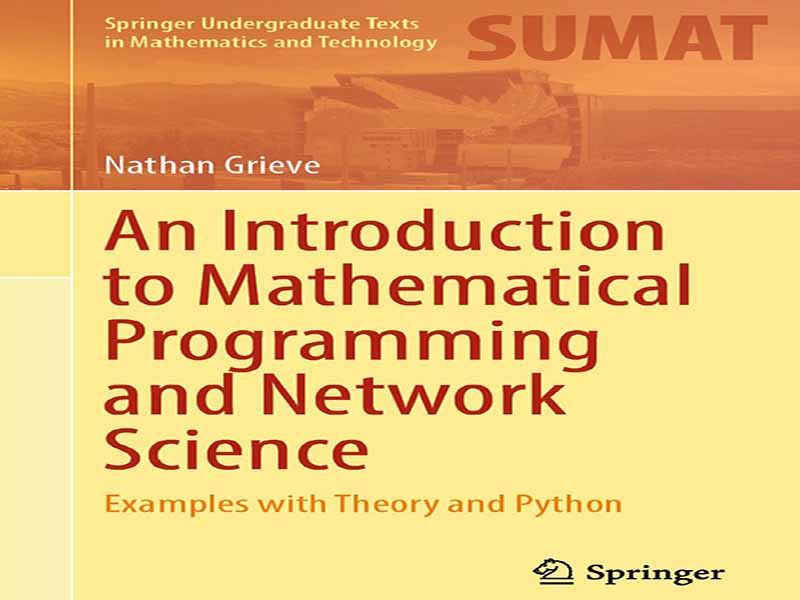
- عنوان کتاب: An Introduction to Mathematical Programming and Network Science Examples with Theory and Python
- نویسنده: Nathan Grieve
- حوزه: برنامهنویسی ریاضیات
- سال انتشار: 2026
- تعداد صفحه: 367
- زبان اصلی: انگلیسی
- نوع فایل: pdf
- حجم فایل: 12.3 مگابایت
دنیای واقعی به سرعت در حال تکامل است – سازماندهی مجدد نیروی کار، خروجیهای تولید، شبکههای توزیع حمل و نقل، نظارت و سایر مسئولیتهای مدیریتی بر این اساس مهم است. یک چالش خاص، تخصیص منابع به روشی مؤثر و کارآمد است. دستیابی به یک رویکرد علمی برای مطالعه و پرداختن به چنین چالشهای دنیای واقعی، یکی از اهداف برنامهنویسی ریاضی و علوم شبکه است. ایده، استفاده از ابزارهای ریاضی برای دستیابی به تخصیص بهینه منابع است. به عنوان مثال، مورد شرکتی را در نظر بگیرید که میخواهد سود خود را به حداکثر برساند و در عین حال خروجیهای انتشار گازهای گلخانهای خود را به حداقل برساند. برخی از مراحل معمول یک چرخه کاری مدلسازی و برنامهریزی عبارتند از: – تعریف یک مسئله بهینهسازی مناسب که توسط مسائل و دادههای مربوط به دنیای واقعی آگاه شده است؛ – فرموله کردن یک مدل بهینهسازی ریاضی مرتبط برای نمایش یک مسئله دنیای واقعی معین؛ – توسعه یک رویه مبتنی بر کامپیوتر برای استخراج راهحلهایی برای مسئله بهینهسازی فرموله شده ریاضی؛ آزمایش مدل ریاضی برای بررسی اینکه آیا راهحل ریاضی به دست آمده در واقع برای مسئله دنیای واقعی معین عملی است یا خیر؛ و – اجرای نتیجهگیریها و/یا اصلاح مدل در صورت نیاز. برنامهنویسی ریاضی و علوم شبکه زمینههای بسیار غنی و دشواری هستند. آنها به دنبال حل مسائل بهینهسازی ریاضی هستند با این هدف که چنین راهحلهایی را برای تصمیمگیریهای آگاهانه در دنیای واقعی برای کسبوکار، صنعت، دولت، سازمانهای غیرانتفاعی و سایر زمینههای سازمانی به کار گیرند. در انجام این کار، آنها از ابزارهای عمیق ریاضی از جبر خطی، تحلیل ترکیبی و محدب استفاده میکنند. در عین حال، تأملات اخلاقی نیز مرتبط میشوند. به عنوان مثال، با توجه به آگاهی از یک راهحل بهینه، آیا اقدام بر اساس آن از نظر اجتماعی مسئولانه است؟ به عنوان مثال، آیا به حداکثر رساندن سود، آسیب بیموردی به نیروی کار خاص وارد میکند؟ به طور مشابه، آیا به حداقل رساندن خروجیهای انتشار گازهای گلخانهای، آسیب بیموردی به بهرهوری اقتصادی وارد میکند؟ علیرغم چنین ملاحظاتی، دانش و/یا توانایی یافتن حداقل برخی از راهحلهای بهینه برای مسائل برنامهریزی ریاضی، از منافع استراتژیک آشکاری برای نهادها در هر اندازه و سلیقهای برخوردار است. درک دقیق، حتی حداقل برخی از زیرمجموعههای راهحلهای بهینه و/یا عملی، به رهبران و افراد این امکان را میدهد تا تصمیمات آگاهانه، مسئولانه و علمی بگیرند.
The real-world evolves rapidly—it is important to reorganize labour, manufacturing outputs, shipping distribution networks, supervisory and other managerial responsibilities accordingly. A particular challenge is to allocate resources in an effective and efficient way. Achieving a scientific approach to studying and addressing such real-world challenges is one aim of Mathematical Programming and Network Science. The idea is to employ mathematical tools to achieve an optimal allocation of resources. For example, consider the case of a company that wishes to maximize its profits while at the same time minimizing its emissions outputs. Some typical phases of a modelling and programming work cycle include – defining a suitable optimization problem that is informed by relevant real-world problems and data; – formulating a relevant mathematical optimization model to represent a given real-world problem; – developing a computer-based procedure for deriving solutions to the mathematically formulated optimization problem; testing the mathematical model to see if the mathematically obtained solution is actually practical for the given real-world problem; and – implementing conclusions and/or revising the model as required. Mathematical programming and network science are very rich and difficult fields. They seek to solve mathematical optimization problems with the intent to apply such solutions to make informed real-world decisions for business, industry, government, non-profit and other organizational contexts. In doing so, they employ deep mathematical tools from linear algebra, combinatorial and convex analysis. At the same time, there are ethical reflections that become relevant. For example, given knowledge of an optimal solution, is it socially responsible to act on it? For instance, will maximizing profits inflict undue harm on a particular workforce? Similarly, will minimizing emissions outputs have undue harm on economic productivity? Not withstanding such considerations, knowledge of and/or the ability to find, at least some optimal solutions to mathematical programming problems are of clear strategic interest to entities of all sizes and flavours. A detailed understanding, of even at least some subset, of the optimal and/or feasible solutions allows leaders and individuals to make informed socially responsible and scientifically guided decisions.
این کتاب را میتوانید از لینک زیر بصورت رایگان دانلود کنید:























نظرات کاربران