











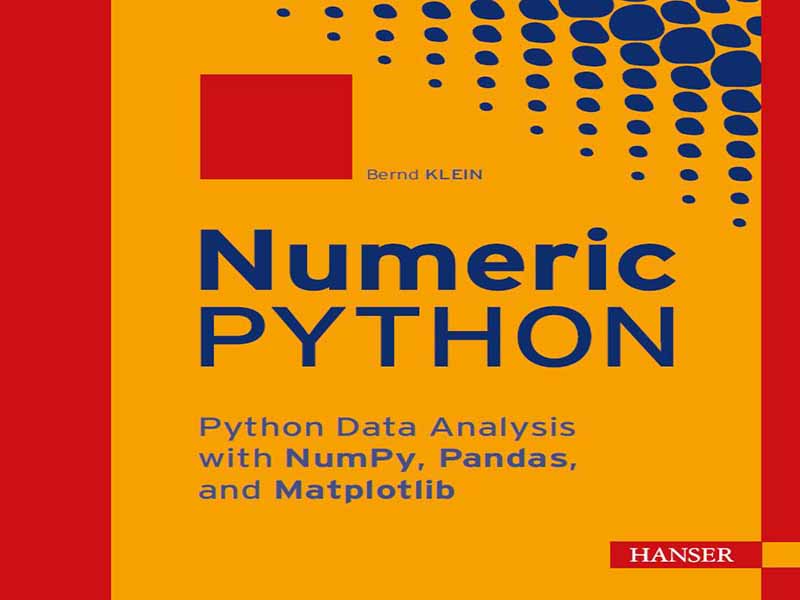
- عنوان کتاب: Numeric Python -Python Data Analysis with NumPy, Pandas, and Matplotlib
- نویسنده: Bernd Klein
- حوزه: برنامهنویسی پایتون
- سال انتشار: 2026
- تعداد صفحه: 576
- زبان اصلی: انگلیسی
- نوع فایل: pdf
- حجم فایل: 18.5 مگابایت
روشهای دادهمحور به نیروی محوری در توسعه نرمافزار معاصر تبدیل شدهاند. مفاهیمی مانند کلانداده و یادگیری ماشین اکنون نقش تعیینکنندهای در تحقیقات، صنعت و مهندسی کاربردی ایفا میکنند. در نتیجه، هم مؤسسات و هم متخصصان فردی با یک سوال اساسی روبرو هستند: کدام زبان برنامهنویسی برای کاربردهای دادهمحور و عددی مناسبتر است؟ در سالهای اخیر، پایتون به طور مداوم به عنوان یکی از پرکاربردترین زبانهای برنامهنویسی در این حوزه ظهور کرده است. توسعه سریع آن، آن را به عنوان یک فناوری اصلی برای تجزیه و تحلیل دادهها، محاسبات علمی و هوش مصنوعی تثبیت کرده است. در حالی که پایتون در ابتدا برای محاسبات عددی طراحی نشده بود، اکوسیستم آن با موفقیت چشمگیری برای پر کردن این شکاف تکامل یافته است. این موفقیت تا حد زیادی به کتابخانههای افزونه قدرتمندی مانند NumPy، SciPy، Matplotlib و Pandas مربوط میشود. این ابزارها در کنار هم، پایتون را به یک پلتفرم قوی تبدیل کردهاند که با بستههای نرمافزاری عددی و آماری تخصصی، چه در تحقیقات دانشگاهی و چه در عمل صنعتی، رقابت میکند. این کتاب مقدمهای ساختاریافته و در دسترس برای برنامهنویسی عددی و دادهمحور با پایتون، با تمرکز ویژه بر NumPy، Matplotlib و Pandas ارائه میدهد. این کتاب برای خوانندگانی نوشته شده است که از قبل تسلط اولیهای بر پایتون دارند و آمادهاند تا مهارتهای خود را در کاربردهای علمی و دادهمحور عمیقتر کنند. بنابراین، این کتاب برای دانشجویان، محققان، مهندسان و متخصصانی که به دنبال گسترش دانش پایتون خود در حوزه محاسبات عددی و تحلیل دادهها هستند، بسیار مناسب است. جلد حاضر بر اساس کتاب موفق آلمانی زبان Numerisches Python نوشته همین نویسنده است. ویرایش اول در ۱۸ ژوئن ۲۰۲۱ منتشر شد و ویرایش سوم و کاملاً اصلاحشده در ۱۴ نوامبر ۲۰۲۵ منتشر شد. این ویرایش انگلیسی زبان، ترجمهای از ویرایش سوم است و شامل چندین تطبیق لازم برای خوانندگان بینالمللی است.
Data-driven methods have become a central force in contemporary software development. Concepts such as Big Data and Machine Learning now play a decisive role across research, industry, and applied engineering. As a result, both institutions and individual practitioners face a fundamental question: which programming language is best suited for data-oriented and numerical applications? In recent years, Python has consistently emerged as one of the most widely used programming languages in this domain. Its rapid development has established it as a core technology for data analysis, scientific computing, and artificial intelligence. While Python was not originally designed for numerical computation, its ecosystem has evolved to fill this gap with remarkable success. This success is largely attributable to powerful extension libraries such as NumPy, SciPy, Matplotlib, and Pandas. Together, these tools have transformed Python into a robust platform that rivals specialized numerical and statistical software packages, both in academic research and in industrial practice. This book provides a structured and accessible introduction to numerical and data oriented programming with Python, with a particular focus on NumPy, Matplotlib, and Pandas. It is aimed at readers who already have a basic command of Python and are ready to deepen their skills in scientific and data-driven applications. The book is therefore well suited for students, researchers, engineers, and professionals seeking to extend their Python knowledge into the realm of numerical computing and data analysis. The present volume is based on the successful German-language book Numerisches Python by the same author. The first edition was published on 18 June 2021, and a third, thoroughly revised edition appeared on 14 November 2025. This English-language edition is a translation of the third edition and includes several necessary adaptations for an international readership.
این کتاب را میتوانید از لینک زیر بصورت رایگان دانلود کنید:
Download: Numeric Python























نظرات کاربران