










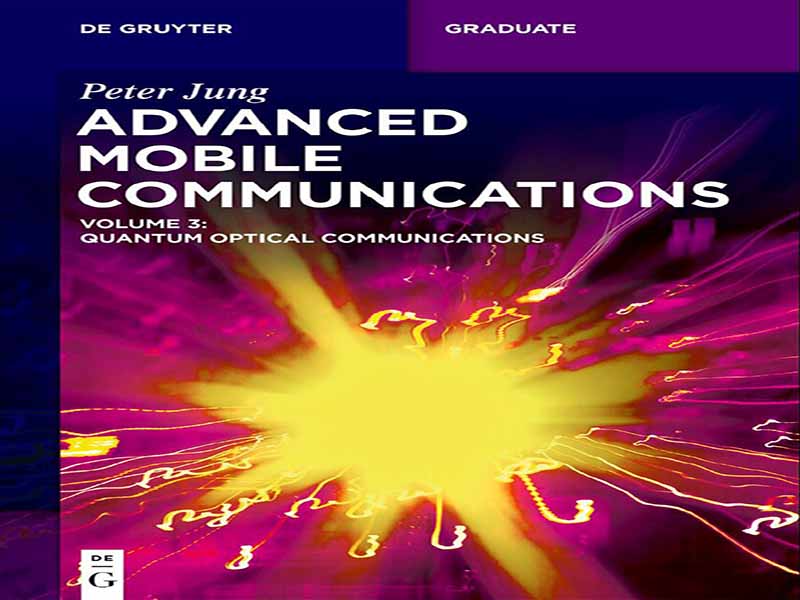
- عنوان کتاب: Advanced Mobile Communications, Volume 3 -Quantum Optical Communications
- نویسنده: Peter Jung
- حوزه: ارتباطات کوانتومی
- سال انتشار: 2026
- تعداد صفحه: 818
- زبان اصلی: انگلیسی
- نوع فایل: pdf
- حجم فایل: 28.3 مگابایت
موسسه آلمانی «Zukunftsinstitut» دوازده «روند کلان» زمان ما را شناسایی کرده است که یکی از آنها «اتصال» است. از اوایل دهه 1990، ارتباطات سیار جزء اصلی این روند کلان بوده است. اگرچه ممکن است تند به نظر برسد، اما هوشمندانه است که بین فرکانس طبیعی ≈ 300 گیگاهرتز و فرکانس طبیعی ≈ 30 تراهرتز فاصلهای باقی بماند و سپس با یک لایه فیزیکی انقلابی جدید مبتنی بر اپتیک ادامه یابد. به طور خاص، به نظر میرسد اپتیک کوانتومی بیسیم راهی مناسب برای پیشرفت باشد. اعتقاد به اپتیک کوانتومی بیسیم به عنوان یک دارایی عالی برای تکامل بیشتر ارتباطات سیار پیشرفته (AMC)، با شروع از اپتیک کوانتومی، اعتقاد نویسنده را به آیندهای واقعاً روشن برای ارتباطات برانگیخت. به دنبال دستور «ایمان خود را متوقف نکنید» (Journey, 1981)، همه ما میتوانیم فرض کنیم که فوتونهای شاد در بزرگراه اپتیک کوانتومی به سمت ارتباطات سیار پیشرفته آینده حرکت خواهند کرد. → شکل 1 تفکر نویسنده را نشان میدهد. هوش مصنوعی (AI) بخشی از رابط هوایی، که رابط رادیویی نیز نامیده میشود، خواهد بود که تمرکز این کتاب درسی بر آن است. ساتون و بارتو در کتاب درسی اصلی خود اشاره میکنند که یادگیری تقویتی (RL)، که به عنوان بخشی از هوش مصنوعی در نظر گرفته میشود [→3، صفحه xiii]، شامل کنترل بهینه و از این رو برنامهنویسی پویا است که قبلاً در دهه 1950 توسط ریچارد بلمن و دیگران [→3، صفحه 14f.] توسعه یافته است. دکتر ولفگانگ زاور-گرف، دوست عزیز نویسنده، در پایاننامه دکترای خود [→4، صفحه 8f.] اشاره کرد که طرحهای تشخیص داده مانند الگوریتم ویتربی (VA) [→5] و خویشاوندان آن [→6]، [→7] استراتژیهای جستجوی رو به عقب هستند که بهترین سلف را تعیین میکنند و به همین ترتیب متعلق به برنامهنویسی پویا هستند. این امر در مورد آشکارسازهای نماد بهینه مانند الگوریتم BCJR [→8] نیز صادق است. نویسنده با کمال میل میگوید که از سال 1990 در این زمینه تحقیقاتی انجام داده است. رجوع کنید به، مثلاً، [→9]، [→10]، [→11]، [→12]، [→13]. از این رو جای تعجب نیست که طرحهای تشخیص مذکور در این کتاب درسی مورد بررسی قرار خواهند گرفت؛ رجوع کنید به فصل →2.
The German “Zukunftsinstitut” has identified twelve “mega trends” of our times, one of which is “connectivity.” Since the early 1990s, mobile communications have been a major component of this mega trend. Although it might sound harsh, it might be clever to leave a gap between the natural frequency ≈ 300GHz and the natural frequency ≈ 30THz and then to continue with a revolutionary new physical layer based on optics. In particular, wireless quantum optics seem to be a viable way forward. The belief in wireless quantum optics as an excellent asset for the further evolution of advanced mobile communications (AMC) sparked the author’s conviction of a truly bright future of communications by setting out from quantum optics. Following the imperative “Don’t Stop Believin’ ” (Journey, 1981), we all may suppose that happy photons will be heading down the quantum optics highway towards future advanced mobile communications. →Figure 1 illustrates the author’s thinking. Artificial intelligence (AI) will be a component of the air interface, also called radio interface, which is the focus of this textbook. In their seminal textbook, Sutton and Barto point out that reinforcement learning (RL), which is seen as part of AI [→3, p. xiii], contains optimal control, and hence dynamic programming already developed in the 1950s by Richard Bellman and others [→3, p. 14f.]. Dr. Wolfgang Sauer-Greff, a dear friend of the author, pointed out in his doctoral dissertation [→4, p. 8f.] that data detection schemes like the Viterbi algorithm (VA) [→5] and its relatives [→6], [→7] are backward search strategies determining the best predecessor and as such belong to dynamic programming. This is also true for an optimum symbol by symbol detectors like the BCJR algorithm [→8]. The author is delighted to say that he has performed research in this field since 1990; cf., e. g., [→9], [→10], [→11], [→12], [→13]. It is hence no surprise that the said detection schemes will be addressed in this textbook; cf. Chapter →2.
این کتاب را میتوانید از لینک زیر بصورت رایگان دانلود کنید:
Download: Advanced Mobile Communications, Volume 3
























نظرات کاربران